
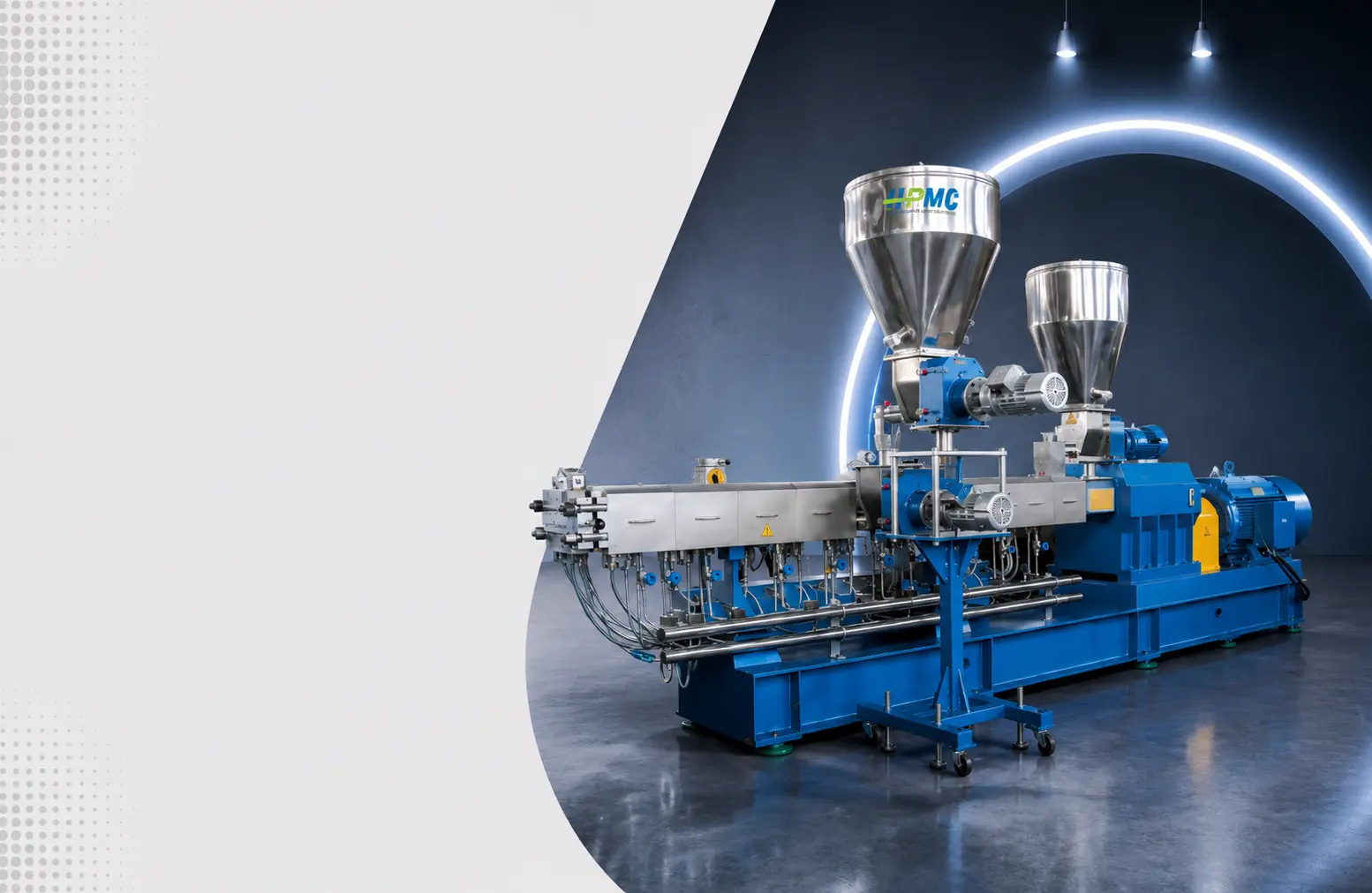
Co-rotatingTwin Screw Extruder
High-performance co-rotating twin screw extruder engineered for polymer compounding, masterbatch production, engineering plastics, glass fibre reinforced compounds, and high filler applications with excellent mixing efficiency and consistent output.
Industrial Co-Rotating Twin Screw Extruder for Polymer Compounding
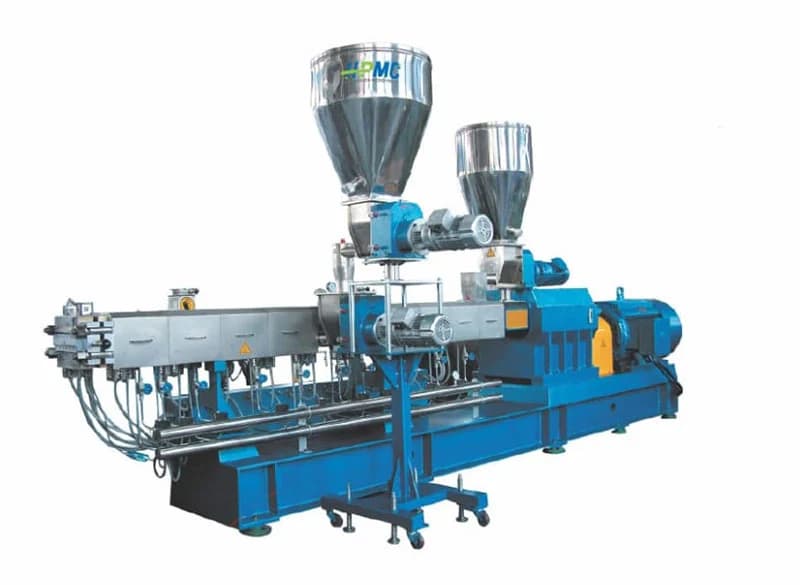
HPMC's co-rotating twin screw extruders are designed for polymer compounding, masterbatch manufacturing and the processing of engineering plastics. Two screws rotate in the same direction to convey, mix and homogenize polymer materials, helping manufacturers achieve consistent compound quality when the machine is configured for the required formulation.
These extrusion systems can be configured for applications such as colour and filler masterbatch production, glass fibre reinforced compounds, selected recycled polymers and other polymer blends. Screw configuration, feeding arrangements, temperature control and processing conditions should be selected according to the raw material and desired output.
HPMC offers different machine models to support a range of production requirements. Compare screw diameter, screw speed, main motor power, L/D ratio and rated output to identify a suitable configuration for your application.
Planning a compounding line? Contact HPMC to discuss your material, target throughput, filler content and production requirements and request a machine recommendation.
4
Machine Models
1000
Max Output (kg/hr)
80%
Talc Loading Capacity
See Our Machine In Action
Explore detailed machine visuals and watch real production demonstrations to understand the performance and quality of our extrusion systems.
Machine Specifications
Explore the available Co-Rotating Twin Screw Extruder models designed for different production capacities and compounding requirements.
| Model | Screw Diameter (mm) | Screw Speed (RPM) | Motor Power | L/D Ratio | Output (kg/hr) |
|---|---|---|---|---|---|
| HPMC 50 | 50.5 | 500 / 600 | 37 / 45 | 32 – 48 | 20 – 150 |
| HPMC 65 | 62.4 | 400 / 500 | 55 / 75 | 32 – 48 | 100 – 300 |
| HPMC 72 | 71.2 | 400 / 500 | 90 / 110 | 32 – 48 | 300 – 600 |
| HPMC 92 | 91 | 400 / 500 | 220 / 250 | 32 – 40 | 600 – 1000 |
* Production capacity may vary depending on material, formulation, filler loading, and processing conditions.
Everything About Our Co-Rotating Twin Screw Extruder
Find answers to common questions about polymer compounding, machine specifications, applications, production capacity, installation, operation, and maintenance.
Expert Support
Quick answers before you enquire
Discuss Your Requirements with Our Experts
Tell HPMC about your material, required output and compounding application. The team can review your requirements and advise on an appropriate machine configuration.
Call Us
+91 95605 96392
Email Us