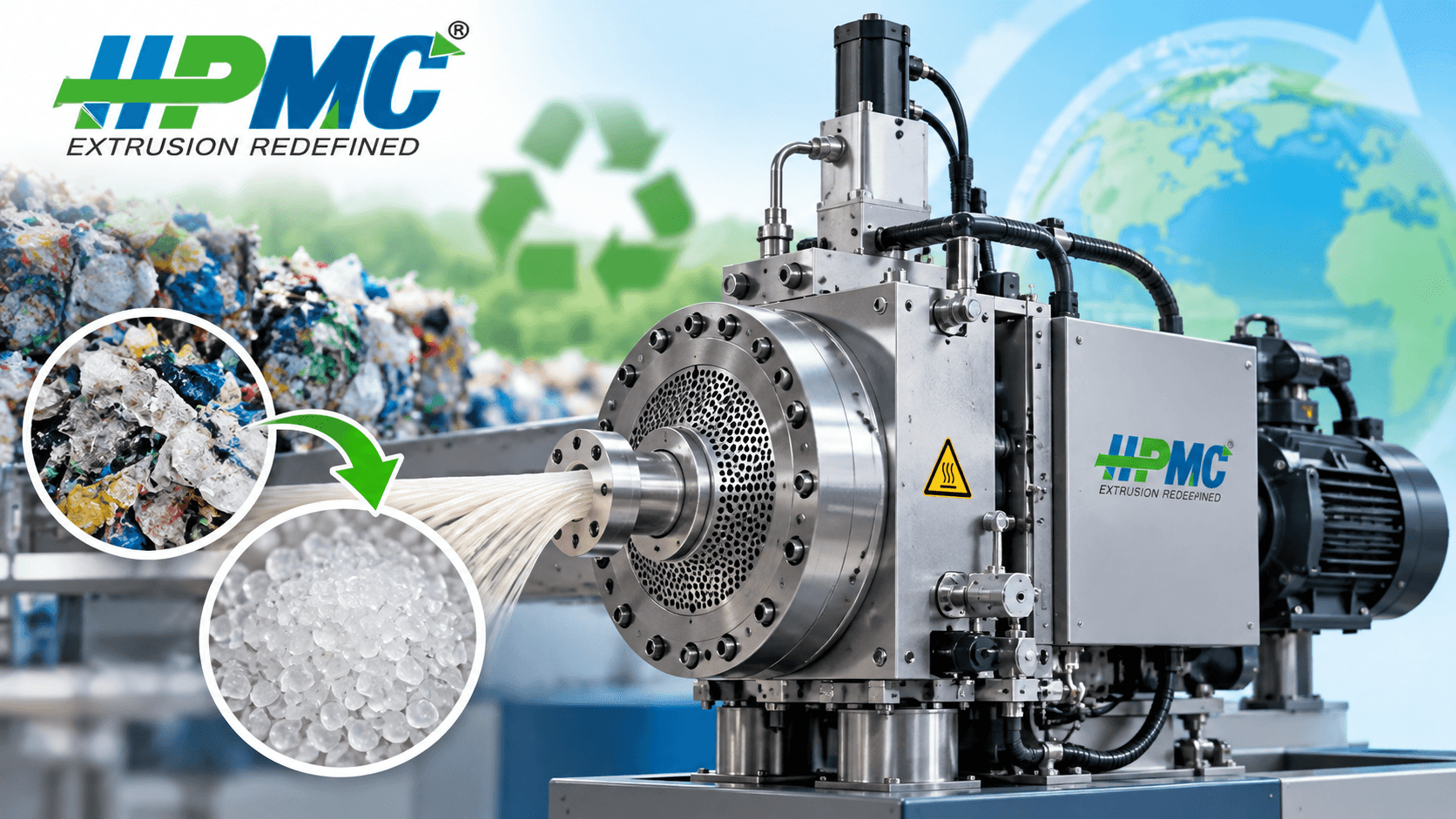
Plastic recycling and reprocessing involve handling materials that may contain paper, aluminium, dust, wood, rubber, unprocessed plastic, and other unwanted contaminants. These contaminants can enter the polymer melt during extrusion and may affect the stability of the recycling process and the quality of the recycled output.
An Automatic Self Cleaning Laser Filter is a continuous melt filtration solution designed to remove suitable solid contaminants from molten plastic during extrusion. Its automatic cleaning mechanism allows filtration to continue while accumulated contaminants are removed from the filtration area.
For plastic recycling and extrusion manufacturers, choosing an appropriate melt filtration system is important. The filter should be selected according to the polymer type, contamination level, feedstock characteristics, extrusion output, required filtration level, and downstream application.
This guide explains what an Automatic Self Cleaning Laser Filter is, how it works, its major components, applications, benefits, and the factors manufacturers should consider before selecting a continuous melt filtration system.
What is an Automatic Self Cleaning Laser Filter?
An Automatic Self Cleaning Laser Filter is a filtration system used in plastic extrusion and recycling applications to remove solid contaminants from molten polymer.
The filter is installed in the melt-processing section of an extrusion line. As molten plastic passes through the filtration area, unwanted solid particles are retained by the filter.
Instead of requiring frequent manual shutdowns for filter cleaning, an automatic self-cleaning arrangement can remove accumulated contaminants while the extrusion process continues under suitable operating conditions.
A typical filtration system can include:
- Melt inlet
- Filtration chamber
- Filter screen or filtration element
- Automatic cleaning mechanism
- Contaminant discharge section
- Melt outlet
- Pressure monitoring system
- Heating arrangement
- Control system
The exact design varies according to the filtration technology and application.
Why is Melt Filtration Important in Plastic Recycling?
Recycled plastic can contain contaminants even after sorting, washing, and other preprocessing stages.
Depending on the source of the waste, contaminants may include:
- Paper
- Wood particles
- Aluminium
- Rubber
- Dirt
- Dust
- Foreign polymer particles
- Unmelted material
- Other solid impurities
If these contaminants enter the final recycled material, they can affect processing consistency and the appearance or performance of downstream products.
A suitable melt filtration system provides an additional cleaning stage after the plastic has been melted.
This makes filtration particularly important in applications where the quality of the recycled polymer depends on effective removal of solid contaminants.
How Does an Automatic Self Cleaning Laser Filter Work?
The filtration process takes place after the plastic has been melted inside the extruder.
A simplified process is:
Plastic Waste → Feeding → Extrusion → Melting → Melt Filtration → Die → Pelletizing → Recycled Granules
As the molten polymer enters the filter, it passes through the filtration element.
Solid contaminants that are larger than the selected filtration opening are retained.
As contaminants accumulate, the pressure across the filtration system can increase.
The automatic cleaning mechanism then removes accumulated contaminants from the filtration area according to the filter's operating principle.
The cleaned filtration surface becomes available for continued melt filtration, allowing the extrusion process to continue with limited interruption under suitable conditions.
The filtered polymer then moves toward the die head and pelletizing system.
The exact cleaning cycle, pressure control, screen arrangement, and discharge mechanism depend on the specific filter design.
Major Components of an Automatic Self Cleaning Laser Filter
Melt Inlet
The melt inlet receives molten polymer from the extruder.
The inlet design must be compatible with the required melt flow and operating conditions.
Filtration Chamber
The filtration chamber houses the filtration elements through which the molten polymer passes.
Its design influences melt flow and filtration performance.
Filter Screen or Filtration Element
The filtration element captures suitable solid contaminants from the polymer melt.
The filtration level should be selected according to the material and final product requirements.
Automatic Cleaning Mechanism
The self-cleaning mechanism removes accumulated contaminants from the filtration area.
Automation reduces the need for frequent manual filter replacement or cleaning.
Contaminant Discharge System
Collected contaminants need to be discharged from the filtration system.
The discharge arrangement depends on the filter design and type of material being processed.
Heating System
Melt filtration requires the polymer to remain in a suitable molten condition.
Heating arrangements help maintain appropriate temperature conditions around the filter housing.
Pressure Monitoring
Pressure monitoring can help operators identify changes in filtration conditions.
Increasing pressure can indicate contamination accumulation or changes in the feedstock.
Control Panel
The control system can manage the filter's operating functions and monitor important process parameters.
Applications of Automatic Self Cleaning Laser Filters
Plastic Recycling
An Automatic Self Cleaning Laser Filter can be integrated into suitable plastic recycling extrusion lines to remove solid contaminants from recycled polymer melt.
Waste Plastic Reprocessing
Waste plastic often contains varying levels of contamination.
A suitable melt filter can provide an additional filtration stage before pelletizing.
Plastic Film Recycling
Recycled films can contain paper, labels, dirt, and other contaminants depending on their source.
A suitable automatic filter can help remove solid impurities during extrusion.
Packaging Plastic Recycling
Suitable recycled packaging materials may require melt filtration before being converted into recycled pellets.
Industrial Plastic Scrap
Production scrap and industrial waste can contain foreign particles that need to be removed before reuse.
Plastic Granule Production
Melt filtration can be an important stage in producing more consistent recycled plastic granules.
Benefits of an Automatic Self Cleaning Laser Filter
A properly configured Automatic Self Cleaning Laser Filter can provide several advantages in plastic recycling applications.
Continuous Filtration
The automatic cleaning mechanism can allow filtration to continue while accumulated contaminants are removed under suitable operating conditions.
Reduced Manual Intervention
Automatic cleaning can reduce the frequency of manual filter cleaning or replacement.
Improved Process Stability
Maintaining controlled filtration conditions can support more stable extrusion.
Contaminant Removal
The filtration system can remove suitable solid impurities from molten plastic before the material reaches the die.
Better Recycled Material Quality
Effective melt filtration can contribute to cleaner and more consistent recycled polymer output.
Suitable for Variable Feedstock
Automatic filtration can be valuable when recycling feedstock contains varying levels of contamination.
Integration with Recycling Lines
The filter can be incorporated into suitable Plastic Recycling Machines, plastic reprocessing systems, and recycling extrusion lines.
Automatic Self Cleaning Laser Filter vs Manual Melt Filter
Manual melt filters require operators to stop or interrupt the process to clean or replace filtration elements when they become blocked.
An automatic self-cleaning filter is designed to reduce this type of manual intervention.
The main differences can be considered in terms of:
- Cleaning method
- Production continuity
- Operator involvement
- Filter maintenance
- Contamination handling
- Process monitoring
Manual filtration may be appropriate for relatively clean materials and smaller operations.
Automatic self-cleaning filtration can be more suitable for recycling applications where contamination levels are higher or continuous production is an important consideration.
The correct choice depends on the feedstock and extrusion requirements.
How to Choose an Automatic Self Cleaning Laser Filter
Selecting the right filtration system requires consideration of the complete recycling process.
Identify the Polymer
Determine whether the system will process PE, PP, HDPE, LDPE, or another polymer.
Different materials may require different filtration configurations.
Assess Contamination
Evaluate the type, quantity, and size of contaminants present in the feedstock.
This is one of the most important factors when selecting a melt filter.
Determine Required Filtration Level
The desired cleanliness of the recycled polymer should be established before selecting the filter.
The filtration level should be compatible with the final application.
Consider Extrusion Output
The filter should be appropriately matched to the expected polymer melt flow and extrusion output.
An undersized filtration system can restrict production, while an unsuitable configuration may affect process stability.
Evaluate Cleaning Mechanism
Understand how the automatic cleaning system operates and how contaminants are discharged.
The cleaning mechanism should be appropriate for the type of contamination generated by the recycling process.
Consider Pressure Control
Pressure monitoring and control are important for maintaining stable melt filtration.
The system should provide suitable monitoring according to the extrusion process.
Check Temperature Management
The filter must operate at suitable processing temperatures for the polymer being recycled.
Proper heating and temperature control should therefore be considered.
Evaluate Integration
The filter should be compatible with the extruder, die head, pelletizing system, and control system.
A properly integrated filtration system can improve the overall performance of the recycling extrusion line.
Consider Maintenance and Spare Parts
Manufacturers should evaluate wear components, filtration elements, cleaning mechanisms, heating components, spare parts availability, and technical support.
Automatic Self Cleaning Laser Filter in a Plastic Recycling Line
An automatic melt filter is generally installed between the extruder and the die or pelletizing system.
A typical recycling process can be:
Waste Plastic → Sorting → Shredding → Washing/Drying if Required → Feeding → Extrusion → Melt Filtration → Die → Pelletizing → Cooling → Recycled Granules
For contaminated feedstock, preprocessing is particularly important.
Sorting, washing, drying, and size reduction can reduce the contaminant load before the material reaches the extruder.
The melt filter then provides an additional filtration stage for solid contaminants that remain in the polymer melt.
This combination of preprocessing and melt filtration can support more consistent recycling performance.
Importance of Filtration in Waste Plastic Reprocessing
Waste plastic varies significantly in quality.
Clean industrial production scrap may contain relatively low levels of foreign material, while post-consumer waste can contain a much higher level of contamination.
The filtration requirement should therefore be determined by the actual feedstock.
A suitable Waste Plastic Reprocessing Machine may combine:
- Sorting
- Shredding
- Washing
- Drying
- Feeding
- Extrusion
- Degassing
- Melt filtration
- Pelletizing
The Automatic Self Cleaning Laser Filter can become an important component when continuous melt filtration and automatic contaminant removal are required.
Maintenance of an Automatic Self Cleaning Laser Filter
Although automatic cleaning reduces manual intervention, regular inspection and maintenance remain important.
Important areas to check include:
- Filter elements
- Cleaning mechanism
- Melt passages
- Heating system
- Pressure sensors
- Contaminant discharge section
- Seals
- Control system
- Electrical connections
Operators should monitor melt pressure and other operating parameters for unusual changes.
The filter should also be inspected according to the manufacturer's maintenance recommendations.
Accumulated contaminants should be handled safely, and worn components should be replaced when required.
Why Choose HPMC for Plastic Recycling Filtration Solutions?
HPMC provides machinery solutions for plastic recycling, reprocessing, extrusion, compounding, and polymer processing applications.
An Automatic Self Cleaning Laser Filter can be considered for suitable recycling and extrusion applications where continuous melt filtration and automatic contaminant removal are required.
The filtration system can be selected according to the polymer type, contamination level, extrusion output, required filtration level, degassing requirements, and downstream pelletizing process.
Businesses looking for a Plastic Recycling Machine, Waste Plastic Reprocessing Machine, or recycling extrusion line can discuss their feedstock and production requirements with HPMC to determine a suitable filtration configuration.
A complete recycling solution should consider the entire material flow, from waste preparation and feeding to extrusion, filtration, pelletizing, and final recycled material collection.
Conclusion
An Automatic Self Cleaning Laser Filter can be an important component of modern plastic recycling and reprocessing systems where continuous melt filtration is required.
By removing suitable solid contaminants from molten plastic and automatically cleaning the filtration area, the system can help reduce manual intervention and support more stable extrusion operation.
The correct filter should be selected according to the polymer type, contamination level, required filtration level, extrusion output, temperature conditions, pressure requirements, cleaning mechanism, and downstream process.
Manufacturers should also evaluate system integration, maintenance requirements, spare parts availability, technical support, and the overall design of the recycling extrusion line.
For businesses processing contaminated waste plastic, an appropriately configured Automatic Self Cleaning Laser Filter can complement shredding, washing, drying, extrusion, degassing, and pelletizing equipment to create a more controlled plastic recycling process.
Frequently Asked Questions
Find quick answers to the most common questions about this topic.
An Automatic Self Cleaning Laser Filter is a melt filtration system designed to remove suitable solid contaminants from molten plastic while automatically cleaning the filtration area during operation under suitable process conditions.
Self-cleaning filtration can help continuously remove contaminants from recycled polymer melt while reducing the need for frequent manual filter cleaning or replacement.
Depending on the filtration configuration, suitable solid contaminants such as paper, aluminium particles, wood, rubber, dirt, unmelted material, and foreign polymer particles can be removed.
Yes. A properly configured automatic self-cleaning filter can be integrated into suitable waste plastic recycling and reprocessing extrusion lines.
Effective melt filtration can reduce suitable solid contaminants in the polymer melt and contribute to cleaner and more consistent recycled output.
A melt filter is generally installed after the extruder and before the die or pelletizing stage, depending on the recycling extrusion line configuration.
Consider the polymer type, contamination level, required filtration level, extrusion output, melt pressure, temperature requirements, cleaning mechanism, contaminant discharge, system integration, maintenance, and technical support.
Yes. Melt filtration is not a substitute for proper sorting, shredding, washing, drying, or other preprocessing where those stages are required for the specific waste material.