Introduction
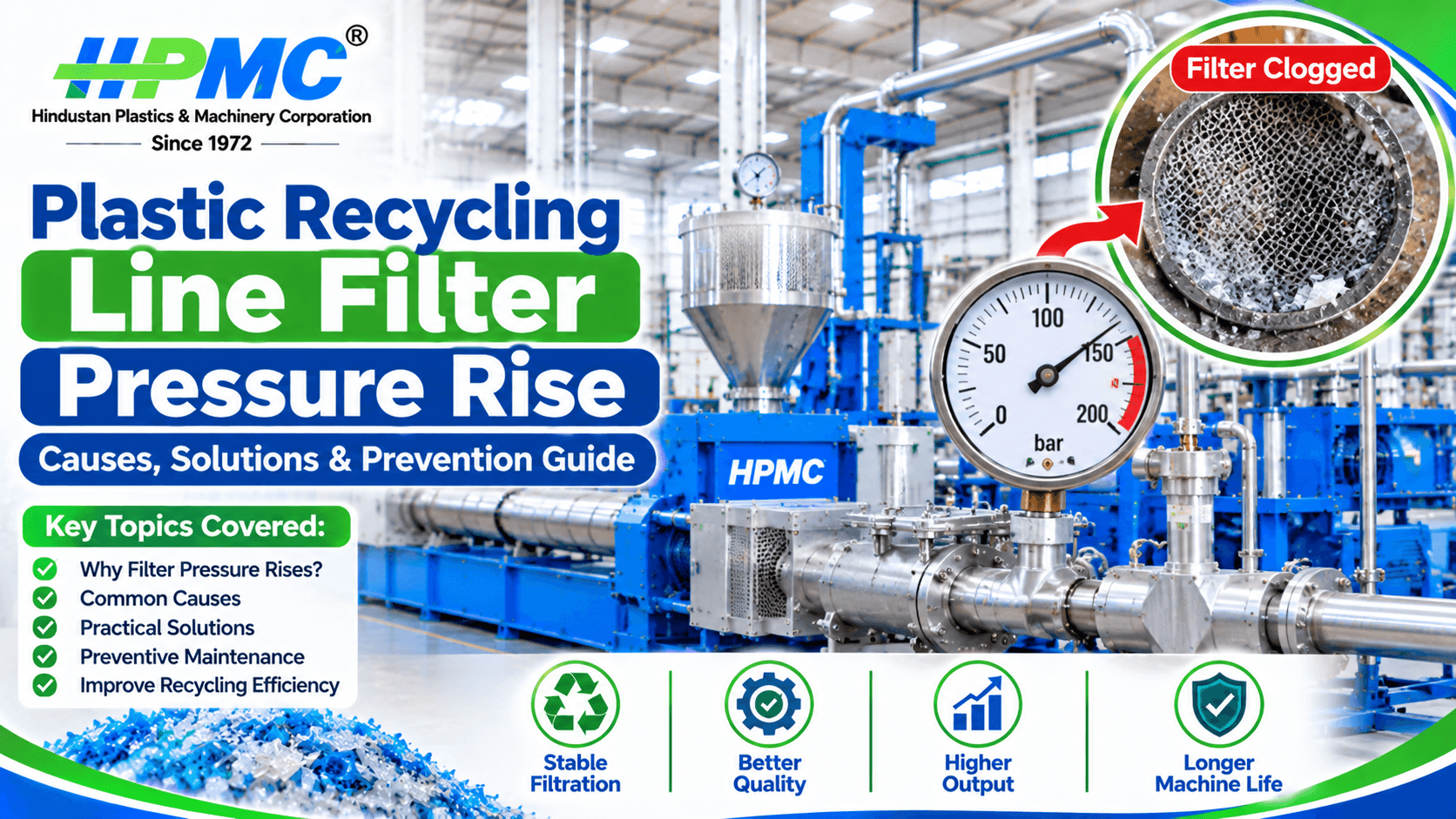
Plastic recycling is an important part of modern plastic manufacturing because it helps convert waste materials into reusable raw materials. However, maintaining consistent production quality requires proper control over every stage of the recycling process. One common challenge faced by manufacturers is Plastic Recycling Line Filter Pressure Rise. This issue generally occurs when unwanted contaminants accumulate on the filtration screen and restrict the smooth flow of molten plastic.
During plastic recycling, materials such as dust, paper, aluminium particles, rubber, labels and other impurities can enter the extrusion system. Although sorting, washing and preprocessing help reduce contamination, some unwanted particles may still reach the filtration section. As these contaminants collect on the filter screen, resistance to melt flow increases and filtration pressure gradually rises.
If the problem is not identified at the right time, it can affect extrusion stability, production output, machine performance and recycled pellet quality. Understanding the causes, warning signs and prevention methods of filter pressure rise helps manufacturers maintain smoother production operations and reduce unnecessary downtime.
In this guide, we will explain the working of plastic recycling line filtration systems, common reasons behind increasing filter pressure, troubleshooting methods and practical ways to improve filtration performance.
What Is Plastic Recycling Line Filter Pressure Rise?
Plastic Recycling Line Filter Pressure Rise refers to an increase in molten plastic pressure around the filtration section of a plastic recycling extrusion machine. The filtration system separates unwanted solid contaminants from molten polymer before it moves towards the die head or pelletizing section.
During normal production, molten plastic passes through a filter screen that captures impurities. As contaminants accumulate, the available filtration area gradually decreases. This creates additional resistance to molten plastic flow and increases the pressure recorded by the monitoring system.
A gradual pressure increase can be normal in recycling operations, particularly when processing contaminated post-consumer plastic waste. However, a sudden or excessive increase may indicate screen blockage, poor feedstock preparation, unsuitable filtration selection or another operating problem.
Manufacturers should understand their machine's normal pressure range and follow the equipment manufacturer's recommended operating limits.
How Does a Plastic Recycling Line Filtration System Work?
A melt filtration system works together with the extruder to remove unwanted particles from molten plastic. Its performance depends on material quality, filtration design, operating temperature and production requirements.
1. Plastic Waste Feeding
Prepared plastic waste enters the recycling extrusion line through the feeding arrangement. Depending on the material condition, preprocessing may include sorting, shredding, washing and drying.
2. Melting and Plasticisation
The extruder screw conveys plastic through the heated barrel. Heat and mechanical movement gradually convert solid plastic into molten polymer.
3. Melt Filtration
Molten plastic passes through a filtration screen or filter element. Solid contaminants are retained while filtered polymer continues through the extrusion system.
4. Pressure Monitoring
Pressure sensors monitor melt pressure around the filtration section. Increasing readings can indicate contamination accumulation or restricted material flow.
5. Filter Cleaning or Screen Replacement
Depending on machine design, contaminants may be removed through manual screen replacement, hydraulic screen changing or an automatic self-cleaning mechanism.
6. Pelletizing and Final Processing
After filtration, molten plastic moves towards the die and pelletizing arrangement, where it is converted into reusable plastic granules.
For manufacturers interested in continuous filtration technology, an Automatic Self Cleaning Laser Filter can be considered for suitable plastic recycling applications.
Common Causes of Plastic Recycling Line Filter Pressure Rise
Understanding the main reasons behind increasing filtration pressure helps operators identify problems before they affect production.
1. Excessive Contamination in Plastic Waste
One of the most common reasons for filter pressure rise is poor incoming material quality. Post-consumer plastic waste may contain paper, dust, metal particles, rubber, labels and other foreign substances.
When these contaminants enter the extrusion system, they collect on the filtration screen and gradually restrict melt flow. Improving sorting and preprocessing can reduce the contamination load reaching the filter.
2. Blocked Filter Screen
The filter screen captures solid impurities during the recycling process. As contaminants accumulate, the open filtration area becomes smaller. This makes it more difficult for molten plastic to pass through the screen and causes pressure to increase.
Regular pressure monitoring and timely screen replacement help prevent severe blockage.
3. Incorrect Filter Mesh Selection
Filter mesh selection plays an important role in filtration performance. A very fine filtration element may become blocked quickly when processing highly contaminated plastic waste. On the other hand, an unsuitable coarse filter may allow unwanted particles to pass through and affect final product quality.
Manufacturers should select filtration elements according to polymer type, contamination level and required product quality.
4. High Contamination Load
Different plastic waste materials contain different levels of impurities. Agricultural films, mixed packaging waste and post-consumer plastic scrap may require additional preprocessing before extrusion.
When the contamination level exceeds the practical capacity of the filtration system, pressure can rise rapidly.
5. Unmelted Plastic Particles
Incomplete melting can also contribute to filtration problems. If solid or partially melted plastic reaches the filter section, it may accumulate on the screen and restrict material flow.
Possible reasons include unsuitable temperature settings, inconsistent feeding and insufficient melting. Operators should review the extrusion temperature profile and processing conditions when unmelted particles are suspected.
6. Incorrect Extrusion Temperature
Temperature directly affects the viscosity and flow characteristics of molten plastic. If the temperature is too low for the polymer, melt viscosity may increase, making it more difficult for material to pass through the filter.
However, excessively high temperatures can cause polymer degradation and other quality problems. The complete temperature profile should be adjusted according to material specifications and machine recommendations.
7. Excessive Material Feeding
Feeding more material than the filtration system can handle may increase the pressure load. The extruder output, screw speed, feeding rate and filter capacity should be properly matched to maintain stable production.
8. Poor Filter Maintenance
Damaged seals, accumulated polymer residues, worn components and faulty cleaning mechanisms can affect filtration performance. Scheduled inspection of the filtration unit helps identify these problems before they cause major production interruptions.
Warning Signs of Filter Pressure Rise
Identifying early warning signs allows machine operators to investigate filtration problems before they become serious.
Increasing Melt Pressure
A gradual or sudden increase in pressure readings may indicate contamination accumulation or restricted melt flow.
Unstable Production Output
Severe filtration restrictions can disturb the smooth movement of molten plastic and contribute to production fluctuations.
Changes in Recycled Pellet Quality
Contaminants passing through an ineffective filtration system may affect the appearance and cleanliness of recycled plastic pellets.
Frequent Filter Screen Replacement
If filter screens require replacement more frequently than usual, manufacturers should investigate incoming material quality and filtration capacity.
Increased Machine Load
Excessive melt pressure can increase operating demands on the extrusion system. Operators should never ignore machine alarms or continue production beyond recommended safety limits.
How to Troubleshoot Plastic Recycling Line Filter Pressure Rise
A systematic inspection process helps manufacturers identify the actual cause instead of making unnecessary machine adjustments.
Step 1: Check Pressure Readings
Observe the pressure sensors or gauges installed around the filtration section. Compare current readings with normal operating conditions and the manufacturer's recommended limits.
Step 2: Inspect the Filter Screen
Check whether contaminants have accumulated on the screen or whether the filtration element is damaged. Cleaning or replacement should be carried out according to the approved shutdown procedure.
Step 3: Review Incoming Plastic Material
Examine the feedstock for dirt, paper, metal, rubber and other impurities. If contamination has increased, improve the sorting and preprocessing arrangements.
Step 4: Check Extrusion Temperature
Review the barrel, screw and filtration section temperature settings. Confirm that the polymer is being processed within its recommended temperature range.
Step 5: Review Feeding Rate and Screw Speed
Check whether feeding rate and screw speed are suitable for the extrusion and filtration capacity. Avoid sudden increases in production output.
Step 6: Inspect Pressure Sensors
Faulty pressure sensors, damaged electrical connections or calibration problems may produce incorrect readings. Inspect the monitoring system according to manufacturer recommendations.
Step 7: Examine the Filter Cleaning Mechanism
For automatic filtration systems, inspect the cleaning mechanism, discharge arrangement and control settings. For hydraulic screen changers, check the hydraulic operation and screen-changing arrangement.
Effective Ways to Prevent Filter Pressure Rise
Preventive maintenance and proper material preparation can improve filtration performance and reduce avoidable downtime.
1. Improve Plastic Waste Sorting
Remove unsuitable materials before they enter the recycling line. Better sorting reduces the amount of foreign contamination reaching the extrusion system.
2. Use Proper Washing and Cleaning
Suitable washing systems help remove dirt, labels and surface contaminants from compatible plastic waste. The washing arrangement should be selected according to the type of material being processed.
3. Select the Right Filtration System
The filtration system should match the polymer type, contamination level, production capacity and required filtration quality. An appropriate Self Cleaning Laser Filter can help reduce frequent manual screen-cleaning requirements in suitable applications.
4. Monitor Pressure Regularly
Record filtration pressure during production and establish normal operating trends for different materials. Monitoring helps operators recognise unusual pressure changes and take corrective action.
5. Maintain Consistent Material Feeding
Avoid sudden changes in feeding rate. Consistent material supply helps maintain predictable melt flow and stable extrusion conditions.
6. Follow a Preventive Maintenance Schedule
Inspect filter screens, seals, filter housings, pressure sensors and cleaning mechanisms at scheduled intervals.
7. Train Machine Operators
Operators should understand pressure readings, machine alarms, filter replacement procedures and safe shutdown requirements.
Automatic Self-Cleaning Filter vs Manual Screen Changer
Selecting the right filtration arrangement depends on feedstock quality, production requirements and the level of automation required.
Manual Screen Changer
A manual screen changer requires operators to replace or clean the filter screen when contaminants accumulate. It may be suitable for relatively clean feedstock and applications where production interruptions for screen replacement are acceptable.
However, frequent manual screen replacement can increase labour requirements and production interruptions.
Hydraulic Screen Changer
A hydraulic screen changer uses a hydraulic mechanism to move or replace filtration screens. Depending on its design, it can reduce manual handling and make screen replacement more convenient.
Automatic Self-Cleaning Filter
An automatic self-cleaning filter removes accumulated contaminants through an integrated cleaning mechanism. It can reduce frequent manual intervention and support continuous filtration under suitable operating conditions.
The right option depends on material contamination, required filtration level, production capacity and the overall recycling line configuration.
Importance of Feedstock Preparation in Reducing Filter Pressure
Filter pressure management starts before plastic material enters the extrusion machine. Poorly prepared plastic waste can increase contamination levels and make filtration more difficult.
A suitable preprocessing arrangement may include sorting, shredding, washing, drying and controlled feeding. Proper preprocessing reduces the amount of unwanted contamination reaching the filtration section.
For lightweight and contaminated plastic materials, a suitable Two Stage Plastic Reprocess Extrusion Line may be evaluated according to feedstock characteristics and production requirements.
Proper preprocessing does not eliminate the need for melt filtration, but it can reduce the contamination load reaching the filtration system.
How to Select the Right Filter for a Plastic Recycling Line
Before selecting a filtration system, manufacturers should evaluate the following factors:
- Polymer Type: Identify whether the line processes HDPE, LDPE, PP, LLDPE, ABS or another polymer.
- Contamination Level: Evaluate the quantity, type and size of impurities in the incoming material.
- Production Capacity: Ensure the filtration system matches the required extrusion output.
- Filtration Requirements: Select a suitable filtration level according to final product requirements.
- Maintenance Requirements: Consider screen availability, cleaning procedures, spare parts and servicing.
- Machine Compatibility: Ensure that the filtration system works with the extruder, degassing section, die head and pelletizing equipment.
- Technical Support: Evaluate installation, commissioning, maintenance and after-sales support.
Role of Extrusion Technology in Stable Melt Filtration
The filtration system does not work independently. Its performance is connected with the extruder, feeding system, temperature controls and downstream equipment.
A properly configured extrusion line helps maintain consistent material flow and suitable melt conditions before filtration. The screw design, processing temperature, feeding arrangement and output capacity should be matched with the material being processed.
For suitable applications, manufacturers can also evaluate a Vented Type Extruder for Recycling, particularly where degassing is an important part of the recycling process.
Venting and melt filtration perform different functions. A venting system helps remove moisture, trapped air and certain volatile components, whereas melt filtration removes suitable solid contaminants. Both may be incorporated into a recycling line depending on the feedstock and process requirements.
Maintenance Checklist for Plastic Recycling Line Filters
Regular maintenance helps manufacturers identify filtration issues before they interrupt production.
- Check melt pressure readings during production.
- Inspect filter screens for accumulated contaminants.
- Examine filter housing and sealing components.
- Inspect automatic cleaning or screen-changing mechanisms.
- Check pressure sensors and electrical connections.
- Monitor heating elements and temperature controls.
- Inspect contaminant discharge arrangements.
- Review incoming plastic material quality.
- Record repeated pressure alarms and screen replacement frequency.
- Replace damaged components according to manufacturer recommendations.
Always isolate electrical and mechanical power before maintenance. Allow hot components to cool and follow the manufacturer's safety and lockout procedures.
Why Choose HPMC for Plastic Recycling Filtration Solutions?
Hindustan Plastics and Machinery Corporation (HPMC) provides machinery solutions for plastic recycling, reprocessing, extrusion, compounding and polymer processing applications.
Selecting suitable recycling machinery requires understanding the complete production process, including feedstock quality, material preparation, extrusion capacity, filtration requirements and final pellet specifications.
HPMC offers machinery solutions that can be considered according to specific industrial requirements. Manufacturers planning to establish or upgrade their recycling facilities can discuss their material type, contamination level and required production capacity with the HPMC team.
A suitable recycling line should be designed around the actual characteristics of the plastic waste rather than selecting individual machines without considering the complete process.
Conclusion
Plastic Recycling Line Filter Pressure Rise is a common operational challenge in plastic recycling and extrusion processes. It generally occurs when contaminants accumulate on the filter screen and restrict the flow of molten polymer. However, incorrect filtration selection, unsuitable temperatures, incomplete melting, excessive feeding and poor maintenance can also contribute to the problem.
Manufacturers can improve filtration performance by maintaining better feedstock quality, selecting suitable filtration equipment, monitoring pressure readings and following preventive maintenance schedules.
A properly configured filtration system helps maintain stable melt flow, reduce unnecessary production interruptions and support consistent recycled pellet quality. Understanding the relationship between material preparation, extrusion conditions and filtration performance is essential for operating an efficient plastic recycling plant.
Contact Hindustan Plastics and Machinery Corporation (HPMC)
Hindustan Plastics and Machinery Corporation (HPMC) provides plastic extrusion, recycling, reprocessing and industrial machinery solutions. If your recycling line is experiencing frequent filter pressure rise, screen blockage or unstable melt filtration, contact HPMC to discuss suitable machinery configurations for your production requirements.
Company: Hindustan Plastics and Machinery Corporation (HPMC)
Address: 5, Category II, DSIDC Industrial Area, Nangloi, Delhi – 110041, India
Phone: +91 95605 96392
Email: info@hindustanplastics.com
Website: https://www.hindustanplastics.com/
Request a Quote: https://www.hindustanplastics.com/get-in-touch
Google Business Profile: https://share.google/lBK4uD53HqY891ynv
When contacting HPMC, share your plastic material type, contamination level, moisture condition, expected processing capacity, existing filtration system and desired recycled output to discuss a suitable machine configuration.
Contact HPMC today to discuss your plastic recycling requirements and explore suitable melt filtration solutions for your production facility.
Frequently Asked Questions
Find quick answers to the most common questions about this topic.
It refers to an increase in molten plastic pressure around the filtration section of a recycling extrusion line, generally caused by contaminant accumulation or restricted melt flow.
Common causes include blocked filter screens, excessive contamination, incorrect mesh selection, unmelted plastic particles, unsuitable processing temperatures and excessive material feeding.
A gradual pressure increase can be normal as contaminants accumulate on the filter screen. However, sudden or excessive pressure increases require investigation.
Improve feedstock preparation, select a suitable filtration system, maintain proper extrusion temperatures and clean or replace filter screens according to operating requirements.
Yes. Restricted filtration can disturb melt flow and may affect production stability. If contaminants pass through the filter, they can also affect the cleanliness of recycled pellets.
A manual screen changer requires operator involvement for screen replacement, whereas an automatic self-cleaning filter uses an integrated mechanism to remove accumulated contaminants during suitable operating conditions.
Maintenance frequency depends on contamination level, material type, production hours and filter design. Follow the manufacturer's recommended maintenance schedule.
Yes. Unsuitable temperatures can change melt viscosity and flow behaviour, potentially contributing to higher filtration pressure.
An automatic self-cleaning filter may be suitable for certain highly contaminated recycling applications. The final selection depends on feedstock characteristics, filtration requirements and production capacity.
HPMC provides plastic recycling, extrusion and melt filtration machinery solutions. Manufacturers can contact its team to discuss material conditions, production requirements and suitable filtration configurations.