
Introduction
A recycling plant may receive loose stretch wrap on Monday, long strips of production trim on Tuesday and rejected rolls of packaging film later in the week. These materials can behave differently in the same shredder. Loose film may bunch up at the hopper, while long strips can wrap around the rotor and interrupt production.
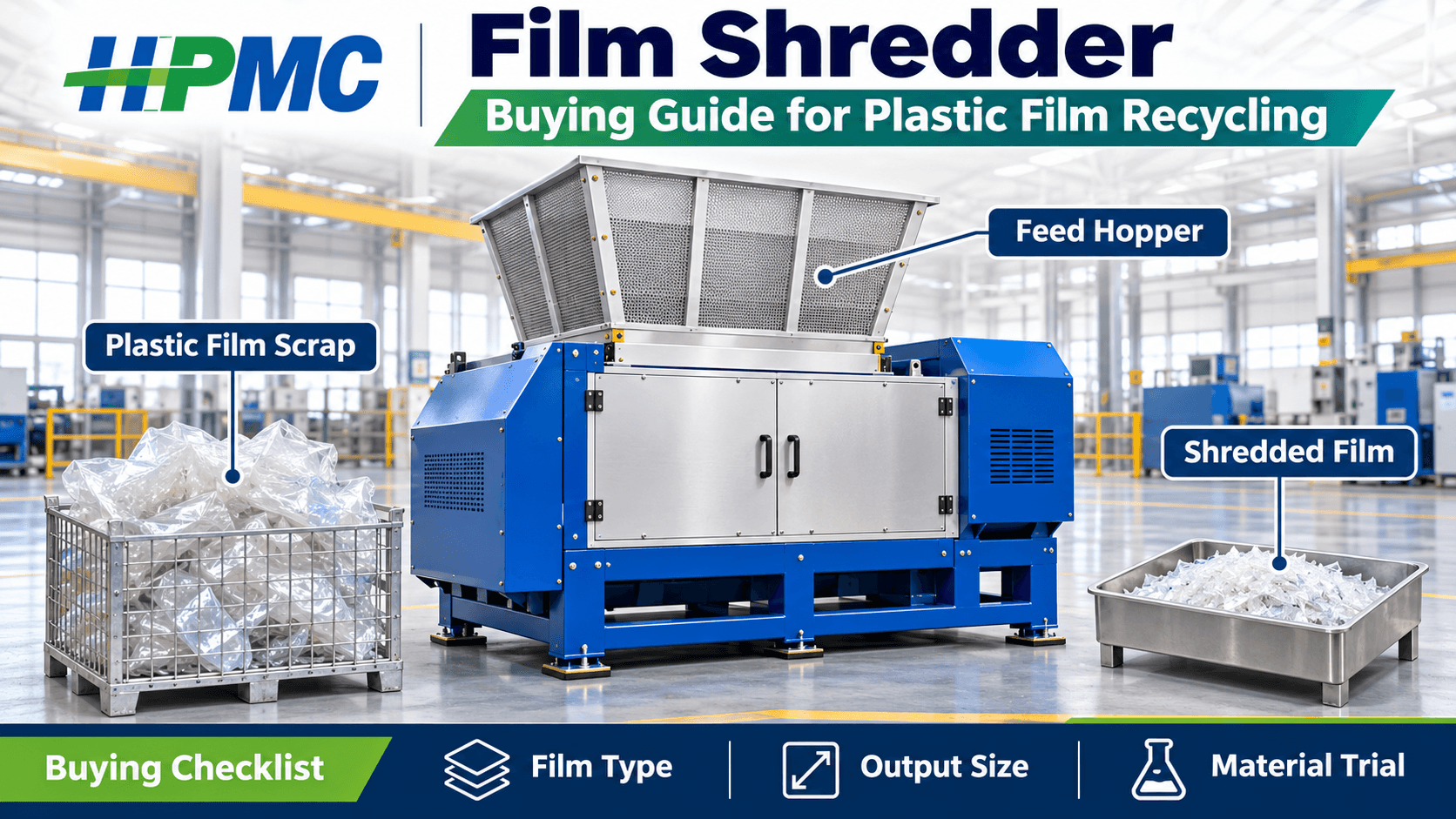
A film shredder cuts flexible plastic scrap into smaller pieces for further processing. Before choosing one, look at three things together. What scrap will you feed into the machine? What size pieces can the next machine handle? How much material does your line need to process in an hour? The answers give you a practical basis for comparing machines and planning a material trial.
How Does a Film Shredder Work?
In a typical single-shaft design, rotating cutters work against fixed knives to cut the film. Where a screen is fitted, it helps control the size of the material leaving the cutting chamber. Flexible film can fold or stretch during cutting, so the screen opening alone gives an incomplete picture of what the output will look like.
Ask to see the discharged material during the trial. Some pieces may be short and easy to handle, while others may leave the machine as long strips. Both can end up in the same collection bin, so inspect several samples before judging the output. For more on the cutting mechanism, see HPMC’s single-shaft shredder guide for plastic recycling.
What Should You Check Before Buying a Film Shredder?
1. Film Type and Feed Form
Start with the scrap that makes up most of your volume. Record the polymer if known, approximate film thickness and the form in which it reaches the machine. Loose sheets, compressed bundles and full rolls can require different feeding arrangements. If you also handle a material that regularly causes stoppages, include it in the trial.
For example, a packaging plant may generate clean trim during every shift and receive used stretch wrap from its warehouse. Test the two separately if they are normally processed separately. This makes it easier to see which material affects feeding or output.
What to checkLoose film and stretch wrapFilm rolls and bundles
Details to share
Typical strip length and how the scrap is collected
Roll diameter, width, weight and core material
What to observe
Bunching at the hopper or wrapping around the rotor
Whether the material feeds steadily or needs preparation
Sample to provide
A batch in its usual condition
A roll or bundle similar to what the plant receives
2. Feeding and Cutting Performance
Ask the supplier to run several batches during a material trial. Watch how steadily the film enters the hopper and how often the operator needs to intervene. If feeding slows, record which scrap was running and whether it arrived in strips, sheets or bundles. That gives the supplier something specific to investigate.
Also discuss how your team will move material from storage to the hopper. A trial with small batches handed over at regular intervals may differ from a normal shift where scrap arrives in larger bundles. Describe how your operators currently load the material and ask whether that method fits the proposed machine.
3. Shredded Film Size
Work backwards from the next machine. If the material goes into a washer or compactor, ask what size and shape that equipment can accept. Then compare those requirements with the actual discharge. Keep samples from different points in the run so you can see whether the output stays consistent from the first batch to the last.
Agree on what acceptable output looks like before requesting quotes. If oversized strips would disrupt feeding at the next stage, tell both the shredder and downstream suppliers. A shared sample gives them a clearer reference than a target size written in an email.
4. Measured Hourly Output
Request a timed trial with your own scrap. Record the material, trial duration, output size and total weight discharged. Ask whether the hourly figure includes feeding interruptions and stops. Compare machines using similar material and test conditions.
Suppose a trial produces 120 kg in 30 minutes, including five minutes of stoppage. That equals 240 kg per hour based on the full trial. If the same result is calculated using only the 25 minutes when the machine was running, it comes to 288 kg per hour. Ask which method each supplier uses before comparing the numbers. This example shows how the reporting method can change the quoted figure even when the amount processed is the same.
5. Maintenance and Spare Parts
Ask which parts need routine inspection and what the supplier recommends for knife and screen maintenance. Check how long a typical service takes, which wear parts are available and what support the supplier provides. If a worn part stops production, its replacement lead time matters as much to your schedule as the time needed to fit it.
Use HPMC’s Single Shaft Shredder product page as a starting point when discussing available configurations and the requirements for your material.
Common Film Shredding Issues and What to Inspect
IssueWhat to inspect
Film wraps around the rotor
Strip length, film elasticity and whether the cutting system suits the scrap
Film bunches up at the hopper
Bundle size, feeding arrangement and how the material is loaded
Shredded pieces vary in size
Cutter condition, screen configuration and changes in the incoming film
Output drops during a run
Feeding interruptions, material changes and machine stoppages
The next machine struggles to feed
Size and shape of the shredded pieces and downstream feed requirements
Record what changed just before the issue appeared. For instance, if throughput falls after switching from clean trim to used stretch wrap, note the change and any additional stops. If the same film produces longer pieces later in the trial, retain both samples and ask the supplier to review them. These observations help narrow down what to inspect.
Where Does Shredding Fit in a Plastic Film Recycling Line?
The sequence depends on the condition of the scrap and what you want to produce. Clean trim collected inside a factory and used packaging film carrying dirt, labels or moisture may need different preparation. Tell the line supplier what contamination you expect and discuss where sorting, size reduction, washing and drying fit. HPMC’s plastic washing line guide explains the role of washing in preparing suitable scrap for recycling.
If your project also includes extrusion and pellet production, a compactor can help prepare suitable lightweight film for feeding into the extruder. Discuss what the compactor can accept and show the supplier the actual shredder discharge. This is especially helpful when the line must handle several film types throughout the week. See HPMC’s Recycling Plant with Compactor for details on the downstream equipment.
What to Send Before Requesting a Quote
Put your requirements in one short brief so suppliers can quote against the same job. Include the following details.
- Incoming scrap — Film type, approximate thickness, feed form and any moisture or contamination.
- Feed dimensions — Largest pieces, bundles or rolls you expect the machine to handle.
- Production target — Required kilograms per hour and the number of shifts you plan to run.
- Output requirements — What the washer, compactor or other downstream equipment can accept.
- Trial material — A sample of your usual scrap and a separate sample of the film that is hardest to process.
If you are adding a shredder to an existing facility, include a simple line layout and identify how material enters and leaves the machine. That gives the supplier enough context to discuss how the shredder would fit into your current operation.
Conclusion
Before selecting a film shredder, test your regular scrap and the material that causes the most trouble. Compare how steadily each machine feeds, what the discharged film looks like and what output it delivers over the full trial. Then confirm that the shredded film suits the next stage of your recycling line.
Contact HPMC
Planning a plastic film recycling project? Share your material photos, target output and line layout with Hindustan Plastics & Machinery Corporation (HPMC) to discuss your equipment requirements.
Phone +91 95605 96392
Email info@hindustanplastics.com
Frequently Asked Questions
Find quick answers to the most common questions about this topic.
It cuts flexible plastic scrap, such as packaging film and production trim, into smaller pieces for further processing.
Yes, if the feeding and cutting system suits both materials. Ask the supplier to test a sample of each before selecting a machine.
It depends on the machine and the roll. Share the diameter, width, weight and core material so the supplier can confirm whether the roll needs preparation.
The sequence depends on the condition of the scrap and the equipment used. Describe the contamination so the supplier can advise where washing fits.
Long, flexible strips can wrap around the rotor when they do not cut cleanly. If it happens during a trial, ask the supplier to review the feed form and cutting setup.
Check what size and shape the next machine can accept. Compare those requirements with a sample of the shredded film.
Request a timed trial with your own scrap. Ask for the measured output in kilograms per hour and confirm whether the figure includes stoppages.
Some models can handle both. Ask for separate trials and check whether switching materials requires different settings, cutters or screens.
Ask how knives and screens are inspected and replaced. Confirm which spare wear parts are available and what routine maintenance the manufacturer specifies.
Share the film type, feed form, maximum feed dimensions, target hourly output and the next processing stage. Include photos or representative samples if available.