
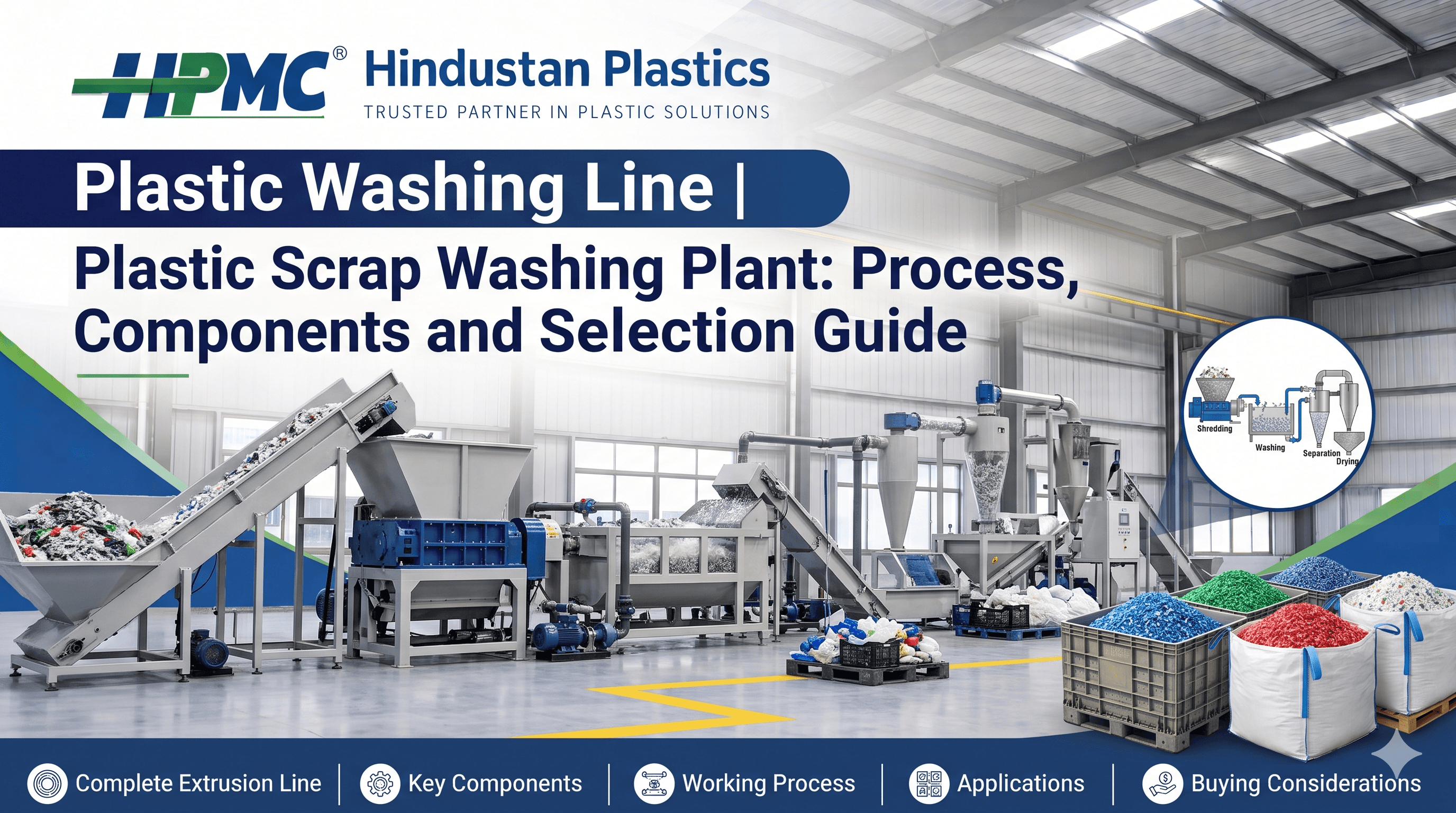
Plastic waste often arrives with dirt, labels, paper, oil, soil, and other unwanted material attached to it. Before suitable PP, PE, HDPE, or other compatible plastic can be reused, it may need sorting, size reduction, washing, separation, dewatering, and drying.
A Plastic Washing Line—also called a Plastic Scrap Washing Plant—brings these stages together in a planned process. The exact arrangement depends on the type of scrap, contamination level, required cleanliness, available space, water-management plan, and the next recycling stage.
HPMC (Hindustan Plastics and Machinery Corporation), Delhi NCR, India, provides machinery solutions for plastic recycling and reprocessing. This guide explains how a plastic washing line works, the equipment it may include, the materials it can handle, and the points buyers should evaluate before choosing a plant.
What Is a Plastic Washing Line?
A Plastic Washing Line is a group of machines designed to clean and prepare suitable plastic scrap for further recycling. Depending on the material and plant design, the line may include a shredder, friction washer, float-sink tank, hot-washing stage, rinsing equipment, dewatering unit, and drying system.
The purpose is to remove washable contaminants and prepare the cleaned plastic—often as flakes—for an appropriate downstream process such as extrusion and pelletizing. Not every plant needs every component. For example, hot washing may be useful for some feedstocks but unnecessary for others.
For a broader explanation of water-based recycling stages, see HPMC’s Wet Recycling Machine for Plastic Reprocess guide.
Which Plastic Scrap Can a Washing Plant Process?
The suitable feedstock depends on the line configuration and the properties of the waste. A correctly designed plant may be used for compatible materials such as:
- PP and PE films: including selected post-consumer or industrial film waste.
- HDPE bottles and containers: after sorting and removal of unsuitable items.
- Rigid plastic scrap: such as suitable crates and similar products.
- Production scrap: where washing is required before further processing.
- Selected post-consumer plastics: provided they are compatible with the washing and separation system.
Different materials can require different shredding, washing, separation, and drying arrangements. Film is lightweight and may retain water; rigid items may need a different size-reduction setup. Mixed polymers and non-plastic items should be sorted as far as practical before processing.
How Does a Plastic Scrap Washing Plant Work?
A typical process may follow this sequence:
Sorting → Shredding → Pre-washing → Friction washing → Density separation → Optional hot washing → Rinsing → Dewatering → Drying → Clean flakes collection → Extrusion and pelletizing, if required
This is an illustrative sequence, not a fixed specification. A plant should be designed around the actual feedstock.
1. Sorting and Feeding
Incoming scrap is inspected and sorted to remove incompatible materials and items that could disrupt the process. Sorting helps keep the feedstock more consistent and reduces avoidable contamination.
2. Shredding or Size Reduction
Large bottles, crates, and rigid plastic pieces may need to be reduced to a suitable size before washing. The shredder must match the material type and the required flake size. For relevant size-reduction context, read HPMC’s Single Shaft Shredder for Plastic Recycling guide.
3. Pre-washing and Friction Washing
Pre-washing can loosen dirt and surface residues. A friction washer then uses mechanical action to help dislodge contamination from the plastic surface. The required intensity depends on how dirty the incoming material is and the type of residue present.
4. Float-Sink Separation
A float-sink tank separates materials according to their density in a suitable liquid. It can help separate some plastics from other materials, but it does not automatically distinguish every polymer or remove every contaminant. The correct separation setup depends on the polymers and contaminants in the feedstock.
5. Optional Hot Washing
Some materials may need a hot-washing stage to help remove stubborn labels, oils, adhesives, or other residues. Hot washing is not required for every application. The temperature, cleaning method, and duration should be selected for the material and contamination rather than assumed to be the same for all plastics.
6. Rinsing
Rinsing can remove loosened dirt and residual cleaning agents from the material. The number and arrangement of rinsing stages depend on the required cleanliness and water-management design.
7. Dewatering and Drying
After washing, plastic flakes retain moisture. A dewatering unit removes part of the water mechanically, while a drying system reduces remaining moisture according to downstream process requirements. Film and rigid flakes can behave differently, so the drying arrangement should be matched to the feedstock.
8. Collection and Further Recycling
Cleaned material is collected for storage or transferred to the next stage. If the goal is recycled granule production, the washing line may be integrated with a suitable extrusion and pelletizing system. HPMC’s Wet Recycling Extrusion Line is a related downstream option; its suitability should be assessed against the specific material and process requirements.
Main Components of a Plastic Washing Line
Shredder
Reduces suitable large plastic waste into manageable pieces. Blade arrangement, feed opening, and cutting configuration should match the material.
Friction Washer
Provides mechanical cleaning to help remove surface dirt and residues. Inspection and cleaning access are important when evaluating the design.
Float-Sink Tank
Supports density-based separation for compatible material streams. The separation method should be selected after reviewing the feedstock composition.
Hot-Washing Unit
May be included when the contamination profile requires additional cleaning. It adds process and utility requirements, so it should be specified only when appropriate.
Rinsing System
Helps remove remaining dirt and residues after washing. Its configuration depends on the target cleanliness and water-management plan.
Dewatering Unit and Dryer
Reduce moisture before the material is stored or transferred downstream. The required moisture level depends on the next process.
Conveyors, Pumps and Controls
Move material and water between stages and help operators manage the line. Access for inspection, cleaning, and routine maintenance should be considered during plant planning.
Benefits of a Properly Designed Washing Plant
A suitable plastic washing line can help processors:
- Remove washable dirt, labels, and other surface contaminants.
- Prepare compatible scrap for downstream recycling.
- Improve the cleanliness and consistency of washed flakes.
- Combine multiple cleaning stages into a coordinated workflow.
- Recover suitable post-consumer and production scrap for further processing.
- Plan washing, separation, drying, and extrusion as connected stages rather than isolated machines.
Results depend on incoming material quality, correct sorting, equipment configuration, operating conditions, and maintenance. A washing plant cannot make every mixed or contaminated plastic stream suitable for every recycling application.
Water Management and Maintenance
Washing transfers removed contaminants into the process water. The plant plan should account for water collection, screening or filtration, settling where suitable, recirculation, fresh-water requirements, and responsible wastewater handling in line with applicable local requirements. Water reuse depends on the treatment arrangement and the level of contamination.
Regular checks should cover shredder cutting parts, washer components, tanks, pumps, conveyors, bearings, motors, dewatering equipment, dryer, filters, and electrical controls. Cleaning access and safe isolation for maintenance should be considered before installation. Follow the equipment manufacturer’s maintenance instructions.
How to Choose a Plastic Washing Line
Before requesting a quotation, prepare answers to these questions:
- What material will be processed? Identify the polymer type, form (film, bottles, crates, rigid scrap), and whether the stream is mixed.
- How contaminated is it? Describe dirt, labels, oil, adhesives, soil, and other residues.
- What output is required? Define the desired washed-flake condition and whether the next stage is storage, extrusion, or pelletizing.
- Which stages are necessary? Confirm whether pre-washing, friction washing, float-sink separation, hot washing, rinsing, dewatering, and drying are required.
- What are the site constraints? Review floor space, utilities, water supply, drainage, and material-handling needs.
- How will water and waste be managed? Plan for collection, filtration or treatment, recirculation, and disposal according to applicable requirements.
- What support is available? Ask about installation, commissioning, operator training, spare parts, and maintenance support.
Do not choose a line based on a headline capacity alone. Ask the supplier to assess the actual feedstock and clarify the assumptions behind any quoted capacity or performance figures.
Integrating Washing with Downstream Recycling
A washing plant usually prepares material rather than completing every recycling stage itself. After washing and drying, compatible flakes may be fed into a recycling extruder for melting, filtration, and pelletizing. For context on downstream equipment, see HPMC’s Vented Type Extruder for Waste Plastic Recycling and Two Stage Plastic Reprocess Extrusion Line guides.
The right combination depends on polymer type, moisture, contamination, desired recycled material, and the process requirements. In some cases, a washing line and an extrusion line can be specified as a connected system; in others, the material may be supplied to a separate downstream processor.
Why Consider HPMC?
HPMC (Hindustan Plastics and Machinery Corporation) supplies machinery solutions for plastic extrusion, recycling, and reprocessing applications. A plastic washing plant should be selected after discussing the feedstock, contamination, required cleaning stages, water management, and downstream recycling plan.
Share the type of plastic scrap, its condition, expected processing requirement, and intended output when requesting a quotation. This helps establish which equipment stages are relevant and which details need technical confirmation.
Conclusion
A Plastic Washing Line or Plastic Scrap Washing Plant combines suitable cleaning, separation, dewatering, and drying stages to prepare compatible plastic waste for further recycling. Its configuration should be based on the feedstock—not on a one-size-fits-all list of machines.
Careful planning around sorting, washing intensity, density separation, moisture removal, water management, maintenance, and downstream extrusion can help create a more coherent recycling process. Before selecting equipment, discuss the actual scrap and desired output with the supplier and confirm the proposed line configuration.
HPMC Contact Information
HPMC (Hindustan Plastics and Machinery Corporation)
Address: 5, Category II, DSIDC Industrial Area, Nangloi, Delhi – 110041, India
Website: https://www.hindustanplastics.com/
Phone: +91 95605 96392
Email: info@hindustanplastics.com
Google Business Profile: https://share.google/lBK4uD53HqY891ynv
Frequently Asked Questions
Find quick answers to the most common questions about this topic.
A Plastic Washing Line is a series of machines that cleans compatible plastic scrap and prepares it for further recycling.
Depending on the design, it may process suitable PP/PE films, HDPE bottles, crates, rigid plastic waste, and selected industrial or post-consumer scrap.
A friction washer uses mechanical action to help remove dirt and surface residues from plastic pieces.
It separates some materials based on density. Its effectiveness depends on the plastics and contaminants present.
No. Hot washing is included when the material and contamination require it. The configuration should be chosen for the specific feedstock.
They reduce moisture after washing and prepare the material for storage or a suitable downstream process.
Suitable film can be processed, but feeding, water retention, dewatering, and drying requirements should be assessed carefully.
A washing line generally produces cleaned material or flakes. Granules require a suitable downstream extrusion and pelletizing system.
Water may be treated and recirculated when the plant has an appropriate water-management system. The arrangement depends on contamination and local requirements.
Consider plastic type, contamination, feed size, cleaning stages, required output, moisture targets, water management, site constraints, maintenance, and downstream equipment.