
Introduction
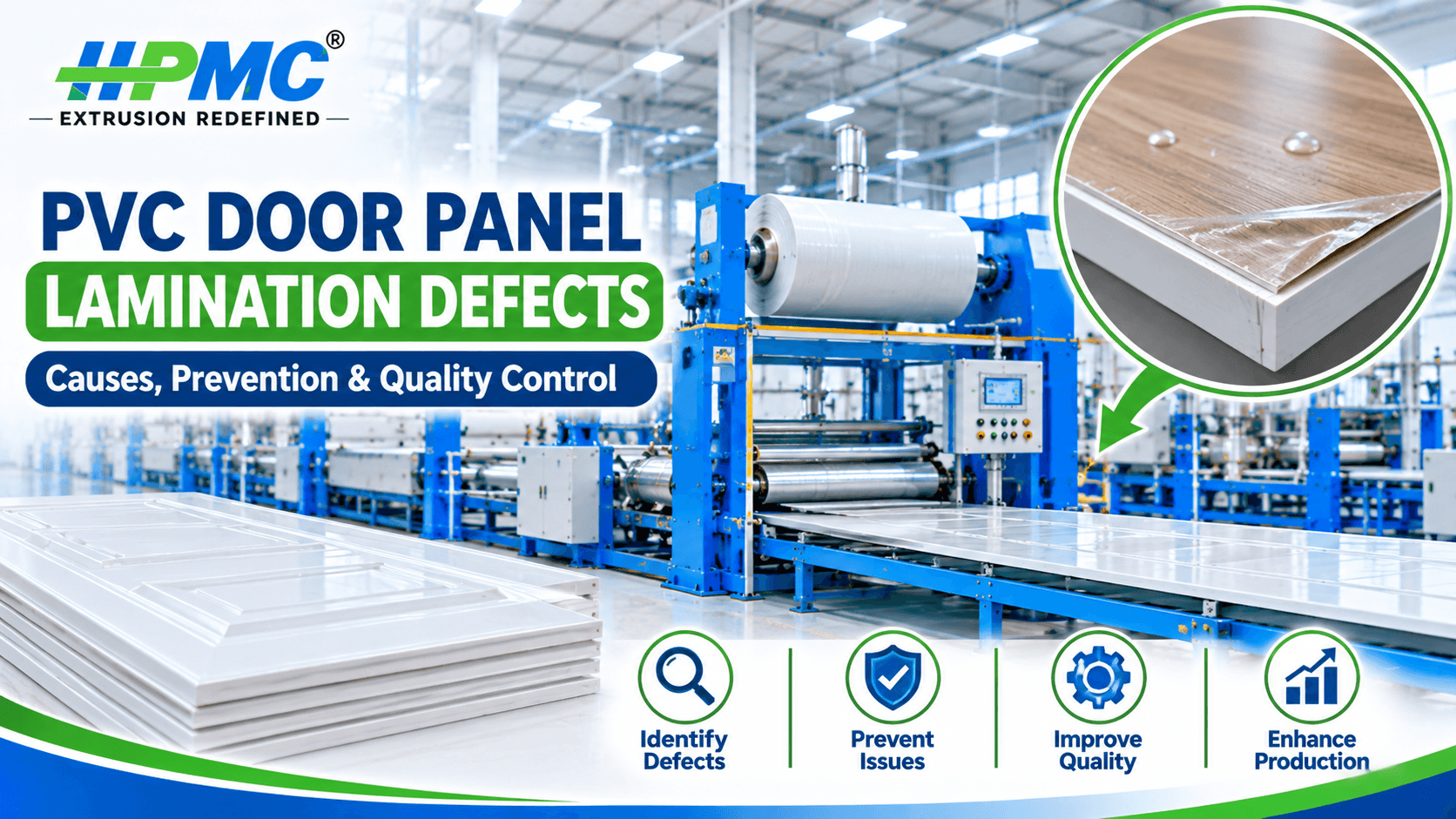
PVC door panels are widely used in residential buildings, commercial spaces, offices and modern interior applications. Their popularity comes from their attractive appearance, moisture resistance, low maintenance requirements and availability in different colours, patterns and decorative finishes. To achieve a premium appearance, manufacturers use a lamination process in which decorative film is bonded to the surface of a PVC door panel.
However, maintaining consistent lamination quality can be challenging during production. Problems such as air bubbles, film wrinkles, peeling edges, adhesive marks, uneven bonding and surface scratches can affect the appearance and durability of finished panels. These problems are commonly known as PVC Door Panel Lamination Defects.
Lamination defects can develop because of incorrect temperature settings, unsuitable adhesive, poor surface preparation, improper roller pressure, film tension variation or inconsistent production conditions. Identifying the actual cause is important because correcting only the visible defect may not prevent it from happening again.
In this guide, we explain the most common PVC door panel lamination defects, their causes, troubleshooting methods and preventive quality-control practices that manufacturers can follow to improve production consistency.
What Are PVC Door Panel Lamination Defects?
PVC door panel lamination defects are visible or functional problems that develop when decorative film is applied to a PVC panel surface. These defects may affect bonding strength, surface appearance, edge quality or the overall finish of the finished door panel.
A properly laminated PVC door panel should have a uniform appearance, consistent film coverage, suitable adhesion and clean edges. The decorative film should remain firmly attached without visible bubbles, wrinkles, peeling or unwanted marks.
The quality of the finished product depends on several factors, including PVC panel surface preparation, film quality, adhesive compatibility, application temperature, roller pressure and production speed.
Common PVC Door Panel Lamination Defects
1. Air Bubbles Under the Lamination Film
Air bubbles are among the most noticeable lamination problems. They appear as small or large raised areas between the PVC panel and decorative film.
Possible Causes:
- Air trapped during film application.
- Insufficient or uneven roller pressure.
- Incorrect adhesive application.
- Dust or contamination on the panel surface.
- Unsuitable lamination temperature.
- Improper film positioning.
Solutions: Clean the PVC panel surface before lamination and ensure that adhesive is applied uniformly. Check roller alignment and pressure according to equipment recommendations. Review film tension and application conditions to prevent air from becoming trapped beneath the decorative layer.
2. Film Wrinkles and Creases
Wrinkles develop when the decorative film does not move smoothly across the PVC panel during lamination. They may appear as folds, lines or uneven sections on the finished surface.
Possible Causes:
- Incorrect film tension.
- Misaligned film rolls.
- Uneven roller pressure.
- Inconsistent panel feeding.
- Improper film handling.
- Changes in production speed.
Solutions: Maintain proper film alignment and inspect the tension-control arrangement. Ensure that the PVC panel moves steadily through the lamination section. Operators should also check the condition of rollers and guides before starting production.
3. Edge Peeling and Poor Adhesion
Edge peeling occurs when the decorative film begins separating from the PVC panel, particularly around corners and edges. This defect can reduce product quality and create problems during handling and installation.
Possible Causes:
- Inadequate adhesive bonding.
- Poor surface preparation.
- Insufficient adhesive coverage near the edges.
- Incorrect application conditions.
- Contaminated panel surfaces.
- Incompatible film and adhesive materials.
Solutions: Verify adhesive compatibility with the PVC panel and decorative film. Inspect the edge-bonding process and ensure sufficient adhesive coverage. Follow the adhesive supplier's recommended application and curing instructions.
4. Uneven Lamination Surface
An uneven surface can appear as inconsistent texture, raised areas or irregular bonding across the door panel.
Possible Causes:
- Uneven roller pressure.
- Irregular panel thickness.
- Inconsistent adhesive distribution.
- Damaged rollers.
- Improper machine alignment.
Solutions: Inspect the roller arrangement and check whether pressure is distributed consistently across the panel width. Measure incoming panel thickness and review adhesive application. Replace damaged rollers according to maintenance recommendations.
5. Adhesive Marks and Glue Stains
Adhesive marks can create visible spots, streaks or unwanted residue on the decorative film. These defects are particularly problematic when manufacturing glossy or premium-finish PVC door panels.
Possible Causes:
- Excessive adhesive application.
- Adhesive leakage.
- Incorrect application technique.
- Contamination around the bonding section.
- Unsuitable adhesive viscosity.
Solutions: Maintain the recommended adhesive quantity and application method. Clean application equipment using approved procedures and check for leakage. Always follow the adhesive manufacturer's handling and cleaning instructions.
6. Film Discolouration
Film discolouration refers to unwanted colour changes that appear during or after lamination. The problem may affect the entire surface or specific sections of the door panel.
Possible Causes:
- Excessive temperature exposure.
- Poor-quality decorative film.
- Adhesive-related chemical incompatibility.
- Contamination.
- Incorrect storage conditions.
Solutions: Verify film specifications and storage conditions. Monitor the actual application temperature and check adhesive compatibility. Avoid using materials that show signs of damage or deterioration.
7. Scratches and Surface Damage
Scratches can appear during film handling, panel transportation or the lamination process. They reduce the visual quality of decorative PVC door panels.
Possible Causes:
- Dirty rollers or conveyor surfaces.
- Improper handling.
- Contact with sharp objects.
- Damaged machine guides.
- Dust and hard particles on the panel surface.
Solutions: Keep contact surfaces clean and inspect rollers and guides regularly. Use suitable protective materials during storage and transportation. Train operators to handle decorative panels carefully.
8. Film Misalignment
Film misalignment occurs when the decorative layer is not positioned correctly on the PVC door panel. It can create uneven margins, exposed sections or incorrect pattern positioning.
Possible Causes:
- Incorrect film positioning.
- Unstable feeding.
- Misaligned guide rollers.
- Inconsistent panel dimensions.
- Operator setup errors.
Solutions: Check the film-guiding arrangement and panel feeding system before production. Use suitable positioning references and inspect the first finished panels before allowing continuous production.
Major Causes of PVC Door Panel Lamination Defects
Understanding the underlying causes helps manufacturers develop a more reliable lamination process.
1. Incorrect Temperature Control
Temperature plays an important role in adhesive activation and film bonding. Excessive or insufficient heat can affect adhesion, film appearance and surface quality. Manufacturers should follow the adhesive and film suppliers' recommended processing conditions rather than using a fixed temperature for every material.
2. Poor Surface Preparation
Dust, oil, moisture and other contaminants can prevent proper bonding between the decorative film and PVC panel. Cleaning and inspecting the panel before lamination helps reduce contamination-related defects.
3. Incorrect Roller Pressure
Rollers help bring the film and panel into contact during the lamination process. Uneven pressure may cause bubbles, wrinkles or inconsistent adhesion. Roller alignment and pressure should be checked according to equipment specifications.
4. Low-Quality Decorative Film
Decorative films with inconsistent thickness, poor dimensional stability or unsuitable surface properties can create production difficulties. Manufacturers should purchase compatible materials from reliable suppliers and inspect incoming film rolls.
5. Adhesive Compatibility Problems
Not every adhesive is suitable for every PVC surface and decorative film. Material compatibility, application conditions and curing requirements should be evaluated before large-scale production.
6. Improper Machine Maintenance
Worn rollers, damaged guides, adhesive deposits and incorrect machine alignment can affect lamination quality. Regular preventive maintenance helps reduce avoidable production interruptions.
How to Prevent PVC Door Panel Lamination Defects
Preventive measures are more effective than repeatedly correcting defective panels after production.
1. Maintain Proper Surface Cleaning
Clean PVC panels before applying decorative film. Ensure that dust, oil, moisture and other contaminants are removed using suitable cleaning methods.
2. Select Compatible Adhesives and Films
Check the compatibility of the PVC panel, decorative film and adhesive. Follow supplier recommendations for application, drying and curing.
3. Monitor Temperature Conditions
Use suitable temperature-control arrangements and verify actual operating conditions. Avoid sudden changes without testing their effect on the finished product.
4. Maintain Correct Roller Alignment
Inspect rollers for wear, damage and material buildup. Ensure that the panel and decorative film pass through the lamination section without unnecessary movement.
5. Control Film Tension
Maintain consistent film feeding and tension. Incorrect tension can produce wrinkles, stretching or alignment problems.
6. Train Machine Operators
Operators should understand material handling, machine settings, inspection procedures and defect identification. Proper training helps maintain consistent production practices.
7. Perform Regular Quality Inspections
Inspect finished panels for bubbles, wrinkles, peeling, scratches, adhesive marks and film alignment. Record recurring defects and investigate their causes.
PVC Door Panel Lamination Quality Control Checklist
A standard inspection checklist helps manufacturers identify problems before defective panels reach customers.
- Inspect incoming PVC panels for surface damage.
- Check decorative film quality and storage condition.
- Verify adhesive compatibility and application instructions.
- Clean the panel surface before lamination.
- Check roller condition and alignment.
- Verify film positioning and tension.
- Monitor the recommended application conditions.
- Inspect finished panels for air bubbles.
- Check for wrinkles and edge peeling.
- Examine the surface for scratches and adhesive marks.
- Verify decorative pattern alignment.
- Record defects and corrective actions.
Quality inspection should be carried out during production, not only after the entire batch has been completed.
Role of PVC Extrusion Quality in Door Panel Lamination
Lamination quality does not depend only on the lamination equipment. The condition and consistency of the original PVC panel also play an important role.
If the panel has uneven thickness, surface irregularities or dimensional variation, achieving a uniform decorative finish may become difficult. Therefore, manufacturers should pay attention to PVC material preparation, extrusion stability, die condition, cooling and dimensional control.
A suitable PVC Profile Machine helps manufacturers produce consistent PVC profiles for different applications. The extrusion process should be evaluated according to the intended product design, material formulation and production requirements.
Importance of Proper PVC Material Processing
PVC material processing affects the surface quality and consistency of the finished product. Incorrect material preparation or unstable processing conditions can contribute to visible variations in the extruded panel.
Manufacturers should maintain suitable temperature control, consistent feeding, proper screw performance and regular equipment inspection. For rigid PVC applications, selecting suitable extrusion technology is important.
A Conical Twin Screw Plant for PVC Profile can be considered when planning suitable PVC profile production machinery. The machine configuration should match the product design, compound characteristics and required production capacity.
Maintenance Practices for Better Lamination Quality
Regular maintenance helps maintain stable production conditions and reduces avoidable machine-related defects.
Important maintenance activities include:
- Cleaning rollers and material-contact surfaces.
- Inspecting adhesive application components.
- Checking film-guiding and tension-control arrangements.
- Inspecting bearings and moving components.
- Verifying temperature sensors and control systems.
- Checking conveyor alignment.
- Replacing worn or damaged machine components.
- Maintaining production and maintenance records.
When defects continue despite basic checks, manufacturers should investigate the equipment systematically instead of changing several settings at once. General troubleshooting practices can also be reviewed through HPMC's Extrusion Machine Troubleshooting and Maintenance Guide.
How to Improve PVC Door Panel Lamination Production Efficiency
Production efficiency depends on maintaining a balance between output, material quality and finishing consistency.
Manufacturers can improve production practices by standardising machine setup procedures, checking the first finished panel, maintaining suitable film tension and reducing unnecessary production interruptions.
Operators should also record material batches, adhesive details, operating conditions and recurring defects. This information makes it easier to identify patterns and investigate production issues.
Proper documentation and equipment instructions are equally important. Manufacturers and maintenance teams can refer to relevant HPMC Machine Manuals for machinery documentation and maintenance guidance where applicable.
When Should Manufacturers Seek Technical Assistance?
Some lamination problems may continue even after operators have checked the material, adhesive, roller pressure and film alignment. Repeated defects may indicate an equipment-related issue or a problem requiring a more detailed technical inspection.
Manufacturers should consider technical assistance when:
- Film peeling continues across multiple batches.
- Roller alignment cannot be maintained.
- Temperature-control problems repeatedly occur.
- Production quality changes unexpectedly.
- Machine vibration or mechanical problems appear.
- Defects continue despite documented corrective actions.
HPMC provides field services and technical support for machinery inspections, commissioning, maintenance and troubleshooting. Manufacturers can discuss their equipment requirements and arrange suitable technical assistance.
Conclusion
PVC Door Panel Lamination Defects can affect the appearance, bonding strength and overall quality of decorative PVC door panels. Common problems include air bubbles, film wrinkles, edge peeling, uneven surfaces, adhesive stains, discolouration, scratches and film misalignment.
Most of these problems require a systematic approach to material selection, surface preparation, adhesive compatibility, temperature control, roller alignment and film tension. Regular equipment maintenance and proper operator training also contribute to consistent production quality.
Manufacturers should establish a structured quality-control process, inspect finished panels at regular intervals and record recurring defects. By identifying the actual cause of each problem, they can reduce material wastage, improve finishing consistency and maintain better production standards.
Contact Hindustan Plastics and Machinery Corporation (HPMC)
For manufacturers looking to improve PVC extrusion production and machinery performance, Hindustan Plastics and Machinery Corporation (HPMC) offers plastic processing machinery solutions and technical support. Contact the HPMC team to discuss your production requirements, machinery configuration and technical queries.
Company: Hindustan Plastics and Machinery Corporation (HPMC)
Address: 5, Category II, DSIDC Industrial Area, Nangloi, Delhi – 110041, India
Phone: +91 95605 96392
Email: info@hindustanplastics.com
Website: https://www.hindustanplastics.com/
Request a Quote: https://www.hindustanplastics.com/get-in-touch
Google Business Profile: https://share.google/lBK4uD53HqY891ynv
When contacting HPMC, share your PVC panel type, extrusion requirements, production capacity, existing machinery details and the quality issues you are experiencing.
Contact HPMC today to discuss your plastic extrusion machinery requirements and explore suitable solutions for your manufacturing business.
Frequently Asked Questions
Find quick answers to the most common questions about this topic.
The most common defects include air bubbles, wrinkles, peeling edges, adhesive stains, scratches, film misalignment, uneven surfaces and discolouration.
Air bubbles may develop because of trapped air, uneven roller pressure, poor surface cleaning, incorrect adhesive application or unsuitable lamination conditions.
Peeling may occur because of poor adhesive compatibility, inadequate surface preparation, insufficient edge bonding or incorrect application conditions.
Manufacturers should maintain consistent film tension, correct roll alignment, stable panel feeding and properly adjusted rollers.
Adhesive marks may result from excessive adhesive application, leakage, unsuitable viscosity or contamination around the application section.
Yes. Temperature can influence adhesive bonding and film behaviour. Manufacturers should follow the recommended conditions for the specific adhesive and decorative film.
Keep rollers and conveyors clean, inspect machine guides, remove hard particles and handle decorative panels carefully during production and transportation.
Proper roller pressure helps establish consistent contact between the decorative film and PVC panel. Uneven pressure can contribute to bubbles, wrinkles and inconsistent bonding.
Equipment should be inspected according to the manufacturer's maintenance schedule, production intensity and observed machine condition. Operators should also perform routine checks before production.
They can improve quality through suitable material selection, proper surface preparation, compatible adhesives, controlled operating conditions, regular maintenance and systematic quality inspections.