
Introduction
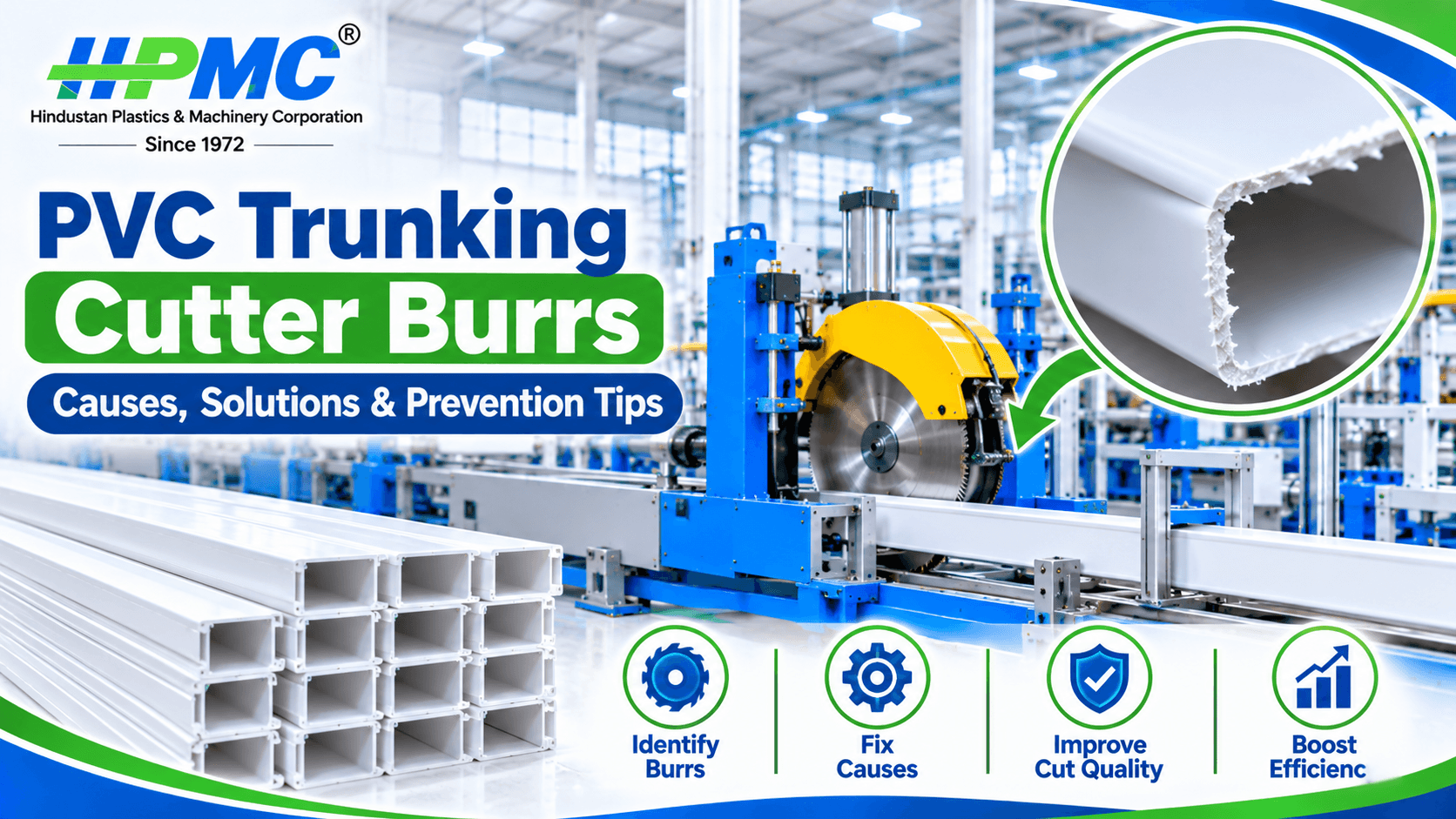
PVC trunking is widely used in residential, commercial and industrial electrical installations to organize and protect electrical cables. It provides a neat cable management solution while helping protect wiring from dust, physical damage and external exposure. For manufacturers, producing PVC trunking with accurate dimensions, clean edges and a smooth surface is essential for maintaining product quality. However, one common production problem that affects the final appearance of PVC trunking is PVC Trunking Cutter Burrs.
Cutter burrs are unwanted rough edges, small plastic projections or uneven material residues that remain around the cut section after the PVC trunking passes through the cutting machine. These imperfections can affect product appearance, fitting accuracy, installation convenience and customer satisfaction. In some cases, excessive burr formation can also increase finishing work, material rejection and production downtime.
The problem may develop because of a dull cutting blade, incorrect cutting speed, unsuitable blade geometry, poor material support, machine vibration or improper cutting conditions. Understanding these factors helps manufacturers identify the actual reason behind poor cutting quality and take corrective action.
This guide explains the common causes of PVC trunking cutter burrs, practical troubleshooting methods, preventive maintenance practices and ways to improve cutting accuracy in PVC trunking manufacturing.
What Are PVC Trunking Cutter Burrs?
PVC Trunking Cutter Burrs are unwanted rough edges, thin plastic projections or irregular material residues formed during the cutting of PVC trunking profiles. They generally appear around the edges of the cut section and may be visible on the internal or external surfaces.
During production, PVC trunking profiles move continuously through an extrusion line before reaching the cutting unit. The cutting machine separates the continuous profile into predetermined lengths. If the blade does not cut the material cleanly, small plastic fragments or rough edges may remain.
A properly configured cutting system should produce clean and consistent cut sections with minimal edge deformation. The actual cutting arrangement depends on profile dimensions, PVC formulation, wall thickness, production speed and machine design.
Common Types of PVC Trunking Cutter Burrs
1. Rough Edge Burrs
Rough edge burrs develop when the cutting blade does not produce a clean separation through the PVC material. They may appear as uneven plastic edges around the profile opening. These burrs can affect the appearance of finished trunking and may require additional manual finishing.
2. Thin Plastic Projections
Thin plastic projections are small pieces of PVC material that remain attached to the cut edge. They may develop when the blade is worn, incorrectly positioned or unsuitable for the material and profile geometry.
3. Internal Edge Burrs
Internal burrs develop around the inner walls of the trunking profile. They can be difficult to identify during a quick external inspection. Excessive internal roughness may interfere with fitting components and cable management accessories.
4. External Edge Burrs
External burrs appear on the outer edges of the cut profile. They are particularly noticeable on decorative or visible trunking surfaces and can reduce the overall finishing quality.
5. Uneven Cutting Marks
Sometimes the cutting operation leaves rough marks, small chips or irregular edges rather than a clean cutting surface. These problems may indicate blade wear, vibration, incorrect cutting movement or insufficient support.
Major Causes of PVC Trunking Cutter Burrs
1. Dull or Worn Cutting Blade
A worn cutting blade is one of the common reasons for burr formation. As the blade becomes dull, it may no longer separate the PVC material cleanly. Instead of producing a smooth cut, it can create rough edges, plastic projections and small fragments.
Solution: Inspect the cutting blade regularly and check its condition before production. Replace or service blades according to the machine manufacturer's recommendations. Selecting a suitable blade for PVC profile cutting is equally important.
2. Incorrect Cutting Speed
Cutting speed directly influences the quality of the cut. If the cutting movement is too slow or too fast for the material and equipment configuration, the finished edge may become rough or irregular.
Solution: Follow the recommended cutting parameters for the particular PVC trunking profile. Check the relationship between extrusion speed, haul-off movement and cutting operation to maintain consistent production.
3. Incorrect Blade Alignment
Blade alignment is important for achieving a straight and uniform cut. If the blade is not correctly positioned, it may apply uneven cutting force across the profile.
Solution: Check blade positioning, cutting angle and machine alignment. Inspect the cutting mechanism to ensure that the blade moves smoothly through the intended cutting path.
4. Excessive Machine Vibration
Machine vibration can affect cutting stability and produce uneven edges. Loose fasteners, worn bearings, damaged mechanical components or an unstable machine foundation may contribute to unwanted movement during cutting.
Solution: Inspect the cutting unit, bearings, mounting arrangements and mechanical connections. Tighten loose components and replace damaged parts where necessary.
5. Incorrect PVC Material Processing
PVC material characteristics can influence cutting behaviour. Variations in material formulation, processing conditions, profile wall thickness and cooling may affect how the profile responds during cutting.
Solution: Maintain consistent material preparation and stable extrusion conditions. Check whether the profile is sufficiently cooled and dimensionally stable before it reaches the cutting section.
6. Insufficient Profile Support
PVC trunking profiles need suitable support during the cutting process. If the profile moves, bends or vibrates during cutting, the blade may produce an uneven edge.
Solution: Check the profile holding arrangement and cutting support system. Ensure that the trunking remains properly positioned during the cutting operation.
7. Unsuitable Cutting Blade Design
Different PVC trunking profiles may require different cutting arrangements depending on their cross-section, wall thickness and dimensions. An unsuitable blade design can contribute to rough edges and inconsistent cutting quality.
Solution: Select cutting equipment and blade specifications according to the product requirements. Discuss blade compatibility with the machinery manufacturer before making major changes.
How to Reduce PVC Trunking Cutter Burrs
Reducing burr formation requires proper control of the cutting process and regular inspection of the equipment.
1. Maintain Cutting Blade Condition
Regular blade inspection helps identify wear before it affects finished product quality. Operators should check for damaged teeth, uneven wear, deposits and other visible problems.
2. Maintain Stable Production Speed
The extrusion line, haul-off and cutting system should operate in coordination. Sudden variations in production speed can affect cutting accuracy and product consistency.
3. Check Profile Cooling
The PVC profile should reach the cutting section under suitable cooling and dimensional conditions. Inadequate cooling or unstable profile conditions may contribute to deformation during cutting.
4. Inspect Cutting Machine Alignment
Proper alignment helps the cutting blade move through the profile consistently. Regular mechanical inspection can identify loose connections, damaged guides and alignment issues.
5. Use Suitable Cutting Parameters
Cutting parameters should be selected according to the PVC formulation, profile geometry, wall thickness and equipment specifications. Avoid changing several settings simultaneously without checking their individual effects.
6. Maintain Clean Cutting Equipment
PVC deposits and dust around the cutting section may affect machine movement and product quality. Keep the blade area, profile guides and supporting components clean according to safe maintenance procedures.
Role of Cutting Machines in PVC Trunking Manufacturing
The cutting machine is an important downstream component of a PVC trunking extrusion line. It separates continuously extruded profiles into the required commercial lengths.
A typical production line may include a material feeding system, conical twin screw extruder, PVC trunking die, calibration unit, cooling system, haul-off machine, cutting system and collection arrangement.
Each component contributes to the finished product. The extruder processes the PVC compound, the die forms the required trunking shape, the calibration system controls dimensions and the cooling arrangement stabilizes the profile. The haul-off then moves the profile through the line, while the cutting machine determines the final product length.
Manufacturers planning a new production setup can explore HPMC's PVC Trunking Machine Manufacturer Guide to understand the major components and selection considerations for PVC trunking production.
Importance of Extrusion Stability in Cutting Quality
Cutting quality does not depend only on the cutting machine. The condition of the extruded PVC profile also influences the final cutting result.
If the profile has inconsistent wall thickness, dimensional variation or insufficient cooling, the cutting unit may struggle to produce uniform edges. Therefore, manufacturers should maintain stable extrusion conditions throughout production.
A suitable extrusion system should provide consistent material processing, controlled temperature management and reliable profile formation. HPMC's Twin Screw Plant for PVC Trunking is designed for manufacturing PVC trunking and cable management profiles with suitable downstream production equipment.
How Haul-Off Speed Affects PVC Trunking Cutting
The haul-off system pulls the extruded profile through the production line at a controlled speed. Its operation needs to remain coordinated with the extrusion and cutting systems.
If the haul-off speed changes unexpectedly, the profile may not reach the cutting unit under consistent conditions. This can affect cut length, cutting synchronization and overall production stability.
Manufacturers should monitor haul-off operation and verify that the cutting system is synchronized with the profile movement. Regular inspection of pulling belts, rollers, drive components and control settings can help maintain consistent production.
Preventive Maintenance for PVC Trunking Cutting Machines
Preventive maintenance helps reduce unexpected downtime and maintain consistent cutting performance. Instead of waiting for visible defects, operators should inspect important components at scheduled intervals.
Important maintenance activities include:
- Inspect cutting blades for wear and damage.
- Check blade alignment and positioning.
- Inspect bearings and mechanical connections.
- Check the cutting motor and drive arrangement.
- Clean PVC dust and material deposits.
- Inspect profile guides and support arrangements.
- Verify cutting synchronization.
- Check safety guards and emergency-stop systems.
- Record recurring cutting defects.
- Replace worn components according to manufacturer recommendations.
Maintenance teams should follow the machine manufacturer's instructions and ensure that electrical and mechanical maintenance is performed using appropriate safety procedures.
For equipment documentation and operating guidance, manufacturers can refer to the available HPMC Machine Manuals.
Quality Control Checklist for PVC Trunking Cutting
A consistent quality-control process helps manufacturers identify cutting defects before finished products are packed or dispatched.
The following points should be checked during production:
- Inspect the cut surface for rough edges.
- Check for internal and external burrs.
- Verify the required trunking length.
- Inspect the profile for cracks and deformation.
- Check the cutting surface for chips and marks.
- Verify that the blade is properly aligned.
- Inspect the first few cut profiles after machine setup.
- Monitor cutting quality during continuous production.
- Record rejected products and recurring defects.
- Review corrective actions after maintenance.
Quality inspections should be performed at suitable intervals based on production requirements and product specifications.
How to Improve PVC Trunking Production Efficiency
Production efficiency depends on more than achieving a higher extrusion speed. Manufacturers also need consistent product dimensions, clean cutting edges, minimal rejection and reliable machine performance.
The following practices can help improve overall efficiency:
Standardize Machine Settings: Maintain documented operating parameters for different trunking sizes and profile designs.
Train Machine Operators: Operators should understand blade inspection, cutting synchronization, defect identification and safe operating procedures.
Reduce Unplanned Downtime: Regular maintenance and timely replacement of worn components can reduce unexpected interruptions.
Monitor Rejection Rates: Record the number and type of defective profiles to identify recurring production problems.
Inspect Finished Products: Regular inspection helps detect cutting problems early and reduces the risk of defective products reaching customers.
When Should Manufacturers Seek Technical Assistance?
Some cutting problems may continue even after blade replacement and basic machine adjustments. Repeated burr formation, inconsistent cutting lengths, excessive vibration or synchronization problems may indicate a more complex mechanical or control-related issue.
Manufacturers should consider technical assistance when cutting defects continue across multiple production batches, machine alignment cannot be maintained or the cutting system shows unusual vibration and operating behaviour.
A technical inspection can help identify whether the problem is related to the blade, drive system, profile support, machine alignment or production synchronization.
Conclusion
PVC Trunking Cutter Burrs can affect the appearance, dimensional accuracy and finishing quality of electrical cable management profiles. Common causes include dull cutting blades, incorrect cutting speed, blade misalignment, machine vibration, insufficient profile support and unstable extrusion conditions.
Manufacturers can reduce these problems through regular blade inspection, proper machine alignment, controlled production speed, suitable profile cooling and preventive maintenance. Maintaining coordination between the extruder, haul-off and cutting system is equally important for consistent results.
A systematic quality-control process helps identify recurring problems, reduce rejected products and improve overall manufacturing efficiency. By maintaining suitable equipment conditions and following recommended operating procedures, PVC trunking manufacturers can achieve cleaner cutting edges and more consistent finished products.
Contact Hindustan Plastics and Machinery Corporation (HPMC)
Hindustan Plastics and Machinery Corporation (HPMC) provides plastic extrusion machinery solutions for PVC profiles, trunking, pipes, recycling, compounding and other polymer processing applications. Manufacturers looking to establish a new production facility, upgrade existing machinery or discuss extrusion-related technical requirements can contact the HPMC team.
Company: Hindustan Plastics and Machinery Corporation (HPMC)
Address: 5, Category II, DSIDC Industrial Area, Nangloi, Delhi – 110041, India
Phone: +91 95605 96392
Email: info@hindustanplastics.com
Website: https://www.hindustanplastics.com/
Request a Quote: https://www.hindustanplastics.com/get-in-touch
Google Business Profile: https://share.google/lBK4uD53HqY891ynv
When contacting HPMC, share your PVC trunking dimensions, required production capacity, existing machinery configuration, cutting problems and desired finished product specifications.
Contact HPMC today to discuss your PVC extrusion machinery requirements and explore suitable solutions for your manufacturing business.
Frequently Asked Questions
Find quick answers to the most common questions about this topic.
PVC trunking cutter burrs are unwanted rough edges, thin plastic projections or material residues that remain around the cut section after PVC trunking is cut to the required length.
Common causes include dull blades, incorrect cutting speed, blade misalignment, machine vibration, insufficient profile support and unsuitable cutting conditions.
Manufacturers can reduce burr formation by maintaining sharp blades, checking machine alignment, stabilizing production speed and ensuring proper profile support during cutting.
Yes. A dull or damaged blade may fail to separate the PVC material cleanly, resulting in rough edges, plastic projections and uneven cutting surfaces.
Yes. The cooling condition of the profile can influence its dimensional stability and behaviour during cutting. Manufacturers should maintain suitable cooling before the profile reaches the cutting unit.
Correct blade alignment helps maintain consistent cutting movement and reduces uneven cutting force, which can contribute to rough edges and irregular cuts.
Excessive vibration can make the cutting operation unstable and create uneven edges, cutting marks and inconsistent finished quality.
Blade inspection frequency depends on production volume, material characteristics and blade condition. Manufacturers should follow the machine manufacturer's maintenance recommendations and inspect cutting quality regularly.
Yes. Extrusion speed and haul-off speed should remain properly coordinated with the cutting system. Unstable production movement can affect cutting synchronization and finished product consistency.
Manufacturers should maintain suitable cutting blades, stable haul-off movement, correct machine alignment, proper profile cooling and regular quality inspections. They should also record cutting defects and investigate recurring problems.