
Introduction
Wood-plastic composite (WPC) sheets are flat products made from a thermoplastic, wood-based filler and additives. Manufacturers select the formulation and extrusion equipment according to the required sheet dimensions, surface finish and intended application.
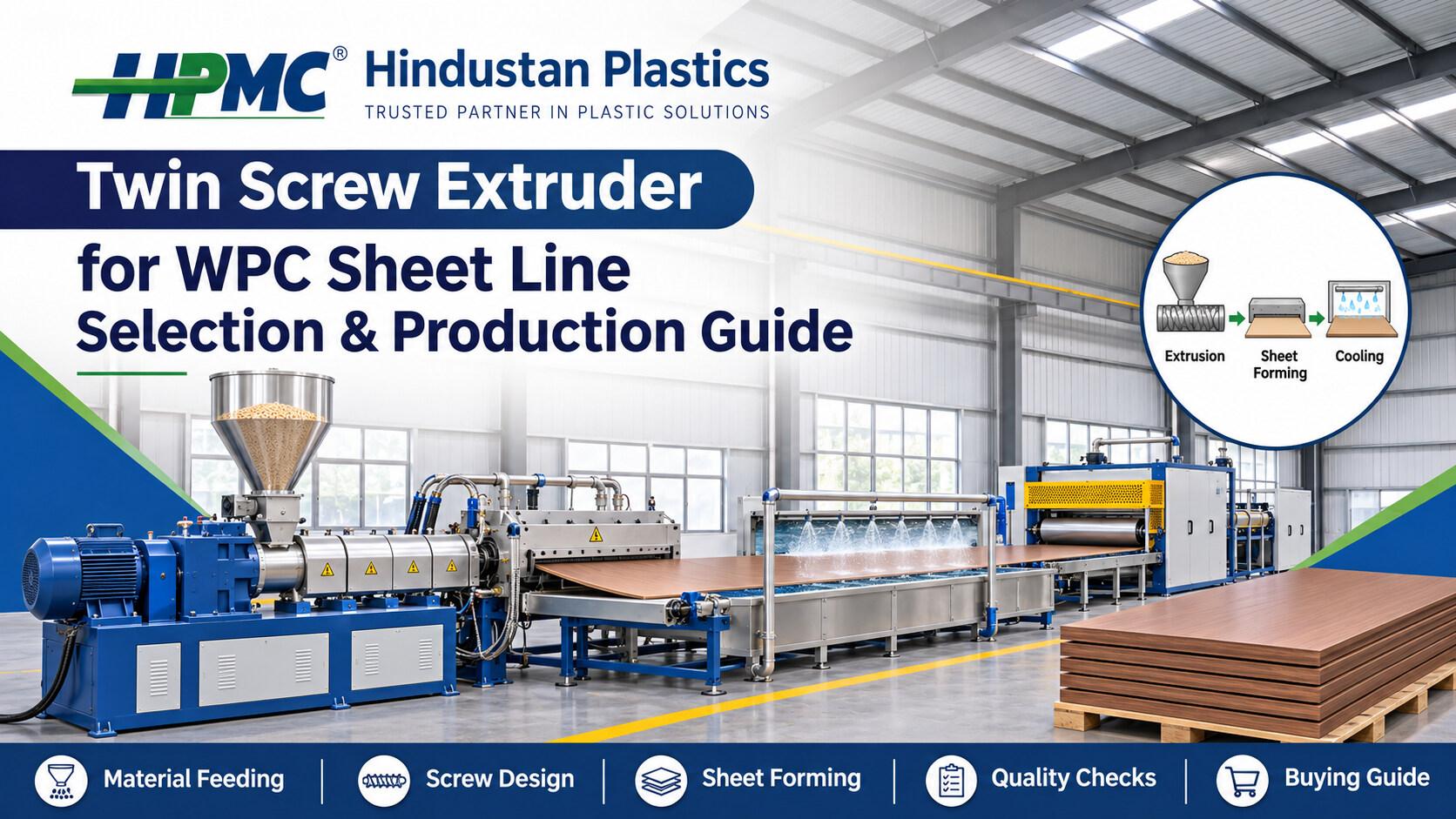
A twin screw extruder for a WPC sheet line processes the formulation and delivers it to a sheet-forming die. A complete production line also needs downstream equipment for forming, cooling, pulling and cutting. These stages work together to produce a sheet that can be measured and inspected after cooling.
For manufacturers planning a new line or upgrading existing equipment, this guide explains the production process, key selection factors, common defects and the checks to include in a supplier trial.
What Is a Twin Screw Extruder for a WPC Sheet Line?
A twin screw extruder uses two screws inside a barrel to convey and process material. In a wood-plastic composite application, the feed may include a thermoplastic, wood flour or another wood-based filler, and additives selected for the product. The appropriate screw arrangement and operating conditions depend on the formulation and how it is supplied to the line.
The extruder prepares and delivers the material to a sheet-forming die. The die spreads it across the required width. Downstream equipment then shapes, cools, pulls and cuts the sheet according to the product specification. A stable extrusion run matters because fluctuations upstream can appear later as changes in thickness, weight or surface finish. HPMC lists related equipment under its WPC Board Plant.
How Does a WPC Sheet Extrusion Line Work?
1. Prepare and Feed the Material
Start by confirming whether the line will process a prepared compound or a blend of separately supplied ingredients. A prepared compound still needs consistent feeding, while a direct blending route also requires control over the proportions entering the machine. Ask the supplier how the proposed setup will handle the material in the form you intend to buy or prepare it.
Record the polymer grade, filler form, additive package and how the material is stored. If wood flour can absorb moisture before use, discuss how moisture will be measured and controlled. Send a representative sample for the trial, along with notes on how the feed may vary between batches.
2. Process the Compound in the Extruder
The screw configuration affects how the formulation is conveyed and mixed before reaching the die. Ask the supplier to explain why the proposed screws suit your material and production range. If venting is part of the design, ask what it is intended to remove and what feed preparation the supplier expects upstream.
When evaluating HPMC’s Co-Rotating Twin Screw Extruder, discuss whether the equipment is intended for preparing the compound, feeding a sheet line directly, or a specific configuration for your project. Confirm the complete route with the supplier before assuming that an extruder offered for compounding is suitable for the sheet-forming stage.
3. Form the Sheet Through the Die
Ask how the die will be matched to your target thickness range and finished width. Compare the dimensions of the sheet coming from the die with the dimensions of the finished product after cooling and edge trimming. Confirm the expected trim allowance.
Pay attention to thickness across the width. A sheet that meets the target at the centre can still fall outside the agreed tolerance near an edge. Measure several locations and compare samples from different points in the run.
4. Cool, Pull and Cut the Sheet
Cooling and downstream handling influence what the finished sheet looks like after it leaves the line. Ask how the equipment supports the sheet while it cools and how the pulling and cutting stages are coordinated. Check the finished length, squareness, edge condition and flatness after cooling, using the same inspection method for every sample.
Key Features of a WPC Sheet Line
A sheet line forms a wide, flat product. The key features to compare are the forming die, cooling arrangement and downstream handling. Buyers usually specify the finished width, thickness, density where relevant and surface quality. A profile line forms a shaped cross-section, such as a door frame with grooves or rebates. Both use extrusion, but the die and downstream equipment are selected for different product shapes. HPMC illustrates the shaped-product application in its WPC Profile Plant.
Compare both lines using these four practical checks.
- Cross-section. A sheet has a broad, flat cross-section. A profile has a shaped cross-section defined by its drawing.
- Tooling focus. The die and downstream setup must suit the sheet width and thickness. The die and calibration tooling must suit the profile geometry.
- Quality checks. Inspect thickness across the width, surface finish and flatness. Inspect critical dimensions, straightness and fit at joints.
- Typical trial sample. Measure a cooled, trimmed sheet at several locations. Measure cooled profile lengths and check how the parts fit together.
How to Choose a Twin Screw Extruder for WPC Sheet Production
1. Define the Product Range
Prepare a specification for your highest-volume sheet and the largest or thickest size you intend to produce. Include the final width, thickness range, cut length and acceptable tolerances. If the sheet will be laminated, routed or otherwise finished after extrusion, explain what the next process requires from the surface and edges.
If your range includes solid and foamed products, identify them separately in the enquiry. Ask which formulations the supplier has trialled and which parts of the proposed configuration depend on the product construction. Request a trial on the grade most important to your production plan.
2. Compare the Complete Line
Ask suppliers to itemise material preparation, feeding, extrusion, die, cooling, haul-off, trimming and cutting. Confirm which items are included in the base quote and which require a separate purchase. If you intend to reuse equipment, share its layout and operating limits so the supplier can check whether it fits the proposed line.
Also ask for the utility requirements and space needed for service access and material handling. Discuss how long size changes are expected to take and what adjustments, tooling or cleaning they involve. The answer matters if you switch frequently between short production orders.
3. Measure Saleable Output
Compare the amount of finished sheet that passes inspection over a defined period. Record the formulation, sheet dimensions, run time, stops, edge trim and rejects. If one supplier reports extruder output and another reports finished product, ask them to calculate output on the same basis.
Suppose a one-hour trial processes 220 kg, including 15 kg of edge trim and 10 kg of rejected sheet. The saleable output is 195 kg for that hour. Use the example as a reporting method and ask the supplier to measure the actual result for your product. If your orders are planned in sheets per shift, also count how many accepted sheets the trial produced.
4. Review Commissioning and Spare Parts
Ask what the supplier will demonstrate during commissioning, who will provide the trial material and which sheet sizes will be covered. Agree on how operators will be trained to record settings, inspect samples and identify when a change needs support. HPMC outlines the scope of its technical assistance.
Check which wear components are specific to the proposed configuration, what identification is needed to reorder them and how replacement lead times are handled. Request a list based on the quoted equipment so your maintenance team can plan initial stock. For support on component availability, see HPMC’s spare parts services.
Common WPC Sheet Defects and What to Inspect
Use these checks when defects appear.
- Uneven thickness. Compare readings across the width and along the run. Review die setup, material delivery and downstream settings with the supplier.
- Bowing after cooling. Record when the bow first appears. Review cooling consistency, sheet support and handling after cutting.
- Surface marks or rough patches. Note whether the defect follows a fixed position. Review material condition, tooling surfaces and recent process changes.
- Voids or visible bubbles. Check the condition of the feed and discuss material preparation, venting and product construction with the supplier.
- Inconsistent cut length. Compare lengths after cooling. Review how the puller, cutter and length control work together.
Record which batch and settings were running when a defect appeared. If a change in material or line speed came first, retain samples from before and after the change. Compare the samples using the same measurement points before drawing conclusions. A symptom can have several causes, so use the observations to guide the next trial.
How to Run a Useful WPC Sheet Trial
Agree on the Acceptance Criteria
Set the inspection method before the machine runs. Include the finished dimensions, thickness tolerance, appearance requirements and flatness after cooling. If density or weight per sheet matters, specify how it will be measured. Bring an approved sample when available so both teams can compare the finish against the same reference.
Collect Samples Throughout the Run
Collect and label samples at the start, middle and end of the agreed test period. Record when the run becomes stable, when the machine stops and how long it takes to recover. Take thickness readings at fixed positions on each sheet. This lets you compare variation from edge to centre and between different points in the run.
Ask the supplier to retain a full-width sample from the trial and mark which edge faced the operator. If thickness or finish varies across the sheet, this makes it easier to compare the defect with its position on the line. Photograph the sample and attach the measurement record to the trial report for later review.
Test the Sheet in Its Next Operation
If you plan to laminate, machine or cut the sheet to final dimensions, take some trial material through that operation. A sheet can meet the extrusion dimensions and still need further investigation if the surface finish or edges cause problems downstream. Bring those results into the equipment discussion before agreeing on the final specification.
WPC Sheet Line Price and Quotation Factors
Include these enquiry details.
- Sheet specification. Include the finished width, thickness range, length, surface requirements and tolerances.
- Material details. Describe the polymer, filler and additives, and state whether the material is a prepared compound or a blend.
- Production plan. Share your target saleable output, expected shifts and most common product sizes.
- Factory layout. Provide the available space, utilities and details of equipment you want to retain.
- Acceptance checks. List the measurements, trial duration and sample requirements you want included in the proposal.
The price depends on the equipment scope, sheet size range, tooling, automation and commissioning requirements. Ask each supplier to itemise the extruder, die, downstream equipment and trial costs. Compare quotations using the same brief, including the cost of any additional tooling or equipment needed before production can start.
Conclusion
A suitable twin screw extruder for a WPC sheet line should process your formulation and deliver material consistently to the sheet-forming equipment. Compare the full line against your product drawings, then use a representative trial to check thickness, flatness, finish and saleable output. Ask for cooled samples and record the results under agreed conditions so you can compare proposals on the same basis.
Contact Hindustan Plastics and Machinery Corporation (HPMC)
HPMC (Hindustan Plastics and Machinery Corporation).
Share your sheet dimensions, formulation details and target output with HPMC to discuss the equipment and trial requirements for your project.
Address: 5, Category II, DSIDC Industrial Area, Nangloi, Delhi – 110041, India.
Phone: +91 95605 96392.
Email: info@hindustanplastics.com.
Frequently Asked Questions
Find quick answers to the most common questions about this topic.
It conveys and processes the WPC formulation before it reaches the sheet-forming die. The downstream equipment then helps shape, cool and cut the finished sheet.
Suitability depends on the polymer, filler, feed form, sheet design and the complete line configuration. Ask the supplier to explain the proposed machine and verify it with a material trial.
Some configurations are designed to process prepared compound. Confirm the accepted feed form with the supplier and provide a representative sample for testing.
Moisture is a feed condition that can affect processing and sheet appearance. Ask your material and equipment suppliers how to measure and control it for your formulation.
The die, downstream forming and cooling, and edge trimming all matter. Check the width and measure the thickness at several positions on a cooled sample.
It depends on the line configuration, tooling and formulation. Ask the supplier to specify which products the proposed line supports and to trial the grades you intend to sell.
Extruder output is the amount of material processed over a period. Saleable output counts the finished sheet that passes inspection after trimming and rejection.
Agree on a flatness check and a consistent inspection time with the supplier. Measure several cooled samples taken from different points in the run.
Door frames use a shaped cross-section and require compatible profile tooling and downstream equipment. Share both drawings with the supplier if your project includes sheets and frames.
Send the required sheet dimensions, intended formulation, target output, factory layout and any finishing requirements. Include a material sample or reference sheet if available.