
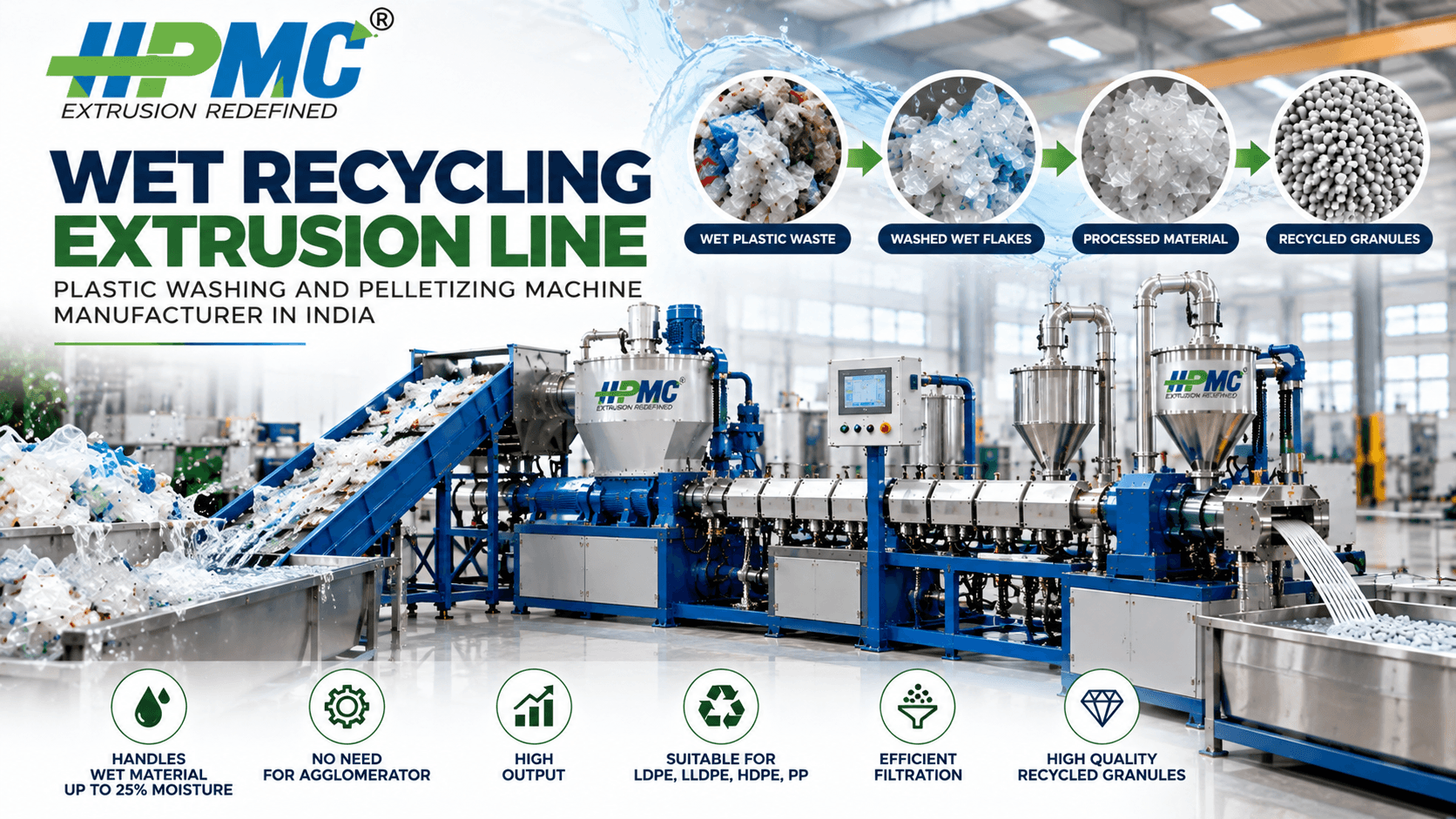
Plastic recycling businesses often process washed plastic films and flakes that retain moisture after cleaning. Removing this moisture before extrusion can require additional equipment, processing time, energy and factory floor space. For recyclers handling flexible packaging waste, agricultural films and compatible plastic flakes, selecting an extrusion system designed for wet feedstock can help simplify the production process.
A Wet Recycling Extrusion Line is designed to process suitable wet plastic materials and convert them into reusable recycled plastic granules. Unlike conventional systems that may require extensive pre-drying or a separate agglomerator, a purpose-built wet recycling extrusion line manages moisture during processing through an appropriate combination of feeding, squeezing, degassing and extrusion.
Hindustan Plastics & Machine Corporation (HPMC), a plastic processing machinery manufacturer based in Delhi, offers a Wet Recycling Extrusion Line for businesses handling suitable post-consumer and post-industrial plastic waste. The system is designed to support moisture management, material feeding and consistent extrusion output.
Learn more about the HPMC Wet Recycling Extrusion Line and discuss your feedstock requirements with the manufacturer.
What Is a Wet Recycling Extrusion Line?
A Wet Recycling Extrusion Line is a plastic recycling system designed to process compatible plastic flakes or films that retain moisture after washing. The system manages moisture during the extrusion process so that the material can be melted, filtered and converted into recycled granules.
A conventional recycling process may require a separate drying or agglomeration stage, depending on the material. A wet recycling extrusion system can reduce the need for these additional steps when the feedstock and moisture level fall within the machine's operating capabilities.
A typical line may include:
- Material feeding system
- Screw and barrel assembly
- Moisture-management or squeezing section
- Degassing section
- Heating and temperature-control system
- Melt filtration equipment
- Die head
- Pelletizing system
- Cooling and granule-handling equipment
- Electrical control system
The exact components depend on the machine configuration and the plastic material being processed.
It is important to distinguish a wet recycling extrusion line from a complete plastic washing plant. Washing equipment removes dirt and other contaminants from plastic waste, while a wet recycling extrusion line is designed to process suitable wet feedstock during the extrusion and pelletizing stages. A complete recycling project may need both systems.
How Does a Wet Recycling Extrusion Line Work?
The processing sequence depends on the feedstock and the selected configuration. A typical workflow includes the following stages.
1. Plastic Waste Sorting and Preparation
Plastic waste is sorted according to polymer type and application. Incompatible materials and unwanted contaminants should be removed before processing.
For post-consumer film, preparation may include sorting, shredding and washing. Cleaner industrial scrap may require fewer preprocessing stages.
2. Washing and Wet Material Feeding
Plastic film or flakes may be washed to remove dirt and surface contamination. The washed material is then supplied to the extrusion line using a suitable feeding arrangement.
Feedstock size, bulk density, moisture content and flow behaviour all influence feeding performance.
3. Moisture Management and Squeezing
The system is designed to handle suitable wet material by managing moisture during processing. Depending on the configuration, a dedicated squeezing or moisture-removal section may help reduce the amount of water entering the melting stage.
The required performance depends on the initial moisture content, polymer type, material form and operating conditions.
4. Extrusion and Melting
The plastic enters the extrusion system, where the screw conveys, compresses, melts and homogenises the polymer under controlled processing conditions.
Stable feeding and suitable temperature settings help support consistent processing.
5. Degassing
Moisture and other volatile components may affect extrusion stability and recycled pellet quality. A suitable degassing arrangement provides an opportunity for moisture vapour and gases to escape during processing.
Degassing performance depends on the machine design, feedstock condition and operating parameters. It does not remove the need for appropriate washing, contamination control or any preprocessing required by the material.
6. Melt Filtration
The molten polymer passes through a suitable filtration system to remove solid contaminants. Filter selection should be based on the contamination level, polymer type and quality requirements for the recycled material.
7. Pelletizing and Cooling
After filtration, the molten plastic is converted into granules using the selected pelletizing system. The granules are then cooled and collected for storage or further manufacturing.
The final pellet quality depends on the feedstock, polymer compatibility, filtration, moisture management and extrusion conditions.
Key Features of HPMC's Wet Recycling Extrusion Line
Designed for Wet Plastic Materials
HPMC describes its Wet Recycling Extrusion Line as suitable for processing wet plastic flakes and compatible films. The system is designed to manage moisture during processing and reduce the need for extensive pre-drying in suitable applications.
No Separate Agglomerator Required for Suitable Feedstock
The HPMC product page highlights that the line can process compatible wet plastic materials without requiring a separate agglomerator. This can simplify the production layout and reduce the number of separate material-preparation stages.
Moisture Handling Capability
HPMC advertises moisture handling of up to 25%, depending on the material and processing conditions. If your feedstock typically contains 10–15% moisture, share that information with the manufacturer to confirm the expected output and operating requirements for your specific application.
Integrated Extrusion and Pelletizing Process
The system supports the conversion of suitable plastic feedstock into recycled granules. The exact filtration, pelletizing and cooling configuration should be confirmed when requesting a quotation.
Production Capacity Options
HPMC's product page advertises production capacity of up to 600 kg/hr. Actual throughput depends on the polymer, feedstock form, moisture content, contamination level and machine configuration.
Designed for Industrial Recycling Applications
The machine is intended for recycling applications involving suitable post-consumer and post-industrial plastic waste. Its configuration should be selected according to the material being processed and the required recycled product quality.
Important: Confirm moisture limits, expected throughput, electrical requirements and the included equipment with HPMC before finalising a purchase.
Technical Specifications of HPMC's Wet Recycling Extrusion Line
HPMC's official product page highlights the following information:
- Production capacity: Advertised up to 600 kg/hr.
- Moisture handling: Advertised up to 25%, subject to feedstock and process conditions.
- Material compatibility: Compatible PP, PE, HDPE, LDPE, LLDPE, films, flakes, woven bags and raffia, subject to configuration.
- Preprocessing: Designed to process suitable wet plastic materials without a separate agglomerator.
- Moisture management: The extrusion process is designed to manage moisture during processing.
- Pellet production: Suitable configurations can process plastic into recycled granules.
The available product page does not establish one universal set of screw dimensions, motor ratings or energy consumption figures for every configuration. Request a model-specific technical datasheet before comparing specifications or calculating operating costs.
For current product information, visit the official HPMC Wet Recycling Extrusion Line page.
Which Plastic Materials Can Be Processed?
Material suitability depends on the polymer, the condition of the feedstock and the selected machine configuration.
LDPE Film
Low-density polyethylene film is commonly used in flexible packaging and bags. Suitable washed LDPE film can be considered for wet recycling extrusion, subject to moisture and contamination limits.
LLDPE Film
LLDPE stretch film and flexible packaging waste can be lightweight and difficult to handle after washing. A suitably configured wet recycling extrusion line can help process compatible material into recycled granules.
HDPE Film and Flakes
Compatible HDPE film and flakes can be considered for recycling, provided the feedstock is prepared and processed under suitable conditions.
PP Film and Woven Materials
Polypropylene film, woven bags and raffia may be suitable for appropriately configured equipment. PP and PE should be segregated when required because they have different processing characteristics and are not automatically interchangeable in every recycled product application.
Agricultural Film Waste
Agricultural films may contain soil, organic matter and other contaminants. These materials can require effective sorting and washing before extrusion. The wet extrusion line should be selected as part of a complete process designed for the condition of the incoming waste.
Packaging and Industrial Plastic Scrap
Suitable post-consumer and post-industrial plastic scrap may also be processed. Material testing and confirmation of polymer compatibility are recommended before establishing production targets.
Benefits of a Wet Recycling Extrusion Line
1. Reduced Need for Extensive Pre-Drying
For compatible feedstock within the machine's operating limits, moisture can be managed during extrusion. This may reduce the need for a separate, extensive pre-drying stage.
2. No Separate Agglomerator for Suitable Materials
HPMC highlights that its wet recycling extrusion line can process compatible wet plastic materials without a separate agglomerator. This can simplify the process and reduce equipment requirements.
3. More Efficient Use of Factory Space
Reducing the number of separate processing stages may help businesses plan a more compact production layout. Actual floor-space savings depend on the complete plant configuration.
4. Streamlined Recycling Workflow
Combining moisture management, extrusion and pelletizing in a suitable system can reduce the need to transfer material between multiple independent machines.
5. Support for Washed Plastic Waste
The system is designed for compatible washed film and flakes, making it relevant to recyclers that handle wet material after washing.
6. Potential Energy and Operating Cost Benefits
Reducing separate drying or agglomeration stages may lower some operating requirements. However, actual energy consumption depends on the complete line, including washing, dewatering, extrusion, heating and auxiliary equipment.
Request estimated power consumption under your expected operating conditions rather than relying on general savings claims.
Wet Recycling Extrusion Line vs. Conventional Recycling Line
The key difference is how the system handles wet feedstock before and during extrusion.
A conventional recycling line may require material to be dried or agglomerated before extrusion, depending on the moisture level and physical form of the plastic. A wet recycling extrusion line is designed to manage suitable moisture-bearing feedstock during processing.
A wet recycling extrusion line may be suitable when:
- The material has already been washed and retains moisture.
- The feedstock includes compatible plastic film or flakes.
- Reducing separate pre-drying or agglomeration stages is a priority.
- The moisture level and material characteristics fall within the machine's operating capabilities.
A conventional line or additional preprocessing equipment may be more appropriate when:
- The material requires extensive cleaning or drying.
- Moisture exceeds the machine's confirmed handling limits.
- The feedstock contains substantial contamination.
- The recycled output requires specialised processing beyond the selected line's configuration.
For applications where lightweight film needs densification before extrusion, compare HPMC's Recycling Plant with Compactor. For applications where degassing is a major concern, explore the Vented Recycling Plant.
The best solution depends on the material's condition, not just the name of the machine.
Wet Recycling Extrusion Line for Plastic Washing and Pelletizing
A recycling project may need multiple machines to convert collected plastic waste into reusable pellets. The complete process should be designed around the type of plastic, contamination level, moisture content and required output quality.
A typical workflow for contaminated plastic film may include:
- Sorting and removal of unsuitable materials.
- Shredding or size reduction.
- Washing to remove dirt and other surface contaminants.
- Separation and dewatering.
- Feeding the compatible wet material into the extrusion line.
- Moisture management and extrusion.
- Melt filtration.
- Pelletizing and cooling.
- Granule collection and quality checks.
Not every recycling project requires all these stages. Relatively clean industrial scrap may need less preprocessing, while heavily contaminated agricultural or post-consumer film may require a more comprehensive washing system.
HPMC's Wet Recycling Extrusion Line can be evaluated as part of a suitable recycling and pelletizing setup.
How to Choose the Right Wet Plastic Recycling Machine
Before purchasing a wet recycling extrusion line, evaluate these factors.
Moisture Content of the Feedstock
Measure the moisture content of the washed material and explain how it varies during normal production. If the feedstock contains approximately 10–15% moisture, request confirmation of the machine's suitability for that specific material.
Plastic Type and Material Form
Identify whether the feedstock consists of LDPE film, LLDPE film, HDPE flakes, PP woven bags or a mixture of materials. Polymer compatibility should be confirmed before processing mixed waste streams.
Required Production Capacity
Estimate the quantity of feedstock available per hour and the required output of recycled granules. HPMC advertises capacity up to 600 kg/hr, but actual output depends on the application and configuration.
Contamination and Washing Requirements
Determine whether the plastic contains soil, labels, paper, oil, organic residues or other unwanted materials. The extrusion line should not be expected to replace the washing and separation stages needed to achieve suitable feedstock quality.
Pellet Quality Requirements
Explain the intended use of the recycled granules. The required filtration system and processing conditions depend on the quality standards of the downstream application.
Energy Consumption
Ask for the complete installed power load and estimated energy consumption per kilogram of output under specified operating conditions. Include washing, dewatering, extrusion, heating, pelletizing and auxiliary equipment when comparing operating costs.
Installation and After-Sales Support
Confirm installation requirements, commissioning, operator training, spare parts availability and technical support before finalising the order.
Why Choose HPMC for a Wet Recycling Extrusion Line?
Hindustan Plastics & Machine Corporation (HPMC) manufactures plastic processing and recycling machinery from its facility in Nangloi, Delhi.
Reasons to consider HPMC include:
- Experience in plastic processing machinery manufacturing since 1972.
- A wet recycling extrusion solution designed for compatible wet films and plastic flakes.
- Equipment options for suitable PP, PE and other compatible plastic materials.
- A process designed to manage moisture during extrusion.
- Machinery solutions for different plastic recycling and reprocessing applications.
- Direct access to the manufacturer for discussing feedstock, production capacity and configuration requirements.
Before purchasing, share details about the polymer, material form, moisture level, contamination, required throughput and desired pellet quality. This information helps the manufacturer recommend a configuration that matches the intended application.
Explore HPMC's plastic recycling and extrusion machinery range.
Related HPMC Products and Resources
If you are evaluating equipment for a complete plastic recycling project, these HPMC pages may be useful:
- Wet Recycling Extrusion Line — for compatible wet plastic film and flakes.
- Recycling Plant with Compactor — for suitable lightweight plastic materials that benefit from compaction before extrusion.
- Vented Recycling Plant — for recycling applications requiring a vented extrusion system.
- Two Stage Recycling Plant — for applications where two-stage extrusion is appropriate.
- HPMC Frequently Asked Questions — for additional information about HPMC machinery.
Wet Recycling Extrusion Line Price in India
The price of a Wet Recycling Extrusion Line depends on the machine configuration and the requirements of the complete recycling project.
Important pricing factors include:
- Required production capacity.
- Plastic type and feedstock form.
- Initial moisture content and moisture-management requirements.
- Extruder specifications and screw design.
- Degassing and moisture-removal arrangement.
- Melt filtration system.
- Pelletizing and cooling equipment.
- Automation and electrical controls.
- Additional washing, dewatering or material-handling equipment.
- Installation, commissioning and after-sales support.
HPMC does not provide a single confirmed current price for every configuration on its product page. Contact the manufacturer for a quotation based on your material, moisture content, production target and required equipment.
When comparing quotations, check whether the price includes only the extrusion line or also covers washing, dewatering, installation and other auxiliary systems. This helps ensure that different suppliers are being compared on a like-for-like basis.
Conclusion
A Wet Recycling Extrusion Line can be a suitable solution for plastic recyclers processing washed, moisture-bearing films and flakes. By managing moisture during processing and reducing the need for a separate agglomerator for suitable feedstock, the system can help streamline the route from washed plastic material to recycled granules.
Hindustan Plastics & Machine Corporation (HPMC) offers a wet recycling extrusion solution designed for compatible plastic films and flakes, with an advertised capacity of up to 600 kg/hr. Actual performance depends on the material, moisture content, contamination level and selected configuration.
If you are planning a plastic washing and pelletizing project, discuss your feedstock and production requirements with HPMC before selecting the machine. Request a configuration-specific quotation and confirm moisture-handling limits, expected throughput and power consumption for your application.
Contact Hindustan Plastics & Machine Corporation (HPMC)
Company: Hindustan Plastics & Machine Corporation (HPMC)
Address: 5, Category II, DSIDC Industrial Area, Nangloi, Delhi – 110041, India
Phone: +91 95605 96392
Email: info@hindustanplastics.com
Website: https://www.hindustanplastics.com/
Google Business Profile: https://share.google/lBK4uD53HqY891ynv
Product Page: https://www.hindustanplastics.com/wet-recycling-extrusion-line
Contact HPMC to discuss your plastic type, moisture level, required output, machine configuration and project pricing.
Frequently Asked Questions
Find quick answers to the most common questions about this topic.
A Wet Recycling Extrusion Line is a plastic recycling system designed to process suitable moisture-bearing plastic films or flakes and convert them into recycled granules through extrusion, filtration and pelletizing.
Yes, suitable wet plastic materials can be processed without extensive pre-drying when the extrusion system is designed to manage their moisture content. Suitability depends on the polymer, moisture level and operating conditions.
HPMC advertises moisture handling of up to 25%, depending on the material and processing conditions. Confirm the expected performance for your actual feedstock with the manufacturer before purchasing.
A feedstock containing 10–15% moisture may be suitable, but performance depends on the plastic type, moisture distribution, feeding conditions and machine configuration. Provide these details to HPMC to confirm suitability.
Depending on the configuration, compatible materials may include PP, PE, HDPE, LDPE, LLDPE, plastic film, flakes, woven bags and raffia. Confirm compatibility for your specific material.
HPMC states that its Wet Recycling Extrusion Line can process suitable wet plastic materials without a separate agglomerator. The need for additional equipment depends on the material and the overall recycling process.
HPMC advertises production capacity of up to 600 kg/hr. Actual output depends on the feedstock, moisture level, polymer, machine configuration and operating conditions.
The price depends on capacity, extruder configuration, moisture-management requirements, filtration, pelletizing and auxiliary equipment. Contact HPMC for a current quotation based on your application.
You can contact Hindustan Plastics & Machine Corporation (HPMC) in Nangloi, Delhi, through its official product page, by calling +91 95605 96392 or by emailing info@hindustanplastics.com.
Not necessarily. The extrusion line is designed to process suitable wet feedstock, but washing equipment may still be required to remove dirt and contaminants. The complete plant should be designed according to the incoming material's condition.
Suitable agricultural film may be processed after appropriate sorting and cleaning. Because agricultural waste can contain soil, organic residues and other contaminants, the required washing and preparation stages should be evaluated before extrusion.