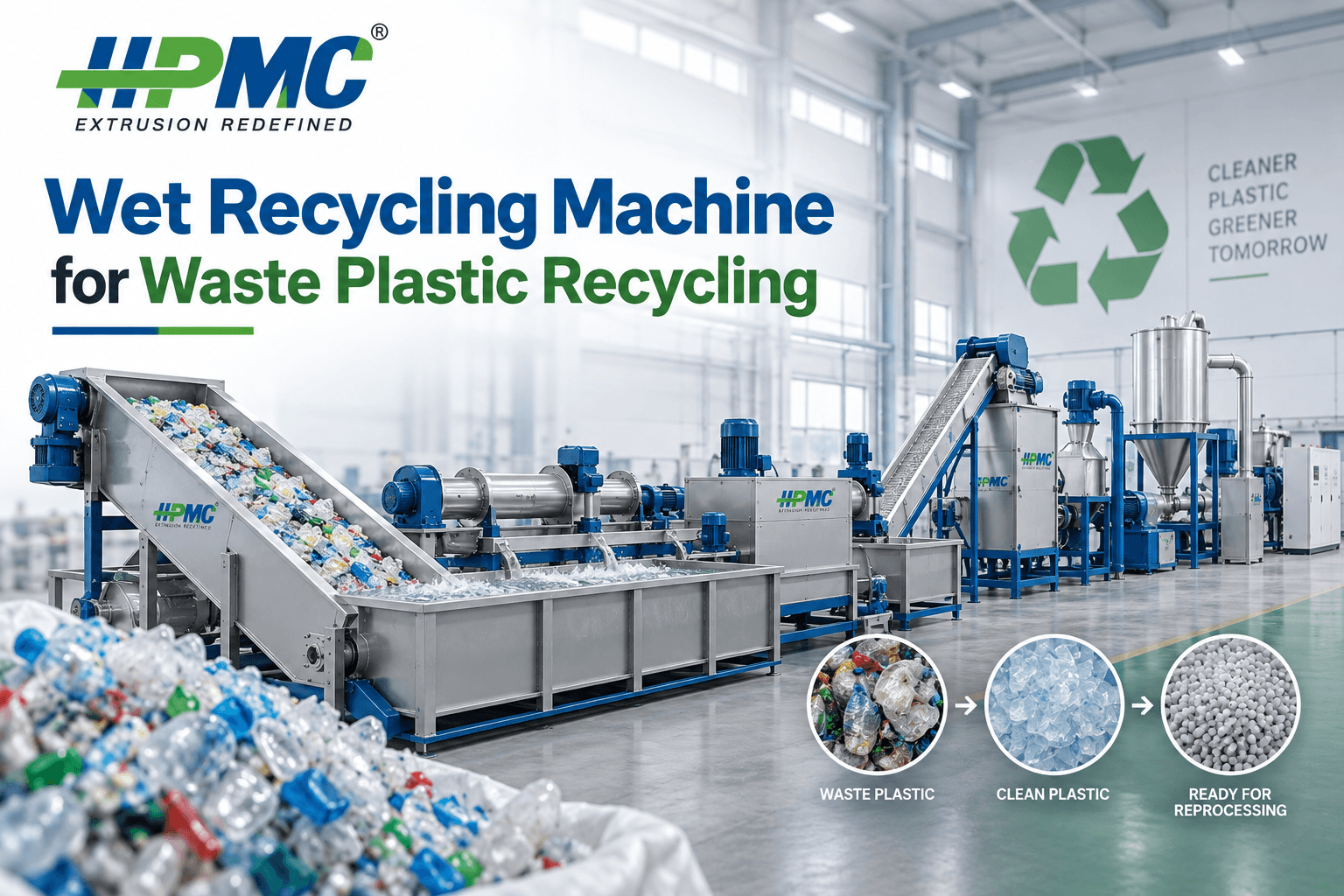
Waste plastic collected from industrial, commercial, and post-consumer sources can contain dirt, dust, labels, paper, organic residues, oils, and other contaminants. Before this material can be reused in suitable plastic processing applications, it may require sorting, washing, drying, size reduction, and further recycling.
A Wet Recycling Machine for Waste Plastic Recycling is designed for recycling processes where water-based cleaning and washing are required to remove contaminants from plastic waste. It can form an important part of a complete waste plastic recycling system, particularly when the feedstock requires washing before further processing.
Wet recycling generally combines mechanical size reduction, water-based washing, material separation, dewatering, and drying. The cleaned plastic can then be prepared for further processing through a suitable extrusion and pelletizing system.
For manufacturers planning to establish or upgrade a waste plastic recycling plant, selecting the right wet recycling machinery is important. The system should be matched with the type of plastic waste, contamination level, moisture content, required output, washing requirements, drying process, and downstream recycling equipment.
This guide explains the working process, major components, applications, benefits, and important factors to consider when choosing a Wet Recycling Machine for Waste Plastic Recycling.
What is a Wet Recycling Machine for Waste Plastic Recycling?
A Wet Recycling Machine for Waste Plastic Recycling is a plastic recycling system that uses water and mechanical processing to clean and prepare suitable waste plastic for further recycling.
Unlike dry recycling systems, wet recycling introduces water into selected stages of the process to help remove dirt and other contaminants from the plastic waste.
A typical wet recycling line may include:
- Feeding system
- Pre-shredder or plastic shredder
- Conveyor system
- Washing equipment
- Friction washer
- Separation system
- Rinsing section
- Dewatering machine
- Hot or thermal drying system where required
- Storage or collection system
- Extrusion and pelletizing equipment where applicable
- Control system
The exact configuration depends on the type of plastic waste and the required level of cleaning.
Why is Wet Recycling Important for Waste Plastic?
Waste plastic can be contaminated during collection, transportation, storage, and use.
For example, post-consumer plastic may contain:
- Dirt
- Dust
- Sand
- Labels
- Paper
- Organic residues
- Oil or grease
- Food-related contamination
- Other unwanted materials
Simply shredding contaminated plastic does not remove these contaminants.
A wet recycling process uses water, mechanical agitation, friction, and material separation to improve the cleanliness of suitable plastic waste before further processing.
This makes wet recycling particularly useful when the feedstock requires substantial cleaning.
How Does a Wet Recycling Machine for Waste Plastic Recycling Work?
The recycling process generally starts with sorting the incoming plastic waste.
Unwanted materials and incompatible polymers should be removed as far as practical before the washing stage.
A typical process can be represented as:
Sorting → Shredding → Pre-Washing → Washing → Friction Cleaning → Separation → Rinsing → Dewatering → Drying → Storage → Extrusion/Pelletizing
The actual process varies according to the feedstock.
Step 1: Sorting
Waste plastic is sorted according to polymer type, colour, product type, and contamination.
Proper sorting helps improve the consistency of the recycled material.
Step 2: Shredding
Larger plastic waste is reduced into smaller pieces using suitable size-reduction equipment.
A Plastic Shredder may be used depending on the feed material.
Step 3: Washing
The shredded plastic enters the washing system.
Water and mechanical action help remove dirt and surface contamination.
Step 4: Friction Cleaning
Friction-based washing can provide additional mechanical cleaning by creating contact between the plastic material and cleaning surfaces.
Step 5: Separation
Suitable separation equipment can help separate plastic material from contaminants and unwanted materials.
Step 6: Rinsing
A rinsing stage may be used to remove remaining dirt or cleaning residues.
Step 7: Dewatering
After washing, the plastic contains significant amounts of surface water.
A dewatering system removes a substantial portion of this water before drying.
Step 8: Drying
Further drying may be required before the material enters extrusion or another downstream process.
Step 9: Recycling and Pelletizing
The cleaned and dried plastic can then be fed into a suitable Plastic Recycling Machine or extrusion system for melting, filtration, extrusion, and pelletizing.
Major Components of a Wet Plastic Recycling System
Feeding System
The feeding system introduces waste plastic into the recycling line.
It should be appropriate for the size, shape, and bulk characteristics of the incoming material.
Plastic Shredder
The shredder reduces larger plastic waste into smaller pieces.
The required size reduction depends on the washing and downstream equipment.
Washing Tank
The washing section uses water to remove dirt and other contaminants from suitable plastic waste.
Friction Washer
A friction washer can provide mechanical cleaning through high-speed material movement and friction.
Separation System
Separation equipment can help remove unwanted materials from the plastic stream.
Different separation methods may be used depending on the density and characteristics of the feedstock.
Rinsing System
A rinsing stage can provide additional cleaning after the main washing process.
Dewatering Machine
The dewatering system removes water from the washed plastic before the drying stage.
Drying System
A suitable drying arrangement reduces remaining moisture and prepares the material for further processing.
Storage System
Cleaned and dried material can be collected and stored before entering the extrusion or pelletizing stage.
Control System
A centralized control system can help operators monitor and manage important equipment functions throughout the recycling process.
What Materials Can Be Processed?
The suitability of a Wet Recycling Machine for Waste Plastic Recycling depends on the system configuration and the characteristics of the waste.
Potential applications can include suitable:
- HDPE waste
- LDPE waste
- PP waste
- Plastic films
- Containers
- Packaging plastic
- Industrial plastic waste
- Post-consumer plastic
- Agricultural plastic waste
- Production scrap requiring washing
Different materials require different washing, separation, drying, and recycling configurations.
Film waste, for example, can require special feeding and washing arrangements because of its lightweight and flexible characteristics.
Applications of Wet Recycling Machines
Post-Consumer Plastic Recycling
Post-consumer plastic often contains significant surface contamination and may benefit from a wet washing process before further recycling.
Plastic Film Recycling
Suitable plastic films can be washed and prepared for further recycling.
A suitable feeding and drying system is important because films can retain moisture and present handling challenges.
Packaging Waste Recycling
Selected plastic packaging waste can be processed through washing and recycling systems to prepare it for further processing.
Industrial Plastic Waste
Industrial plastic waste that requires cleaning before reprocessing can be processed through a suitable wet recycling system.
Agricultural Plastic Recycling
Suitable agricultural plastic waste can require washing to remove soil and other contamination before recycling.
Plastic Scrap Cleaning
Manufacturing or processing scrap that has become contaminated can be cleaned before entering a suitable recycling process.
Benefits of a Wet Recycling Machine for Waste Plastic Recycling
A properly designed Wet Recycling Machine for Waste Plastic Recycling can provide several advantages.
Effective Cleaning
Water-based washing and mechanical cleaning can help remove dirt and other surface contaminants from suitable plastic waste.
Improved Feedstock Quality
Cleaning the waste plastic before extrusion can contribute to more consistent downstream processing.
Suitable for Contaminated Waste
Wet recycling can be particularly useful when plastic waste contains dirt, dust, organic residues, or other contamination that cannot be adequately removed through dry processing alone.
Better Preparation for Extrusion
Washed and dried plastic can be better prepared for a suitable recycling extrusion process.
Reduced Contaminant Load
Washing and separation stages can reduce the amount of unwanted material entering downstream equipment.
Integrated Recycling Process
A wet recycling system can be combined with shredding, washing, drying, extrusion, filtration, and pelletizing equipment to create a complete recycling line.
Wet Recycling vs Dry Recycling
The choice between wet and dry recycling depends largely on the condition of the plastic waste.
Wet recycling uses water-based washing and cleaning, making it suitable for feedstocks that require substantial cleaning.
Dry recycling generally relies more heavily on mechanical processing, air separation, screening, and other methods without extensive water washing.
Wet recycling may be preferred when the waste contains:
- Soil
- Dirt
- Dust
- Organic contamination
- Surface residues
- Other washable contaminants
Dry processing may be more suitable for relatively clean production scrap that does not require extensive washing.
The right approach should therefore be selected according to the actual condition of the waste plastic.
How to Choose a Wet Recycling Machine for Waste Plastic Recycling
Selecting the right system requires evaluation of the complete recycling process.
Identify the Plastic Type
Determine whether you are processing HDPE, LDPE, PP, film, packaging waste, agricultural plastic, or another material.
The polymer type affects the washing, separation, drying, and downstream recycling configuration.
Assess Contamination
Evaluate the type and level of contamination in the waste.
This helps determine the required washing intensity and number of cleaning stages.
Determine Input Material Size
Consider the size and shape of the incoming waste.
Large plastic items may require a Plastic Shredder before entering the washing system.
Consider Water Requirements
Wet recycling requires an appropriate water management system.
Manufacturers should consider water circulation, filtration, cleaning, and reuse requirements when planning the recycling plant.
Evaluate Dewatering and Drying
Effective moisture removal is essential before the plastic enters a downstream extrusion system.
The dewatering and drying equipment should be matched to the material and production requirements.
Determine Production Capacity
Estimate the required processing output and select the equipment accordingly.
The washing, separation, dewatering, drying, and downstream extrusion equipment should be appropriately balanced.
Consider Downstream Recycling
If the cleaned material will be converted into recycled granules, the wet recycling line should be integrated with a suitable Plastic Granule Making Machine or recycling extrusion system.
Evaluate Automation
Automation can help operators monitor water flow, equipment operation, material movement, and other process parameters.
Check Technical Support
Installation, commissioning, operator training, spare parts, maintenance, and technical assistance should be considered when selecting a recycling machinery manufacturer.
Wet Recycling Machine and Complete Plastic Recycling Line
A wet recycling machine is generally one part of a complete plastic recycling operation.
A typical integrated process may look like:
Waste Plastic → Sorting → Shredding → Washing → Friction Cleaning → Separation → Rinsing → Dewatering → Drying → Extrusion → Filtration → Pelletizing → Recycled Granules
The exact configuration depends on the waste material.
For heavily contaminated waste, additional washing and separation stages may be required.
For relatively clean plastic scrap, a simpler recycling process may be sufficient.
This is why recycling equipment should be selected based on the actual feedstock rather than using the same configuration for every type of plastic waste.
Water Management in Wet Plastic Recycling
Water management is an important consideration when establishing a wet recycling plant.
The washing process generates wastewater containing dirt and removed contaminants.
A suitable water management approach may include:
- Water collection
- Screening or filtration
- Settling or separation
- Water recirculation
- Controlled fresh-water addition
- Periodic cleaning of the water system
The exact arrangement should be designed according to the type of waste, washing process, local requirements, and plant configuration.
Efficient water management can help reduce unnecessary water consumption and support more controlled recycling operations.
Maintenance of a Wet Recycling Machine
Regular maintenance is essential for reliable operation.
Important components and areas to inspect include:
- Shredder
- Washing tanks
- Friction washer
- Pumps
- Conveyors
- Separation equipment
- Dewatering system
- Drying system
- Water filtration system
- Bearings
- Motors
- Electrical controls
Washing tanks and water circuits should be cleaned periodically to prevent excessive accumulation of contaminants.
Dewatering and drying equipment should also be inspected to maintain effective moisture removal.
Wear components should be checked according to operating hours and material characteristics.
Operators should follow the manufacturer's recommended maintenance schedule.
Why Choose HPMC for Waste Plastic Recycling Machinery?
HPMC provides machinery solutions for plastic recycling, plastic reprocessing, extrusion, compounding, and related polymer processing applications.
A Wet Recycling Machine for Waste Plastic Recycling can be configured according to the type of plastic waste, contamination level, washing requirements, production capacity, dewatering needs, drying requirements, and downstream recycling process.
Businesses looking for a Waste Plastic Recycling Machine can discuss their material characteristics and production requirements with HPMC to determine a suitable recycling system.
The focus should be on developing a complete process in which sorting, size reduction, washing, separation, drying, extrusion, filtration, and pelletizing work together according to the characteristics of the waste material.
Conclusion
A Wet Recycling Machine for Waste Plastic Recycling is a valuable solution for processing suitable plastic waste that requires washing and cleaning before further recycling.
By combining size reduction, washing, friction cleaning, separation, dewatering, and drying, a wet recycling system can prepare contaminated plastic for further processing through suitable recycling equipment.
The right system should be selected according to the plastic type, contamination level, input material size, washing requirements, production capacity, water management, drying requirements, and downstream recycling process.
Manufacturers should also evaluate the machinery supplier's technical expertise, system integration capabilities, installation support, spare parts availability, and after-sales service.
A properly designed Wet Recycling Machine for Waste Plastic Recycling can become an important part of a complete waste plastic recycling line and help manufacturers recover suitable plastic waste for further processing and reuse.
Frequently Asked Questions
Find quick answers to the most common questions about this topic.
A Wet Recycling Machine for Waste Plastic Recycling is a system that uses water-based washing and mechanical cleaning to remove contaminants from suitable waste plastic before further recycling and reprocessing.
Depending on the machine configuration, suitable HDPE, LDPE, PP, plastic films, packaging waste, agricultural plastic, industrial plastic waste, and other washable plastic materials can be processed.
Washing can help remove dirt, dust, soil, organic residues, labels, oils, and other contaminants from suitable waste plastic before further recycling.
Often, larger plastic waste needs to be reduced in size before washing. The exact requirement depends on the feedstock and the configuration of the recycling line.
Washed plastic generally goes through separation, dewatering, and drying before it is stored or sent to a suitable extrusion and pelletizing system.
Yes. A wet recycling system can be integrated with a suitable plastic recycling extrusion line to convert cleaned and dried plastic into recycled granules.
Water can be collected, treated, filtered, and recirculated in suitable recycling plant configurations. The exact water management system depends on the washing process and feedstock.
Consider the plastic type, contamination level, feed size, required washing intensity, production capacity, water management, dewatering, drying, downstream extrusion, automation, maintenance, and technical support.