Plastic reprocessing allows suitable plastic waste and production scrap to be converted into usable material for further manufacturing. However, plastic collected from different sources can contain dirt, dust, soil, labels, paper, oil, organic residues, and other unwanted contaminants.
When plastic requires intensive cleaning before it can enter a reprocessing system, a Wet Recycling Machine for Plastic Reprocess can provide an effective solution. Wet recycling combines washing, mechanical cleaning, separation, dewatering, and drying to prepare plastic material for subsequent reprocessing.
A properly designed wet recycling system can be integrated with shredding equipment and downstream extrusion machinery to create a complete plastic reprocessing line. The exact configuration depends on the type of plastic, contamination level, material size, moisture requirements, and desired recycled output.
For manufacturers planning to invest in plastic recycling or reprocessing machinery, understanding the role of wet recycling is important for selecting the right equipment.
This guide explains what a Wet Recycling Machine for Plastic Reprocess is, how it works, its major components, applications, benefits, and the key factors to consider before purchasing a system.
What is a Wet Recycling Machine for Plastic Reprocess?
A Wet Recycling Machine for Plastic Reprocess is a recycling system designed to clean and prepare suitable plastic waste for further reprocessing using water-based washing and mechanical cleaning.
The system can remove various forms of contamination before the plastic enters downstream processing equipment.
Depending on the material and plant requirements, a wet recycling system may include:
- Feeding system
- Plastic shredder
- Conveyor system
- Pre-washing equipment
- Washing tank
- Friction washer
- Separation equipment
- Rinsing system
- Dewatering unit
- Drying system
- Material collection system
- Extrusion equipment
- Melt filtration system
- Pelletizing equipment
- Control system
Not every application requires all of these components. The line should be designed according to the actual characteristics of the plastic being reprocessed.
Why Use Wet Recycling for Plastic Reprocess?
The quality of input material has a direct effect on the downstream reprocessing process.
If plastic contains excessive dirt, soil, organic material, paper, or other contaminants, simply shredding and melting it may not provide the desired material quality.
Wet recycling introduces washing and cleaning stages before extrusion.
This can help:
- Remove surface contamination
- Improve material cleanliness
- Prepare plastic for extrusion
- Reduce unwanted contaminants
- Improve handling of recovered plastic
- Support more consistent downstream processing
- Recover suitable plastic scrap for reuse
For relatively clean production scrap, a complete wet recycling system may not always be necessary. However, contaminated feedstock can benefit significantly from an appropriately designed washing process.
How Does a Wet Recycling Machine for Plastic Reprocess Work?
The working process varies according to the plastic material and contamination level.
A typical process can be represented as:
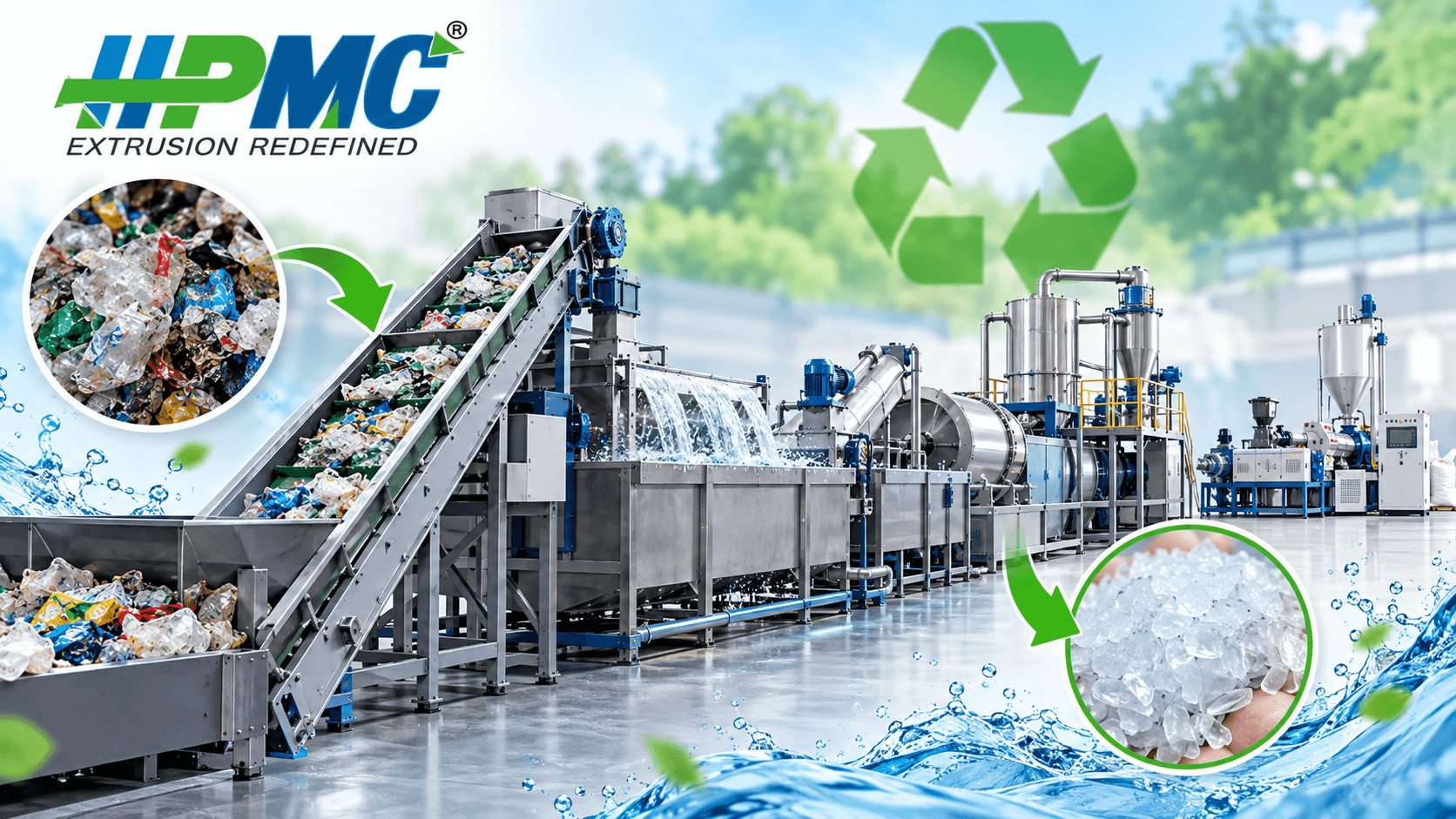
Plastic Waste → Sorting → Shredding → Washing → Friction Cleaning → Separation → Rinsing → Dewatering → Drying → Storage → Extrusion → Filtration → Pelletizing
Step 1: Material Sorting
Plastic waste is first sorted to remove unwanted materials and, where practical, separate different plastic types.
Proper sorting helps improve the consistency of the reprocessed material.
Step 2: Size Reduction
Large plastic items are reduced into smaller pieces using a suitable Plastic Shredder.
The required feed size depends on the washing equipment and the downstream recycling process.
Step 3: Washing
The shredded material enters the washing section.
Water and mechanical movement help remove dirt and other surface contaminants from the plastic.
Step 4: Friction Cleaning
A friction washer can provide additional mechanical cleaning by creating friction between the plastic pieces and the cleaning surfaces.
This stage can be useful for removing stubborn surface contamination.
Step 5: Material Separation
The recycling line can use suitable separation methods to remove unwanted materials from the plastic stream.
The appropriate separation technology depends on material density, shape, polymer type, and contamination.
Step 6: Rinsing
A rinsing stage can be incorporated where additional cleaning is required.
It helps remove remaining contaminants and residues before dewatering.
Step 7: Dewatering
After washing, the plastic contains moisture that needs to be removed.
A dewatering system mechanically removes a significant portion of the water from the material.
Step 8: Drying
Further drying may be required depending on the downstream reprocessing requirements.
Proper moisture management is particularly important before extrusion.
Step 9: Extrusion and Reprocessing
The cleaned and dried plastic can be transferred to a suitable Plastic Reprocessing Machine.
During extrusion, the plastic is melted and processed before filtration and pelletizing, depending on the required output.
Major Components of a Wet Plastic Reprocessing System
Feeding System
The feeding system introduces plastic waste into the recycling process.
It should be suitable for the shape, size, and bulk characteristics of the feedstock.
Plastic Shredder
A shredder reduces large plastic waste into smaller pieces suitable for washing and further processing.
The shredder configuration should be selected according to the material.
Washing System
The washing section removes dirt and other washable contaminants from the plastic.
Its design depends on the type and condition of the feed material.
Friction Washer
A friction washer provides mechanical cleaning and can improve the removal of difficult surface contamination.
Separation Equipment
Separation systems help remove unwanted materials from the plastic stream.
The appropriate method depends on the properties of the plastic and contaminants.
Dewatering Unit
The dewatering system removes water from washed plastic before drying.
Effective dewatering can reduce the load on the subsequent drying process.
Drying System
The drying system removes remaining moisture and prepares the plastic for downstream processing.
Storage and Conveying System
Conveyors and storage systems move cleaned material between different stages of the recycling line.
Extrusion System
The extrusion section melts and homogenizes the cleaned plastic for further processing.
Depending on the application, the extrusion system may be combined with filtration and pelletizing equipment.
Melt Filtration System
Filtration can help remove remaining solid contaminants from the polymer melt before pelletizing.
The filtration method should be selected according to the feedstock and required recycled material quality.
What Plastic Can Be Reprocessed Using Wet Recycling?
The suitability of a Wet Recycling Machine for Plastic Reprocess depends on the machine configuration and feedstock.
Potential materials can include suitable:
- HDPE plastic waste
- LDPE plastic waste
- PP waste
- Plastic films
- Packaging waste
- Containers
- Industrial plastic scrap
- Agricultural plastic waste
- Post-consumer plastic
- Manufacturing rejects
- Plastic processing waste
Different materials have different washing, drying, separation, and extrusion requirements.
For example, plastic film can require specialized feeding and drying arrangements because of its lightweight structure and ability to retain moisture.
Therefore, the recycling system should be selected according to the actual plastic material being processed.
Applications of Wet Plastic Reprocessing Machines
Industrial Plastic Scrap Reprocessing
Manufacturing facilities may generate plastic scrap that requires cleaning before it can be reprocessed.
A suitable wet recycling system can prepare contaminated scrap for further extrusion.
Post-Consumer Plastic Reprocessing
Post-consumer plastic can contain significant contamination.
Wet recycling can help clean suitable material before it enters the reprocessing stage.
Plastic Film Reprocessing
Suitable plastic films can be washed, dewatered, dried, and subsequently processed into recycled material.
Packaging Plastic Reprocessing
Selected plastic packaging waste can be processed through washing and recycling equipment before further reprocessing.
Agricultural Plastic Reprocessing
Agricultural plastic can contain soil and other contaminants, making washing an important stage before further processing.
Production Waste Recovery
Manufacturers can use suitable recycling equipment to recover usable plastic from production waste and processing rejects.
Benefits of a Wet Recycling Machine for Plastic Reprocess
A properly designed wet recycling system can provide several benefits to plastic processors.
Improved Material Cleanliness
Water-based washing can help remove dirt, dust, soil, and other washable contaminants from suitable plastic waste.
Better Preparation for Reprocessing
Clean and properly dried material can be better prepared for subsequent extrusion and pelletizing.
Reduced Contamination
Washing and separation stages can reduce the amount of unwanted material entering downstream equipment.
Better Utilization of Plastic Scrap
Suitable production scrap can be recovered and prepared for reuse rather than being immediately discarded.
Integrated Recycling Process
Wet recycling can be integrated with shredding, washing, drying, extrusion, filtration, and pelletizing equipment.
Improved Process Control
A properly configured line allows different processing stages to work together as part of a controlled plastic reprocessing operation.
Support for Recycled Granule Production
After cleaning and drying, suitable plastic can be converted into recycled granules through an appropriate extrusion and pelletizing system.
Wet Recycling Machine vs Dry Plastic Reprocessing
The choice between wet and dry processing depends primarily on the condition of the plastic feedstock.
A dry recycling process can be suitable for relatively clean production scrap where extensive washing is unnecessary.
Wet recycling is more appropriate when the feedstock contains washable contamination such as:
- Dirt
- Soil
- Dust
- Organic residues
- Surface deposits
- Other contaminants
Wet processing generally requires additional equipment for water circulation, wastewater handling, dewatering, and drying.
Therefore, the additional complexity of wet recycling should be evaluated against the contamination level and quality requirements of the feedstock.
How to Choose a Wet Recycling Machine for Plastic Reprocess
Selecting a recycling system requires careful evaluation of the complete material flow.
Identify the Plastic Type
Determine whether the material is HDPE, LDPE, PP, film, packaging waste, agricultural plastic, or another compatible plastic.
Evaluate Contamination
Understand what contaminants are present and how heavily the plastic is contaminated.
This determines the required washing and cleaning stages.
Check Feed Material Size
Large plastic pieces may require shredding or other size reduction before washing.
Determine Required Output
Define the desired condition of the material after washing and drying.
If the material will be pelletized, the downstream extrusion system should also be considered during machine selection.
Evaluate Moisture Requirements
Dewatering and drying requirements should be evaluated according to the plastic type and downstream process.
Consider Water Management
A wet recycling plant requires an appropriate approach to water collection, filtration, treatment, and recirculation.
Determine Production Requirements
The complete line should be appropriately balanced so that washing, dewatering, drying, extrusion, filtration, and pelletizing stages can operate according to the required production rate.
Consider Automation
Automation can help manage material flow and monitor important operating functions throughout the line.
Evaluate Maintenance and Support
Manufacturers should consider wear components, maintenance accessibility, spare parts, installation support, commissioning, and technical assistance before purchasing the machinery.
Wet Recycling Machine in a Complete Plastic Reprocess Line
A wet recycling machine generally works as part of a larger recycling and reprocessing system.
A typical integrated line may follow:
Plastic Waste → Sorting → Shredding → Washing → Friction Cleaning → Separation → Rinsing → Dewatering → Drying → Extrusion → Melt Filtration → Pelletizing → Recycled Plastic Granules
The exact configuration depends on the feedstock.
For heavily contaminated materials, additional washing or separation stages may be required.
For cleaner industrial scrap, a simpler configuration may be sufficient.
The objective is to create a balanced process in which the cleaned plastic is properly prepared for downstream reprocessing.
Water Management in Wet Plastic Reprocessing
Water management is an important part of any wet recycling plant.
The washing process removes contaminants from plastic and transfers them into the washing water.
A suitable water management system may include:
- Water collection
- Screening
- Settling
- Filtration
- Water recirculation
- Controlled fresh-water addition
- Periodic cleaning
The exact system depends on the type of plastic waste, contamination, washing process, plant layout, and local requirements.
Effective water management can help maintain stable washing performance and improve overall process control.
Maintenance of a Wet Recycling Machine
Regular maintenance helps maintain the efficiency and reliability of the recycling line.
Important areas include:
- Shredder blades and cutting components
- Washing tanks
- Friction washer
- Pumps
- Conveyors
- Separation equipment
- Dewatering unit
- Drying system
- Water filtration equipment
- Bearings
- Motors
- Electrical controls
Washing equipment should be cleaned regularly to prevent excessive accumulation of removed contaminants.
The dewatering and drying sections should also be inspected to maintain effective moisture removal.
Wear components should be checked according to operating conditions and manufacturer recommendations.
Why Choose HPMC for Plastic Reprocessing Machinery?
HPMC provides machinery solutions for plastic recycling, reprocessing, extrusion, compounding, and related polymer processing applications.
A Wet Recycling Machine for Plastic Reprocess can be selected according to the type of plastic, contamination level, material size, washing requirements, production requirements, moisture level, and downstream extrusion process.
Businesses planning to establish or upgrade a plastic reprocessing line can discuss their feedstock and processing requirements with HPMC to identify a suitable machinery configuration.
The complete process should be considered rather than selecting individual machines in isolation. Shredding, washing, separation, dewatering, drying, extrusion, filtration, and pelletizing should work together according to the characteristics of the material.
Conclusion
A Wet Recycling Machine for Plastic Reprocess is an important solution for plastic processors handling waste or scrap that requires washing before further reprocessing.
By combining size reduction, washing, mechanical cleaning, separation, dewatering, and drying, the system prepares suitable plastic material for downstream extrusion and recycled granule production.
The correct machine configuration depends on the type of plastic, contamination level, input size, required cleaning intensity, production requirements, moisture level, and downstream processing requirements.
When selecting plastic recycling machinery, manufacturers should also evaluate system integration, maintenance requirements, spare parts, installation support, and technical assistance.
For businesses looking to improve plastic scrap recovery and establish a controlled reprocessing workflow, a properly designed Wet Recycling Machine for Plastic Reprocess can become an important part of a complete plastic recycling and reprocessing system.
Frequently Asked Questions
Find quick answers to the most common questions about this topic.
A Wet Recycling Machine for Plastic Reprocess is a system that uses water-based washing and mechanical cleaning to prepare suitable plastic waste for further reprocessing.
Wet recycling is used when plastic contains dirt, soil, dust, organic residues, or other washable contaminants that need to be removed before further processing.
Depending on the system configuration, suitable HDPE, LDPE, PP, plastic films, packaging waste, agricultural plastic, industrial scrap, and other compatible plastic materials can be processed.
Large or irregular plastic waste generally needs suitable size reduction before entering the washing stage. The exact requirement depends on the feed material and recycling line configuration.
After washing, the plastic generally undergoes separation, dewatering, and drying. It can then be stored or transferred to an extrusion and pelletizing system for further reprocessing.
Yes. A wet recycling system can be integrated with suitable extrusion, filtration, and pelletizing equipment to create a complete plastic reprocessing line.
Suitable plastic films can be processed through wet recycling systems, but film-specific feeding, washing, dewatering, and drying requirements should be considered during system design.
Yes. Water collection, filtration, recirculation, cleaning, and wastewater management should be considered when designing a wet plastic recycling plant.
Consider the plastic type, contamination level, feed size, washing requirements, production output, water management, dewatering, drying, downstream extrusion, automation, maintenance, and technical support.