Introduction
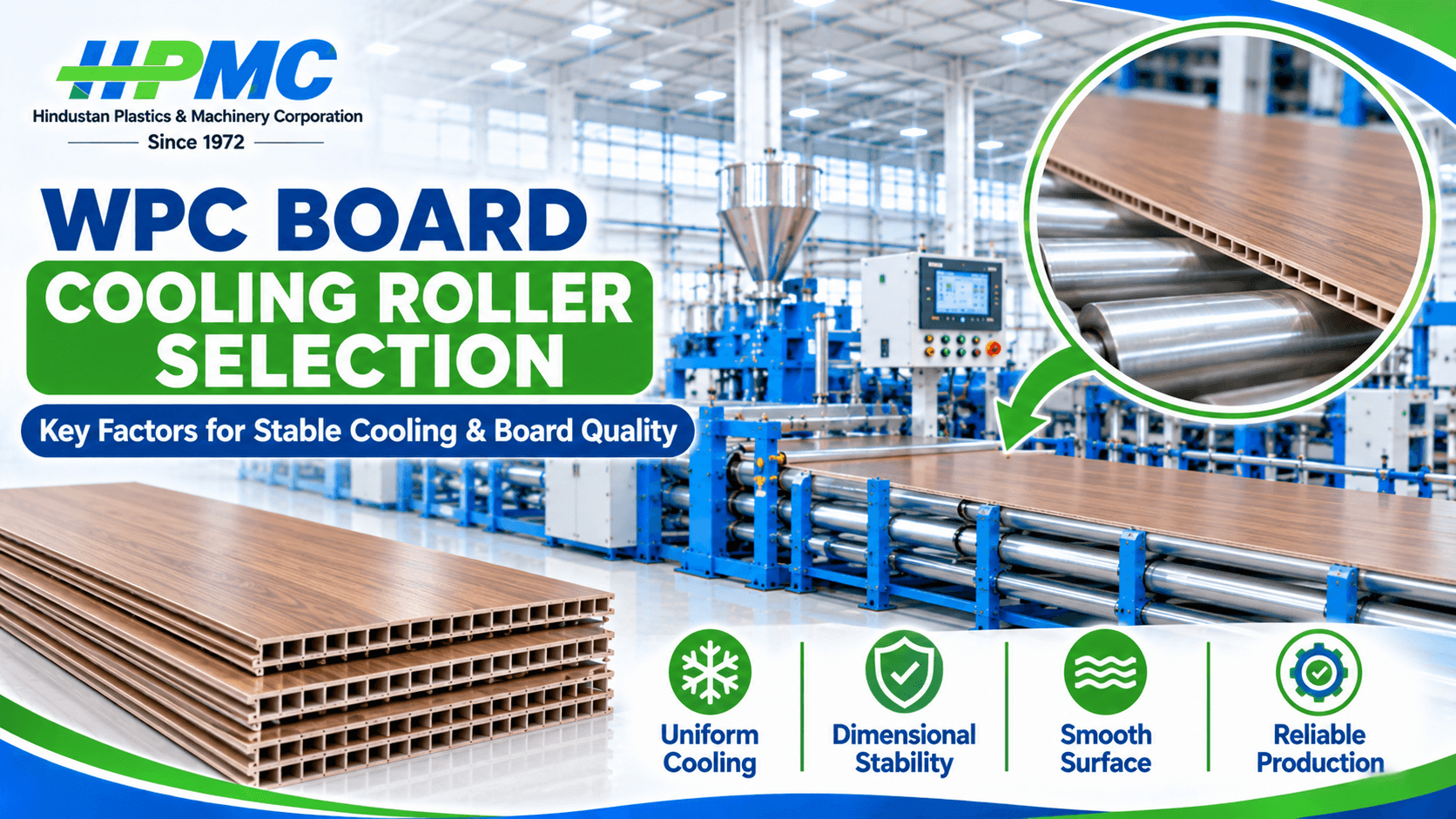
WPC (Wood Plastic Composite) boards are widely used in furniture manufacturing, interior decoration, wall panels, partitions, cabinets and construction applications. These boards combine thermoplastic materials with wood flour or wood fibre to produce products with different thicknesses, densities, designs and surface finishes. During manufacturing, maintaining consistent board quality is important, and the cooling section plays a major role in achieving the desired results. One important factor in this process is WPC Board Cooling Roller Selection.
Cooling rollers help support and guide the hot WPC board while it passes through the downstream cooling section. Their arrangement, surface condition, diameter, alignment and cooling configuration can influence board stability and finished-product quality. Selecting unsuitable rollers may contribute to surface marks, uneven cooling, dimensional variation and board deformation.
For manufacturers planning a new WPC board production line or upgrading existing equipment, understanding cooling roller selection is essential. The right configuration should match the board width, thickness, material formulation, production speed and required surface finish.
In this guide, we explain the importance of cooling rollers, different selection factors, common cooling problems, maintenance practices and practical ways to improve WPC board production quality.
What Is a WPC Board Cooling Roller?
A WPC board cooling roller is a cylindrical component used in the downstream section of a WPC board extrusion line. It supports and guides the board during the cooling and stabilisation process.
After the molten WPC material passes through the extrusion die, it enters the calibration and cooling section. Depending on the machine configuration, cooling rollers may be used to guide, support or assist in controlling the board during further cooling.
The main purpose of the cooling arrangement is to help the board maintain its required shape, thickness and surface condition while its temperature decreases.
Cooling roller design should be selected according to the board's physical properties, production requirements and the overall extrusion line configuration.
Why Is WPC Board Cooling Roller Selection Important?
Selecting suitable cooling rollers is important because the cooling stage influences the dimensional stability and appearance of the finished WPC board.
1. Uniform Board Cooling
Consistent cooling helps reduce temperature differences across the board. If cooling conditions vary significantly between different sections, the board may develop dimensional inconsistencies or surface defects.
2. Better Dimensional Stability
WPC boards need to maintain their specified width and thickness after extrusion. A suitable roller arrangement supports the board during cooling and helps maintain stable movement through the production line.
3. Improved Surface Finish
The roller surface comes into contact with the board in certain machine configurations. Damaged, dirty or unsuitable roller surfaces can leave unwanted marks on the finished product.
4. Reduced Board Deformation
Uneven cooling, improper support or incorrect handling can contribute to board bending and warping. Properly selected and aligned rollers help maintain stable board movement.
5. Consistent Production
A suitable cooling arrangement can support reliable downstream operation and reduce interruptions caused by board handling and dimensional problems.
Important Factors in WPC Board Cooling Roller Selection
1. Board Width and Dimensions
Board width is one of the first factors manufacturers should consider when selecting cooling rollers. The roller arrangement must provide suitable support across the board width.
For wider boards, roller dimensions, support arrangements and mechanical rigidity require particular attention. Insufficient support may allow unwanted deflection or movement during production.
Manufacturers should consider the maximum and minimum board widths they intend to produce before finalising the roller configuration.
2. Roller Diameter
Roller diameter influences the contact arrangement and mechanical characteristics of the cooling section. The appropriate diameter depends on the machine design, board thickness, production speed and required support.
A roller should not be selected based only on its physical size. Its compatibility with the complete cooling system and intended board specification is equally important.
3. Roller Surface Quality
Surface quality is important because rollers may come into direct contact with the WPC board. Scratches, dents, contamination and surface irregularities can affect the finished appearance.
Manufacturers should inspect roller surfaces for:
- Scratches and mechanical damage.
- Uneven surface conditions.
- Material deposits.
- Corrosion or contamination.
- Signs of excessive wear.
Suitable surface finishing should be discussed with the equipment manufacturer according to the intended WPC board finish.
4. Roller Material
Roller material should be selected according to operating conditions, temperature exposure, mechanical loading and maintenance requirements.
Industrial cooling rollers may use suitable metal construction and surface treatments depending on their application. The final choice should be based on the manufacturer's engineering recommendations rather than assuming that one material is suitable for every WPC production line.
5. Cooling System Compatibility
Cooling rollers must work with the overall cooling arrangement. Depending on the equipment design, the line may use water-based cooling, air cooling, calibration equipment or a combination of cooling methods.
Manufacturers should confirm the cooling requirements, temperature-control arrangement and available utilities before selecting the rollers.
6. Roller Alignment
Correct roller alignment helps maintain stable board movement. Misaligned rollers may contribute to uneven contact, tracking problems or surface marks.
During installation and maintenance, the roller arrangement should be checked for parallelism, positioning and mechanical stability.
7. Production Speed
The required production speed should also influence roller selection. A cooling arrangement designed for one operating speed may not provide the same performance under significantly different production conditions.
Manufacturers should consider extrusion output, board dimensions, haul-off speed and available cooling capacity together.
8. Load-Bearing Capacity
Cooling rollers must withstand the mechanical loads associated with the board and the operating arrangement. Their construction should provide sufficient rigidity under the expected working conditions.
For larger or heavier boards, manufacturers should pay particular attention to roller support, shaft design, bearings and frame construction.
Different Types of Cooling Roller Arrangements
The cooling roller configuration can vary depending on the WPC board extrusion line design.
1. Single-Side Roller Arrangement
Some production systems use rollers primarily to support and guide the board from one side. The arrangement depends on the calibration and cooling design of the line.
2. Multi-Roller Cooling Arrangement
A multi-roller configuration uses several rollers to guide and support the board through the downstream section. It can provide continuous support when designed according to the board dimensions and operating requirements.
3. Combined Calibration and Cooling Arrangement
Some WPC board production lines combine calibration and cooling equipment. This arrangement helps control board dimensions while reducing the material temperature.
The appropriate system depends on the extrusion process, board design and required finishing quality.
Common Problems Caused by Improper Cooling Roller Selection
1. Board Warping
Board warping may develop because of uneven cooling, material variation, insufficient support or unsuitable downstream handling.
Solution: Check the cooling arrangement, roller alignment and board support. Also inspect material consistency and extrusion conditions before making adjustments.
2. Surface Scratches
Scratches may develop when damaged or contaminated rollers come into contact with the board.
Solution: Inspect roller surfaces regularly, remove deposits using approved cleaning methods and replace damaged components when required.
3. Uneven Board Thickness
Thickness variation can originate from material flow, die configuration, calibration or other extrusion conditions. Roller support and alignment may also influence the board's stability during downstream processing.
Solution: Inspect the die, calibration system and roller arrangement. Measure board thickness at multiple positions to identify where the variation begins.
4. Surface Marks
Roller deposits, surface damage or inconsistent contact conditions can leave unwanted marks on WPC boards.
Solution: Maintain clean roller surfaces and check the mechanical condition of the cooling section. Confirm that the roller arrangement is appropriate for the required surface finish.
5. Board Bending
Board bending may occur when cooling and material shrinkage are not sufficiently uniform or when downstream support is inadequate.
Solution: Review the cooling process, support arrangement, production speed and material formulation. Identify the actual cause before changing machine settings.
6. Unstable Board Movement
Incorrect roller positioning or mechanical problems may affect the movement of the board through the downstream section.
Solution: Inspect alignment, bearings, drive components and supporting structures. Follow the machinery manufacturer's recommendations for adjustment and maintenance.
How to Select the Right Cooling Rollers for Different WPC Boards
Different WPC board products may require different cooling arrangements.
Solid WPC Boards
Solid boards generally require suitable support and cooling according to their thickness, density and dimensions. Manufacturers should consider the board's weight and cooling characteristics when evaluating roller configuration.
WPC Foam Boards
Foam boards have different internal structures and physical characteristics compared with solid boards. Their cooling and support requirements should be evaluated according to foam density, board thickness and surface quality.
Decorative WPC Boards
Decorative boards may require additional attention to surface condition. Roller surfaces should be suitable for the required decorative finish and should not create unwanted marks.
Wide WPC Boards
Wide boards require appropriate mechanical support across their width. Roller rigidity, alignment and structural design should be considered carefully.
Manufacturers planning a complete production setup can explore HPMC's WPC Board Plant Manufacturing Process and Machine Guide to understand the major stages involved in WPC board production.
Role of Cooling Rollers in the Complete WPC Board Extrusion Line
Cooling rollers should not be selected independently of the other production equipment. Their performance depends on how the complete extrusion line is designed and operated.
A typical WPC board extrusion line includes raw material preparation, mixing, feeding, extrusion, die shaping, calibration, cooling, haul-off, cutting and stacking.
The extruder processes the material and supplies it to the die. The die creates the required board shape, while calibration and cooling equipment help establish the required dimensions and stabilise the material.
The downstream roller arrangement supports board movement and should be compatible with the production line's intended output.
Manufacturers can review the HPMC WPC Board Plant for information about WPC extrusion machinery and available machine configurations.
Maintenance Tips for WPC Board Cooling Rollers
Regular maintenance helps maintain roller performance and reduce unexpected production interruptions.
Important maintenance activities include:
- Inspect roller surfaces for scratches and damage.
- Clean material deposits from contact surfaces.
- Check roller alignment and positioning.
- Inspect bearings and supporting components.
- Check shafts and mechanical connections.
- Monitor cooling-system performance.
- Inspect for unusual vibration or noise.
- Check the roller frame and mounting arrangement.
- Follow the recommended lubrication schedule.
- Maintain maintenance and inspection records.
Maintenance should always be performed according to the machine manufacturer's instructions and appropriate industrial safety procedures.
How to Improve WPC Board Cooling Efficiency
Improving cooling efficiency requires attention to the complete production process rather than simply increasing the cooling rate.
Maintain Stable Cooling Conditions
Keep cooling conditions consistent according to the material and machine configuration. Sudden changes may affect board dimensions and surface quality.
Coordinate Extrusion and Haul-Off Speed
Extrusion output and downstream movement should remain properly coordinated. Unstable movement can affect the cooling process and board handling.
Inspect Roller Alignment
Check that rollers remain correctly positioned and that the board moves smoothly through the cooling section.
Monitor Finished Board Quality
Inspect board thickness, width, surface finish and flatness. Record recurring defects to help identify process variations.
Maintain Equipment Regularly
Regular inspection of cooling rollers, calibration equipment and supporting components helps maintain reliable operation.
How to Choose a Reliable WPC Board Machine Manufacturer
Choosing the right machine manufacturer is important when planning a new WPC board manufacturing facility.
Manufacturers should evaluate the complete production line, technical specifications, material compatibility, production capacity and after-sales support.
Important points to consider include:
- Machine Configuration: Check whether the equipment matches your required board dimensions and product type.
- Production Capacity: Discuss expected output for the actual material formulation and product specifications.
- Cooling Arrangement: Understand the calibration and cooling configuration supplied with the production line.
- Quality of Components: Review the construction of rollers, bearings, motors, drives and other important components.
- Installation Support: Confirm commissioning, operator training and technical assistance.
- Maintenance Requirements: Ask about spare parts, maintenance schedules and long-term servicing.
HPMC also manufactures equipment for WPC profile production. Businesses interested in shaped WPC products can explore the HPMC WPC Profile Plant to understand the differences between board and profile extrusion applications.
Why Technical Support Matters in WPC Board Production
Even a properly selected machine requires suitable installation, commissioning and maintenance. Technical support can help manufacturers understand equipment operation, identify production problems and maintain consistent working conditions.
Before purchasing machinery, discuss the complete product specification, raw material, expected production capacity, factory requirements and downstream equipment with the supplier.
Manufacturers can also learn more about HPMC's Manufacturing Facility and Engineering Process, including machine design, manufacturing, quality testing and installation support.
Conclusion
WPC Board Cooling Roller Selection is an important consideration when planning or upgrading a WPC board extrusion line. Roller diameter, surface quality, material, alignment, mechanical strength and cooling-system compatibility all influence the suitability of the cooling arrangement.
The right cooling configuration should match the board width, thickness, material formulation and required production speed. Regular maintenance and proper inspection can help reduce surface marks, unstable board movement and avoidable production problems.
Manufacturers should evaluate cooling rollers as part of the complete extrusion system rather than treating them as independent components. A properly planned production line, combined with consistent operating practices, can help improve board quality and manufacturing efficiency.
Contact Hindustan Plastics and Machinery Corporation (HPMC)
Hindustan Plastics and Machinery Corporation (HPMC) provides plastic extrusion machinery solutions for WPC, PVC, pipe extrusion, profiles, compounding and recycling applications. Manufacturers planning a WPC board production line or looking to improve their existing machinery can contact the HPMC team to discuss suitable equipment configurations and technical requirements.
Company: Hindustan Plastics and Machinery Corporation (HPMC)
Address: 5, Category II, DSIDC Industrial Area, Nangloi, Delhi – 110041, India
Phone: +91 95605 96392
Email: info@hindustanplastics.com
Website: https://www.hindustanplastics.com/
Request a Quote: https://www.hindustanplastics.com/get-in-touch
Google Business Profile: https://share.google/lBK4uD53HqY891ynv
When contacting HPMC, share your required WPC board width, thickness, material formulation, expected production capacity, cooling requirements and existing machinery details.
Contact HPMC today to discuss your WPC board extrusion machinery requirements and explore suitable manufacturing solutions for your business.
Frequently Asked Questions
Find quick answers to the most common questions about this topic.
WPC Board Cooling Roller Selection is the process of choosing suitable rollers according to board dimensions, material characteristics, production speed, surface requirements and cooling-system configuration.
Cooling rollers help support and guide the board through the downstream section. Their arrangement and condition can influence board stability, surface quality and production consistency.
Important factors include roller diameter, surface quality, material, alignment, mechanical strength, board width, thickness and compatibility with the cooling system.
Yes. Damaged, dirty or unsuitable roller surfaces may contribute to scratches, marks and other surface imperfections.
Incorrect alignment may cause unstable board movement, uneven contact and tracking problems. Proper alignment helps maintain consistent downstream movement.
Inspection frequency depends on production intensity and equipment design. Manufacturers should follow the machine manufacturer's maintenance schedule and perform routine condition checks.
Yes. Solid and foam boards have different physical characteristics. Their cooling and support arrangements should be selected according to density, thickness, structure and product specifications.
Cooling rollers are one factor to inspect, but warping can also result from uneven cooling, material variation, extrusion conditions and downstream handling.
Manufacturers should maintain stable cooling conditions, suitable roller alignment, proper production synchronization and regular inspection of the cooling equipment.
They should review board dimensions, production capacity, roller specifications, cooling configuration, machine compatibility, maintenance requirements and technical support availability.