
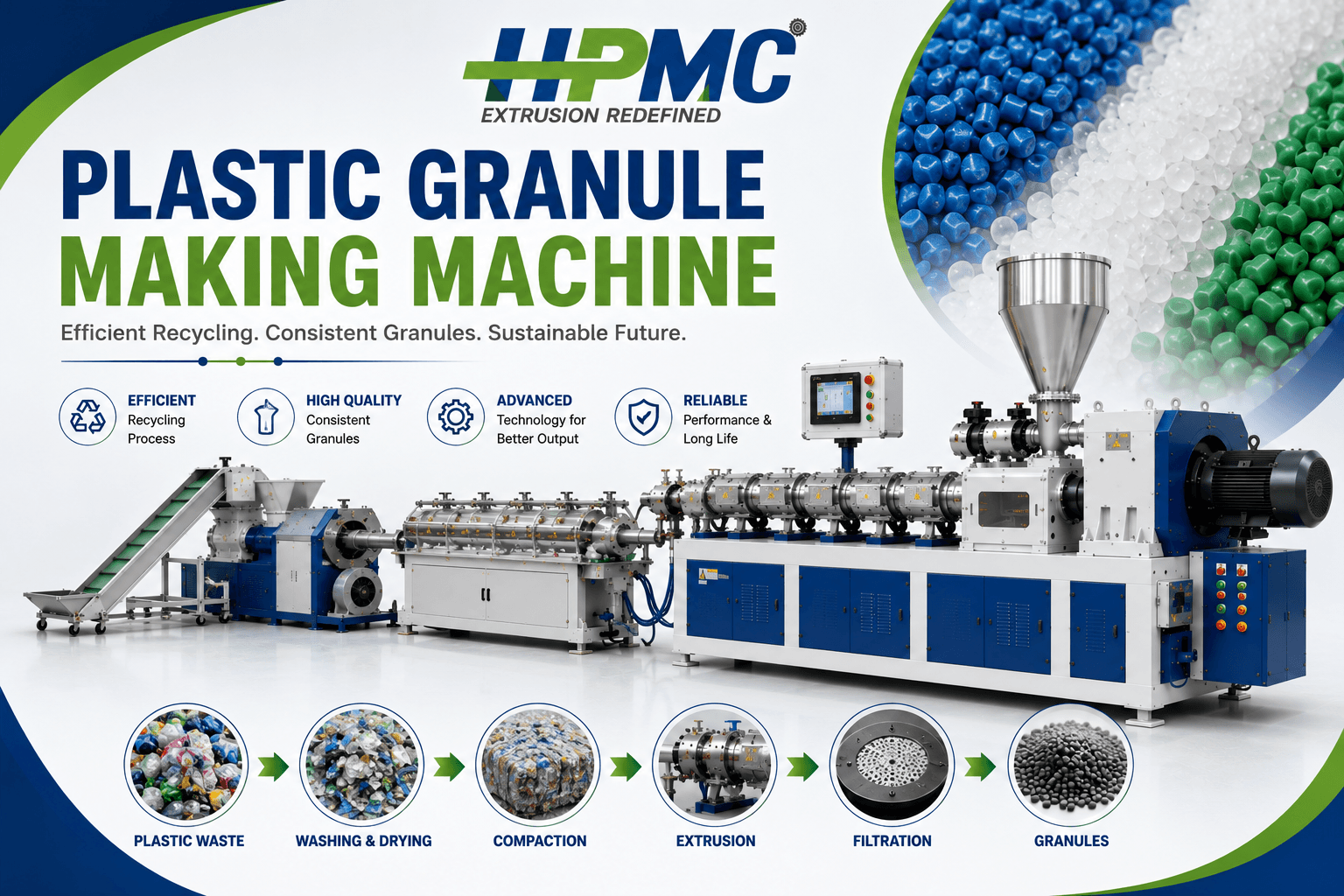
Plastic waste is generated across manufacturing, packaging, agriculture, consumer products, and many other industries. Instead of sending suitable plastic waste for disposal, recycling businesses can process it into reusable plastic granules that can serve as a raw material for various manufacturing applications.
A Plastic Granule Making Machine is designed to convert suitable plastic waste or scrap into recycled plastic granules through a controlled recycling and extrusion process. Depending on the material, the complete system may include shredding, washing, drying, feeding, compaction, extrusion, filtration, cooling, and pelletizing.
For businesses planning to establish or expand a plastic recycling operation, choosing the right Waste Plastic Granule Making Machine is important for achieving consistent output, efficient material processing, and reliable production.
This guide explains how plastic granule machines work, the types of waste they can process, important machine components, and what to consider when selecting Waste Plastic Recycling Machine Manufacturers.
What is a Plastic Granule Making Machine?
A Plastic Granule Making Machine is a recycling and extrusion system used to process plastic waste into small, reusable plastic granules.
The machine melts and homogenizes suitable plastic waste before filtering and converting it into pellets or granules.
Depending on the type of plastic being processed, the recycling line may include:
- Plastic shredder
- Conveyor or feeding system
- Washing system
- Drying system
- Compactor
- Recycling extruder
- Melt filtration system
- Die head
- Pelletizing system
- Cooling system
- Granule collection system
- Electrical control panel
Not every application requires all these components. The configuration depends on the type and condition of the plastic waste, required production capacity, contamination level, moisture content, and desired recycled material quality.
How Does a Waste Plastic Granule Making Machine Work?
The plastic recycling process generally starts with the collection and sorting of suitable plastic waste.
The material may then be shredded into smaller pieces to make handling and feeding easier. If the waste requires cleaning, it can pass through washing and drying equipment before entering the extrusion stage.
For lightweight materials such as films, a compactor may be used to increase bulk density and improve feeding into the extruder.
The prepared material enters the recycling extruder, where controlled heating and mechanical action melt and homogenize the plastic.
The molten polymer then passes through a filtration system. Filtration helps remove remaining solid contaminants from the melt.
After filtration, the material passes through a die and is converted into strands or another suitable form before being cooled and pelletized.
The resulting recycled plastic granules can then be collected, inspected, packaged, and used in suitable manufacturing applications.
What Types of Plastic Waste Can Be Recycled into Granules?
The type of waste that can be processed depends on the machine configuration and material preparation.
Common materials may include:
- Plastic films
- Packaging waste
- Agricultural plastic waste
- Woven sacks
- Raffia
- Post-industrial plastic scrap
- Selected post-consumer plastic waste
- Production rejects
- Plastic lumps and scraps
Different polymers have different processing requirements. Therefore, the recycling machine should be selected according to the actual material rather than using a single generic machine configuration for every plastic waste stream.
Key Components of a Plastic Granule Making Machine
Understanding the major components can help businesses evaluate different recycling systems.
Shredding System
A shredder reduces larger plastic waste into manageable pieces. Proper size reduction can improve feeding and prepare the material for subsequent recycling stages.
Feeding System
The feeding system transfers the prepared material into the recycling line. Stable feeding is important for maintaining consistent extrusion output.
Compactor
A compactor can be particularly useful for low-density plastic films and lightweight waste. It increases the apparent bulk density of the material and can improve feeding consistency.
Recycling Extruder
The extruder is the core processing component of the granulation system. It melts, mixes, and homogenizes the plastic before filtration and pelletizing.
Melt Filtration System
The filtration system removes unwanted solid particles from the molten plastic. The required filtration arrangement depends on the contamination level of the input material.
Pelletizing System
The pelletizing system converts the processed polymer into manageable recycled granules that can be stored, transported, and used in subsequent manufacturing processes.
How to Choose a Plastic Granule Making Machine
Selecting a machine based only on its price can result in unsuitable equipment and higher operating costs. Businesses should evaluate the entire recycling process.
Identify the Plastic Material
First determine the polymer type you plan to recycle. Different plastics may require different extrusion temperatures, screw configurations, filtration arrangements, and processing conditions.
Evaluate the Condition of the Waste
Consider whether the material is clean, washed, printed, wet, contaminated, mixed, or post-industrial.
The condition of the input material can influence the requirement for washing, drying, filtration, and other preprocessing equipment.
Determine Production Capacity
Calculate the required output in kilograms per hour before selecting the machine.
The extruder, compactor, feeding system, filtration system, and pelletizing equipment should be appropriately matched to the desired production capacity.
Consider Filtration Requirements
Contaminated plastic waste requires suitable melt filtration. Discuss the expected contamination level with the manufacturer so that an appropriate filtration solution can be selected.
Evaluate Energy Efficiency
Energy consumption is an important operating cost in plastic recycling. Consider the efficiency of the motors, heating systems, extruder, compactor, and other components when comparing different machines.
Consider Automation
PLC-based automation can help monitor important production parameters such as temperature, extrusion speed, feeding rate, and pelletizing conditions.
Automation can also reduce manual intervention and support more consistent production.
Check After-Sales Support
A reliable machinery manufacturer should provide installation, commissioning, operator training, maintenance guidance, spare parts, and technical assistance.
This support can be particularly important during the initial commissioning of a recycling plant.
Benefits of a Waste Plastic Granule Making Machine
Investing in an appropriate Waste Plastic Granule Making Machine can provide several benefits to recycling businesses.
Converts Plastic Waste into Reusable Material
The primary purpose of plastic granulation is to convert suitable plastic waste into a more manageable and reusable form.
Improves Material Handling
Granules are easier to store, transport, weigh, and feed into many subsequent manufacturing processes than loose plastic waste.
Supports Recycling Operations
A granulation system allows suitable waste streams to be processed into recycled material instead of being discarded.
Consistent Output
Properly designed extrusion, filtration, and pelletizing systems can help produce granules with relatively consistent characteristics when the input material is properly controlled.
Production Flexibility
Depending on the machine configuration, recycling businesses can process different forms of plastic waste using appropriate preprocessing and processing arrangements.
Better Resource Utilization
Recovering suitable plastic scrap can help businesses make better use of material that would otherwise become waste.
Waste Plastic Recycling Machine Manufacturers: What Should You Check?
When comparing Waste Plastic Recycling Machine Manufacturers, look beyond brochures and advertised production capacity.
Evaluate the manufacturer's experience with your specific plastic material and application.
Important factors include:
- Experience in plastic recycling machinery
- Machine design and configuration
- Extruder technology
- Screw and barrel specifications
- Filtration system
- Pelletizing technology
- Automation
- Energy efficiency
- Customization options
- Installation support
- Spare parts availability
- Technical service
It is also useful to discuss your actual waste material with the manufacturer before finalizing the equipment.
A machine designed for clean production scrap may not be appropriate for heavily contaminated post-consumer material without additional processing and filtration.
Plastic Granule Making Machine for Different Recycling Applications
Plastic granulation technology can be used in different recycling operations depending on the material.
For example, film recycling may require shredding, washing, drying, and compaction before extrusion. Rigid plastic scrap may require a different size-reduction and feeding arrangement.
Similarly, materials with higher contamination levels may require stronger or more frequently cleaned filtration systems.
This is why the recycling plant should be designed around the material characteristics rather than selecting equipment based solely on the desired granule output.
For lightweight plastic waste, a Compactor Type for Plastic Recycling can also be considered where appropriate.
Why Choose HPMC for Plastic Recycling Machinery?
HPMC provides plastic recycling, reprocessing, extrusion, compounding, and profile machinery for different polymer processing applications.
Our solutions can be configured according to the type of plastic waste, required production capacity, material condition, filtration requirements, and desired automation level.
Businesses looking for a Plastic Granule Making Machine or evaluating Waste Plastic Recycling Machine Manufacturers can discuss their material, production requirements, and recycling objectives with HPMC to determine a suitable machine configuration.
The focus is on appropriate extrusion technology, reliable machine components, controlled processing, and technical support for long-term recycling operations.
Conclusion
A Plastic Granule Making Machine is an important part of many plastic recycling operations because it converts suitable plastic waste into manageable recycled granules. The right system can help improve material handling, production efficiency, filtration, and the consistency of recycled output.
Before purchasing a Waste Plastic Granule Making Machine, businesses should identify the plastic material, evaluate the condition of the waste, determine the required production capacity, and understand the need for shredding, washing, drying, compaction, extrusion, filtration, and pelletizing.
When comparing Waste Plastic Recycling Machine Manufacturers, technical experience and after-sales support should be considered alongside machine specifications and price.
Selecting a machine based on the actual characteristics of your plastic waste can help create a more reliable and efficient recycling operation.
Frequently Asked Questions
Find quick answers to the most common questions about this topic.
A Plastic Granule Making Machine is a recycling extrusion system that processes suitable plastic waste into reusable plastic granules or pellets.
Depending on the machine configuration, suitable materials can include films, packaging waste, agricultural plastics, woven sacks, raffia, post-industrial scrap, and selected post-consumer plastic waste.
Not always. The requirement depends on the condition and contamination level of the input material. Some materials may require washing and drying, while clean production scrap may require less preprocessing.
A compactor can increase the apparent bulk density of lightweight plastic waste and help improve feeding into the recycling extruder.
Consider experience with your specific material, production capacity, extrusion technology, filtration system, pelletizing technology, automation, energy efficiency, customization, spare parts, and after-sales technical support.
Yes, suitable recycled granules can be used as a raw material in appropriate plastic manufacturing applications, depending on the polymer type and required product properties.