
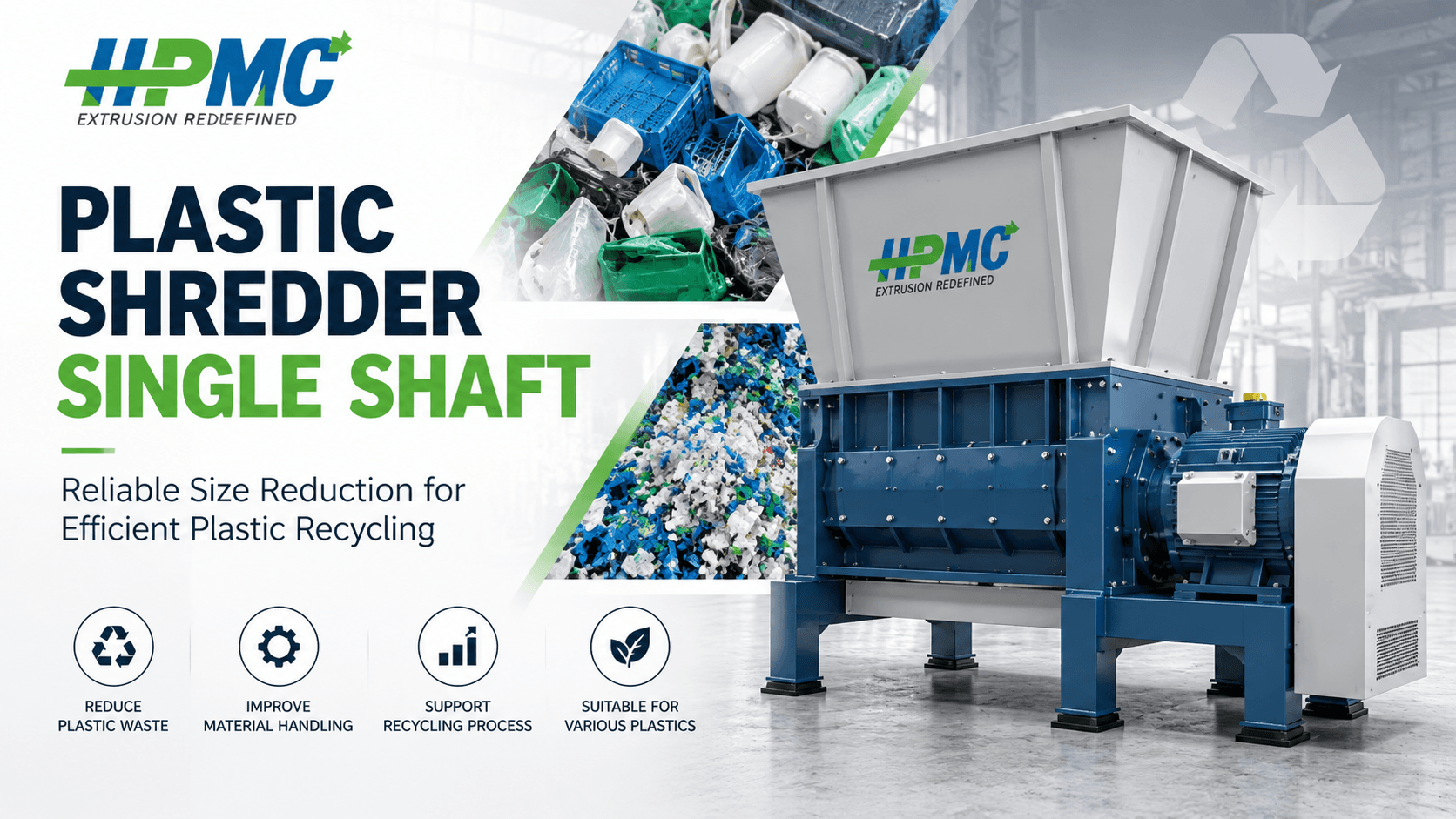
Plastic recycling and manufacturing industries generate different types of plastic waste, including production scrap, rejected products, plastic lumps, purgings, sheets, profiles, and other rigid plastic materials. Large and bulky plastic waste can be difficult to handle and may require size reduction before further processing.
A Plastic Shredder Single Shaft is designed to reduce suitable plastic waste into smaller, manageable pieces. The single-shaft configuration can be used in plastic recycling and reprocessing applications where controlled size reduction is required before downstream processing.
For recycling plants and plastic manufacturers, choosing the right Single Shaft Plastic Shredder depends on the type of material, input size, required capacity, output requirements, and the next stage of processing.
What Is a Plastic Shredder Single Shaft?
A Plastic Shredder Single Shaft is an industrial size-reduction machine that uses a single rotating shaft fitted with cutting elements to process plastic waste.
The machine is designed to reduce larger plastic materials into smaller pieces that can be handled and processed more efficiently.
Depending on the application, shredded plastic can be sent to:
- Grinding equipment
- Washing systems
- Drying systems
- Plastic recycling extruders
- Reprocessing lines
- Melt filtration systems
- Pelletizing systems
The machine configuration should be selected according to the material being processed and the requirements of the complete recycling line.
Why Is a Single Shaft Plastic Shredder Important?
Plastic waste can vary significantly in size, shape, thickness, and hardness. Large plastic pieces may not be suitable for direct feeding into downstream equipment.
A Single Shaft Shredder can help prepare this material for further processing.
1. Size Reduction
The primary function of the machine is to reduce larger plastic waste into smaller pieces.
2. Better Material Handling
Smaller shredded pieces can be easier to convey, store, and feed into subsequent machinery.
3. Recycling Line Preparation
Shredding can serve as an initial size-reduction stage before grinding, washing, extrusion, or other recycling processes.
4. Processing Manufacturing Scrap
Plastic manufacturers can use shredding equipment to process suitable production waste and rejected material.
5. Improved Feed Preparation
Preparing oversized plastic waste before downstream processing can make the overall material flow more manageable.
How Does a Plastic Shredder Single Shaft Work?
The working principle of a Single Shaft Plastic Shredder is based on controlled mechanical cutting.
Step 1: Plastic Waste Feeding
Plastic waste is introduced through the machine's feeding system.
Depending on the configuration, the input may include:
- Plastic lumps
- Rigid plastic scrap
- Production rejects
- Plastic purgings
- Sheets
- Profiles
- Plastic components
- Industrial plastic waste
Step 2: Material Movement
The rotating shaft moves the material toward the cutting area.
Step 3: Cutting and Shredding
Cutting elements mounted on the rotating shaft interact with the material and reduce it into smaller pieces.
Step 4: Size Control
Depending on the machine design, a screen or other size-control arrangement can help determine the resulting output.
Step 5: Discharge
The processed plastic is discharged and transferred to the next stage of the recycling or reprocessing process.
Main Components of a Plastic Shredder Single Shaft
A reliable Plastic Shredder Machine consists of several important components.
1. Feeding Hopper
The hopper receives the plastic waste and directs it into the shredding chamber.
2. Shredding Chamber
This is the main processing area where the plastic material is reduced in size.
3. Single Rotor Shaft
The single rotating shaft carries the cutting elements and performs the primary shredding action.
4. Cutting Elements
The cutters interact with the plastic material to break and reduce it.
5. Drive System
The drive system supplies the mechanical power required for shredding.
6. Screen
Where applicable, the screen helps control the size of the discharged material.
7. Discharge System
The discharge arrangement transfers the processed plastic to the next processing stage.
8. Control System
The control system allows operators to operate and monitor the machine.
What Types of Plastic Waste Can a Single Shaft Shredder Process?
A Plastic Shredder Single Shaft can be configured for different types of plastic waste.
Common applications can include:
- Plastic lumps
- Plastic purgings
- Rigid plastic scrap
- Production rejects
- Injection moulding scrap
- Blow moulding scrap
- Plastic sheets
- Plastic profiles
- Large plastic components
- Industrial plastic waste
The actual suitability depends on material properties, dimensions, contamination, and machine configuration.
A material assessment is recommended before selecting the final machine.
Applications of Plastic Shredder Single Shaft
A Single Shaft Plastic Shredder can be used in various plastic recycling and manufacturing applications.
Plastic Recycling Plants
Plastic waste can be shredded before grinding, washing, extrusion, or other recycling processes.
Plastic Manufacturing
Manufacturers can process suitable production scrap and rejected plastic products.
Injection Moulding
Suitable rejected components and production waste can be reduced for further processing.
Blow Moulding
The machine can be used for appropriate rigid plastic waste generated during production.
Plastic Reprocessing
Shredded plastic can be prepared for subsequent recycling and reprocessing equipment.
Industrial Plastic Waste Management
Industries generating bulky plastic scrap can use single-shaft shredding as part of their waste-processing system.
Benefits of a Plastic Shredder Single Shaft
Investing in the right Single Shaft Shredder can provide several operational advantages.
Efficient Plastic Size Reduction
The machine is designed to reduce larger plastic waste into smaller pieces.
Better Material Handling
Shredded plastic can be easier to move, store, convey, and feed.
Suitable for Bulky Plastic Waste
The configuration can be suitable for processing larger and difficult-to-handle plastic materials.
Supports Recycling Operations
The shredder can act as a preparation stage in a plastic recycling line.
Processing of Production Scrap
Manufacturers can recover suitable plastic scrap for further recycling.
Easy Integration
A single-shaft shredder can be incorporated into different plastic processing and recycling setups.
Flexible Applications
The machine can be configured according to different material and processing requirements.
Plastic Shredder Single Shaft vs Grinder
A shredder and grinder perform different size-reduction functions.
A Single Shaft Plastic Shredder is generally used for initial reduction of larger plastic waste.
A grinder is generally used for further reduction into smaller particles.
A typical processing sequence can be:
Large Plastic Waste → Single Shaft Shredder → Grinder → Washing/Drying → Extrusion → Pelletizing
However, the actual configuration depends on the material and final output requirements.
Plastic Shredder Single Shaft vs Twin Shaft Shredder
Single-shaft and twin-shaft shredders have different configurations and may be suitable for different applications.
A Single Shaft Shredder uses one primary rotating shaft with cutting elements.
A Twin Shaft Shredder uses two rotating shafts and is generally selected according to the characteristics of the material and required shredding action.
When comparing the two, businesses should evaluate:
- Type of plastic waste
- Material dimensions
- Material hardness
- Required throughput
- Desired output size
- Feeding conditions
- Downstream equipment
- Maintenance requirements
The best choice depends on the specific recycling application rather than simply the number of shafts.
How to Choose the Right Plastic Shredder Single Shaft?
Selecting the correct machine is an important investment decision.
1. Identify the Plastic Material
Determine whether you are processing plastic lumps, purgings, sheets, profiles, rejected products, or other plastic waste.
2. Evaluate Input Size
Measure the approximate dimensions and shape of the material entering the machine.
3. Check Material Properties
Consider:
- Plastic type
- Hardness
- Thickness
- Density
- Shape
- Moisture
- Contamination
4. Determine Required Capacity
Estimate the amount of material that needs to be processed according to your production requirements.
5. Define Output Requirements
The desired output size should be determined according to the next stage of processing.
6. Consider Downstream Machinery
Check compatibility with grinders, washing systems, dryers, extruders, and other equipment.
7. Evaluate Maintenance
Consider access to cutters, wear components, cleaning requirements, and routine maintenance.
8. Choose the Right Manufacturer
A manufacturer should understand your material and application and recommend a suitable machine configuration.
Plastic Shredder in a Recycling Line
A Plastic Shredder Single Shaft can be integrated into a complete plastic recycling process.
A possible recycling workflow is:
Plastic Waste → Single Shaft Plastic Shredder → Grinding → Washing → Drying → Extrusion → Melt Filtration → Pelletizing
Not every application requires every stage.
For example, clean production scrap may require fewer processing stages, while contaminated post-consumer plastic may require additional cleaning and preparation.
The recycling line should therefore be designed according to:
- Input material
- Contamination level
- Moisture
- Required recycled material quality
- Production capacity
- Desired final product
- Downstream processing requirements
Single Shaft Shredder for Plastic Manufacturing Scrap
Plastic manufacturing facilities can generate different forms of scrap during production.
Examples include:
- Rejected components
- Production waste
- Plastic purgings
- Oversized scrap
- Off-specification products
- Process waste
A Single Shaft Plastic Shredder can reduce suitable scrap into manageable pieces for further processing.
This can help manufacturers incorporate scrap recovery into their plastic production workflow.
Maintenance of a Plastic Shredder Single Shaft
Regular maintenance is important for maintaining reliable shredding performance.
Important maintenance activities include:
- Inspecting cutting elements
- Checking cutter condition
- Inspecting the rotor and shaft
- Checking bearings
- Monitoring the drive system
- Cleaning the shredding chamber
- Inspecting electrical components
- Checking mechanical connections
- Following the manufacturer's maintenance recommendations
Maintenance frequency depends on material type, contamination, operating conditions, and machine usage.
Factors Affecting Plastic Shredder Performance
Several factors can influence the performance of a Plastic Shredder Single Shaft.
Material Characteristics
Plastic type, hardness, density, thickness, and shape can influence shredding performance.
Input Size
Large or irregularly shaped material may require an appropriate feeding and chamber configuration.
Contamination
Foreign materials such as metal or stones can increase wear and may damage machine components.
Cutter Condition
Properly maintained cutting components are important for consistent shredding.
Feeding Method
Consistent material feeding can contribute to stable operation.
Machine Configuration
Rotor design, cutter arrangement, drive system, and size-control arrangement can influence performance.
Downstream Requirements
The desired output should be compatible with the next stage of the recycling process.
Why Choose HPMC for Plastic Shredding Solutions?
HPMC provides plastic recycling and processing machinery for different plastic waste and reprocessing applications.
For businesses looking for a Plastic Shredder Single Shaft, machine selection should be based on the actual material, input dimensions, production requirements, desired output, and downstream recycling process.
HPMC can help customers evaluate their application and identify a suitable shredding solution for their plastic recycling or reprocessing setup.
The objective is to select a practical machine configuration that matches the customer's material and production requirements.
Conclusion
A Plastic Shredder Single Shaft is an important size-reduction solution for plastic recycling plants, manufacturing units, and reprocessing businesses handling bulky or rigid plastic waste.
By reducing larger plastic materials into smaller and more manageable pieces, the machine can prepare suitable feed for grinding, washing, extrusion, and further recycling processes.
When purchasing a Single Shaft Plastic Shredder, businesses should evaluate the plastic material, input dimensions, contamination, required capacity, desired output, machine configuration, and downstream equipment.
Choosing the right machine and manufacturer is essential for developing a reliable and efficient plastic recycling or reprocessing operation.
For businesses looking for a Plastic Shredder Single Shaft, HPMC can provide plastic processing and recycling machinery solutions based on specific material and application requirements.
Frequently Asked Questions
Find quick answers to the most common questions about this topic.
A Plastic Shredder Single Shaft is an industrial size-reduction machine that uses one rotating shaft with cutting elements to process suitable plastic waste.
Depending on its configuration, it can process plastic lumps, purgings, rigid plastic scrap, production rejects, sheets, profiles, plastic components, and other suitable plastic waste.
A single-shaft shredder uses one primary rotating shaft, while a twin-shaft shredder uses two rotating shafts. The appropriate machine depends on the material and application requirements.
Yes. Shredding can be used as an initial size-reduction stage before grinding when the recycling process requires further particle-size reduction.
Yes. A plastic shredder can prepare suitable plastic waste for further recycling and reprocessing.
Consider the plastic type, input size, material properties, contamination, required capacity, output size, downstream machinery, and maintenance requirements.
Yes, a suitably configured machine can process appropriate production scrap and rejected plastic materials.
Yes. Depending on the application, it can be integrated with grinding, washing, drying, extrusion, filtration, and pelletizing equipment.