
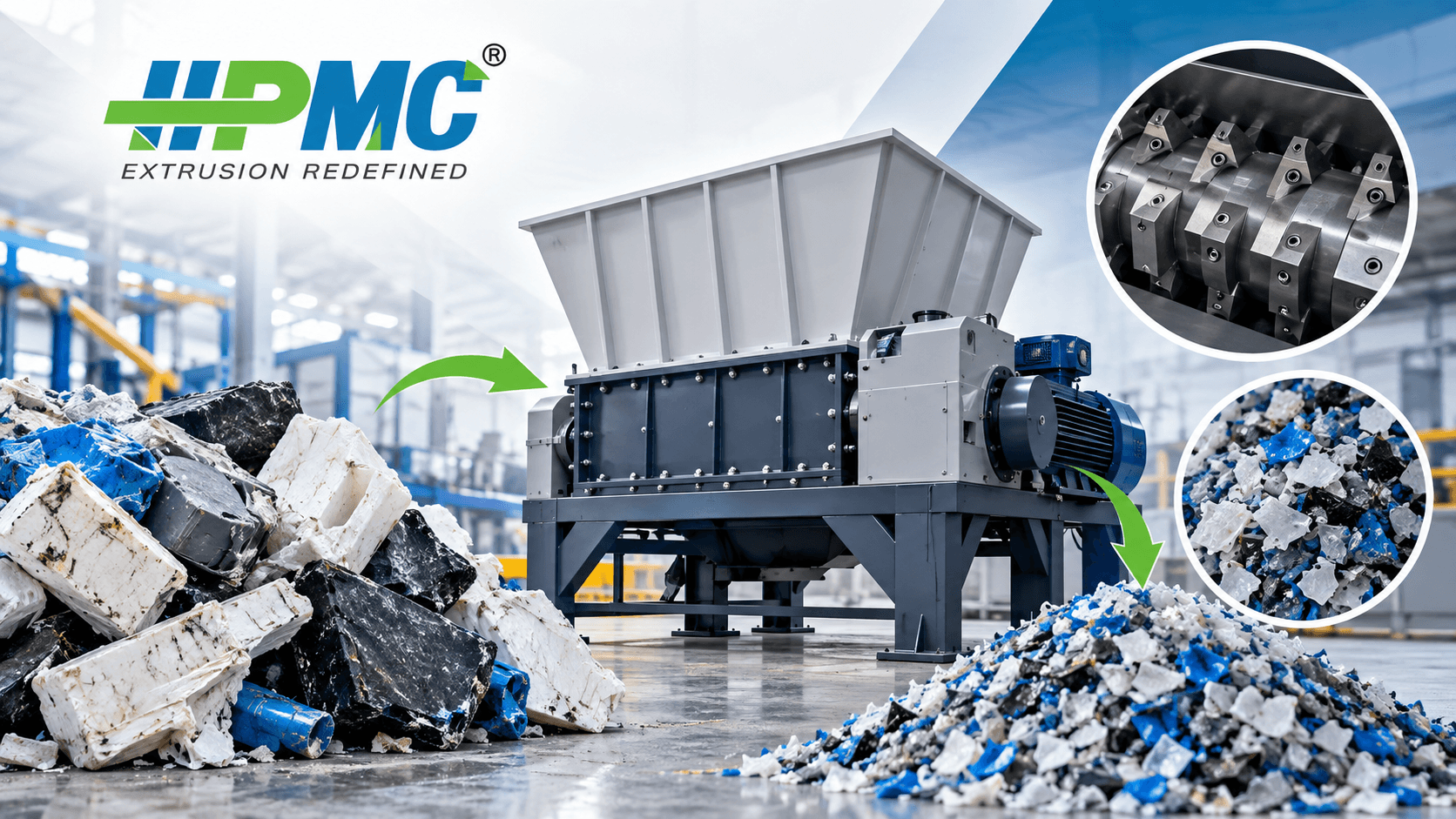
Plastic processing and recycling industries generate different forms of scrap, including bulky plastic lumps, rejected products, production waste, purgings, and other rigid plastic materials. Because these materials can be large and difficult to handle, size reduction is often required before further recycling or reprocessing.
A Lumps Shredder Single Shaft is designed to reduce bulky plastic lumps and similar plastic waste into smaller, manageable pieces. The single-shaft configuration can be used as a size-reduction solution in plastic recycling and reprocessing applications.
For manufacturers, recyclers, and plastic processing businesses, choosing the right Single Shaft Lumps Shredder requires consideration of the material type, input size, required capacity, desired output, and downstream recycling process.
What Is a Lumps Shredder Single Shaft?
A Lumps Shredder Single Shaft is an industrial plastic size-reduction machine that uses a rotating shaft equipped with cutting elements to process bulky plastic lumps and other rigid plastic waste.
The machine is designed to break down large or difficult-to-handle plastic material into smaller pieces that can be processed more efficiently by downstream equipment.
Depending on the application, the shredded material can be transferred to:
- Plastic washing systems
- Grinding equipment
- Pulverizers
- Plastic recycling extruders
- Plastic reprocessing lines
- Melt filtration systems
- Pelletizing systems
The exact machine configuration should be selected according to the characteristics of the material being processed.
Why Is a Single Shaft Lumps Shredder Important?
Large plastic lumps can create handling and feeding challenges in recycling operations. A Single Shaft Shredder helps prepare these materials for subsequent processing.
Key reasons for using a single-shaft lumps shredder include:
1. Size Reduction
The primary purpose is to reduce bulky plastic lumps into smaller pieces.
2. Easier Material Handling
Smaller pieces are generally easier to convey, store, and feed into downstream machinery.
3. Recycling Line Preparation
Shredding can be used as an initial size-reduction stage before grinding, washing, extrusion, or other processes.
4. Processing Production Scrap
Plastic manufacturers can use the machine to process rejected products and production waste.
5. Improved Feed Preparation
Preparing bulky material before downstream processing can help create a more manageable feed stream.
How Does a Lumps Shredder Single Shaft Work?
The basic working principle involves feeding plastic lumps into the shredding chamber, where a rotating shaft carrying cutting elements reduces the material.
Step 1: Material Feeding
Plastic lumps or other suitable plastic scrap are introduced into the machine.
Depending on the material, the feed may include:
- Plastic lumps
- Production rejects
- Plastic purgings
- Rigid plastic scrap
- Large plastic components
- Manufacturing waste
Step 2: Material Engagement
The rotating shaft moves the material toward the cutting zone.
Step 3: Cutting and Shredding
The cutting elements interact with the material and reduce the bulky plastic into smaller pieces.
Step 4: Size Control
Depending on the machine configuration, a screen or other size-control arrangement can influence the resulting output.
Step 5: Discharge
The processed material is discharged and transferred to the next stage of the recycling or reprocessing line.
Main Components of a Single Shaft Lumps Shredder
A reliable Plastic Lumps Shredder consists of several key components.
1. Feeding Hopper
The hopper allows plastic lumps and other scrap materials to enter the shredding chamber.
2. Shredding Chamber
This is the main area where the material undergoes size reduction.
3. Single Rotor Shaft
The rotating shaft carries the cutting elements and performs the primary shredding action.
4. Cutting Elements
The cutting components interact with the plastic material to break it into smaller pieces.
5. Drive System
The drive system provides the mechanical power required for the shredding operation.
6. Screen
Where applicable, the screen helps control the size of the material leaving the shredding chamber.
7. Discharge System
The discharge arrangement transfers shredded plastic to the next processing stage.
8. Control System
The control system allows operators to manage and monitor machine operation.
What Materials Can a Lumps Shredder Process?
A Single Shaft Lumps Shredder can be configured for different types of plastic waste.
Typical applications can include:
- Plastic lumps
- Plastic purgings
- Rigid plastic scrap
- Production rejects
- Injection moulding scrap
- Blow moulding scrap
- Plastic components
- Large plastic waste
- Manufacturing waste
- Industrial plastic scrap
The suitability of the machine depends on the material's size, shape, hardness, thickness, contamination, and other physical characteristics.
A material evaluation should be carried out before finalizing the machine configuration.
Applications of Lumps Shredder Single Shaft
A Lumps Shredder Machine can be used in several plastic processing and recycling applications.
Plastic Recycling Plants
Plastic lumps can be shredded before grinding, washing, extrusion, or other recycling processes.
Plastic Manufacturing Units
Manufacturers can process rejected products and production scrap for further recycling.
Injection Moulding Industry
Production scrap and larger rejected plastic components can be prepared for further size reduction.
Blow Moulding Industry
The machine can be used for processing suitable rigid plastic waste generated during manufacturing.
Plastic Reprocessing Plants
Shredded plastic can be used as prepared feed for subsequent recycling or reprocessing equipment.
Industrial Plastic Waste Processing
Businesses handling bulky plastic waste can use single-shaft shredding as part of their material preparation process.
Benefits of a Lumps Shredder Single Shaft
Choosing the right Single Shaft Shredder can provide several operational benefits.
Efficient Size Reduction
The machine is designed to reduce bulky plastic materials into smaller pieces.
Suitable for Large Plastic Lumps
The configuration can be suitable for processing large and difficult-to-handle plastic waste.
Better Material Handling
Shredded material can be easier to convey, store, and feed.
Supports Recycling Operations
The machine can serve as an important preparation stage in plastic recycling.
Processing of Production Scrap
Manufacturers can recover suitable production waste for further processing.
Integration with Recycling Lines
A single-shaft shredder can be integrated with other size-reduction and recycling equipment.
Flexible Application
The machine can be configured according to different plastic materials and processing requirements.
Lumps Shredder vs Single Shaft Shredder
The terms Lumps Shredder and Single Shaft Shredder can describe overlapping machine applications, but they emphasize different aspects.
Lumps Shredder generally describes the material or application being processed, particularly bulky plastic lumps.
Single Shaft Shredder describes the machine's shredding configuration, where a single rotating shaft performs the primary cutting action.
Therefore, a Lumps Shredder Single Shaft combines both concepts: a single-shaft shredding machine configured for processing plastic lumps and similar materials.
Lumps Shredder Single Shaft vs Grinder
A shredder and grinder perform different size-reduction functions.
A Single Shaft Lumps Shredder is generally used for initial reduction of larger and bulky plastic materials.
A grinder is generally used when the material needs further reduction into smaller particles.
A typical process may therefore look like:
Plastic Lumps → Single Shaft Shredder → Grinder → Extrusion/Recycling
The exact process depends on the material and the required final output.
How to Choose the Right Lumps Shredder Single Shaft?
Choosing the correct machine is an important purchasing decision.
1. Identify the Material
Determine whether you are processing plastic lumps, purgings, rejected products, rigid scrap, or another type of plastic waste.
2. Check Input Size
The dimensions and shape of the incoming lumps can influence machine selection.
3. Evaluate Material Properties
Consider:
- Material type
- Hardness
- Thickness
- Shape
- Density
- Contamination
- Moisture
4. Determine Required Capacity
Estimate the quantity of plastic waste that needs to be processed within the required production period.
5. Define Output Requirements
Determine the desired shredded material size based on the next stage of processing.
6. Check Downstream Equipment
The shredder should be compatible with the grinder, washing system, extruder, or other equipment used after shredding.
7. Consider Maintenance
Evaluate access to cutting components, wear parts, cleaning requirements, and routine maintenance.
8. Consider Manufacturer Support
A reliable manufacturer should understand the material and recommend a machine configuration based on the actual application.
Lumps Shredder in a Plastic Recycling Line
A single-shaft lumps shredder can serve as the initial size-reduction stage in a plastic recycling system.
A possible process is:
Plastic Lumps → Single Shaft Lumps Shredder → Grinding → Washing/Drying → Extrusion → Filtration → Pelletizing
However, not every recycling line requires all these stages.
The final configuration depends on:
- Type of plastic
- Input material condition
- Contamination
- Required recycled material quality
- Desired output
- Production capacity
- Downstream processing requirements
Single Shaft Shredder for Plastic Production Scrap
Plastic manufacturing operations can generate significant quantities of scrap.
Examples include:
- Rejected components
- Production offcuts
- Plastic purgings
- Oversized scrap
- Defective products
- Process waste
A Single Shaft Plastic Shredder can reduce suitable scrap into manageable pieces for further recycling.
This can help manufacturers integrate internal scrap recovery into their production workflow.
Maintenance of a Lumps Shredder Single Shaft
Regular maintenance is essential for reliable machine performance.
Important maintenance activities include:
- Inspecting cutting elements
- Checking cutter wear
- Inspecting the rotor and shaft
- Checking bearings
- Monitoring the drive system
- Cleaning the shredding chamber
- Inspecting electrical components
- Checking fasteners and mechanical connections
- Following the manufacturer's maintenance recommendations
Maintenance frequency depends on the material being processed, contamination, operating hours, and machine usage.
Factors Affecting Shredder Performance
Several factors can affect the performance of a Lumps Shredder Single Shaft.
Material Characteristics
Hardness, density, thickness, and shape influence shredding behaviour.
Input Size
Large or irregularly shaped lumps may require an appropriate feeding and chamber configuration.
Contamination
Metal, stones, or other foreign materials can cause excessive wear or damage.
Cutter Condition
Sharp and properly maintained cutting components contribute to effective size reduction.
Feeding Consistency
Consistent feeding can help maintain stable operation.
Machine Configuration
Rotor design, cutter arrangement, drive system, and size-control arrangement can affect performance.
Downstream Requirements
The required output size should be considered based on the next stage of processing.
Why Choose HPMC for Single Shaft Lumps Shredders?
HPMC provides plastic recycling and processing machinery for different plastic waste and reprocessing applications.
For businesses looking for a Lumps Shredder Single Shaft, machine selection should be based on the actual plastic material, input dimensions, processing capacity, output requirements, and downstream recycling process.
HPMC can help businesses evaluate their application and identify a suitable shredding solution for their plastic recycling or reprocessing setup.
The objective is to provide a practical machine configuration that fits the customer's material and production requirements.
Conclusion
A Lumps Shredder Single Shaft is an effective size-reduction solution for businesses handling bulky plastic lumps, production scrap, purgings, and other rigid plastic waste.
By reducing large plastic materials into smaller and more manageable pieces, a single-shaft shredder can prepare the material for grinding, washing, extrusion, and further recycling processes.
When purchasing a Single Shaft Lumps Shredder, businesses should carefully evaluate material type, input dimensions, contamination, required capacity, output requirements, and downstream equipment.
Selecting the right machine configuration and manufacturer is essential for building a reliable and efficient plastic recycling or reprocessing operation.
For businesses looking for a Lumps Shredder Single Shaft, HPMC can provide plastic processing and recycling machinery solutions based on specific material and application requirements.
Frequently Asked Questions
Find quick answers to the most common questions about this topic.
A Lumps Shredder Single Shaft is a plastic size-reduction machine that uses a single rotating shaft with cutting elements to process bulky plastic lumps and similar rigid plastic waste.
Depending on its configuration, it can process plastic lumps, purgings, rigid plastic scrap, production rejects, plastic components, and other suitable industrial plastic waste.
A Lumps Shredder refers primarily to the material or application, while Single Shaft Shredder describes the machine configuration. A single-shaft machine can be configured specifically for plastic lumps.
Yes. In many applications, shredding is used as an initial size-reduction stage before grinding.
Yes. It can be used to prepare bulky plastic waste for further recycling and reprocessing.
Consider the plastic material, input size, material properties, contamination, required capacity, desired output size, downstream equipment, and maintenance requirements.
A suitably configured single-shaft shredder can be used for suitable plastic purgings. The actual material should be evaluated before selecting the machine.
Yes. Depending on the application, it can be integrated with grinders, washing systems, dryers, extruders, filtration systems, and pelletizing equipment.