
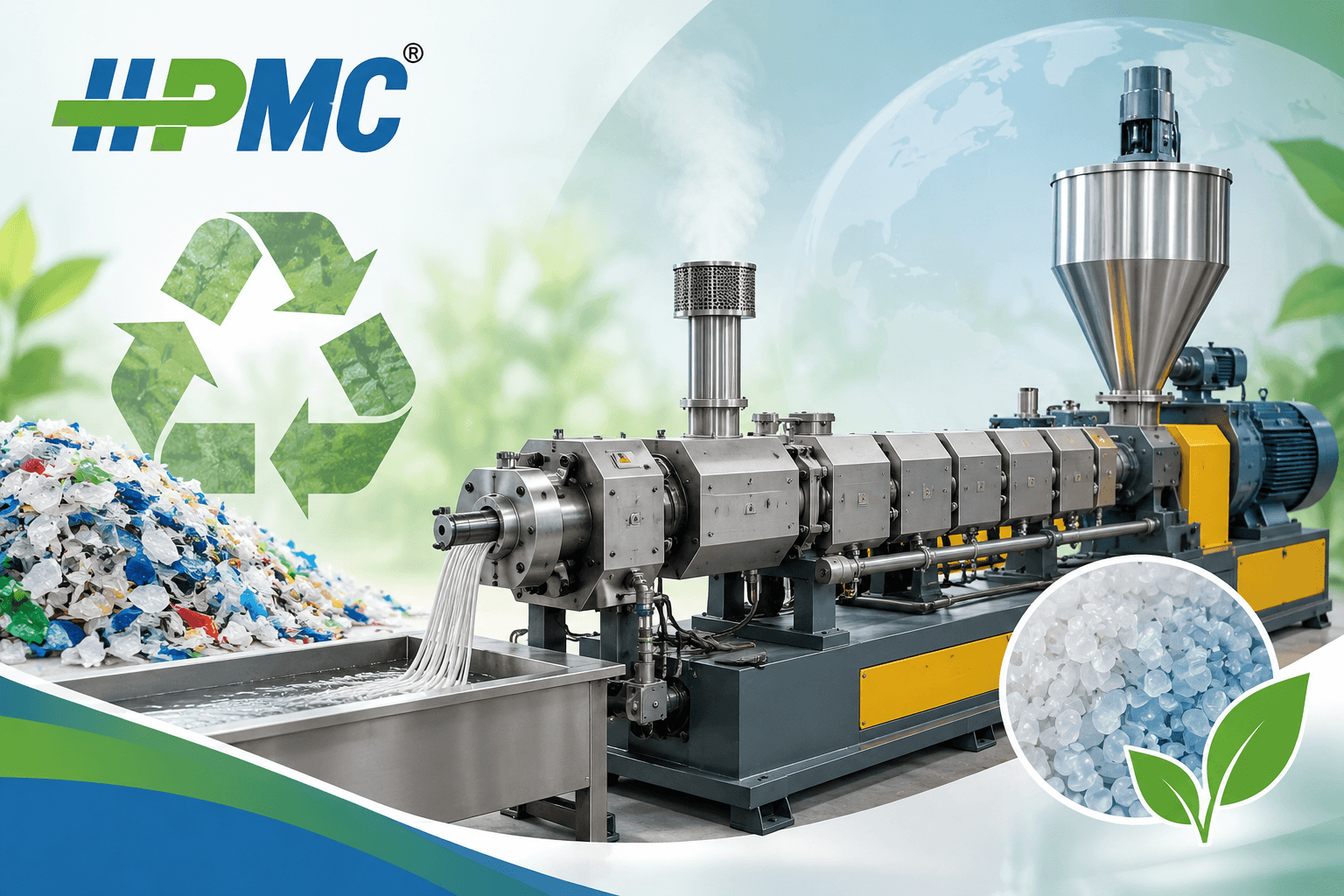
Waste plastic recycling requires carefully controlled processing because recycled materials can contain moisture, trapped air, volatile components, and other impurities depending on their source and preparation. An extrusion system must therefore be selected according to the characteristics of the plastic waste and the quality requirements of the recycled output.
A Vented Type Extruder for Waste Plastic Recycling is designed with a venting section that can help remove moisture, trapped air, and certain volatile components during the extrusion process. This makes vented extrusion useful for suitable plastic recycling and reprocessing applications where degassing is an important part of the process.
For manufacturers planning to process waste plastic into reusable recycled granules, selecting the right extruder is an important decision. The machine configuration should be matched with the plastic type, feedstock condition, moisture level, contamination, required output, filtration system, feeding arrangement, and pelletizing requirements.
This guide explains the working process, components, applications, benefits, and important factors to consider before purchasing a Vented Type Extruder for Waste Plastic Recycling.
What is a Vented Type Extruder for Waste Plastic Recycling?
A Vented Type Extruder for Waste Plastic Recycling is a plastic recycling extrusion machine equipped with a specially designed venting section in the barrel.
During the recycling process, plastic waste is heated and melted inside the extruder. Depending on the feedstock, the molten polymer may contain moisture, air, or volatile substances.
The venting section provides an opportunity for these unwanted components to escape from the polymer melt. Vacuum-assisted degassing may also be incorporated when required by the material and extrusion configuration.
A typical vented plastic recycling extrusion line may include:
- Feeding system
- Vented extruder
- Screw and barrel assembly
- Heating and cooling system
- Venting section
- Vacuum system where required
- Melt filtration system
- Die head
- Pelletizing system
- Cooling system
- Granule collection system
- Control panel
The exact configuration depends on the type and condition of the waste plastic being processed.
Why is Venting Important in Plastic Recycling?
Waste plastic can have different levels of moisture and contamination depending on how it has been collected, stored, washed, dried, and prepared.
Moisture and trapped air can affect extrusion stability and the quality of recycled material.
A vented extrusion system can help address certain degassing requirements during processing.
Venting may help remove:
- Moisture
- Trapped air
- Certain volatile components
- Residual gases generated during processing
The effectiveness of degassing depends on the feedstock, preprocessing, extrusion conditions, vent design, and vacuum arrangement where applicable.
For this reason, venting should be considered as part of the complete recycling system rather than as an isolated machine feature.
How Does a Vented Type Extruder for Waste Plastic Recycling Work?
The recycling process generally begins with preparing the waste plastic.
Depending on the feedstock, preparation can involve:
Sorting → Shredding → Washing → Drying → Feeding
Not every material requires all these stages.
The prepared plastic is then introduced into the vented extruder through the feeding system.
Inside the barrel, the screw conveys the material through different processing zones. Controlled heating and mechanical energy gradually soften and melt the polymer.
As the material progresses through the extruder, it becomes increasingly homogenized.
The molten polymer then reaches the venting section.
At this stage, moisture, trapped air, and certain volatile components can be released through the vent. A vacuum system may be used when required to improve degassing under suitable process conditions.
After degassing, the polymer continues toward the filtration section.
The melt filter removes suitable solid contaminants from the molten plastic before it reaches the die.
The filtered polymer then exits through the die and enters the pelletizing system.
The pellets are cooled, collected, and prepared for storage or further manufacturing.
Major Components of a Vented Plastic Recycling Extruder
Screw
The screw is responsible for conveying, melting, mixing, and pressurizing the plastic material.
Its geometry should be selected according to the polymer, feedstock condition, throughput, and required processing characteristics.
Barrel
The barrel houses the screw and generally consists of multiple processing zones.
Each zone can be controlled to establish suitable heating and cooling conditions.
Feeding System
The feeding system introduces prepared waste plastic into the extrusion process.
Feedstock characteristics such as size, shape, bulk density, and flow behaviour should be considered when selecting the appropriate feeding arrangement.
Venting Section
The venting section is one of the most important features of this extrusion system.
It provides an outlet through which moisture, air, and certain volatile components can be removed from the polymer during processing.
Vacuum Degassing System
Depending on the material, a vacuum system can be connected to the venting section.
This can support the removal of unwanted gases and moisture from suitable feedstocks.
Heating and Cooling System
Controlled temperature management is necessary for stable plastic extrusion.
Heating helps melt the polymer, while cooling can be used in selected zones to manage process temperature.
Melt Filtration System
Recycled plastic can contain solid contaminants.
A suitable melt filtration system can remove these contaminants from the molten polymer before pelletizing.
Die Head
The die head provides the required outlet geometry for the molten plastic.
The die configuration depends on the downstream pelletizing method.
Pelletizing System
The pelletizing unit converts the processed polymer into recycled granules or pellets.
The selected pelletizing system should match the polymer and required production conditions.
Control Panel
The control system allows operators to monitor important operating parameters such as temperature, screw speed, feeding rate, motor load, and other process conditions.
What Materials Can Be Processed?
The suitability of a Vented Type Extruder for Waste Plastic Recycling depends on the machine configuration and the preparation of the feedstock.
Potential applications can include suitable:
- PP waste
- PE waste
- HDPE scrap
- LDPE waste
- Plastic films
- Production scrap
- Industrial plastic waste
- Packaging waste
- Selected post-consumer plastic
Different polymers and waste streams require different extrusion configurations.
Materials with higher moisture or volatile content may require greater attention to drying and degassing before and during extrusion.
Applications of Vented Type Extruders for Waste Plastic Recycling
Industrial Plastic Waste Recycling
Manufacturing waste and production scrap can be reprocessed into reusable plastic material when the feedstock is suitable.
Plastic Film Recycling
Suitable plastic film waste can be processed through an appropriately configured recycling line.
Film materials can present feeding challenges because of their lightweight and flexible nature, so suitable feeding and compaction systems may be required.
Packaging Plastic Recycling
Selected packaging plastic can be recycled through a suitable extrusion and filtration system.
Waste Plastic Reprocessing
Waste plastic can be converted into recycled granules for suitable downstream manufacturing applications.
Production Scrap Reprocessing
Clean production scrap can often be reprocessed efficiently when its polymer composition is known and consistent.
Benefits of a Vented Type Extruder for Waste Plastic Recycling
A properly configured Vented Type Extruder for Waste Plastic Recycling can provide several advantages.
Effective Degassing
The venting section provides an opportunity to remove moisture, trapped air, and certain volatile components during extrusion.
Stable Material Processing
Controlled conveying, melting, and degassing can support stable extrusion when the feedstock is appropriately prepared.
Continuous Recycling
The extrusion process allows prepared plastic waste to be continuously processed into recycled material.
Integration with Filtration
Melt filtration can be integrated into the recycling line to remove suitable solid contaminants.
Improved Recycled Material Quality
Effective feed preparation, degassing, filtration, and controlled extrusion can contribute to more consistent recycled output.
Flexible Recycling Applications
Vented extrusion systems can be configured for different suitable waste plastic applications according to polymer type and feedstock characteristics.
How to Choose a Vented Type Extruder for Waste Plastic Recycling
Selecting the right machine requires careful evaluation of the complete recycling process.
Identify the Plastic Type
First determine the polymer you intend to recycle.
PP, PE, HDPE, LDPE, and other polymers have different processing requirements.
Evaluate Moisture Content
Moisture is particularly important when selecting a vented recycling extruder.
Consider whether the material is washed, dried, stored outdoors, or exposed to environmental moisture.
Assess Contamination
Evaluate the type and quantity of contaminants present in the feedstock.
This information helps determine the appropriate filtration system.
Determine Production Capacity
Define the desired output in kilograms per hour.
The screw diameter, motor, gearbox, feeding system, filtration system, and pelletizing equipment should be appropriately matched to the target capacity.
Evaluate Feeding Requirements
Lightweight films and irregular plastic waste may require specialized feeding or compaction arrangements.
A Compactor Type for Plastic Recycling can be considered for suitable lightweight feedstocks to improve feeding characteristics.
Consider Degassing Requirements
Determine whether the material requires atmospheric venting or vacuum-assisted degassing.
The manufacturer's recommendation should be based on the actual feedstock and process requirements.
Select the Filtration System
The melt filtration system should be selected according to the contamination level and required recycled material quality.
Consider Pelletizing
The pelletizing system should be matched to the polymer, output capacity, and desired granule characteristics.
Evaluate Automation
A suitable control system can help operators monitor important parameters and maintain consistent processing conditions.
Check Technical Support
Installation, commissioning, training, spare parts, maintenance, and technical support should be considered when selecting a recycling machinery manufacturer.
Vented Type Extruder vs Other Plastic Recycling Extruders
Different recycling extrusion technologies can be suitable for different waste streams.
A Vented Type Extruder for Waste Plastic Recycling is particularly relevant when moisture, trapped air, or volatile components are an important consideration.
A two-stage extrusion system may be preferred for applications requiring additional processing stages, while a twin screw recycling extruder may be considered where intensive mixing and homogenization are important.
Similarly, a compactor can be incorporated when lightweight plastic materials require improved feeding characteristics.
Therefore, the right extrusion technology should be selected according to:
- Plastic type
- Feedstock condition
- Moisture level
- Contamination
- Required output
- Degassing requirements
- Filtration requirements
- Final recycled product
Vented Extruder and Plastic Reprocessing Process
A complete plastic reprocessing operation may involve several stages.
A typical process can include:
Waste Plastic → Sorting → Shredding → Washing → Drying → Compaction/Feeding → Vented Extrusion → Degassing → Filtration → Pelletizing → Cooling → Granule Collection
The actual process depends on the characteristics of the plastic waste.
For relatively clean production scrap, extensive washing may not be necessary.
For contaminated waste plastic, additional sorting, washing, and drying may be required before extrusion.
This makes it important to design the Plastic Reprocessing Machine around the actual characteristics of the feedstock.
Maintenance of a Vented Type Recycling Extruder
Regular maintenance is important for reliable operation and consistent recycling performance.
Important components to inspect include:
- Screw
- Barrel
- Gearbox
- Bearings
- Heating elements
- Cooling system
- Feeding system
- Venting section
- Vacuum system
- Melt filter
- Die head
- Pelletizing system
- Electrical controls
The venting and vacuum system should be kept clean and inspected regularly to maintain effective degassing.
Screw and barrel wear should also be monitored because excessive wear can influence conveying, melting, and extrusion performance.
Filters and die components should be maintained according to the material being processed and the manufacturer's recommendations.
Why Choose HPMC for Waste Plastic Recycling Machinery?
HPMC provides plastic recycling, plastic reprocessing, extrusion, compounding, and polymer processing machinery for different industrial applications.
Our Vented Type Extruder for Waste Plastic Recycling solutions can be configured according to the polymer type, feedstock condition, moisture level, contamination, production capacity, filtration requirements, degassing needs, and pelletizing requirements.
Businesses looking for a Plastic Recycling Machine or Plastic Reprocessing Machine can discuss their waste material and production requirements with HPMC to determine a suitable extrusion configuration.
The focus is on selecting appropriate recycling technology and developing a controlled processing system suited to the characteristics of the plastic feedstock.
Conclusion
A Vented Type Extruder for Waste Plastic Recycling can be an effective solution for suitable plastic recycling applications where moisture, trapped air, or volatile components need to be managed during extrusion.
The venting section provides an important processing function, but the overall performance of the recycling line depends on several factors, including material preparation, feeding, screw design, temperature control, degassing, filtration, pelletizing, and automation.
Before purchasing a Vented Type Extruder for Waste Plastic Recycling, manufacturers should evaluate the type of plastic waste, moisture content, contamination level, required production capacity, desired recycled material quality, and downstream requirements.
Businesses should also evaluate the machinery manufacturer's technical expertise, customization capabilities, installation support, spare parts availability, and after-sales service.
A properly configured vented recycling extrusion line can help manufacturers process suitable waste plastic into consistent recycled granules and establish a controlled and efficient plastic reprocessing operation.
Frequently Asked Questions
Find quick answers to the most common questions about this topic.
A Vented Type Extruder for Waste Plastic Recycling is an extrusion machine equipped with a venting section that allows moisture, trapped air, and certain volatile components to be removed during plastic recycling.
Venting can help remove unwanted moisture, air, and certain volatile components from the polymer melt, depending on the feedstock and extrusion conditions.
Yes. A properly configured vented extruder can be used for suitable waste plastic recycling and reprocessing applications.
Depending on the machine configuration, suitable PP, PE, HDPE, LDPE, film waste, production scrap, industrial plastic waste, and selected packaging materials can be processed.
Not in every application. The need for vacuum-assisted degassing depends on the moisture, volatile content, feedstock condition, and processing requirements.
It depends on the feedstock. Clean production scrap may require limited preprocessing, while contaminated post-consumer plastic may require sorting, washing, and drying before extrusion.
Consider the plastic type, feedstock condition, moisture, contamination, required production capacity, feeding system, degassing requirements, filtration, pelletizing, automation, and after-sales technical support.