
Plastic recycling businesses process different types of plastic waste, production scrap, and recovered materials. Depending on the material condition, contamination level, moisture content, and required output, a single extrusion stage may not always provide the desired processing arrangement.
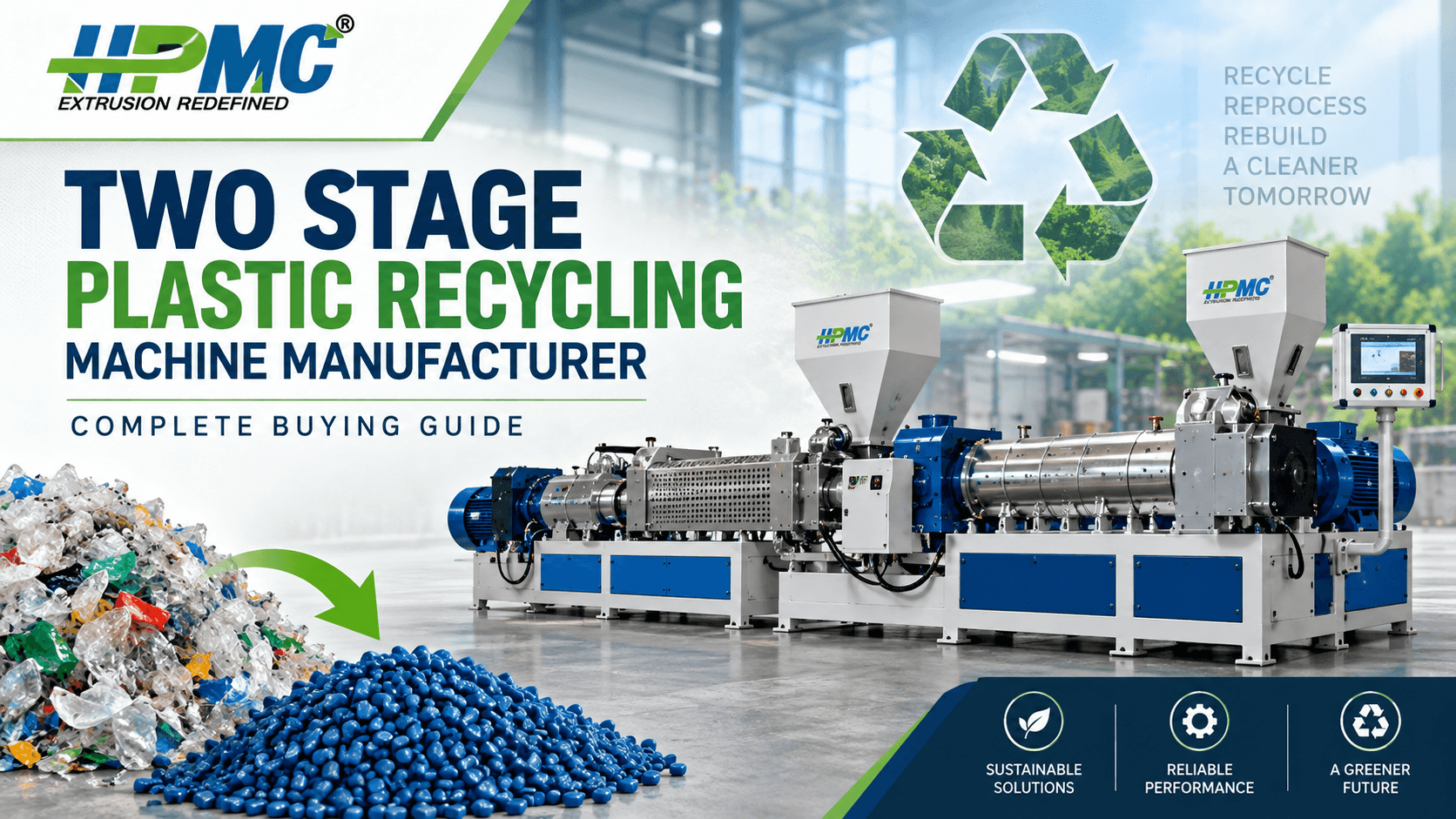
A Mother-Baby Plastic Recycling Machine is a two-stage plastic recycling system in which a primary extrusion unit, commonly referred to as the “mother,” works together with a secondary extrusion unit, commonly referred to as the “baby.” The two extrusion stages work sequentially to process, homogenize, filter, and prepare suitable recycled plastic for pelletizing.
This configuration can be considered for recycling applications where additional melt processing and controlled material handling are required.
For businesses planning to purchase plastic recycling machinery, choosing the right Mother-Baby Plastic Recycling Machine requires more than comparing machine prices. Feedstock characteristics, extrusion configuration, filtration requirements, production output, pelletizing system, automation, maintenance, and after-sales support should all be evaluated.
This guide explains the machine configuration, working process, applications, benefits, and important factors to consider when selecting a Mother-Baby Plastic Recycling Machine for a commercial recycling operation.
What is a Mother-Baby Plastic Recycling Machine?
A Mother-Baby Plastic Recycling Machine is a plastic recycling extrusion system consisting of two sequential extrusion units.
The first extrusion unit, commonly called the mother extruder, performs the initial processing of the plastic material. It can convey, melt, plasticize, and homogenize the feedstock.
The processed polymer melt is then transferred to the second extrusion unit, commonly called the baby extruder.
The second stage provides additional melt processing and can be integrated with filtration and pelletizing equipment according to the recycling application.
A typical process can be represented as:
Plastic Waste → Feeding → Mother Extruder → Melt Processing → Baby Extruder → Filtration → Pelletizing → Cooling → Recycled Granules
The actual machine configuration depends on the type of plastic, feedstock condition, required output, and desired recycled material characteristics.
Why Buy a Mother-Baby Plastic Recycling Machine?
Businesses handling plastic waste often need to balance recycling performance with production requirements.
A mother-baby configuration provides two sequential processing stages, allowing different functions to be distributed across the extrusion system.
Potential advantages include:
- Two-stage melt processing
- Improved material homogenization
- Flexible extrusion configuration
- Controlled melt handling
- Integration with melt filtration
- Support for recycled granule production
- Suitable configuration for selected challenging feedstocks
- Integration with upstream and downstream recycling equipment
The suitability of the system depends on the actual plastic material and recycling process.
How Does a Mother-Baby Plastic Recycling Machine Work?
The machine operates through two connected extrusion stages.
Before entering the extrusion system, the plastic may require sorting, shredding, washing, drying, or other preprocessing depending on its condition.
The basic process is:
Sorting → Size Reduction → Washing/Drying if Required → Feeding → Mother Extruder → Baby Extruder → Melt Filtration → Pelletizing → Cooling → Granule Collection
Step 1: Plastic Waste Preparation
Plastic waste is sorted according to polymer type and material characteristics.
Contaminated material may require washing and drying before extrusion.
Step 2: Size Reduction
Large or irregular plastic waste can be reduced into smaller pieces using suitable shredding or cutting equipment.
This prepares the material for controlled feeding into the extrusion system.
Step 3: Feeding into the Mother Extruder
Prepared plastic material is introduced into the primary extrusion stage.
The feeding system should provide a consistent material flow.
Step 4: Melting and Plasticization
Inside the mother extruder, the rotating screw conveys the plastic through the heated barrel.
Heat and mechanical energy support melting and plasticization.
Step 5: Initial Homogenization
The first extrusion stage processes the polymer melt and helps produce a more uniform material stream.
Step 6: Transfer to the Baby Extruder
The processed melt moves into the secondary extrusion stage.
The baby extruder continues the processing and melt transport.
Step 7: Melt Filtration
A suitable filtration system can remove remaining solid contaminants from the polymer melt.
The filtration technology should be selected according to the feedstock and required output quality.
Step 8: Pelletizing
The processed polymer melt is converted into recycled plastic granules using an appropriate pelletizing system.
Step 9: Cooling and Collection
The granules are cooled, collected, and prepared for storage, packing, or further manufacturing.
Mother Extruder and Baby Extruder: What is the Difference?
The two extrusion units perform different roles within the overall recycling system.
Mother Extruder
The mother extruder generally performs the primary material processing functions.
These may include:
- Feeding
- Conveying
- Melting
- Plasticization
- Initial homogenization
Its configuration depends on the characteristics of the plastic waste.
Baby Extruder
The baby extruder receives the processed melt from the first stage.
It can provide:
- Additional melt processing
- Homogenization
- Controlled melt transport
- Integration with filtration
- Preparation for pelletizing
The two stages work together rather than functioning as completely independent recycling machines.
Major Components of a Mother-Baby Plastic Recycling Machine
Feeding System
The feeding system introduces plastic material into the mother extruder.
It should be selected according to the size, shape, density, and flow characteristics of the feedstock.
Mother Extruder
The mother extruder performs the initial melting and processing of the plastic material.
Baby Extruder
The baby extruder performs secondary melt processing before filtration and pelletizing.
Screws and Barrels
Screw and barrel design influences material conveying, melting, mixing, and melt transport.
The configuration should be selected according to the plastic being processed.
Heating and Cooling System
Controlled heating supports plastic melting and processing, while cooling arrangements can help manage operating temperatures where required.
Melt Filtration System
A filtration system removes unwanted solid particles from the polymer melt.
The appropriate filter depends on contamination level and material requirements.
Pelletizing System
The pelletizing unit converts the polymer melt into recycled plastic granules.
Cooling System
The cooling section solidifies the freshly produced granules and prepares them for collection.
Control System
The control system allows operators to monitor and manage important operating parameters throughout the recycling line.
What Materials Can Be Processed?
The suitability of a Mother-Baby Plastic Recycling Machine depends on its configuration and the characteristics of the plastic feedstock.
Potential applications may include suitable:
- LDPE
- HDPE
- PP
- Plastic films
- Packaging waste
- Industrial plastic scrap
- Production waste
- Post-consumer plastic
- Agricultural plastic waste
- Processed plastic regrind
Different materials can require different feeding, washing, drying, extrusion, filtration, and pelletizing arrangements.
Material sorting remains important, particularly when different polymers are present in the same waste stream.
Applications of Mother-Baby Plastic Recycling Machines
Plastic Film Recycling
Suitable plastic film waste can be processed through a mother-baby recycling system after appropriate preparation.
Industrial Scrap Recycling
Manufacturing facilities can process suitable plastic scrap and production waste into reusable recycled material.
Packaging Waste Recycling
Selected plastic packaging materials can be processed after appropriate sorting and cleaning.
Post-Consumer Plastic Recycling
Suitable post-consumer plastic can be processed after removing contaminants and preparing the material for extrusion.
Agricultural Plastic Recycling
Agricultural plastic waste can contain soil and other contaminants and may require washing and drying before entering the recycling extrusion system.
Plastic Reprocessing
A mother-baby extrusion configuration can be integrated into a Plastic Reprocessing Machine setup to convert suitable recovered plastic into recycled granules.
Benefits of a Mother-Baby Plastic Recycling Machine
Two-Stage Processing
The two extrusion stages allow different material-processing functions to be distributed across the system.
Improved Melt Homogenization
Additional processing through the second extrusion stage can support more controlled melt homogenization for suitable feedstocks.
Flexible System Configuration
The recycling line can be configured around the feedstock, filtration system, pelletizing process, and production requirements.
Better Integration with Filtration
The second extrusion stage can be arranged with an appropriate melt filtration system before pelletizing.
Recycled Granule Production
The system can be integrated with pelletizing equipment to produce recycled plastic granules.
Suitable for Selected Challenging Feedstocks
A mother-baby arrangement can be considered for applications where additional processing and melt handling are required.
Complete Recycling Line Integration
The machine can be connected with shredders, washing systems, drying equipment, filtration, pelletizing, cooling, and material handling systems.
Mother-Baby Plastic Recycling Machine vs Single-Stage Recycling Machine
A single-stage recycling machine processes plastic through one primary extrusion stage.
A mother-baby system uses two sequential extrusion stages.
A two-stage system may be considered when additional processing, homogenization, melt handling, or process separation is required.
The appropriate configuration depends on:
- Plastic type
- Feedstock condition
- Contamination
- Moisture
- Required material quality
- Production output
- Filtration requirements
- Pelletizing process
Businesses should evaluate their actual feedstock before selecting either configuration.
How to Choose a Mother-Baby Plastic Recycling Machine
Choosing the right machine is an important investment decision.
1. Identify Your Plastic Material
Determine whether the feedstock consists of LDPE, HDPE, PP, film, packaging waste, industrial scrap, or another compatible plastic.
2. Evaluate Feedstock Contamination
Determine whether the plastic contains:
- Dirt
- Dust
- Paper
- Organic material
- Moisture
- Other solid contaminants
The contamination level influences preprocessing and filtration requirements.
3. Determine Required Production Output
Define the required recycling output before selecting the machine.
The mother extruder, baby extruder, filtration system, pelletizer, and cooling system should be appropriately balanced.
4. Evaluate Feeding Requirements
Different materials have different feeding characteristics.
Films, flakes, regrind, and bulky plastic waste may require different feeding solutions.
5. Consider Washing and Drying
If the feedstock is contaminated, a Wet Recycling Machine or washing system may be required before extrusion.
Moisture removal should also be considered before the material enters the recycling extruder.
6. Select the Right Filtration System
The filtration system should be matched to the type and level of contamination in the polymer melt.
7. Evaluate Pelletizing Requirements
Determine the desired form and characteristics of the recycled granules.
This helps in selecting a suitable pelletizing and cooling arrangement.
8. Consider Automation
Automation can help monitor important parameters such as temperature, screw operation, feeding, pressure, and material flow, depending on the machine configuration.
9. Evaluate Maintenance
Before purchasing, consider access to wear components, screw and barrel maintenance, filtration components, lubrication requirements, and cleaning procedures.
10. Check Manufacturer Support
Evaluate:
- Installation
- Commissioning
- Operator training
- Spare parts
- Technical support
- Maintenance assistance
- After-sales service
These factors are important when investing in long-term recycling equipment.
Cost Factors When Buying a Mother-Baby Plastic Recycling Machine
The price of a Mother-Baby Plastic Recycling Machine can vary significantly depending on its configuration.
Important cost factors include:
- Extruder configuration
- Production requirements
- Screw and barrel design
- Feeding system
- Filtration technology
- Pelletizing system
- Cooling system
- Automation
- Material handling
- Preprocessing equipment
- Installation requirements
Instead of evaluating the machine only on its purchase price, businesses should consider the complete recycling line and its suitability for their feedstock.
A correctly configured system can help avoid unnecessary equipment modifications and improve the overall efficiency of the recycling operation.
Mother-Baby Plastic Recycling Machine for Granule Production
Recycled granule production is a common application of plastic recycling extrusion.
A typical process can be:
Plastic Waste → Sorting → Shredding → Washing/Drying if Required → Feeding → Mother Extruder → Baby Extruder → Melt Filtration → Pelletizing → Cooling → Screening → Recycled Granules
The final granule quality depends on the input material, sorting, cleaning, extrusion conditions, filtration, pelletizing, and overall process control.
Maintenance of a Mother-Baby Plastic Recycling Machine
Regular maintenance is necessary for reliable machine operation.
Important areas include:
- Feeding system
- Mother extruder
- Baby extruder
- Screws
- Barrels
- Die
- Filtration system
- Heating zones
- Cooling system
- Gearboxes
- Motors
- Bearings
- Pelletizing equipment
- Electrical controls
The screw and barrel should be inspected for wear.
Filtration components should be maintained according to the selected filter design.
Heating and cooling systems should be checked to maintain controlled processing.
Gearboxes, bearings, motors, and electrical components should be inspected according to the manufacturer's maintenance recommendations.
Why Choose HPMC for a Mother-Baby Plastic Recycling Machine?
HPMC provides machinery solutions for plastic recycling, plastic reprocessing, extrusion, compounding, and related polymer processing applications.
A Mother-Baby Plastic Recycling Machine can be selected according to the type of plastic waste, feedstock condition, contamination, production requirements, filtration needs, pelletizing process, and downstream application.
Businesses planning to purchase a mother-baby recycling system can discuss their material and production requirements with HPMC to determine an appropriate machine configuration.
The complete recycling process should be evaluated, including preprocessing, feeding, mother extrusion, baby extrusion, filtration, pelletizing, cooling, and granule collection.
Conclusion
A Mother-Baby Plastic Recycling Machine is a two-stage extrusion solution designed for suitable plastic recycling and reprocessing applications.
By combining a primary mother extruder with a secondary baby extruder, the system provides two sequential processing stages for melting, homogenization, melt handling, filtration, and preparation for pelletizing.
For businesses looking to purchase plastic recycling machinery, the machine should be selected according to the actual feedstock, polymer type, contamination level, moisture, production requirements, filtration needs, and desired recycled product.
The manufacturer is equally important. Businesses should evaluate technical expertise, machine configuration, complete line integration, installation, commissioning, spare parts, maintenance, and after-sales support before making a purchase decision.
HPMC provides plastic recycling and reprocessing machinery solutions for businesses looking to establish or upgrade their recycling operations. By discussing the feedstock and production requirements with the machinery manufacturer, businesses can identify a suitable Mother-Baby Plastic Recycling Machine configuration for their application.
Frequently Asked Questions
Find quick answers to the most common questions about this topic.
A Mother-Baby Plastic Recycling Machine is a two-stage plastic recycling extrusion system consisting of a primary mother extruder and a secondary baby extruder arranged sequentially.
The terms “mother” and “baby” are commonly used to distinguish the larger primary extrusion stage from the secondary extrusion stage in this type of recycling configuration.
Depending on the machine configuration, suitable LDPE, HDPE, PP, plastic films, packaging waste, industrial scrap, production waste, and other compatible materials can be processed.
The mother extruder generally performs the initial feeding, conveying, melting, plasticization, and processing of the plastic material.
The baby extruder receives the processed melt and provides additional melt processing before filtration and pelletizing.
Yes. A suitable mother-baby recycling system can be integrated with melt filtration and pelletizing equipment to produce recycled plastic granules.
Washing depends on the feedstock. Contaminated plastic may require sorting, washing, drying, and other preprocessing before entering the extrusion system.
The cost depends on factors such as machine configuration, production requirements, feeding system, filtration, pelletizing, automation, and material handling. A manufacturer should evaluate the specific application before providing a machine configuration and quotation.
Evaluate the manufacturer's experience in plastic recycling, machine configuration, feedstock understanding, filtration solutions, production requirements, installation support, spare parts, technical service, and after-sales support.
The system configuration can be selected according to the type of plastic, feedstock condition, contamination, production requirements, filtration needs, and desired recycled output.