
Introduction
A waste plastic reprocessing line can perform well on clean factory scrap and struggle when the incoming material contains moisture, labels or a mix of shapes. The same equipment may also deliver different results when the recycled pellets are intended for different products. Before requesting a quotation, define what will enter the line and what the finished material needs to do.
When comparing waste plastic reprocessing machine manufacturers, ask each supplier to test representative feedstock, explain the scope of the proposed line and report how much output passes inspection. This guide covers the information to share, the questions to ask and the checks that help you compare suppliers on the same basis.
What Does a Waste Plastic Reprocessing Machine Do?
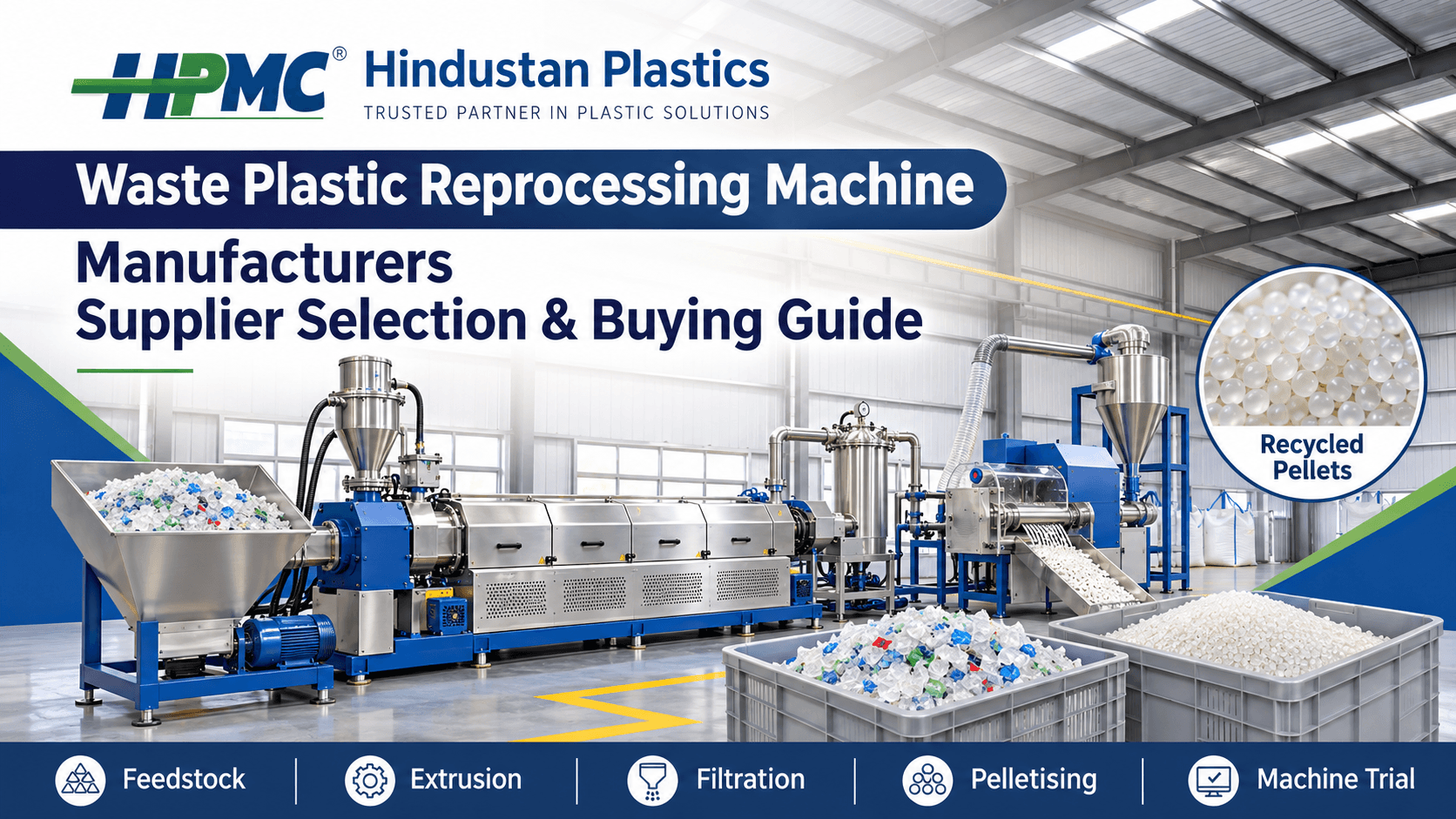
A waste plastic reprocessing system converts suitable plastic scrap into material that can be used again. For a pellet production project, the process generally includes feeding, extrusion and pelletising. Sorting, size reduction, washing, drying, compaction, venting or melt filtration may also be needed, depending on the feedstock and the required output.
Ask the supplier to identify where its equipment scope starts and ends. One proposal may start with washed flakes at the feed hopper. Another may include upstream preparation and downstream pellet handling. Both can be described as recycling lines, so compare the equipment lists before comparing prices.
Define the intended downstream application as well. If the pellets will be blended into another production process, share how that material will be evaluated. An output target is useful only when both teams understand what qualifies as acceptable recycled material.
Start With a Feedstock Profile
Prepare a short description of your scrap before speaking with suppliers. Use material from a normal week and include a second sample if the condition changes between suppliers, seasons or production batches. A clean demonstration sample may give an incomplete view of the work your plant will handle.
- Polymer and source. Record the polymer where known and state whether it is production trim, rejected moulded parts, washed flakes or recovered packaging.
- Physical form. Describe whether the scrap reaches the line as loose film, bundles, flakes or regrind. Include typical and maximum feed dimensions.
- Moisture. Tell the supplier whether the material is dry, damp or washed immediately before processing. Ask how moisture will be assessed for the trial.
- Contamination. Describe labels, paper, dirt, other plastics or other unwanted material. Explain what sorting or washing takes place before extrusion.
- Quantity and variation. Share the expected volume per shift and describe any recurring changes in the incoming material.
Keep each sample labelled with its source and condition. If your plant processes different polymers separately, give the supplier separate samples and specify which material should be used for each result. This makes the proposed configuration easier to review.
Match the Equipment to the Material
Lightweight Film and Loose Trim
Loose film can be difficult to feed evenly when it reaches the line in long strips or bulky bundles. Ask how the proposed feed system will handle your material and whether size reduction or compaction is included. During a trial, watch what happens across several batches and note any interruptions. HPMC’s Recycling Plant with Compactor provides a reference for discussing suitable lightweight feedstock.
Washed Flakes and Moisture Management
If the material arrives damp, ask the supplier to define the feed conditions the line can accept. Clarify how moisture is measured, which preparation stages are included and whether additional drying is needed for your material and product target. HPMC’s Wet Recycling Extrusion Line is one configuration to discuss for suitable wet flakes.
Feedstock That Needs Additional Melt Processing
Some projects call for more than one extrusion stage to handle the melt or distribute processing tasks across the system. Ask the supplier to explain what each stage would do for your feedstock. Request a trial result showing how the proposed arrangement affects the finished pellets. See HPMC’s Two Stage Recycling Plant when comparing configurations that use sequential extrusion stages.
The same label on two quotations does not guarantee the same process layout. Ask for a flow diagram that starts with your actual scrap and ends at the point where you collect or pack the recycled material.
Questions to Ask Waste Plastic Reprocessing Machine Manufacturers
1. Which Preparation Steps Are Included?
Ask the manufacturer to list sorting, size reduction, washing, drying and feeding equipment separately where applicable. If you already have a washer or shredder, share what it delivers and ask whether the proposed line can accept that output. Request a description of the material condition expected at each handover point.
A line designed for prepared flakes may require your factory to install extra equipment or provide additional floor space. Ask the supplier to mark those boundaries on the layout. This helps you compare a standalone machine quote with a proposal for a more complete plant.
2. How Will the Line Manage Contamination and Moisture?
Ask how the supplier plans to handle the specific material you identified. Discuss what should be removed before the extruder, what the proposed melt filtration stage can address and what still needs to be checked in the pellets. For materials with variable moisture, agree on the feed condition to be used in the trial.
Request an explanation of how the line will be monitored when the feed changes. Ask what observations the operator should record and what happens if the material goes outside the agreed range. Use this information to define which batches can be sent to the line and which need further preparation.
3. What Output Can the Complete Line Deliver?
Ask for both material processed per hour and pellets that pass inspection per hour. The difference can include startup material, rejects and other process losses. Confirm which stages are included in the measurement, and ask whether stoppages are included in the elapsed time.
For example, suppose a one-hour run produces 180 kg of pellets. If 15 kg is set aside from startup and 10 kg fails inspection, the accepted output is 155 kg for that hour. Those figures are illustrative. Apply the same calculation to your trial so competing suppliers report output on a comparable basis.
4. What Happens When the Recipe or Scrap Source Changes?
If you will switch between colours, suppliers or approved polymer grades, include a representative change in the demonstration. Record the time from the last accepted material of the first run to the first accepted material of the next. Also record the amount discarded or set aside during the transition.
Ask which parts of the line need cleaning or adjustment and what checks will be repeated before production resumes. A changeover record is particularly useful if your orders are small and your team expects to switch batches several times in a shift.
5. What Support Is Available After Installation?
Confirm who supplies material for commissioning, what the supplier will demonstrate and who records the acceptance results. Ask what operator training covers and how the factory can request help if a production issue appears later. HPMC describes commissioning and troubleshooting under Technical Assistance.
Ask for an equipment-specific list of wear and replacement parts. Confirm how the parts are identified and which items the manufacturer recommends keeping on site. HPMC provides ordering and identification information through its Spare Parts service.
What to Check During a Reprocessing Machine Trial
Agree on the feedstock, inspection method and trial duration before the run. Keep samples at several points so the trial report shows how the line behaves over time. Where possible, use the same feed batch and acceptance criteria across competing trials.
- Feeding behaviour. Watch whether the material enters steadily or requires frequent operator intervention. Note which sample was running when a stop occurred.
- Operating record. Record the trial duration, interruptions and adjustments. Identify when the line first started producing acceptable material.
- Pellet appearance. Check the agreed characteristics, such as size consistency, fines, visible contamination and colour variation.
- Downstream suitability. If the pellets will be used in a defined process, test a representative batch in that application using the agreed method.
- Accepted output. Weigh the material that passes inspection and record rejects separately. Save samples and the inspection results with the trial report.
Label samples taken at startup, during stable production and after any interruption. If a defect appears only after a feed change, keep samples from before and after it. Those records make it easier to discuss the proposed configuration with the supplier before signing off.
Common Reasons a Trial Result Can Be Misleading
A supplier may quote a stable operating rate from the best part of a demonstration. Ask for the full run record so you can see how startup, changes and stops affect production. The stable rate and the total accepted output answer different questions. Both are useful when planning a shift.
Also check how closely the trial material matches what you will process every day. If a sample was sorted, dried or shredded more thoroughly than your regular supply, ask the supplier to explain what preparation your factory would need to reproduce the result. Write that preparation into the project scope and include its cost when comparing proposals.
Finally, check whether the trial ends at the extruder, the pelletiser or final inspection. An extrusion rate alone leaves out losses and interruptions further downstream. Use the same finish point for every comparison, and request a sample you can retain for your own quality checks.
Plan the Space Between Preparation and Pelletising
Before approving the layout, trace how material moves through the factory. Mark where incoming scrap is received, where prepared material waits before extrusion and where finished pellets are inspected or packed. Include space for separate batches, rejected material and samples that need further testing. Discuss which movements will be manual and which require handling equipment.
If preparation and extrusion run at different rates, check what happens between them. For example, a washer may supply material in batches while the extruder is scheduled for a longer run. Ask how the line will be supplied during a gap and how the team will track changes in moisture or material condition while the prepared feed waits. Confirm which storage or transfer equipment is included in the proposal.
Also consider the reverse situation. If the extrusion stage stops, ask where prepared material will go and how it will be identified when production resumes. An agreed layout makes it easier to plan a trial around the same material handling conditions your operators will encounter in production.
Prepare a Supplier Comparison Record
Use a single record for every demonstration. Start with the sample identity, feed condition and time window. Then record the measured weight entering the process, the weight accepted at final inspection and any material left in the system or set aside. Ask each supplier to explain differences in how those figures were measured before drawing a conclusion from the comparison.
Separate the technical results from the commercial details. Record whether the trial met the agreed product criteria, what changes the supplier proposes and which of those changes affect the quotation. If the proposed configuration changes after the trial, ask which results still apply and what must be tested again.
Keep an accepted pellet sample and the corresponding report for commissioning. That gives the factory team something concrete to compare with the first production batch. Agree in advance on who will sign the trial record and what evidence is needed to accept the installed line. Record any open items and agree when they will be reviewed. Assign a responsible person.
How to Compare Equipment Quotations
Request an itemised quote based on the same feedstock description, output target and scope. Compare what it will take to start producing accepted material, including factory preparation and any equipment required outside the supplier’s package.
- Equipment scope. Check the feeder, extruder, filtration, pelletiser and any preparation or handling stages that the project requires.
- Utilities and layout. Request the quoted electrical and water requirements, equipment footprint and space needed for routine service.
- Trial commitments. Confirm what material will be tested, how long the run will last and what the acceptance report will include.
- Commissioning and training. Clarify the supplier’s responsibilities, site readiness requirements and support available after startup.
- Parts and operating costs. Ask which wear items are included and what recurring costs depend on the proposed configuration.
If one quotation is cheaper, identify which item or assumption accounts for the difference. Ask each supplier to state exclusions in writing. This gives your team a clearer view of the equipment, preparation and support needed for the first production order.
Conclusion
Compare waste plastic reprocessing machine manufacturers using your actual scrap, intended recycled product and accepted output target. Ask the supplier to explain where its equipment scope begins, run a representative trial and measure the output that passes inspection. Then compare the proposed preparation, utilities, commissioning and service support using the same assumptions.
Contact HPMC
HPMC (Hindustan Plastics and Machinery Corporation).
Share your scrap type, feed form, moisture and contamination details, desired recycled output and factory layout with HPMC to discuss the equipment scope and trial requirements.
Address: 5, Category II, DSIDC Industrial Area, Nangloi, Delhi – 110041, India.
Phone: +91 95605 96392.
Email: info@hindustanplastics.com.
Frequently Asked Questions
Find quick answers to the most common questions about this topic.
It processes suitable plastic scrap into reusable material. A pellet production line may combine feeding, extrusion, filtration and pelletising, with preparation stages added as needed.
Compatibility depends on the feed system, extruder configuration and material condition. Ask the supplier to confirm each intended material and test representative samples separately.
Send the polymer type, scrap source, physical form, moisture and contamination details, target accepted output and factory layout. Include photos and representative samples where possible.
It depends on the quotation. Some systems start with prepared or washed material. Ask the supplier to state which preparation stages are included and what feed condition the extruder expects.
Consider discussing it when lightweight film or loose trim is difficult to feed consistently. Test your actual material to see how the proposed feeding arrangement performs.
A supplier may propose two stages to distribute melt processing tasks or handle a particular material requirement. Ask what each stage does for your feedstock and verify the result in a trial.
Request a timed trial using representative material. Compare accepted pellet weight over the same elapsed period and record startup material, rejects and interruptions separately.
Check the properties relevant to your intended use, such as pellet size, visible contamination and fines. Where possible, test a sample in the downstream application.
Price depends on capacity, feed preparation, extrusion and filtration equipment, pelletising, controls and installation scope. Request itemised quotations based on the same requirements.
Confirm installation, commissioning, operator training, troubleshooting and spare parts availability for the quoted equipment. Ask how replacement parts are identified and ordered.