
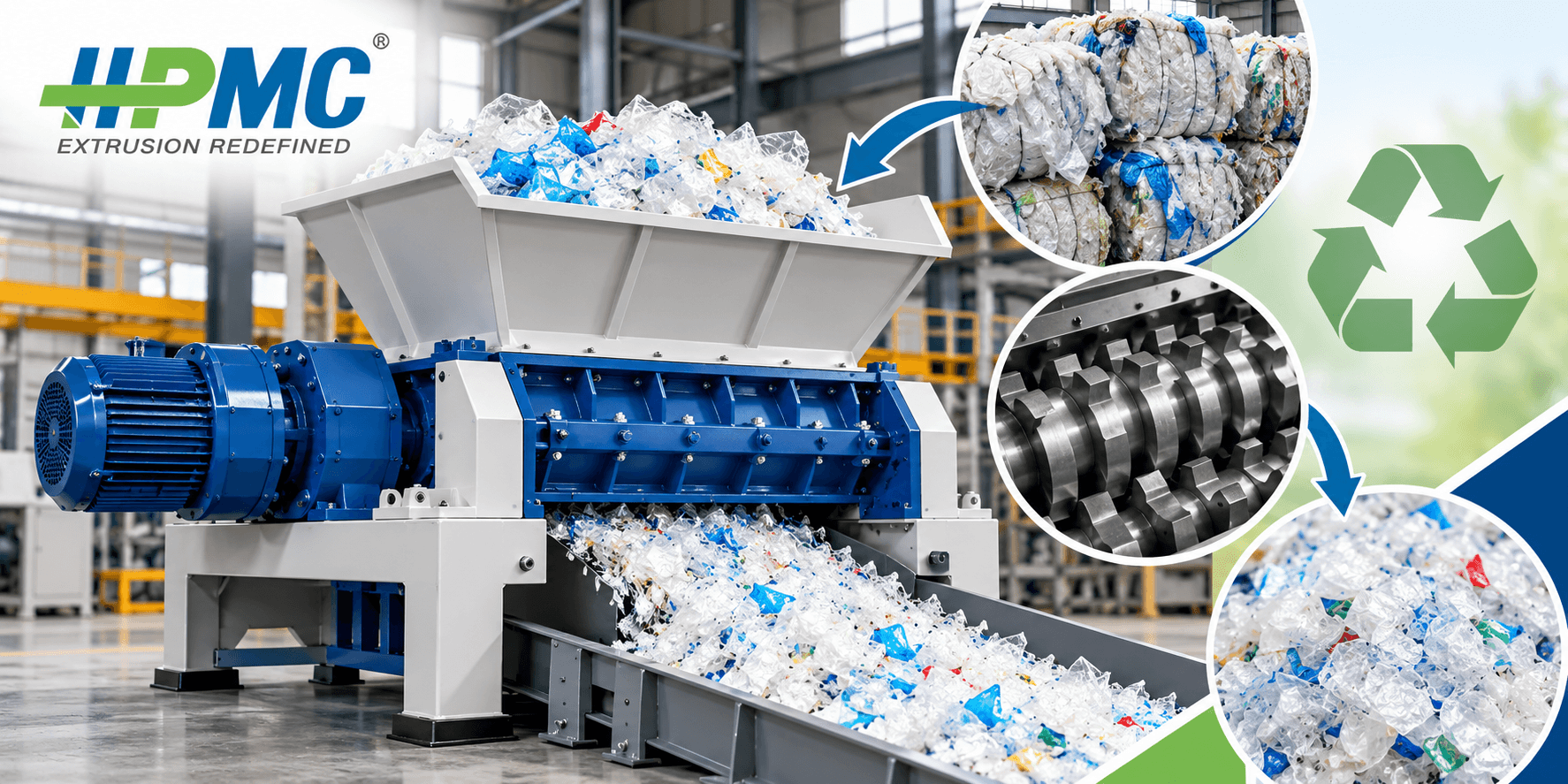
Plastic films are widely used in packaging, agriculture, industrial applications, consumer products, and manufacturing. However, waste film such as packaging film, agricultural film, stretch film, and production scrap can be difficult to handle because of its flexible and lightweight nature.
A Film Shredder is designed to reduce plastic film waste into smaller, manageable pieces before further recycling or reprocessing. It can be an important part of a plastic recycling line where waste material needs to be prepared for washing, drying, extrusion, or granule production.
For businesses dealing with large volumes of plastic film waste, selecting the right Plastic Film Shredder can improve material handling and make the overall recycling process more efficient.
What Is a Film Shredder?
A Film Shredder is an industrial size-reduction machine designed specifically to process flexible plastic materials such as films, bags, sheets, packaging waste, and similar plastic scrap.
Unlike rigid plastic scrap, films can be lightweight, flexible, and difficult to feed into conventional size-reduction equipment. A dedicated Film Shredder Machine is designed to handle these characteristics and prepare the material for subsequent recycling processes.
Depending on the material and recycling line configuration, shredded film can be sent for:
- Washing
- Drying
- Agglomeration or densification
- Extrusion
- Melt filtration
- Pelletizing
- Further plastic reprocessing
The right machine configuration depends on the type, condition, contamination level, and volume of film being processed.
Why Is a Film Shredder Important for Plastic Recycling?
Film waste often takes up considerable storage and transportation space because of its low bulk density. Processing the material into smaller pieces can make it easier to handle and integrate into a recycling line.
A Plastic Film Shredder can help with:
1. Size Reduction
The machine reduces larger film waste into smaller pieces that are easier to process in downstream equipment.
2. Better Material Handling
Shredded film can be easier to convey, store, feed, and transfer between different stages of a recycling system.
3. Recycling Line Preparation
Film shredding can serve as an initial preparation step before washing, drying, extrusion, or other recycling operations.
4. Processing Production Scrap
Manufacturing units can use film shredding equipment to process rejected or excess film generated during production.
5. Improved Feed Preparation
Properly prepared material can make downstream processing more manageable, depending on the complete recycling line configuration.
How Does a Film Shredder Work?
The basic working process of a Film Shredder Machine involves feeding plastic film into the shredding chamber, where cutting components reduce the material into smaller pieces.
The general process includes:
Step 1: Film Waste Feeding
Plastic film waste is introduced into the machine through the feeding system.
The material may include:
- Packaging films
- Stretch films
- Agricultural films
- Plastic bags
- Industrial films
- Production film scrap
- Flexible plastic waste
Step 2: Cutting and Shredding
Inside the shredding chamber, rotating cutting elements interact with stationary cutting components to tear and reduce the film.
The actual cutting configuration depends on the machine design and material requirements.
Step 3: Size Reduction
The film is progressively reduced into smaller pieces suitable for the next processing stage.
Step 4: Material Discharge
The processed material exits the shredding system and can be transferred to washing, drying, densification, extrusion, or another downstream operation.
Main Components of a Film Shredder
A reliable Plastic Film Shredding Machine consists of several important components.
1. Feeding System
The feeding system introduces film waste into the shredding chamber and should be suitable for handling lightweight and flexible materials.
2. Shredding Chamber
This is the primary processing area where plastic film is reduced in size.
3. Cutting System
The cutting arrangement performs the actual shredding operation. Cutter design and configuration should be selected according to the type of film being processed.
4. Rotor
The rotor carries the rotating cutting elements and plays an important role in the shredding process.
5. Drive System
The drive system provides the required mechanical power for the shredding operation.
6. Screen or Size-Control System
Where applicable, a screen or related configuration can help control the resulting material size.
7. Discharge System
The discharge arrangement transfers the processed film to the next stage of the recycling process.
8. Control System
The control system helps operators manage machine operation and monitor the shredding process.
What Types of Plastic Film Can a Film Shredder Process?
The exact material range depends on machine configuration, but a Film Shredder can be used for various types of flexible plastic waste.
Common applications include:
- LDPE film
- LLDPE film
- Packaging film
- Stretch film
- Agricultural film
- Plastic bags
- Industrial film waste
- Post-industrial film scrap
- Production rejects
- Flexible plastic packaging waste
Before selecting a machine, buyers should discuss the actual material composition with the manufacturer.
Applications of Film Shredders
A Film Shredder Machine can be used across different industries and recycling applications.
Plastic Recycling Plants
Film waste can be shredded before washing, drying, and extrusion.
Packaging Industry
Packaging manufacturers can process production scrap and rejected film.
Agricultural Plastic Recycling
Used agricultural films can be prepared for further recycling after suitable collection and contamination management.
Plastic Waste Management
Recycling facilities can use film shredders to process collected flexible plastic waste.
Manufacturing Units
Factories generating plastic film scrap can integrate shredding into their internal recycling process.
Plastic Reprocessing
Shredded material can be prepared for downstream extrusion and granule production.
Benefits of Using a Film Shredder
Investing in the right Plastic Film Shredder can provide several operational benefits.
Efficient Film Size Reduction
The machine is designed specifically for reducing flexible plastic film waste.
Better Material Handling
Smaller pieces can be easier to move and feed into subsequent processing equipment.
Suitable for Recycling Lines
A film shredder can be integrated with washing, drying, extrusion, and pelletizing systems.
Processing of Production Scrap
Manufacturers can process their own film waste and reduce material losses.
Improved Feed Preparation
Consistent material preparation can support smoother downstream processing.
Better Space Utilization
Reducing bulky film waste can make storage and transportation more manageable.
Supports Plastic Waste Recycling
Film shredding is an important preparation step in many plastic recycling applications.
Film Shredder vs Conventional Plastic Shredder
Although both machines are used for plastic size reduction, the application requirements can differ.
A Film Shredder is particularly suited to flexible and lightweight plastic materials, while other plastic shredders may be configured primarily for rigid plastics, lumps, pipes, profiles, or other forms of scrap.
When choosing between machines, consider:
- Material type
- Film thickness
- Material contamination
- Feed form
- Required throughput
- Desired output size
- Downstream equipment
- Available installation space
The machine should be selected according to the actual recycling application rather than simply choosing a machine based on general plastic-processing capability.
Film Shredder vs Film Recycling Machine
A Film Shredder primarily performs size reduction.
A complete film recycling system may include several additional stages such as:
Film Waste → Shredding → Washing → Drying → Extrusion → Filtration → Pelletizing
Therefore, a shredder should be considered one part of a complete recycling solution when the goal is to convert waste film into recycled plastic granules.
How to Choose the Right Film Shredder?
Selecting the correct Film Shredder Machine requires evaluating both the input material and the complete recycling process.
1. Identify the Film Material
Determine whether the waste consists of LDPE, LLDPE, agricultural film, packaging film, mixed flexible plastics, or another material.
2. Evaluate Material Contamination
Film containing soil, paper, labels, moisture, or other contaminants may require additional processing before or after shredding.
3. Determine Required Capacity
Estimate how much material needs to be processed per hour or per production shift.
4. Consider Feed Characteristics
Film can vary significantly in thickness, size, moisture, and contamination. These factors influence the appropriate machine configuration.
5. Define Required Output Size
The required shredded material size should be determined based on the next processing stage.
6. Check Downstream Equipment
The shredder should work effectively with the washing, drying, densification, extrusion, or pelletizing equipment used later in the recycling line.
7. Consider Maintenance Requirements
Evaluate accessibility of cutting components, wear parts, cleaning requirements, and general maintenance procedures.
8. Evaluate Machine Manufacturer Support
Choose a manufacturer capable of understanding your material and recommending an appropriate configuration for your recycling application.
Film Shredder in a Plastic Recycling Line
A Film Shredder can be integrated into different recycling line configurations depending on the quality of the incoming waste.
A typical process can be:
Plastic Film Waste → Film Shredder → Washing → Drying → Extrusion → Melt Filtration → Pelletizing
For cleaner post-industrial film, the process may be simpler.
For heavily contaminated post-consumer or agricultural film, additional washing and preparation stages may be required.
The final line configuration should therefore be designed according to:
- Input material
- Contamination level
- Moisture content
- Required recycled material quality
- Desired output
- Production capacity
- Downstream processing requirements
Film Shredder for Post-Industrial Plastic Waste
Post-industrial film waste is generated during manufacturing processes and can include:
- Production rejects
- Edge trim
- Packaging scrap
- Off-specification film
- Excess material
A Plastic Film Shredder can help manufacturers prepare this scrap for internal recycling or further reprocessing.
This can support better material utilization and reduce the amount of usable plastic material sent for disposal.
Film Shredder for Post-Consumer Plastic Waste
Post-consumer film can contain significantly higher levels of contamination.
Examples include:
- Used packaging films
- Plastic bags
- Flexible packaging waste
- Household plastic films
- Agricultural plastic waste
Such material may require washing and other preparation processes after shredding.
The complete recycling line should be designed according to the quality and contamination level of the collected waste.
Maintenance of a Film Shredder
Regular maintenance is important for maintaining reliable shredding performance.
Important maintenance activities include:
- Inspecting cutting components
- Checking wear on knives and cutters
- Monitoring drive-system condition
- Checking bearings and moving components
- Cleaning the shredding chamber
- Inspecting electrical and control systems
- Checking fasteners and mechanical connections
- Following the manufacturer's maintenance schedule
The frequency of maintenance depends on material type, contamination, operating conditions, and machine usage.
Factors That Affect Film Shredder Performance
The performance of a Film Shredder can depend on several factors.
Material Type
Different plastic films have different physical properties.
Film Thickness
Thicker films may require a different shredding configuration than thin films.
Contamination
Dirt, metal, stones, and other contaminants can increase wear and affect processing.
Feeding Method
Consistent feeding can contribute to stable operation.
Cutter Condition
Worn cutting components can negatively affect shredding performance.
Machine Configuration
Rotor design, cutter arrangement, drive system, and other machine characteristics influence performance.
Downstream Requirements
The desired output should be compatible with the next processing stage.
Why Choose HPMC for Film Shredding Solutions?
HPMC provides plastic processing and recycling machinery designed for different material-processing requirements.
For businesses looking for a Film Shredder, the machine selection should be based on the actual plastic film, production requirement, contamination level, and downstream recycling process.
HPMC can help customers evaluate their application and select a suitable shredding solution for integration into a broader plastic recycling or reprocessing setup.
The right machine configuration can help businesses build a more practical and efficient plastic waste processing workflow.
Conclusion
A Film Shredder is an important size-reduction solution for businesses processing flexible plastic waste. From packaging films and stretch films to agricultural and industrial film scrap, the right shredding machine can prepare material for washing, drying, extrusion, and further recycling.
When purchasing a Plastic Film Shredder, businesses should evaluate the type of film, contamination level, required capacity, output requirements, machine configuration, and complete recycling-line requirements.
Choosing the right manufacturer and machine configuration is essential for building a reliable plastic recycling operation.
For businesses looking for a suitable Film Shredder Machine, HPMC can provide plastic processing and recycling machinery solutions based on specific application requirements.
Frequently Asked Questions
Find quick answers to the most common questions about this topic.
A Film Shredder is a machine designed to reduce flexible plastic films and similar plastic waste into smaller pieces for easier handling and further recycling.
Depending on its configuration, it can process materials such as packaging film, stretch film, agricultural film, plastic bags, industrial film scrap, and other flexible plastic waste.
Yes. Film shredding can be used as a preparation stage before washing, drying, densification, extrusion, or other downstream recycling processes.
Yes, a suitably configured machine can be used for agricultural film recycling. However, agricultural film can contain significant contamination, so the complete recycling line should be designed accordingly.
A Film Shredder is specifically suited to flexible film materials, while general plastic shredders may be designed for a wider range of plastic scrap forms.
Consider the material type, film thickness, contamination, required capacity, output size, feeding conditions, downstream equipment, and maintenance requirements.
Yes. Depending on the application, it can be integrated with washing, drying, extrusion, melt filtration, and pelletizing systems.
Shredding reduces bulky film waste into more manageable pieces, making material handling and subsequent recycling processes easier.