
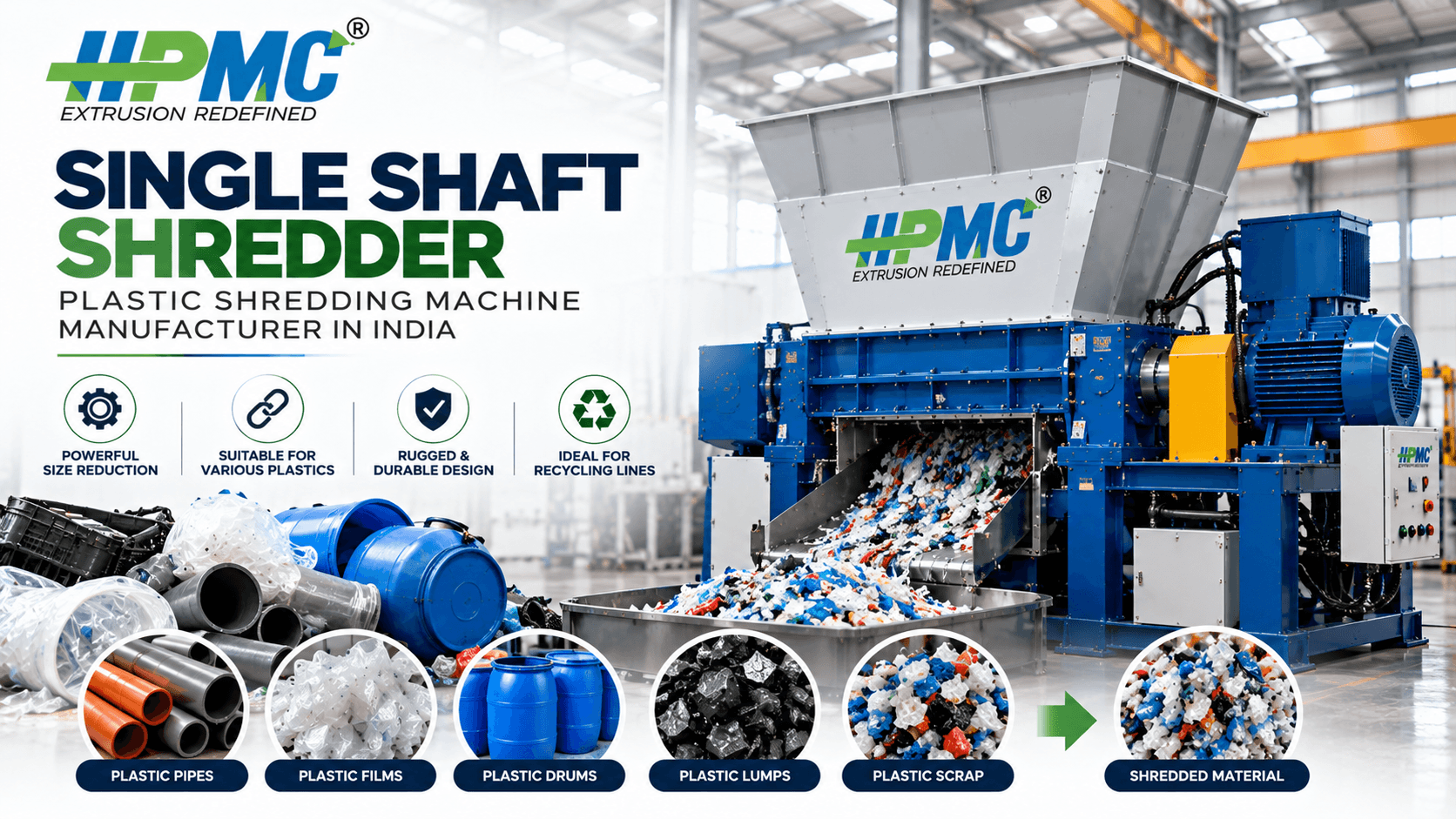
Plastic waste generated by manufacturing units, packaging companies and recycling facilities often includes bulky, irregular or oversized materials that cannot be fed directly into downstream recycling equipment. Plastic pipes, drums, lumps, production rejects and other industrial scrap may require size reduction before washing, granulation or extrusion.
A Single Shaft Shredder is an industrial plastic shredding machine designed to reduce suitable plastic waste into smaller pieces using a rotating rotor fitted with cutting blades. Depending on the machine configuration, a hydraulic ram can push material towards the rotor, while a screen helps control the size of the discharged material.
Hindustan Plastics & Machine Corporation (HPMC), based in Nangloi, Delhi, provides plastic processing and recycling machinery for industrial applications. A suitably configured single shaft shredder can form the first stage of a plastic recycling line, helping prepare material for subsequent processing.
If you are planning a plastic recycling project, selecting the right shredder requires an assessment of the material type, input dimensions, desired output size and required production capacity.
What Is a Single Shaft Shredder?
A Single Shaft Shredder is a mechanical size-reduction machine that uses one rotating shaft equipped with cutting blades to shred plastic waste. The rotor works against fixed blades to cut and tear suitable materials into smaller pieces.
Many industrial models use a hydraulic ram or pusher to move bulky plastic towards the cutting rotor. A screen may be installed to help control the size of the discharged material.
Unlike a granulator, which is generally designed for finer size reduction, a single shaft shredder is commonly used for initial or intermediate processing of plastic waste.
The shredded output can be transferred to other equipment, such as washing systems, granulators, compactors or recycling extruders, depending on the production process.
A typical single shaft shredding system may include:
- Feeding hopper
- Hydraulic ram or pusher
- Single rotating rotor
- Hardened cutting knives
- Fixed or counter knives
- Shredding chamber
- Drive motor and gearbox
- Screen or sizing arrangement
- Electrical control panel
- Discharge system
The actual design and components vary according to the machine model and application.
How Does a Single Shaft Shredder Work?
The working process involves controlled feeding, cutting and material discharge.
1. Plastic Waste Feeding
Plastic waste is loaded into the hopper. The size, shape and weight of the material determine the appropriate feeding arrangement.
Bulky items such as plastic pipes, drums or lumps may require a different hopper and feeding configuration from smaller production rejects.
2. Hydraulic Ram Feeding
In machines equipped with a hydraulic ram, the pusher moves the plastic towards the rotating rotor. This helps maintain controlled contact between the material and the cutting system.
The hydraulic feeding arrangement should be selected according to the material's dimensions and behaviour during shredding.
3. Rotor Cutting
The rotor rotates with cutting knives that engage with the plastic waste. Working against the fixed knives, the rotor reduces the material into smaller pieces.
The rotor design, knife geometry, drive power and operating conditions influence shredding performance.
4. Material Size Control
A screen with appropriately selected openings can help determine the size of material discharged from the shredding chamber.
The final output size depends on the screen arrangement, material characteristics and machine configuration.
5. Discharge and Further Processing
The shredded plastic is discharged for collection or transferred to the next stage of the recycling process.
Depending on the feedstock, the next step may involve washing, granulation, drying, compaction or extrusion.
Key Features of a Single Shaft Plastic Shredder
Single Rotor Cutting System
The rotating shaft carries cutting knives that reduce suitable plastic waste into smaller pieces. Rotor design and knife arrangement should match the intended material and required output.
Hydraulic Ram Feeding
A hydraulic ram can push bulky material towards the rotor, helping maintain controlled feeding during operation. The exact feeding arrangement depends on the selected machine.
Hardened Cutting Knives
Shredder knives are wear components that must withstand repeated cutting loads. Knife material, hardness and geometry affect service life and cutting performance.
Selectable Screen Size
A suitable screen helps control the size of discharged material. Screen selection should be based on the requirements of the downstream process.
Heavy-Duty Construction
The frame and shredding chamber must withstand the mechanical loads generated during industrial operation. Appropriate construction helps support reliable use under the specified operating conditions.
Maintenance Access
Knife inspection, sharpening or replacement should be considered when evaluating the machine. Easy maintenance access can reduce service time when planned correctly.
Integration with Recycling Equipment
A single shaft shredder can be integrated into a wider plastic recycling setup involving washing, granulation, compaction and extrusion.
Note: Features such as hydraulic feeding, screen configuration, rotor design and motor specifications should be confirmed against the exact model offered by HPMC.
What Types of Plastic Waste Can a Single Shaft Shredder Process?
Material compatibility depends on the machine's rotor design, drive capacity, cutting system, hopper dimensions and screen arrangement.
Plastic Pipes and Profiles
Suitable plastic pipes and profiles can be bulky and difficult to handle in their original form. Shredding reduces their size for easier collection and further processing.
Plastic Films and Packaging Waste
Compatible plastic film and packaging scrap can be shredded before washing or recycling. Lightweight films may require a suitable feeding arrangement to avoid feeding difficulties.
Plastic Drums and Containers
Selected rigid plastic drums, containers and rejected moulded products can be processed when their dimensions and material characteristics fall within the machine's capabilities.
Plastic Lumps and Purging Waste
Large plastic lumps and extrusion or moulding purgings may require high-torque size reduction. The machine should be selected according to the size, hardness and quantity of the material.
Plastic Bales
Suitable plastic bales may be processed when the feeding opening, rotor and drive system are designed to accommodate them. Remove unsuitable foreign materials before feeding.
Fibres and Industrial Plastic Scrap
Certain plastic fibres and industrial scrap can be processed using an appropriate cutter and feeding arrangement. Flexible or entangling materials may require specific design considerations.
Rejected Plastic Parts
Production rejects from plastic manufacturing can be shredded and prepared for reprocessing, provided the polymer is compatible with the intended recycling process.
Metal pieces, stones and other hard foreign objects should be removed wherever possible because they can damage the cutting system.
Benefits of a Single Shaft Shredder for Plastic Recycling
1. Efficient Size Reduction
The machine reduces bulky plastic waste into smaller pieces that are easier to handle and transfer between processing stages.
2. Better Material Handling
Shredded material is generally easier to convey, store and feed into downstream equipment than large, irregular pieces.
3. Preparation for Washing
For contaminated plastic waste, shredding can prepare the material for a suitable washing system. The appropriate input size depends on the washing equipment.
4. Support for Recycling Operations
The machine can be used as an initial or intermediate size-reduction stage in plastic recycling and reprocessing plants.
5. Controlled Output Size
When equipped with a suitable screen, the machine can help control the size of discharged material. Actual output depends on the feedstock and machine configuration.
6. Hydraulic Feeding for Bulky Material
A hydraulic ram can help feed bulky plastic towards the rotor and reduce the need for constant manual repositioning.
7. Maintenance Planning
Accessible cutting components and replaceable knives can simplify routine servicing when the machine is designed for convenient maintenance.
8. Integration into Complete Recycling Lines
A shredder can work alongside washing equipment, granulators, compactor systems and extrusion machines to support a coordinated recycling process.
Actual power consumption, noise levels, throughput and maintenance costs depend on the model, feedstock and operating conditions. Request machine-specific information before comparing suppliers.
Single Shaft Shredder vs. Twin Shaft Shredder
Both machines reduce plastic waste, but their cutting mechanisms and suitable applications can differ.
Single Shaft Shredder
- Uses one rotating rotor with cutting knives.
- Commonly uses a hydraulic ram or pusher for controlled feeding.
- Can use a screen to help control the discharged material size.
- Is suitable for applications requiring controlled rotor-based size reduction.
Twin Shaft Shredder
- Uses two interacting rotating shafts fitted with cutting tools.
- Pulls and tears material through the interaction of the shafts.
- Can be suitable for certain bulky or irregular waste streams.
- May be preferred where the material and required process suit a two-shaft cutting mechanism.
Neither design is universally better. The correct choice depends on plastic type, input dimensions, required output size, throughput and downstream processing requirements.
Single Shaft Shredder vs. Plastic Granulator
A shredder and a granulator perform different roles in many recycling lines.
A Single Shaft Shredder is generally used to reduce large or bulky plastic waste into smaller pieces.
A Plastic Granulator is generally used to reduce plastic into smaller, more uniform particles through a higher-speed cutting arrangement.
A shredder may be the right choice when processing large pipes, lumps, purgings or rejected parts. A granulator may be more suitable when the material is already at a manageable size and requires finer size reduction.
Some recycling operations use both machines in sequence. The correct arrangement depends on the target particle size and the requirements of the next processing stage.
Applications of a Single Shaft Shredder
A single shaft plastic shredding machine can support several industrial applications.
- Plastic recycling plants: Reducing suitable plastic waste before further processing.
- Pipe manufacturing units: Shredding compatible pipe offcuts and rejected profiles.
- Packaging manufacturers: Processing suitable production scrap and rejected plastic products.
- Plastic moulding facilities: Reducing compatible moulding rejects, lumps and purgings.
- Industrial waste management: Preparing selected plastic waste streams for recovery and recycling.
- Plastic washing plants: Preparing suitable material for downstream washing and separation.
- Recycling extrusion lines: Providing size-reduced feedstock for an appropriately configured recycling process.
The required machine configuration should be determined by the type and quantity of material being processed.
Role of a Single Shaft Shredder in a Plastic Recycling Line
A shredder is often one part of a complete plastic recycling process. Its role is to reduce the size of the incoming waste before the next processing stage.
A typical process for suitable contaminated plastic waste may include:
Sorting → Shredding → Washing → Separation → Dewatering or Drying → Extrusion → Melt Filtration → Pelletizing
Not every plant needs every stage. Clean industrial scrap may require only size reduction before further processing, while contaminated post-consumer waste may need a more extensive washing and preparation system.
For applications involving wet plastic material, HPMC's Wet Recycling Extrusion Line may be relevant after suitable preparation.
For lightweight film that needs densification before extrusion, consider the Recycling Plant with Compactor.
Where the application requires a vented extrusion system, review HPMC's Vented Recycling Plant.
These machines serve different purposes, so the complete line should be designed around the feedstock rather than choosing equipment in isolation.
How to Choose the Right Single Shaft Shredder
Before purchasing a Single Shaft Shredder Machine, evaluate the following factors.
Type of Plastic
Identify whether the feedstock consists of pipes, films, drums, lumps, purgings, fibres, bales or rejected plastic parts. Different materials place different demands on the cutting system.
Input Dimensions
Measure the maximum length, width, diameter and thickness of the incoming waste. The hopper opening and shredding chamber must accommodate the material safely.
Required Throughput
Estimate the quantity of material to be processed per hour. Ask the manufacturer to confirm the expected throughput for your actual feedstock rather than relying on a general capacity figure.
Desired Output Size
Determine the particle size required by the next processing stage. Screen selection and rotor configuration should be chosen accordingly.
Rotor and Knife Design
Ask about rotor geometry, knife material, knife replacement procedures and maintenance intervals for your intended application.
Motor and Gearbox
The drive system must provide suitable power and torque for the plastic being processed. Confirm the installed motor rating and operating requirements for the selected model.
Hydraulic System
If hydraulic ram feeding is required, evaluate the pusher arrangement, control system and maintenance requirements.
Safety and Maintenance
Confirm guarding, emergency stops, access for servicing, lockout procedures and operator training requirements.
After-Sales Support
Ask about installation, commissioning, spare parts, knife availability, maintenance support and technical documentation.
Single Shaft Shredder Price in India
The price of a Single Shaft Shredder in India depends on the machine's specifications and intended application.
Factors that can influence the price include:
- Required production capacity
- Rotor diameter and cutting width
- Motor and gearbox specifications
- Hopper dimensions
- Hydraulic ram configuration
- Knife material and design
- Screen size and arrangement
- Control panel and safety features
- Installation and commissioning requirements
- Spare parts and after-sales support
A machine designed for plastic pipes may require a different configuration from one intended for film, fibres or dense plastic lumps. For this reason, a single generic price may not accurately reflect the investment required.
HPMC's current price for a specific Single Shaft Shredder configuration should be confirmed directly with the manufacturer. Share the plastic type, maximum input dimensions, expected hourly throughput and desired output size to request a relevant quotation.
Why Choose HPMC for Plastic Recycling Machinery?
Hindustan Plastics & Machine Corporation (HPMC) manufactures plastic processing and recycling machinery from its facility in Nangloi, Delhi.
Businesses evaluating a plastic shredding solution can discuss their application with HPMC and establish the required machine configuration based on the material and production process.
Before finalising a purchase, confirm the machine specifications, expected throughput, electrical requirements, installation scope, maintenance schedule and availability of spare parts.
For documentation and support, visit HPMC's machine manuals page and spare parts page.
Explore the HPMC website for additional plastic processing and recycling machinery.
Related HPMC Products and Resources
- Wet Recycling Extrusion Line — for suitable wet plastic films and flakes.
- Recycling Plant with Compactor — for suitable lightweight plastic materials that benefit from compaction before extrusion.
- Vented Recycling Plant — for recycling applications requiring a vented extrusion system.
- Two Stage Recycling Plant — for suitable applications requiring two-stage extrusion.
- Machine Manuals — for product documentation and operating guidance.
- Spare Parts — for parts and maintenance support information.
Conclusion
A Single Shaft Shredder is an important size-reduction solution for businesses processing bulky plastic waste, production rejects, pipes, drums, lumps and other compatible materials. Its rotor and cutting system reduce large plastic pieces into more manageable material for subsequent washing, granulation or extrusion.
Selecting the right machine requires careful consideration of material type, input dimensions, required throughput, output size and maintenance requirements. The correct configuration can help integrate shredding into a more effective plastic recycling workflow.
Hindustan Plastics & Machine Corporation (HPMC), based in Nangloi, Delhi, can help you discuss your plastic processing requirements and identify the specifications needed for your application. Contact HPMC to enquire about machine configuration, technical details and pricing.
Contact Hindustan Plastics & Machine Corporation (HPMC)
Company: Hindustan Plastics & Machine Corporation (HPMC)
Address: 5, Category II, DSIDC Industrial Area, Nangloi, Delhi – 110041, India
Phone: +91 95605 96392
Email: info@hindustanplastics.com
Website: https://www.hindustanplastics.com/
Google Business Profile: https://share.google/lBK4uD53HqY891ynv
Contact HPMC to discuss your plastic material, required output size, production capacity and Single Shaft Shredder pricing.
Frequently Asked Questions
Find quick answers to the most common questions about this topic.
A Single Shaft Shredder is an industrial machine that uses one rotating rotor fitted with cutting knives to reduce suitable plastic waste into smaller pieces.
Depending on the machine configuration, it can process plastic pipes, films, drums, lumps, purgings, bales, fibres and rejected plastic parts.
It is generally used for initial or intermediate size reduction before washing, granulation, compaction or extrusion.
The hydraulic ram pushes material towards the cutting rotor, helping control feeding and maintain contact between the material and cutting system.
A screen with suitable openings helps control the size of material discharged from the shredding chamber. The output also depends on the material and machine configuration.
A single shaft shredder is generally used for bulky plastic waste and coarse size reduction. A granulator is commonly used to produce smaller, more uniform particles from material that is already manageable in size.
Suitable pipes and drums can be processed if their dimensions, material characteristics and wall thickness fall within the machine's capabilities. Confirm the application with the manufacturer.
Yes. A shredder can prepare suitable plastic waste for a washing system. The required output size and feeding arrangement depend on the design of the downstream plant.
The price depends on capacity, rotor and knife design, motor specifications, hopper size, hydraulic feeding and other configuration details. Contact HPMC for a quotation based on your application.
Provide the plastic type, maximum input dimensions, required hourly throughput, desired output size and downstream process. These details help the manufacturer recommend an appropriate configuration.
You can contact Hindustan Plastics & Machine Corporation (HPMC) in Nangloi, Delhi, at +91 95605 96392 or info@hindustanplastics.com, or visit https://www.hindustanplastics.com/.