
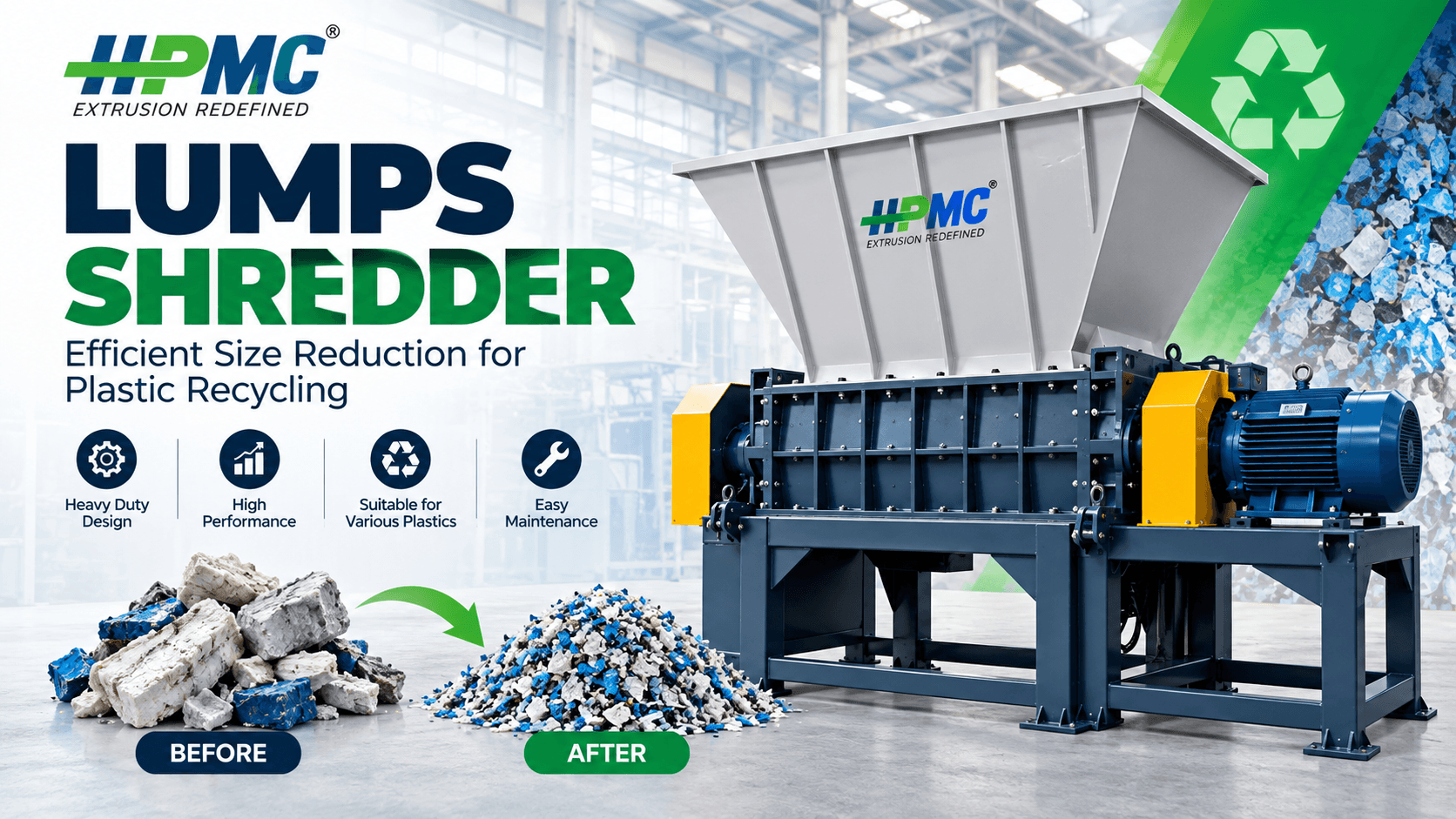
Plastic recycling and reprocessing operations often receive plastic material in different sizes and forms. Large plastic lumps, production rejects, agglomerated material, purge waste, and bulky plastic scrap cannot always be fed directly into an extrusion or recycling line.
A Lumps Shredder is designed to reduce large and bulky plastic lumps into smaller, more manageable pieces for further processing.
For recycling businesses, manufacturers, and plastic processing units, selecting the right shredder is important because the size reduction stage directly affects feeding, material handling, and the performance of downstream equipment.
A properly configured Lumps Shredder Machine can be integrated with plastic recycling lines, extrusion systems, reprocessing equipment, and granule production systems.
This guide explains what a lumps shredder is, how it works, its components, applications, benefits, and the important factors to consider before purchasing a machine.
What is a Lumps Shredder?
A Lumps Shredder is an industrial size-reduction machine used to process large plastic lumps and bulky plastic waste into smaller pieces.
Plastic lumps can be generated during:
- Plastic manufacturing
- Extrusion processes
- Injection moulding
- Blow moulding
- Plastic production changeovers
- Purging operations
- Recycling operations
- Material handling and processing
These lumps may be too large or irregular for direct feeding into downstream equipment.
The shredder reduces the size of this material, making it easier to transport, feed, recycle, or reprocess.
A typical process is:
Plastic Lumps → Feeding → Shredding → Size Reduction → Collection → Recycling/Reprocessing
The final particle or piece size depends on the machine configuration, material characteristics, and downstream requirements.
Why is a Lumps Shredder Required?
Large plastic lumps can create problems in recycling and reprocessing operations.
They may:
- Be difficult to handle
- Occupy significant storage space
- Cause inconsistent feeding
- Require manual size reduction
- Create challenges for downstream extrusion
- Reduce material handling efficiency
A suitable Plastic Lumps Shredder helps convert these large pieces into a more manageable form.
The shredded material can then be directed toward further processing, such as grinding, washing, extrusion, or pelletizing, depending on the recycling process.
How Does a Lumps Shredder Work?
The operating principle is based on mechanical size reduction.
Large plastic lumps are introduced into the shredding chamber through the feeding system.
The rotating cutting mechanism engages with the material and breaks it into smaller pieces.
The basic process is:
Feeding → Cutting → Shearing → Size Reduction → Discharge
Step 1: Material Feeding
Plastic lumps are introduced into the shredder through the hopper or feeding arrangement.
The feeding system should be designed according to the size and shape of the material.
Step 2: Cutting and Shearing
The rotating knives or cutting elements engage with the plastic lumps.
Mechanical force breaks the material into smaller pieces.
Step 3: Size Reduction
The material continues to be processed until it reaches a manageable size for discharge.
Step 4: Discharge
The shredded plastic exits the machine and can be collected or transferred to the next stage.
Depending on the recycling line, the output may then go to a grinder, washing system, extruder, or other downstream equipment.
Major Components of a Lumps Shredder
Feeding Hopper
The hopper provides the entry point for plastic lumps.
Its design should accommodate the dimensions and characteristics of the material being processed.
Shredding Chamber
The shredding chamber contains the cutting mechanism and provides the working area where size reduction takes place.
Rotor or Cutting Shaft
The rotating shaft carries the cutting elements responsible for processing the plastic lumps.
Its design influences shredding performance.
Knives or Cutting Blades
The cutting elements engage with the plastic and break it into smaller pieces.
The knife configuration should be suitable for the material being processed.
Drive System
The drive system supplies the mechanical power required for the shredding operation.
Motor and drive selection should correspond to the material and processing requirements.
Gearbox
The gearbox transfers and manages power between the drive system and the rotating shaft.
Discharge System
The discharge arrangement transfers the shredded material from the machine to collection or downstream processing equipment.
Control System
The control system manages machine operation and can provide monitoring and protection functions depending on the machine configuration.
What Materials Can a Lumps Shredder Process?
A Lumps Shredder is primarily selected for bulky plastic materials and large plastic pieces.
Depending on machine configuration, applications may include suitable:
- Plastic lumps
- Production scrap
- Plastic rejects
- Extrusion waste
- Injection moulding waste
- Blow moulding waste
- Purging material
- Plastic blocks
- Bulky plastic scrap
- Industrial plastic waste
- Reprocessing scrap
Different plastic materials have different mechanical properties, so shredder configuration should be selected according to the actual feedstock.
Applications of Lumps Shredder Machines
Plastic Manufacturing Units
Plastic manufacturers can use a lumps shredder to process production rejects and bulky scrap.
Extrusion Plants
Extrusion operations can generate purge material and large plastic waste that requires size reduction before recycling.
Injection Moulding Units
Large production rejects and plastic waste can be reduced into smaller pieces for further processing.
Blow Moulding Applications
Suitable bulky plastic waste generated during blow moulding can be processed through an appropriately configured shredder.
Plastic Recycling Plants
A lumps shredder can serve as an upstream size-reduction machine in a plastic recycling line.
Plastic Reprocessing Plants
Shredded material can be transferred to downstream equipment for further processing and granule production.
Benefits of Using a Lumps Shredder
Efficient Size Reduction
The machine helps reduce large plastic lumps into smaller pieces suitable for further processing.
Improved Material Handling
Smaller pieces are generally easier to transport, store, and feed into downstream equipment.
Support for Recycling
Shredding prepares bulky plastic waste for subsequent recycling processes.
Reduced Manual Processing
Mechanical size reduction can reduce the need for manual breaking of large plastic lumps.
Better Downstream Feeding
Consistent material size can support more controlled feeding into subsequent processing equipment.
Integration with Recycling Lines
A lumps shredder can be connected with grinders, washing systems, extruders, and other recycling equipment.
Space-Efficient Material Handling
Reducing bulky waste can make storage and transportation within a production facility more manageable.
Lumps Shredder vs Plastic Grinder
A Lumps Shredder and plastic grinder both perform size reduction, but they are generally used for different stages or material conditions.
A shredder is commonly selected for large, bulky, irregular, or difficult-to-handle plastic pieces.
A grinder is generally used for further size reduction when a more uniform and smaller particle size is required.
In some recycling operations, both machines can be used sequentially:
Plastic Lumps → Shredder → Grinder → Extrusion/Recycling
The right combination depends on the feedstock and the required downstream material size.
Lumps Shredder vs Single Shaft Shredder
A Single Shaft Shredder is one type of shredding technology that uses a rotating shaft and cutting system to process plastic material.
A lumps shredder can be configured around the specific requirement of processing bulky plastic lumps.
The selection should be based on:
- Material size
- Material shape
- Polymer type
- Feedstock quantity
- Required output size
- Production requirements
- Downstream equipment
Rather than selecting a machine based only on its name, businesses should evaluate the actual material they intend to process.
How to Choose the Right Lumps Shredder
Selecting a Lumps Shredder Machine requires careful evaluation of the feedstock and production requirements.
1. Identify the Material
Determine the type of plastic being processed.
Different plastics can have different hardness, toughness, and flexibility.
2. Evaluate Lump Size
Measure the typical and maximum dimensions of the plastic lumps.
The feeding hopper and shredding chamber should be suitable for the material size.
3. Determine Required Output Size
Identify the approximate size required after shredding.
The output requirement depends on what happens next in the recycling process.
4. Consider Production Volume
Determine how much plastic needs to be processed over a given operating period.
The shredder should be appropriately matched to the required production workload.
5. Evaluate Feeding Method
Consider whether the material will be loaded manually or through an integrated material handling system.
6. Check Knife Configuration
Knife design and arrangement can affect cutting performance, maintenance, and material processing.
7. Evaluate Drive System
The motor and drive arrangement should be selected according to the material characteristics and processing requirements.
8. Consider Downstream Equipment
The shredder should be evaluated as part of the complete recycling line.
It may need to feed:
- Grinder
- Washing system
- Dryer
- Extruder
- Pelletizer
- Plastic recycling machine
9. Evaluate Maintenance Requirements
Consider access to knives, bearings, gearbox, motor, and other wear components.
Easy maintenance can help reduce downtime.
10. Check Manufacturer Support
When purchasing a Lumps Shredder, evaluate the manufacturer's:
- Technical expertise
- Machine configuration
- Installation support
- Commissioning
- Spare parts
- Maintenance support
- After-sales service
Lumps Shredder for Plastic Recycling
A lumps shredder can form an important part of a plastic recycling process.
A typical recycling workflow may be:
Plastic Lumps → Lumps Shredder → Grinder → Washing → Drying → Extrusion → Filtration → Pelletizing → Recycled Granules
Not every recycling plant requires every stage.
The exact line configuration depends on the condition of the plastic waste and the required recycled product.
For relatively clean production scrap, a simpler process may be sufficient.
For contaminated waste, additional washing, drying, filtration, and material preparation may be necessary.
Lumps Shredder for Plastic Reprocessing
Plastic reprocessing operations often receive scrap in irregular shapes and sizes.
A shredder helps prepare this material for downstream extrusion.
The overall process can include:
Plastic Scrap → Shredding → Size Reduction → Feeding → Extrusion → Melt Filtration → Pelletizing
The shredder therefore acts as an upstream material preparation machine rather than replacing the extrusion or recycling stage.
Factors Affecting Lumps Shredder Performance
Plastic Type
The hardness and flexibility of the plastic influence cutting requirements.
Lump Size
Large and irregular lumps may require a robust feeding and cutting arrangement.
Material Thickness
Thicker plastic pieces can require greater mechanical force for size reduction.
Feeding Consistency
Consistent feeding can help maintain stable machine operation.
Knife Condition
Sharp and properly maintained cutting elements contribute to efficient processing.
Drive Configuration
The drive system must provide suitable power for the intended application.
Maintenance
Regular inspection and maintenance help support reliable operation.
Maintenance of a Lumps Shredder
Regular maintenance is important for maintaining shredding performance.
Important components to inspect include:
- Cutting knives
- Rotor or shaft
- Bearings
- Gearbox
- Motor
- Hopper
- Shredding chamber
- Electrical controls
- Safety systems
Knives should be inspected regularly for wear.
The shredding chamber should be cleaned to prevent excessive material buildup.
Bearings and gearbox components should be maintained according to the manufacturer's recommendations.
Electrical and safety systems should also be inspected regularly.
Why Choose HPMC for a Lumps Shredder?
HPMC provides machinery solutions for plastic recycling, plastic reprocessing, extrusion, shredding, and related plastic processing applications.
A Lumps Shredder can be selected according to the plastic material, lump dimensions, required output size, production requirements, and downstream recycling process.
Businesses planning to purchase a Plastic Lumps Shredder can discuss their material and production requirements with HPMC to determine a suitable machine configuration.
The complete material flow should be considered, from size reduction and shredding to grinding, washing, extrusion, filtration, pelletizing, and final recycled granule production.
Conclusion
A Lumps Shredder is an important size-reduction solution for plastic manufacturing, recycling, and reprocessing applications where large and bulky plastic material needs to be converted into a more manageable form.
By reducing plastic lumps into smaller pieces, the machine can support material handling and prepare suitable feedstock for downstream grinding, washing, extrusion, filtration, and pelletizing.
Choosing the right machine requires evaluation of the plastic type, lump dimensions, material thickness, production requirements, desired output size, knife configuration, drive system, and downstream process.
For businesses purchasing a Plastic Lumps Shredder, the manufacturer should also be evaluated for technical expertise, machine configuration, installation, spare parts, maintenance, and after-sales support.
HPMC provides plastic processing and recycling machinery solutions and can help businesses evaluate their size-reduction requirements and select a suitable Lumps Shredder configuration for their application.
Frequently Asked Questions
Find quick answers to the most common questions about this topic.
A Lumps Shredder is a size-reduction machine designed to process large and bulky plastic lumps into smaller pieces for further recycling or reprocessing.
Depending on the machine configuration, suitable plastic lumps, production scrap, extrusion waste, injection moulding waste, blow moulding waste, purge material, and other bulky plastic waste can be processed.
A shredder is commonly used for primary size reduction of bulky or irregular material, while a grinder is generally used to achieve smaller and more uniform particle sizes.
Yes. A Lumps Shredder can be used as a size-reduction stage in a plastic recycling or reprocessing line.
It depends on the required feed size and the extrusion system. Some applications may require additional grinding or material preparation before extrusion.
Consider the plastic type, maximum lump size, material thickness, required output size, production volume, knife configuration, drive system, feeding method, downstream equipment, and maintenance requirements.
Not necessarily. A single shaft shredder describes a particular machine configuration, while a lumps shredder describes the intended material-processing application. A suitable lumps shredder may use an appropriate shredding configuration based on the application.
Yes. It can be integrated with grinders, washing systems, dryers, plastic recycling extruders, filtration systems, and pelletizing equipment.
Cost can depend on the machine configuration, material type, processing requirements, feeding arrangement, drive system, automation, downstream integration, and other application-specific requirements.
A specialized manufacturer can evaluate the actual plastic material, lump size, required output, and downstream process to recommend a suitable machine configuration rather than offering a generic size-reduction solution.