Introduction
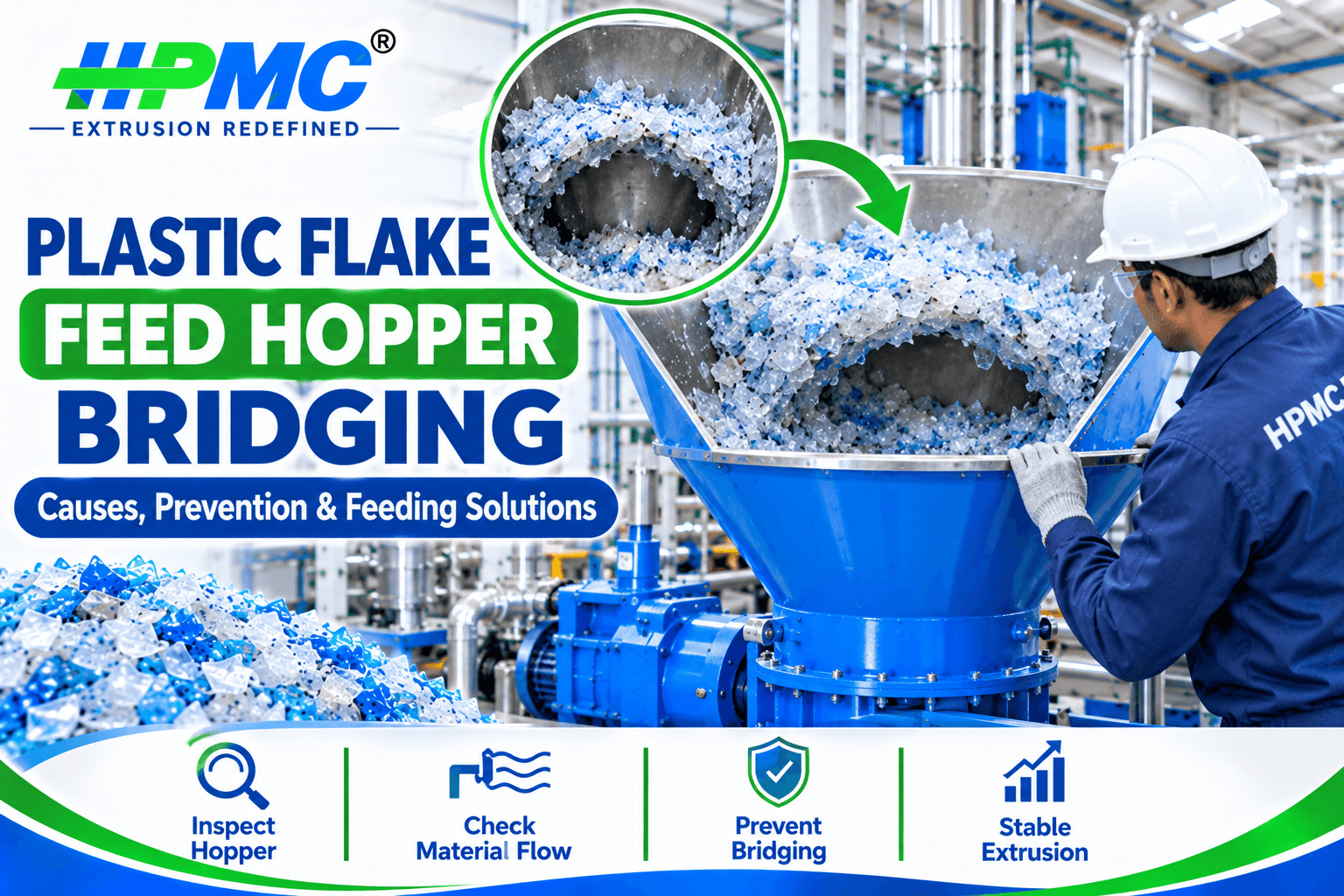
Plastic recycling is an important part of modern manufacturing, where plastic waste is converted into reusable raw materials for different industrial applications. Maintaining a consistent material flow is essential for achieving stable production, better machine performance and reliable recycled pellet quality. However, one common problem experienced by recycling manufacturers is Plastic Flake Feed Hopper Bridging.
Feed hopper bridging occurs when plastic flakes collect and form an arch or blockage inside the hopper instead of moving freely towards the extruder or feeding system. This prevents the material below the blockage from receiving a continuous supply of plastic flakes. As a result, the extrusion line may experience irregular feeding, reduced output, machine fluctuations and unnecessary production interruptions.
Plastic flakes can have different sizes, shapes, bulk densities and surface characteristics. Lightweight flakes, irregularly shaped pieces and materials containing moisture may not flow smoothly through conventional hopper arrangements. When these materials stick together or become compressed, bridging can develop inside the feeding section.
Understanding the causes of hopper bridging is important for manufacturers operating plastic recycling and reprocessing plants. Proper hopper design, suitable feeding equipment, controlled material preparation and regular inspection can help reduce feeding problems.
In this guide, we will explain Plastic Flake Feed Hopper Bridging, its common causes, warning signs, troubleshooting methods, prevention techniques and the importance of selecting suitable feeding equipment for plastic recycling operations.
What Is Plastic Flake Feed Hopper Bridging?
Plastic Flake Feed Hopper Bridging is a material flow problem in which plastic flakes form a stable blockage inside the feed hopper. Instead of moving towards the discharge opening under gravity, the material creates an arch-like structure that prevents continuous feeding.
This problem is commonly associated with lightweight plastic flakes, irregular material shapes, inconsistent particle sizes and poor hopper flow characteristics.
When bridging occurs, the hopper may appear to contain sufficient plastic material, but the extruder does not receive the required quantity. This can create an interruption between material storage and the extrusion process.
In plastic recycling applications, hopper bridging may occur when processing:
- HDPE plastic flakes
- PP plastic flakes
- LDPE and LLDPE flakes
- Washed plastic flakes
- Recycled plastic regrind
- Lightweight plastic scrap
- Mixed plastic processing materials
The actual feeding behaviour depends on material characteristics, hopper geometry, moisture condition and the feeding mechanism being used.
Why Does Plastic Flake Feed Hopper Bridging Occur?
Plastic flakes do not always behave like uniform granular materials. Their irregular shapes, surface friction and bulk density can influence how they move inside a hopper.
Several factors can contribute to bridging during plastic recycling operations.
1. Irregular Plastic Flake Shape
Plastic flakes produced through shredding or grinding may have different shapes and sizes. Some pieces can be flat, elongated or uneven.
When irregular flakes move towards a narrow hopper outlet, they may interlock with one another and create an arch. This structure can restrict the movement of the remaining material.
2. Lightweight Plastic Material
Lightweight plastic flakes may have poor flow characteristics, particularly when their bulk density is low. Instead of moving smoothly towards the hopper outlet, they may remain suspended or collect around the hopper walls.
This can create inconsistent feeding and increase the possibility of bridging.
3. Moisture in Plastic Flakes
Washed plastic flakes may retain moisture after the cleaning process. When wet material enters the feeding hopper, flakes can stick together and form compacted clusters.
These clusters may restrict material movement and create blockages near the hopper outlet.
4. Incorrect Hopper Design
Hopper geometry plays an important role in material movement. A narrow outlet, unsuitable wall angle or poorly designed transition section may encourage material accumulation.
If the hopper is not designed according to the flow characteristics of the plastic flakes, bridging can occur more frequently.
5. Material Compaction
Plastic flakes may become compressed due to excessive material loading, storage conditions or unsuitable feeding arrangements.
Compacted material can develop a strong structure inside the hopper, preventing smooth discharge.
6. Inconsistent Material Size
A mixture of very small and large plastic flakes may create uneven flow behaviour. Smaller pieces can fill spaces between larger pieces, while elongated flakes may become entangled.
This can contribute to blockage formation inside the feeding section.
7. Poor Material Feeding Arrangement
An unsuitable feeding mechanism may fail to move lightweight plastic flakes towards the extruder consistently.
The feeding arrangement should match the material's bulk density, size, moisture condition and required processing capacity.
Common Signs of Plastic Flake Feed Hopper Bridging
Identifying early warning signs helps operators prevent feeding interruptions and unnecessary machine downtime.
Irregular Extruder Feeding
The extruder may receive inconsistent material quantities even when the hopper contains sufficient plastic flakes.
Sudden Production Output Reduction
When material stops flowing through the hopper, extrusion output may decrease because the machine is not receiving a continuous supply.
Empty Feeding Section
The hopper may appear full while the material below the bridge has already moved towards the extruder. This creates an empty space beneath the blockage.
Frequent Manual Intervention
Operators may need to stop production and inspect the hopper repeatedly to restore material flow.
Fluctuating Machine Load
Inconsistent feeding can cause variations in screw loading and extrusion conditions.
Unstable Pellet Production
Irregular material supply may affect melt flow and pelletizing consistency, particularly when the interruption is significant.
How Does Hopper Bridging Affect Plastic Recycling Production?
Hopper bridging can influence several stages of the plastic recycling process.
1. Reduced Production Efficiency
When plastic flakes stop flowing, the extrusion line may operate below its intended production capacity. Repeated interruptions can reduce overall productivity.
2. Unstable Material Feeding
An extruder requires a suitable and consistent supply of material. Bridging creates interruptions that can disturb the feeding process.
3. Increased Operator Workload
Frequent hopper inspections and manual blockage removal increase operator involvement and maintenance requirements.
4. Unnecessary Production Downtime
If bridging becomes severe, the machine may require a controlled shutdown for inspection and cleaning.
5. Inconsistent Processing Conditions
Fluctuating feed rates can influence extrusion stability, temperature conditions and downstream pelletizing performance.
Effective Methods to Prevent Plastic Flake Feed Hopper Bridging
Preventing hopper bridging requires attention to material preparation, hopper design and feeding equipment.
1. Improve Plastic Flake Size Consistency
Plastic flakes should be processed into a suitable and relatively consistent size before entering the feeding system.
Removing oversized pieces and controlling the size distribution can help reduce interlocking and material accumulation.
2. Maintain Proper Moisture Conditions
Washed plastic flakes should be processed according to the moisture-handling requirements of the selected recycling line.
Where required, suitable dewatering and drying arrangements can help prevent wet material from sticking together.
3. Use a Properly Designed Hopper
The hopper should be designed according to the physical properties of the material being processed.
Important design considerations include:
- Hopper wall angle
- Outlet opening size
- Material contact surfaces
- Hopper capacity
- Feeding mechanism compatibility
- Material discharge characteristics
4. Install Suitable Feeding Equipment
Mechanical feeding arrangements can help move plastic flakes towards the extruder more consistently.
Depending on the material, manufacturers may consider screw feeders, agitators, mechanical discharge systems or other suitable feeding arrangements.
5. Avoid Excessive Material Compaction
Material should be stored and supplied in a way that avoids unnecessary compression. Excessive compaction can reduce flowability and increase the possibility of bridging.
6. Maintain Consistent Material Supply
The feeding system should deliver material according to the extruder's processing requirements. Sudden changes in material loading can disturb the feeding process.
7. Perform Regular Hopper Inspections
Operators should inspect the hopper for material buildup, blockages, damaged surfaces and feeding mechanism problems.
Maintenance should always follow the machine manufacturer's safety procedures.
Role of Feeding Systems in Plastic Recycling Lines
The feeding system is an important component of a plastic recycling plant because it controls how prepared plastic material enters the extrusion machine.
A suitable feeding arrangement helps maintain consistent material movement and reduces the possibility of interruptions caused by poor flow behaviour.
For lightweight plastic films and loose recycling materials, a suitable Recycling Plant with Compactor can be evaluated to improve material preparation and feeding.
The compactor cuts, densifies and prepares suitable plastic waste before it enters the extrusion system. Its suitability depends on the feedstock and complete recycling line configuration.
Importance of Material Preparation Before Hopper Feeding
Proper material preparation can significantly influence feeding performance.
Plastic waste generally passes through different preprocessing stages before reaching the extruder. Depending on its condition, these stages may include sorting, shredding, washing, dewatering, drying and size reduction.
Sorting
Sorting helps separate unsuitable materials and different polymer types before further processing.
Shredding
Shredding reduces larger plastic waste into smaller pieces that are easier to handle and process.
Washing
Washing removes dirt and other surface contaminants from compatible plastic materials.
Dewatering and Drying
Suitable dewatering and drying arrangements help manage moisture in washed plastic flakes.
Material Storage
Prepared flakes should be stored under suitable conditions to reduce contamination and moisture exposure.
For manufacturers processing washed flakes with residual moisture, an appropriate Wet Recycling Extrusion Line may be considered according to the material's moisture condition and production requirements.
How to Troubleshoot Plastic Flake Feed Hopper Bridging
When hopper bridging occurs, operators should identify the actual reason instead of repeatedly disturbing the material without investigating the cause.
Step 1: Inspect the Hopper
Check whether plastic flakes have formed an arch or blockage near the outlet. Inspect the hopper walls and discharge area for accumulated material.
Step 2: Check Plastic Flake Size
Examine the feedstock for oversized pieces, elongated flakes and inconsistent material sizes that may contribute to interlocking.
Step 3: Review Moisture Conditions
Check whether washed plastic flakes contain excessive moisture or have formed sticky clusters.
Step 4: Inspect the Feeding Mechanism
Examine screw feeders, agitators, discharge arrangements and other feeding components for wear, damage or obstruction.
Step 5: Check Hopper Geometry
Review whether the hopper outlet and wall design are suitable for the material being processed.
Step 6: Monitor Material Flow
Observe the movement of plastic flakes during normal operation and identify whether the blockage develops at a particular location.
Step 7: Review Extruder Feeding Requirements
Confirm that the feeding equipment is compatible with the extruder's required material supply.
All inspections and blockage removal must be carried out using approved isolation and lockout procedures. Never reach into an operating hopper or use unsafe manual methods to break a material bridge.
How to Select the Right Feed Hopper for Plastic Recycling
Selecting a suitable hopper is important for maintaining reliable feeding performance.
Manufacturers should consider several factors before choosing a feeding arrangement.
Material Type: Identify whether the plant will process HDPE, PP, LDPE, LLDPE or another compatible plastic material.
Flake Size: Evaluate the average size, shape and distribution of plastic flakes.
Bulk Density: Lightweight and low-density materials may require specialised feeding arrangements.
Moisture Condition: Washed or wet plastic flakes may require suitable moisture management.
Required Capacity: Hopper capacity and discharge arrangement should match the required production rate.
Hopper Design: Consider outlet size, wall angle, surface finish and material discharge characteristics.
Feeding Mechanism: Select a compatible screw feeder, mechanical discharge arrangement or other suitable equipment.
Maintenance Requirements: Consider cleaning access, inspection requirements, spare parts and operator safety.
Role of Extrusion Technology in Stable Plastic Flake Feeding
A stable extrusion process depends on proper coordination between material preparation, feeding, melting, filtration and pelletizing.
If plastic flakes do not reach the extruder consistently, the entire production process can be affected.
A suitable Two Stage Plastic Reprocess Extrusion Line can be considered for applications requiring two-stage melt processing and suitable downstream filtration and pelletizing arrangements.
The complete line should be designed according to the polymer type, feedstock condition, required capacity and desired recycled pellet quality.
Maintenance Checklist for Plastic Flake Feed Hoppers
Regular inspection helps reduce material buildup and identify feeding problems before they affect production.
- Inspect hopper walls for accumulated plastic flakes.
- Check the hopper outlet for material blockage.
- Examine screw feeders and discharge mechanisms.
- Check agitators where installed.
- Inspect feeding motor and drive components.
- Monitor material flow during production.
- Check plastic flake size consistency.
- Review moisture conditions of washed flakes.
- Inspect mechanical connections and safety guards.
- Clean approved hopper surfaces according to maintenance procedures.
- Record repeated bridging incidents.
- Follow the manufacturer's recommended maintenance schedule.
Conclusion
Plastic Flake Feed Hopper Bridging is a common material handling challenge in plastic recycling plants. It occurs when plastic flakes form an arch or blockage inside the hopper and prevent continuous material discharge.
Irregular flake shapes, lightweight materials, excessive moisture, material compaction, inconsistent particle sizes and unsuitable hopper geometry can all contribute to this problem.
Manufacturers can reduce bridging by improving material preparation, maintaining suitable moisture conditions, selecting the right hopper design and installing compatible feeding equipment. Regular inspections and preventive maintenance also help maintain reliable material flow.
A properly designed feeding arrangement supports stable extrusion conditions, reduces unnecessary downtime and improves overall recycling plant efficiency. Therefore, hopper design and material flow management should be considered important parts of every plastic recycling line.
Contact Hindustan Plastics and Machinery Corporation (HPMC)
Hindustan Plastics and Machinery Corporation (HPMC) provides plastic extrusion, recycling, reprocessing, compounding and industrial machinery solutions. Manufacturers planning to establish a new plastic recycling facility or improve an existing production line can discuss their material handling and machinery requirements with the HPMC team.
If your recycling plant is experiencing plastic flake hopper bridging, inconsistent feeding or repeated extrusion interruptions, selecting suitable feeding and recycling equipment is important.
Company: Hindustan Plastics and Machinery Corporation (HPMC)
Address: 5, Category II, DSIDC Industrial Area, Nangloi, Delhi – 110041, India
Phone: +91 95605 96392
Email: info@hindustanplastics.com
Website: https://www.hindustanplastics.com/
Request a Quote: https://www.hindustanplastics.com/get-in-touch
Google Business Profile: https://share.google/lBK4uD53HqY891ynv
When contacting HPMC, share your plastic material type, flake size, bulk density, moisture condition, required processing capacity and existing feeding arrangement to discuss a suitable machinery configuration.
Contact HPMC today to discuss your plastic recycling requirements and explore suitable extrusion and material feeding solutions for your production facility.
Frequently Asked Questions
Find quick answers to the most common questions about this topic.
Plastic Flake Feed Hopper Bridging occurs when plastic flakes form an arch or blockage inside a feed hopper, preventing material from flowing continuously towards the extruder.
Common causes include irregular flake shapes, low bulk density, excessive moisture, material compaction, inconsistent particle sizes and unsuitable hopper geometry.
It interrupts material feeding, reduces production output, creates unstable extrusion conditions and may increase machine downtime.
Yes. Moisture can cause plastic flakes to stick together and form compacted clusters, potentially restricting material movement.
Manufacturers can improve flake size consistency, control moisture, select suitable hopper geometry, use appropriate feeding equipment and perform regular maintenance.
Depending on material characteristics, suitable options may include screw feeders, mechanical discharge systems, agitators and other specialised feeding arrangements.
Yes. Hopper outlet size, wall angle, surface characteristics and overall geometry influence material movement and discharge behaviour.
A suitable compactor can densify lightweight plastic waste and improve feeding characteristics in certain recycling applications. Its suitability depends on the material and plant configuration.
Inspection frequency depends on operating hours, material characteristics and feeding conditions. Regular checks should be included in the preventive maintenance schedule.
HPMC provides plastic recycling and extrusion machinery solutions. Manufacturers can contact the HPMC team to discuss material characteristics, feeding requirements, production capacity and suitable machine configurations.