
Introduction
Plastic recycling extrusion involves several important processing stages, including material feeding, melting, plasticisation, degassing, filtration and pelletizing. During this process, moisture, trapped air and volatile components may be released from the plastic material. A vented recycling extruder provides a dedicated section to remove these unwanted substances from the polymer melt. However, maintaining the venting system requires regular inspection and proper maintenance.
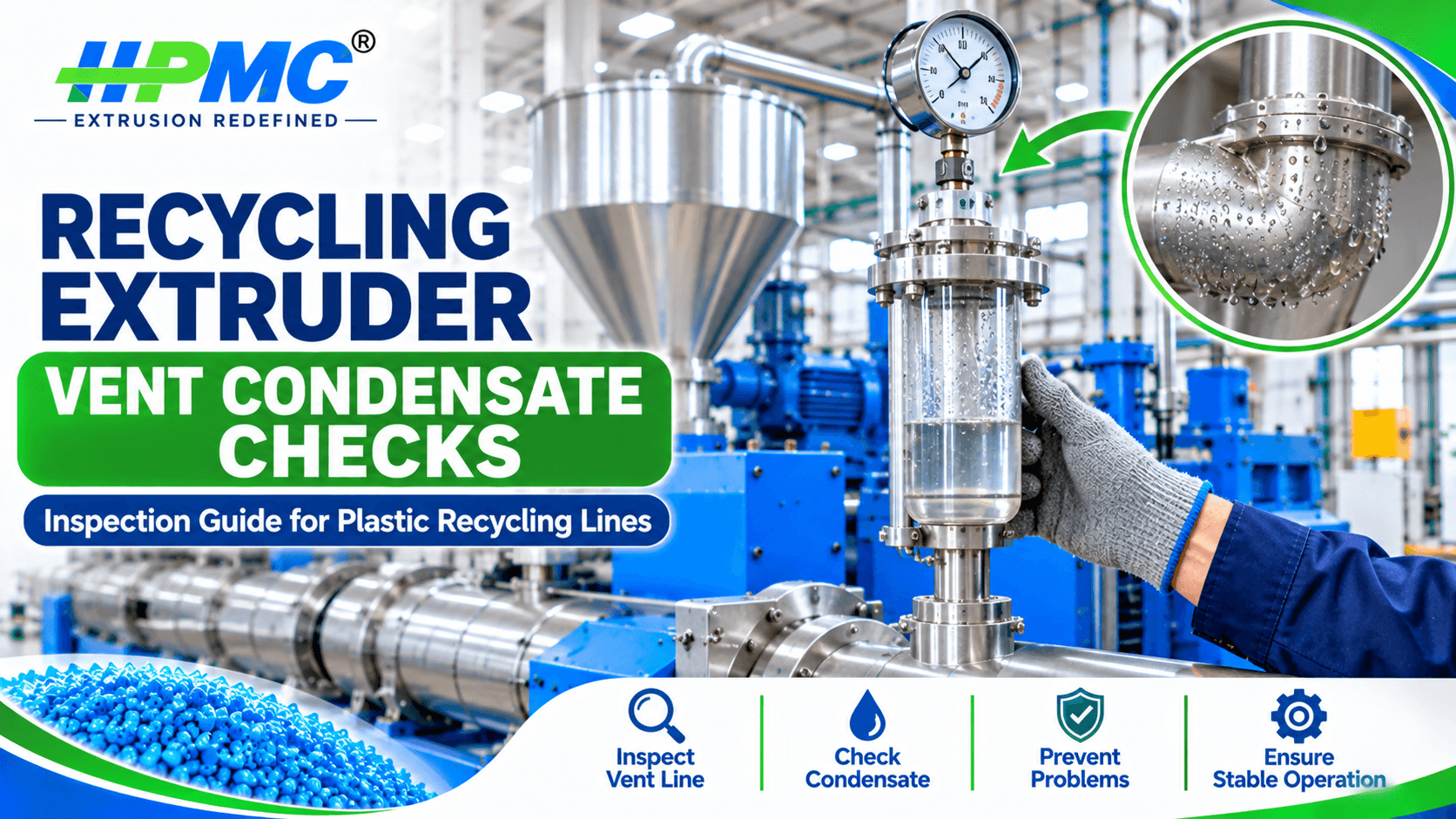
Recycling Extruder Vent Condensate Checks are an important part of preventive maintenance because condensation can accumulate in vent pipes, vacuum lines, collection chambers and connected equipment. If condensate is not inspected and managed properly, it may affect vacuum performance, cause vent blockages, create maintenance issues and disturb the overall recycling process.
Plastic waste can contain different levels of moisture depending on its source, washing process, storage conditions and material preparation. During extrusion, some of this moisture can turn into vapour and move towards the venting system. As the vapour cools, it may condense and collect inside suitable low-temperature sections of the system.
Regular condensate inspection helps machine operators identify moisture accumulation, check the condition of venting components and maintain stable extrusion conditions. In this guide, we will explain the importance of vent condensate checks, common causes of moisture accumulation, inspection procedures, maintenance practices and ways to improve venting performance in plastic recycling lines.
What Are Recycling Extruder Vent Condensate Checks?
Recycling extruder vent condensate checks refer to the inspection of moisture and liquid accumulation in the venting and vacuum arrangement of a plastic recycling extrusion machine.
During plastic recycling, the extruder heats and melts the polymer. Depending on the feedstock, moisture, trapped air and volatile components may be released during processing. These substances can move through the venting arrangement, where some moisture may condense as temperatures decrease.
The condensate may collect in vacuum traps, separators, collection chambers, pipes and other suitable parts of the venting system.
Regular inspection helps operators understand whether moisture accumulation is within the expected operating conditions or whether an issue requires attention.
A typical inspection may include:
- Checking the vent opening for material accumulation.
- Inspecting vacuum pipes and connecting hoses.
- Examining condensate collection chambers.
- Checking moisture traps and separators.
- Inspecting vacuum pump connections.
- Monitoring vacuum performance.
- Checking seals, fittings and drainage arrangements.
- Recording unusual moisture accumulation.
The exact inspection points depend on the extruder design and the installed degassing system.
Why Are Vent Condensate Checks Important in Plastic Recycling?
A venting system plays an important role in removing moisture, trapped air and certain volatile components during plastic extrusion. However, accumulated condensate can create problems if it is not managed according to the machine manufacturer's recommendations.
1. Maintaining Vacuum Performance
Vacuum-assisted degassing systems require suitable operating conditions to remove gases and moisture from the polymer melt. Excessive liquid accumulation in connected components may affect vacuum performance, depending on the system design.
Checking condensate traps and separators helps operators identify potential restrictions and maintenance requirements.
2. Preventing Vent Line Blockages
Moisture mixed with dust, polymer residue or other contaminants may accumulate inside vent lines. Over time, this can restrict the movement of vapour and affect the degassing arrangement.
Regular inspection helps identify deposits before they become serious.
3. Supporting Stable Extrusion
Poor degassing conditions may contribute to bubbles, voids, surface defects and inconsistent processing in certain recycling applications. Maintaining the venting system helps support stable extrusion conditions.
4. Protecting Vacuum Equipment
Vacuum pumps and related equipment should operate according to their design requirements. Excessive liquid carryover can create operational problems in systems that are not designed to handle it.
Suitable traps, separators and condensate management arrangements help protect connected equipment.
5. Reducing Unexpected Maintenance
Scheduled inspections help operators identify leakage, damaged hoses, blocked pipes and collection chamber problems before they interrupt production.
Common Causes of Condensate Accumulation in Recycling Extruders
1. High Moisture Content in Plastic Waste
One of the main reasons for condensate accumulation is excessive moisture in the incoming plastic material. Washed plastic flakes and films may retain moisture if drying is incomplete.
When the material enters the extruder, heat can convert some of the remaining moisture into vapour. This vapour may condense when it reaches cooler sections of the venting system.
2. Inadequate Material Drying
Insufficient drying can increase the amount of moisture entering the extrusion process. The required drying method depends on the polymer, feedstock condition and recycling line configuration.
Operators should inspect the drying process when condensate accumulation becomes unusually high.
3. Low Temperature in Vent Lines
Temperature differences between the extruder and connected vent pipes can cause moisture vapour to condense.
Cold surfaces and unsuitable insulation arrangements may increase condensation in certain sections of the system.
4. Contaminated Feedstock
Plastic waste may contain dust, paper, labels, washing residues and other contaminants. These materials can combine with moisture and contribute to deposits inside the venting arrangement.
Better sorting, cleaning and material preparation can help reduce unwanted contamination.
5. Blocked or Poorly Maintained Vacuum Lines
Dust, polymer residue and accumulated deposits can restrict airflow through vacuum lines. Such restrictions may affect the movement of vapour and contribute to poor degassing performance.
6. Incorrect Vacuum System Operation
Unsuitable vacuum settings, leakage, damaged connections or equipment operating outside its recommended conditions may affect degassing performance.
Vacuum settings should always be checked against the manufacturer's technical recommendations.
7. Poor Condensate Drainage
A blocked drainage arrangement or improperly maintained collection chamber may allow liquid to accumulate beyond its intended level.
Operators should inspect drainage components and follow the approved condensate removal procedure.
Step-by-Step Recycling Extruder Vent Condensate Inspection Checklist
A systematic inspection process helps operators identify problems and maintain the venting arrangement properly.
Step 1: Inspect the Vent Opening
Check the vent opening for polymer deposits, dust and other material accumulation. A blocked opening can affect the removal of vapour from the extrusion barrel.
Inspection and cleaning should be performed only under the manufacturer's approved safety and maintenance procedure.
Step 2: Check the Vent Pipe
Examine the connected vent pipe for visible moisture, deposits, leakage and physical damage. Pay particular attention to joints, bends and low points where condensate may collect.
Step 3: Inspect the Condensate Trap
Check the condensate trap or collection chamber for accumulated liquid. Confirm that the collection level is within the equipment manufacturer's recommended limits.
Step 4: Examine Vacuum Hoses
Inspect vacuum hoses for cracks, loose connections, deformation and blockages. Damaged hoses can reduce system efficiency and affect vacuum stability.
Step 5: Check the Separator
If the system includes a moisture separator, inspect its condition and confirm that it is functioning according to the manufacturer's instructions.
Step 6: Monitor Vacuum Readings
Observe the vacuum gauge or monitoring system during normal operation. Unusual changes may indicate leakage, restrictions, excessive moisture or another equipment issue.
Step 7: Inspect Drainage Arrangements
Check whether condensate can be removed through the intended drainage system. Never open pressurised or hot components without following the approved isolation procedure.
Step 8: Record Inspection Results
Maintain records of moisture accumulation, vacuum readings, cleaning activities and maintenance observations. These records help identify recurring problems.
Signs That Your Recycling Extruder Vent System Needs Attention
Machine operators should recognise early warning signs before they develop into major production issues.
Excessive Moisture in Collection Chambers
Unusually high condensate accumulation may indicate wet feedstock, inadequate drying or a change in operating conditions.
Unstable Vacuum Readings
Fluctuating vacuum readings may indicate leakage, blocked connections, liquid accumulation or problems with the vacuum equipment.
Visible Deposits Inside Vent Pipes
Polymer residue and contaminants can accumulate inside the venting arrangement and restrict vapour movement.
Unusual Odour Around the Venting System
Certain volatile substances released during processing may produce noticeable odours. Unexpected changes should be investigated with suitable workplace ventilation and safety procedures.
Changes in Recycled Pellet Quality
Poor degassing conditions may contribute to bubbles, voids or surface defects in suitable polymer processing applications.
Best Practices for Preventing Condensate Problems
1. Improve Plastic Material Preparation
Sorting, washing and suitable drying help reduce the amount of unwanted moisture and contamination entering the extrusion process.
2. Maintain the Venting System
Inspect vent openings, pipes, hoses, traps, separators and vacuum connections according to the maintenance schedule.
3. Monitor Moisture Conditions
Check the moisture condition of incoming plastic material and review the drying process when unusual condensate accumulation occurs.
4. Maintain Proper Vacuum Conditions
Check vacuum performance regularly and investigate sudden changes rather than making unapproved adjustments.
5. Clean Components at Scheduled Intervals
Remove accumulated residues from approved maintenance points using the cleaning procedures recommended by the equipment manufacturer.
6. Train Machine Operators
Operators should understand the location of condensate collection points, inspection procedures, warning signs and safe maintenance practices.
7. Maintain Proper Records
Documenting inspection results helps identify repeated problems and supports preventive maintenance planning.
Role of Vented Extruders in Plastic Recycling
A vented extruder is designed to provide a dedicated section for removing moisture, trapped air and certain volatile components during polymer processing.
The effectiveness of the venting arrangement depends on screw design, material characteristics, temperature conditions, vent configuration and vacuum performance where applicable.
Manufacturers processing suitable waste plastic can explore the Vented Type Extruder for Waste Plastic Recycling to understand how venting technology can be incorporated into a recycling extrusion line.
A properly configured system can support better degassing when combined with suitable feedstock preparation and process control.
Difference Between Vent Condensate and Melt Filtration Problems
Vent condensate and melt filtration are two different maintenance considerations in plastic recycling.
Vent condensate is related to moisture accumulation in the venting and vacuum arrangement. It generally requires inspection of traps, separators, vent pipes, drainage and vacuum connections.
Melt filtration problems are associated with solid contaminants accumulating on filtration screens and restricting molten polymer flow.
A suitable Vented Recycling Plant can incorporate degassing technology, while an appropriate melt filtration system addresses solid contamination in the polymer melt.
Both systems perform different functions and should be maintained according to their individual operating requirements.
How Feedstock Quality Affects Vent Condensate
The condition of incoming plastic waste directly influences the requirements of the extrusion and degassing process.
Washed plastic films and flakes may contain residual moisture. Plastic waste stored in open areas may also absorb moisture depending on environmental conditions.
If the feedstock contains excessive moisture, more vapour may be released during extrusion. This can increase the condensate load on connected venting components.
Manufacturers should evaluate material preparation, drying efficiency and storage conditions before making changes to the extrusion system.
For applications involving additional mixing and processing requirements, a Corotating Twin Screw Extruder for Compounding and Recycling may be evaluated according to polymer type and production requirements.
Maintenance Checklist for Recycling Extruder Vent Systems
A preventive maintenance schedule helps operators maintain reliable venting performance.
- Inspect the vent opening for material deposits.
- Check vent pipes for moisture accumulation.
- Inspect condensate traps and collection chambers.
- Examine vacuum hoses and connecting fittings.
- Check moisture separators where installed.
- Monitor vacuum readings during production.
- Inspect drainage components.
- Check seals and connections for leakage.
- Clean approved maintenance points regularly.
- Record unusual condensate accumulation.
- Review feedstock moisture conditions.
- Follow manufacturer-recommended service intervals.
Before carrying out maintenance, isolate the machine according to the approved lockout procedure. Allow hot components to cool and use appropriate protective equipment. Condensate should be handled according to its composition and workplace safety requirements.
How to Select the Right Recycling Extruder with a Suitable Venting System
Selecting a recycling extruder requires more than considering production capacity. Manufacturers should evaluate the complete material processing requirement.
Important factors include:
Plastic Material: Identify whether the recycling line will process PP, PE, HDPE, LDPE or other suitable polymers.
Feedstock Moisture: Evaluate whether the material is clean, washed, dried or exposed to moisture during storage.
Degassing Requirements: Determine whether atmospheric venting or vacuum-assisted degassing is required.
Screw and Barrel Design: Select a suitable screw configuration according to polymer characteristics and required output.
Vacuum Arrangement: Consider vacuum pump capacity, moisture separation and condensate collection requirements.
Filtration System: Select an appropriate melt filtration arrangement according to the contamination level.
Production Capacity: Ensure that feeding, extrusion, degassing, filtration and pelletizing systems are properly matched.
Maintenance Support: Consider spare parts availability, operator training, installation assistance and technical support.
A properly selected Vented Type Extruder for Recycling in Delhi can be evaluated according to the manufacturer's material processing requirements and plant configuration.
Conclusion
Recycling Extruder Vent Condensate Checks are an important part of maintaining the performance of plastic recycling extrusion equipment. Moisture released during processing can condense inside vent pipes, vacuum lines, separators and collection chambers. If this accumulation is not inspected properly, it may affect venting performance and increase maintenance requirements.
Regular inspection of vent openings, condensate traps, vacuum hoses, separators and drainage arrangements helps operators identify potential issues early. Proper feedstock preparation, suitable drying, vacuum monitoring and scheduled maintenance also contribute to reliable extrusion operations.
Manufacturers should treat vent condensate inspection as part of their overall preventive maintenance programme. A properly maintained venting system, combined with suitable extrusion technology and material preparation, can support stable processing and consistent recycled plastic output.
Contact Hindustan Plastics and Machinery Corporation (HPMC)
Hindustan Plastics and Machinery Corporation (HPMC) provides plastic extrusion, recycling, reprocessing, compounding and industrial machinery solutions. Manufacturers planning to establish a new recycling facility or upgrade an existing extrusion line can discuss their material processing requirements with the HPMC team.
If your recycling extruder is experiencing condensate accumulation, venting issues, unstable vacuum performance or frequent maintenance requirements, selecting a suitable machine configuration is important.
Company: Hindustan Plastics and Machinery Corporation (HPMC)
Address: 5, Category II, DSIDC Industrial Area, Nangloi, Delhi – 110041, India
Phone: +91 95605 96392
Email: info@hindustanplastics.com
Website: https://www.hindustanplastics.com/
Request a Quote: https://www.hindustanplastics.com/get-in-touch
Google Business Profile: https://share.google/lBK4uD53HqY891ynv
When contacting HPMC, share your plastic material type, feedstock moisture condition, contamination level, expected processing capacity, existing venting arrangement and desired recycled output.
Contact HPMC today to discuss your plastic recycling machinery requirements and explore suitable extrusion and degassing solutions for your production facility.
Frequently Asked Questions
Find quick answers to the most common questions about this topic.
These are regular inspections of moisture accumulation in the venting and vacuum system of a plastic recycling extruder. They help identify liquid accumulation, blockages, leakage and maintenance requirements.
Condensate forms when moisture vapour released during plastic processing cools and changes into liquid inside vent pipes, vacuum lines or collection chambers.
It may collect in condensate traps, vacuum separators, vent pipes, collection chambers and other cooler sections of the venting arrangement.
Yes. Excessive liquid accumulation may affect vacuum performance in systems that are not designed to handle it. Proper moisture separation and maintenance are important.
Inspection frequency depends on feedstock moisture, production hours, machine design and operating conditions. Follow the manufacturer's recommended inspection schedule.
Yes. Higher moisture content in incoming plastic waste can increase the amount of vapour released during extrusion and may increase condensate accumulation.
Common signs may include unstable vacuum readings, visible deposits, restricted vapour movement and changes in degassing performance.
Suitable drying can reduce the moisture entering the extruder and may help reduce the condensate load. The drying method should match the polymer and feedstock condition.
Venting helps remove moisture, trapped air and certain volatile components. Melt filtration removes suitable solid contaminants from molten plastic. Both perform different functions.
HPMC provides plastic recycling and extrusion machinery solutions. Manufacturers can contact the HPMC team to discuss feedstock conditions, production capacity, venting requirements and suitable machine configurations.