
Introduction
Plastic recycling is an important part of the modern manufacturing industry. Recycled plastic pellets are used in various applications, including pipes, packaging materials, plastic sheets, household products and industrial components. However, producing consistent recycled pellets requires proper control over the extrusion and pelletizing process. One common production challenge faced by recycling manufacturers is Plastic Recycling Pellet Size Variation.
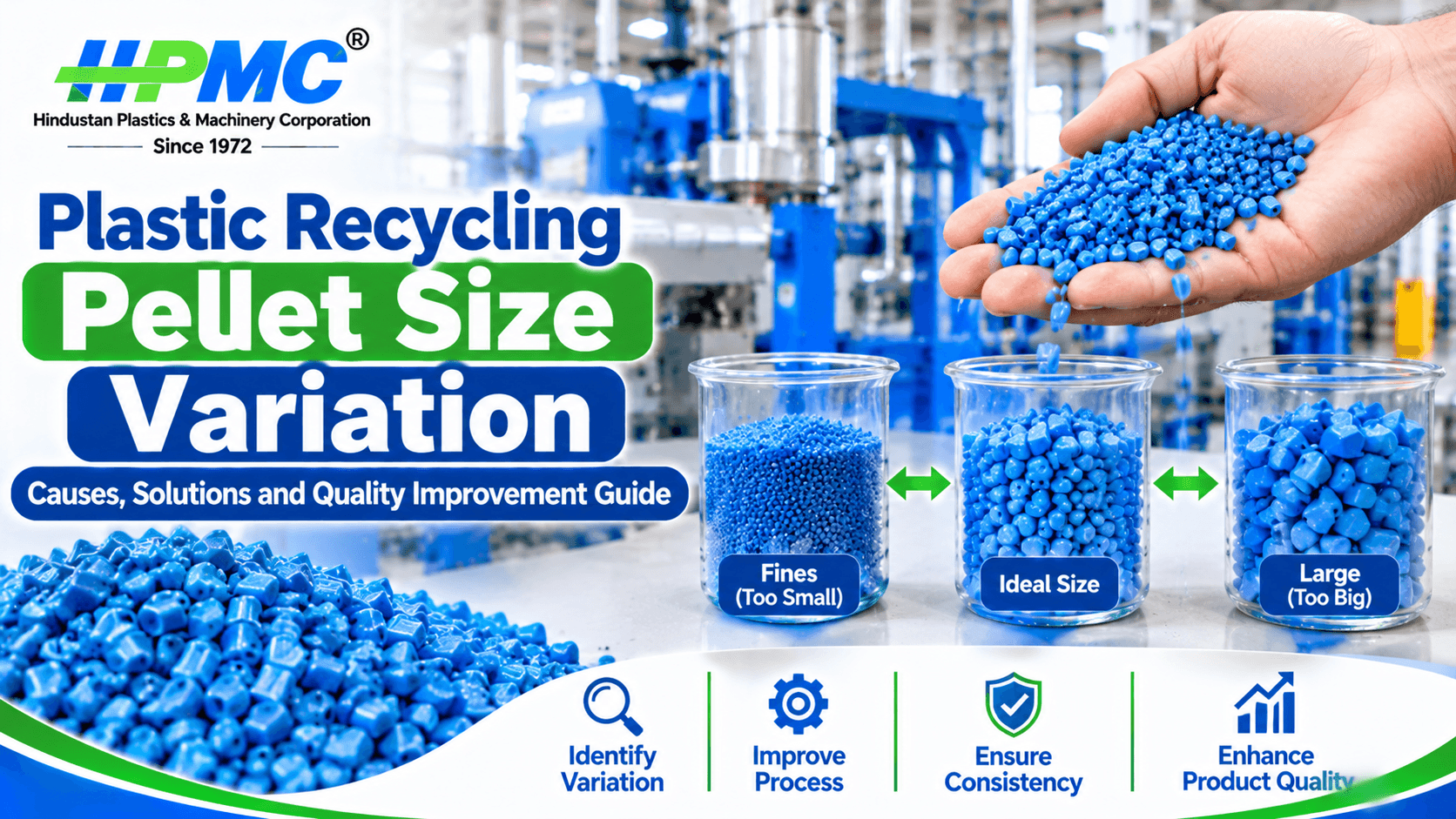
Pellet size variation occurs when recycled plastic granules are produced with inconsistent lengths, diameters or shapes. Some pellets may be smaller than the required size, while others may become oversized or irregular. These differences can affect material handling, packaging, feeding performance and the quality of finished plastic products.
Several factors can contribute to pellet size variation, including unstable melt flow, incorrect cutter settings, worn cutting blades, inconsistent strand dimensions, unsuitable cooling conditions and variations in extrusion output. The problem may occur in both strand pelletizing and die-face pelletizing systems.
For plastic recycling manufacturers, maintaining consistent pellet dimensions is important for improving production efficiency and meeting customer requirements. Understanding the reasons behind pellet size variation helps operators identify processing problems and select suitable corrective measures.
In this guide, we will explain Plastic Recycling Pellet Size Variation, its common causes, effects on production, troubleshooting methods, prevention techniques and practical ways to improve recycled pellet consistency.
What Is Plastic Recycling Pellet Size Variation?
Plastic Recycling Pellet Size Variation refers to differences in the dimensions and shapes of recycled plastic granules produced during the pelletizing process.
Ideally, pellets should have reasonably consistent dimensions according to the requirements of the intended application. However, when extrusion, cooling or cutting conditions are unstable, the final granules may become uneven.
Pellet size variation can appear in different forms:
- Short and undersized plastic pellets.
- Oversized or unusually long granules.
- Irregular pellet shapes.
- Inconsistent pellet diameter.
- Uneven cutting surfaces.
- Excessive fines and small particles.
- Pellets with inconsistent weight and dimensions.
The acceptable pellet dimensions depend on the polymer, pelletizing technology and customer specifications.
Manufacturers should evaluate pellet quality according to the requirements of their downstream processing applications rather than assuming that every polymer requires the same pellet dimensions.
Why Does Pellet Size Variation Occur in Plastic Recycling?
Pellet size variation generally develops when one or more stages of extrusion and pelletizing are not operating consistently.
1. Incorrect Cutter Speed
Cutter speed is one of the important operating factors in pelletizing. If the cutting speed does not match the incoming strand or melt flow, pellets may become shorter or longer than the desired dimensions.
In strand pelletizing systems, the cutter speed must remain properly coordinated with the strand feeding speed.
2. Worn Cutting Blades
Cutting blades gradually wear during continuous production. Damaged or blunt blades may produce uneven cuts, rough edges and irregular pellet dimensions.
Regular blade inspection and replacement according to manufacturer recommendations help maintain cutting performance.
3. Inconsistent Extrusion Output
An unstable material supply or fluctuating extrusion output can affect the dimensions of the strands entering the pelletizing system.
When the melt flow changes continuously, the pelletizing equipment may not maintain consistent cutting conditions.
4. Uneven Strand Diameter
In strand pelletizing systems, the diameter of the extruded strands directly influences the final pellet dimensions.
If strand thickness changes during production, the resulting pellets may have inconsistent sizes and weights.
5. Improper Cooling Conditions
Cooling plays an important role in maintaining strand stability before cutting.
Insufficient cooling can make strands too soft during cutting, while unsuitable cooling conditions may affect strand handling and cutting consistency.
6. Incorrect Strand Feeding
If strands do not enter the cutting unit at a consistent speed, pellet length can vary.
Slipping, irregular strand tension and feeding roller problems may contribute to uneven cutting.
7. Incorrect Die Configuration
Die openings influence the dimensions of the extruded material.
An unsuitable die design, partially blocked openings or inconsistent melt distribution can contribute to differences in strand diameter and pellet dimensions.
8. Polymer and Material Variations
Different polymers have different melting, flow and cooling characteristics. Mixed or inconsistent feedstock can affect extrusion stability and pellet formation.
Material preparation and suitable processing conditions are therefore important for maintaining consistent recycled granules.
Common Signs of Uneven Plastic Pellet Production
Operators should identify pellet size variation early to reduce production interruptions and material quality problems.
Inconsistent Pellet Length
Finished pellets may have noticeable differences in length, even when the machine is operating continuously.
Excessive Small Particles
An increased quantity of fines may indicate cutting problems, brittle material behaviour or unsuitable processing conditions.
Irregular Pellet Shape
Pellets may appear flattened, rough, distorted or unevenly cut.
Variation in Pellet Weight
Different pellet dimensions can result in differences in individual pellet weight.
Uneven Strand Cutting
In strand pelletizing systems, irregular strand movement or inconsistent cutting can produce uneven granules.
Changes in Downstream Feeding
Inconsistent pellet dimensions may affect material movement and feeding behaviour in certain downstream manufacturing systems.
How Does Pellet Size Variation Affect Plastic Recycling Production?
1. Inconsistent Raw Material Quality
Recycled pellets are often supplied to manufacturers who expect material to meet particular specifications. Significant size variation can make the material less suitable for certain applications.
2. Problems During Material Feeding
Different pellet sizes may behave differently in hoppers, conveyors and feeding systems. Excessive fines can also influence material flow.
3. Packaging Difficulties
Uneven granules may create differences in bulk density and packaging behaviour, making material handling less consistent.
4. Reduced Production Efficiency
When pellet size variation becomes excessive, operators may need additional inspection, screening or adjustments.
5. Increased Material Waste
Pellets outside the required specifications may need to be separated, reprocessed or handled as a separate material stream.
6. Customer Quality Complaints
Manufacturers supplying recycled granules to other industries need to maintain consistent product quality. Uncontrolled variation may affect customer satisfaction.
Effective Methods to Reduce Plastic Recycling Pellet Size Variation
1. Maintain Correct Cutter Settings
Cutter speed should be adjusted according to the pelletizing method, polymer properties and material feeding speed.
Operators should avoid making random adjustments without observing the resulting pellet dimensions.
2. Inspect Cutting Blades Regularly
Check the cutting blades for wear, damage and alignment problems. Replace or service blades according to the equipment manufacturer's recommendations.
3. Maintain Stable Extrusion Output
A consistent feed supply and suitable extrusion conditions help maintain stable material flow towards the pelletizing equipment.
4. Control Strand Diameter
For strand pelletizing, monitor strand dimensions and die performance. Consistent strand diameter helps support uniform pellet weight and shape.
5. Improve Cooling Conditions
Maintain suitable cooling conditions according to the polymer and production requirements. Strands should have sufficient stability before entering the cutting unit.
6. Check Feeding Rollers
Inspect strand feeding rollers, guides and related components for wear, slipping or alignment issues.
7. Maintain Die Openings
Inspect the die for material buildup and partially blocked openings. Cleaning should follow the approved maintenance procedure.
8. Monitor Pellet Quality
Collect samples at regular intervals and inspect pellet dimensions, shape and appearance.
Recording these observations helps operators identify repeated quality problems.
Role of Pelletizing Systems in Consistent Recycled Granule Production
Pelletizing equipment plays an important role in determining the dimensions and shape of recycled plastic granules.
Different pelletizing technologies are available depending on polymer characteristics, extrusion output and production requirements.
Strand Pelletizing System
In strand pelletizing, molten plastic passes through a die and forms continuous strands. These strands are cooled, dried and transported towards a cutter, where they are converted into granules.
The cutting process depends on strand diameter, feeding speed, cutter condition and operating settings.
Manufacturers can explore the Strand Pelletizing Line to understand the relationship between cooling, cutting and pellet quality.
Water Ring Pelletizing System
Water ring pelletizing is a die-face pelletizing method in which molten plastic is cut near the die surface. Water is used for cooling and transporting the produced granules.
The pellet dimensions depend on factors such as die openings, cutter blade condition, cutter speed, melt flow and polymer characteristics.
A suitable Water Ring Pelletizing System can be evaluated for compatible plastic recycling and compounding applications.
Two Stage Recycling Extrusion
A two-stage extrusion arrangement can provide additional melt processing and handling before filtration and pelletizing.
Stable melt delivery to the pelletizing system remains important for maintaining consistent granule dimensions.
Learn more about the Two Stage Plastic Reprocess Extrusion Line and its role in plastic recycling operations.
Importance of Melt Filtration in Pellet Quality
Plastic waste may contain dust, paper particles, labels and other solid contaminants. If these contaminants remain in the molten polymer, they can affect the extrusion process and final product quality.
Melt filtration helps remove suitable solid contaminants before the polymer reaches the die and pelletizing equipment.
However, filtration does not directly control pellet cutting dimensions. Pellet size still depends on extrusion stability, die configuration, cooling and cutting conditions.
For applications requiring continuous contaminant removal, manufacturers can explore an Automatic Self Cleaning Laser Filter as part of a suitable recycling extrusion system.
How to Troubleshoot Plastic Recycling Pellet Size Variation
Step 1: Inspect the Finished Pellets
Collect representative samples and compare their length, diameter, shape and overall appearance.
Identify whether the variation involves short pellets, oversized granules, fines or irregular shapes.
Step 2: Check Cutter Blades
Inspect the cutting blades for wear, damage and alignment. Worn blades may need servicing or replacement.
Step 3: Review Cutter Speed
Check whether cutter speed matches the material feeding speed and the requirements of the selected pelletizing system.
Step 4: Inspect Strand Dimensions
For strand pelletizing, examine strand diameter and consistency before the material enters the cutter.
Step 5: Check Cooling Conditions
Review the cooling arrangement and confirm that the material reaches the required condition before cutting.
Step 6: Monitor Extrusion Stability
Check material feeding, temperature conditions, screw operation and melt delivery for unusual fluctuations.
Step 7: Inspect Die Openings
Look for material accumulation, partial blockage or damage that could influence melt distribution.
Step 8: Record Production Observations
Maintain records of pellet dimensions, machine settings, maintenance activities and material variations.
A systematic troubleshooting process helps identify the actual cause instead of repeatedly changing machine settings.
Best Practices for Maintaining Consistent Recycled Pellet Quality
Maintain Proper Material Preparation
Plastic waste should be sorted and prepared according to its polymer type and condition. Removing incompatible materials and reducing contamination can support stable extrusion.
Use Suitable Extrusion Conditions
Temperature, screw speed and material feeding should be managed according to polymer characteristics and equipment recommendations.
Maintain Pelletizing Equipment
Regularly inspect cutter blades, rollers, die openings, cooling equipment and other important components.
Monitor Pellet Dimensions
Routine sampling helps identify changes in pellet size before they become significant production problems.
Train Machine Operators
Operators should understand the relationship between extrusion output, cooling, feeding and cutter performance.
Follow Preventive Maintenance
Scheduled inspection and maintenance help maintain reliable equipment operation and reduce unexpected interruptions.
How to Select the Right Plastic Recycling Pelletizing Machine
Choosing a suitable pelletizing machine requires evaluating the complete recycling process.
Important factors include:
Polymer Type: Identify whether the line will process PP, PE, HDPE, LDPE or another suitable polymer.
Feedstock Condition: Evaluate contamination, moisture and material consistency.
Production Capacity: Select equipment according to the required hourly output.
Pellet Size Requirements: Define the required pellet dimensions and acceptable variation.
Pelletizing Technology: Compare strand, water ring and other suitable pelletizing methods.
Cutter Design: Consider blade quality, cutting arrangement, speed control and maintenance requirements.
Cooling System: Ensure that the cooling arrangement is compatible with the selected polymer and pelletizing method.
Filtration Requirements: Select suitable melt filtration according to feedstock contamination.
Automation: Consider monitoring and control features that support stable production.
Technical Support: Evaluate installation, operator training, maintenance guidance and spare parts availability.
The complete recycling line should be designed around the material characteristics and final pellet specifications rather than selecting individual machines without considering their compatibility.
Conclusion
Plastic Recycling Pellet Size Variation is an important quality challenge in plastic recycling and pellet manufacturing. Uneven pellet dimensions can result from unstable extrusion output, worn cutting blades, incorrect cutter settings, inconsistent strand diameter, unsuitable cooling conditions and irregular material feeding.
Manufacturers can improve pellet consistency by maintaining suitable extrusion conditions, inspecting cutting equipment, controlling strand dimensions, monitoring cooling performance and conducting regular quality checks.
Selecting the right pelletizing technology is equally important. A properly coordinated recycling extrusion and pelletizing system helps manufacturers produce more consistent recycled granules, reduce unnecessary material waste and maintain reliable production performance.
By following preventive maintenance practices and monitoring pellet dimensions regularly, plastic recycling manufacturers can improve overall product quality and support the requirements of downstream plastic processing industries.
Contact Hindustan Plastics and Machinery Corporation (HPMC)
Hindustan Plastics and Machinery Corporation (HPMC) provides plastic extrusion, recycling, reprocessing, compounding and industrial machinery solutions. Manufacturers planning to establish a new recycling plant or upgrade an existing pellet production facility can discuss their machinery requirements with the HPMC team.
If your recycling line is experiencing pellet size variation, inconsistent cutting, irregular granule formation or unstable extrusion output, selecting a suitable extrusion and pelletizing configuration is important.
Company: Hindustan Plastics and Machinery Corporation (HPMC)
Address: 5, Category II, DSIDC Industrial Area, Nangloi, Delhi – 110041, India
Phone: +91 95605 96392
Email: info@hindustanplastics.com
Website: https://www.hindustanplastics.com/
Request a Quote: https://www.hindustanplastics.com/get-in-touch
Google Business Profile: https://share.google/lBK4uD53HqY891ynv
When contacting HPMC, share your plastic material type, required pellet dimensions, current production capacity, pelletizing method, feedstock condition and desired output quality to discuss a suitable machine configuration.
Contact HPMC today to discuss your plastic recycling machinery requirements and explore suitable extrusion and pelletizing solutions for consistent recycled granule production.
Frequently Asked Questions
Find quick answers to the most common questions about this topic.
Plastic Recycling Pellet Size Variation refers to differences in the length, diameter, weight or shape of recycled plastic granules produced during the pelletizing process.
Common causes include incorrect cutter speed, worn blades, inconsistent strand diameter, unstable extrusion output, unsuitable cooling and irregular material feeding.
Manufacturers can maintain correct cutter settings, inspect blades, stabilise extrusion output, control strand dimensions and monitor cooling conditions.
Yes. Incompatible cutter speed and material feeding speed can produce pellets with inconsistent lengths.
Yes. Blunt, damaged or misaligned blades can contribute to uneven cutting, rough edges and inconsistent pellet dimensions.
Suitable cooling helps stabilise strands before cutting. Inadequate or unsuitable cooling may affect strand handling and cutting consistency.
Strand pelletizing cools continuous polymer strands before cutting. Water ring pelletizing cuts molten polymer at the die face and uses circulating water for cooling and transport.
Melt filtration removes suitable solid contaminants from molten plastic. It can support cleaner processing, but pellet dimensions are primarily influenced by extrusion, die and cutting conditions.
Pellet dimensions should be inspected at regular intervals during production. The frequency depends on production requirements, material characteristics and quality control procedures.
HPMC provides plastic extrusion, recycling and pelletizing machinery solutions. Manufacturers can contact the HPMC team to discuss polymer type, required pellet dimensions, production capacity and suitable machine configurations.