
Introduction
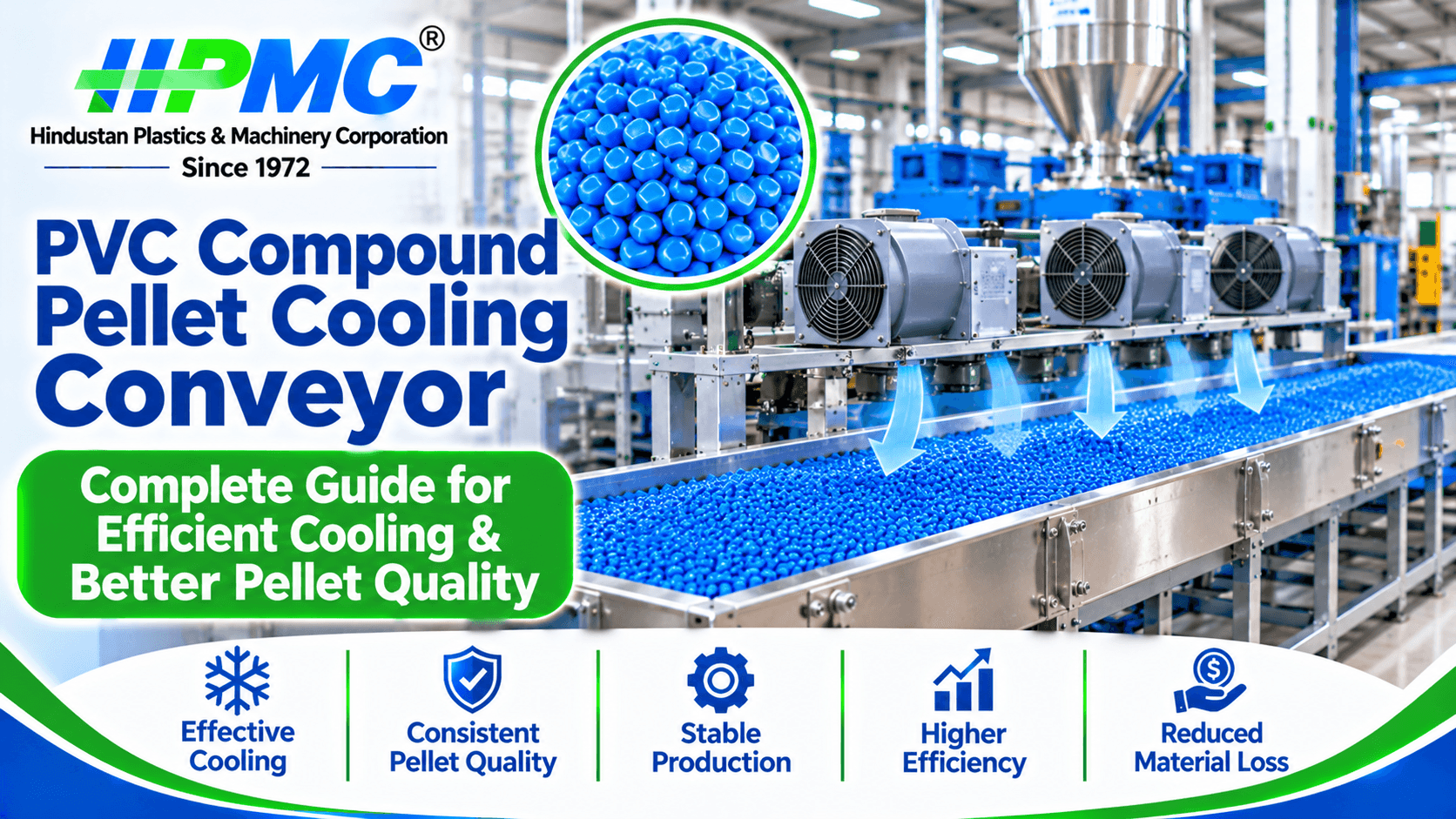
In plastic compounding, producing good-quality pellets is not only about proper mixing and extrusion. Cooling is equally important because freshly produced PVC compound pellets need suitable temperature control before they can be handled, stored and transported. A PVC Compound Pellet Cooling Conveyor helps manufacturers move and cool processed pellets in a controlled production environment.
During PVC compounding, the material passes through mixing, extrusion and pelletizing stages. Once the compound is converted into pellets, it may still retain heat from the processing operation. If the pellets are collected without suitable cooling, they may stick together, deform or create handling difficulties. A properly selected cooling conveyor helps reduce these problems and supports consistent pellet handling.
The cooling conveyor is an important part of a complete PVC compounding line. Its design, conveyor speed, cooling arrangement, airflow and material-handling capacity should match the production requirements. Manufacturers should also consider the type of PVC compound, pellet dimensions, production output and available factory space before selecting a system.
In this guide, we explain how a PVC compound pellet cooling conveyor works, its main components, benefits, common problems, maintenance requirements and important selection factors for PVC manufacturers.
What Is a PVC Compound Pellet Cooling Conveyor?
A PVC compound pellet cooling conveyor is a material-handling system designed to transport and cool PVC compound pellets after the pelletizing process. It helps move the pellets away from the production section while allowing heat to dissipate through the selected cooling arrangement.
Depending on the production line, cooling may be achieved through ambient airflow, forced-air cooling or another suitable cooling arrangement. The exact system depends on pellet characteristics, production capacity and the required downstream material condition.
A typical cooling conveyor system may include:
- Conveyor belt or material transport arrangement.
- Drive motor and gearbox.
- Conveyor frame and support structure.
- Cooling fans or airflow arrangement, where required.
- Material feeding and discharge sections.
- Safety guards and control components.
- Collection or transfer equipment.
The complete arrangement should be designed according to the compound formulation and pelletizing method.
How Does a PVC Compound Pellet Cooling Conveyor Work?
The conveyor works by transporting freshly produced PVC pellets through a controlled cooling section before they reach the collection or packaging stage.
1. Pellet Discharge
After pelletizing, the PVC compound pellets are discharged from the pelletizing equipment. The feeding arrangement transfers the pellets onto the cooling conveyor.
2. Material Distribution
The pellets should be distributed evenly across the conveyor surface. Uneven loading can create different cooling conditions and affect material movement.
3. Cooling Process
As the pellets travel along the conveyor, heat is released. Depending on the machine design, airflow or additional cooling arrangements may support heat removal.
4. Controlled Conveyor Movement
The conveyor motor and drive system control the movement of material. Conveyor speed should be matched to pellet production output and the required cooling time.
5. Pellet Discharge
After travelling through the cooling section, the pellets are transferred to the next material-handling stage.
6. Collection and Storage
The cooled pellets are collected in suitable containers, storage bins or packaging systems according to the production arrangement.
Why Is Pellet Cooling Important in PVC Compounding?
Cooling plays an important role in maintaining the handling quality of PVC compound pellets.
1. Helps Prevent Pellet Sticking
Freshly produced pellets may retain heat. If they are collected without sufficient cooling, they may stick together during storage or transportation.
2. Supports Pellet Shape
Suitable cooling helps pellets maintain their intended shape during handling.
3. Improves Material Handling
Properly cooled pellets are easier to transfer through conveyors, collection systems and packaging equipment.
4. Supports Consistent Production
A suitable cooling arrangement helps maintain a stable material-handling process between pelletizing and collection.
5. Reduces Handling Problems
Excessive pellet temperature may contribute to agglomeration and material flow problems. Controlled cooling helps reduce these risks.
6. Supports Better Storage Conditions
Cooling pellets before storage helps reduce the possibility of heat-related handling issues. The required storage condition should also consider the material's moisture and environmental exposure.
Main Components of a PVC Compound Pellet Cooling Conveyor
1. Conveyor Belt
The conveyor belt or transport surface moves the pellets through the cooling section. Its material and construction should be suitable for the operating temperature and application.
2. Drive Motor
The drive motor provides the mechanical power needed to operate the conveyor.
3. Gearbox
The gearbox transfers motor power and provides the required conveyor speed and torque.
4. Cooling Fans
Some systems use fans to move air across the pellets. The airflow arrangement should provide suitable cooling without creating unnecessary material loss or dust movement.
5. Conveyor Frame
The frame supports the complete conveyor assembly. A stable structure helps maintain proper alignment during operation.
6. Feeding Hopper
The feeding hopper receives pellets from the pelletizing section and distributes them onto the conveyor.
7. Discharge Arrangement
The discharge section transfers cooled pellets to a collection bin, storage system or another production stage.
8. Control Panel
The control panel allows operators to manage conveyor operation and monitor important equipment functions.
Factors to Consider When Selecting a PVC Compound Pellet Cooling Conveyor
1. Production Capacity
The cooling conveyor should handle the expected pellet output from the compounding line. If its capacity is lower than the pelletizing output, material may accumulate at the discharge section.
2. Pellet Size and Shape
PVC compound pellets can vary according to the formulation and pelletizing arrangement. The conveyor should handle the required pellet dimensions without creating unnecessary material loss.
3. Cooling Requirements
Different PVC formulations may have different cooling requirements. The system should be selected according to pellet temperature, production speed and the required condition at discharge.
4. Conveyor Length
Conveyor length influences the available material travel time. A suitable length should be determined according to the required cooling performance and production layout.
5. Conveyor Speed
Conveyor speed affects how long pellets remain in the cooling section. It should be matched to the material output and cooling arrangement.
6. Airflow Arrangement
For forced-air cooling systems, airflow distribution is important. The system should provide suitable cooling across the conveyor width.
7. Material of Construction
The conveyor structure and contact surfaces should be suitable for the temperature, operating environment and cleaning requirements.
8. Factory Space
The conveyor layout should fit the available production area and allow convenient access for inspection and maintenance.
9. Automation Compatibility
The cooling conveyor should be compatible with the pelletizer, transfer equipment and downstream collection system.
10. Maintenance Requirements
Check the accessibility of the drive motor, gearbox, belt, rollers and other moving components before finalizing the equipment.
Common PVC Compound Pellet Cooling Conveyor Problems
1. Pellets Sticking Together
Possible causes: Insufficient cooling, excessive pellet temperature, uneven material distribution or excessive pellet loading.
Solutions: Review the cooling arrangement, check conveyor speed and ensure that pellets are distributed evenly across the conveyor.
2. Uneven Pellet Cooling
Possible causes: Uneven airflow, excessive conveyor loading or inconsistent material distribution.
Solutions: Inspect the airflow arrangement, adjust material distribution and check the conveyor loading conditions.
3. Pellet Accumulation
Possible causes: Conveyor capacity lower than pelletizing output, blocked discharge or incorrect conveyor speed.
Solutions: Check the discharge arrangement and match conveyor capacity with the upstream pelletizing system.
4. Conveyor Belt Slippage
Possible causes: Incorrect belt tension, worn components or drive system problems.
Solutions: Inspect belt tension, rollers and drive components according to the equipment manufacturer's instructions.
5. Excessive Dust Generation
Possible causes: Material degradation, unsuitable handling, excessive impact or poor transfer arrangements.
Solutions: Inspect the pellet condition and review the feeding and transfer arrangement. Suitable dust-control measures should be considered where necessary.
6. Irregular Conveyor Movement
Possible causes: Motor or gearbox problems, mechanical obstruction or incorrect drive settings.
Solutions: Inspect the drive assembly, alignment and electrical connections before restarting the system.
Maintenance Tips for PVC Compound Pellet Cooling Conveyors
Regular maintenance helps improve equipment reliability and reduce unexpected production interruptions.
- Inspect the conveyor belt for damage and wear.
- Check belt alignment and tension.
- Inspect motor and gearbox condition.
- Check conveyor rollers and bearings.
- Clean accumulated PVC compound dust.
- Inspect cooling fans and airflow passages.
- Check feeding and discharge arrangements.
- Verify electrical connections and safety guards.
- Lubricate components according to manufacturer instructions.
- Maintain regular equipment inspection records.
Preventive maintenance should follow the equipment manufacturer's recommended schedule and safety procedures.
How Does the Cooling Conveyor Improve Overall PVC Compounding Line Performance?
A PVC compounding line includes multiple interconnected stages. The mixer prepares the formulation, the extruder processes the material, and the pelletizing section converts the compound into pellets. The cooling conveyor then supports controlled material handling before collection.
If the cooling conveyor cannot handle the output of the pelletizing system, the entire production line may experience interruptions. For this reason, manufacturers should evaluate cooling capacity and material transfer requirements when planning a complete plant.
Businesses looking for suitable upstream equipment can explore HPMC's Twin Screw Extruder for PVC Compounding.
For manufacturers evaluating different PVC compounding arrangements, HPMC also provides information about its Single Screw Plant for PVC Compounding.
A complete production setup should consider mixing, extrusion, pelletizing, cooling, collection and storage as connected operations.
Applications of PVC Compound Pellet Cooling Conveyors
PVC compound cooling conveyors can be used in different PVC manufacturing applications, depending on the formulation and pelletizing system.
1. Rigid PVC Compounds
Rigid PVC compounds are used in products such as pipes, fittings, conduits and profiles. A suitable cooling and material-handling arrangement helps prepare pellets for storage and further processing.
2. Flexible PVC Compounds
Flexible PVC compounds are used in cables, hoses, footwear and other flexible products. Cooling requirements depend on the formulation and pellet characteristics.
3. PVC Cable Compounds
Cable-grade PVC formulations require suitable processing and material handling. Cooling equipment should be selected according to the compound properties and production output.
4. PVC Profile Compounds
PVC compounds used for profile manufacturing may require consistent pellet handling before they are supplied to downstream extrusion equipment.
Manufacturers working with cable-grade materials can also explore HPMC's Soft Cable Grade PVC Compounding Plant.
Why Choose HPMC for Plastic Processing Machinery?
Hindustan Plastics and Machinery Corporation (HPMC) has been associated with plastic processing machinery since 1972. The company provides machinery solutions for extrusion, PVC compounding and plastic recycling applications.
When selecting equipment for a PVC production facility, manufacturers should consider the complete processing requirement rather than focusing only on one machine. Production capacity, material formulation, pelletizing arrangement, cooling requirements and downstream handling should all be evaluated.
HPMC's PVC Compounding Machinery Solutions provide further information for manufacturers planning PVC compound production.
Conclusion
A PVC Compound Pellet Cooling Conveyor is an important part of a PVC compounding and pelletizing setup. It helps transport freshly produced pellets, supports heat removal and prepares the material for collection, storage and further manufacturing.
Selecting the right conveyor requires careful consideration of production capacity, pellet size, cooling requirements, conveyor speed, airflow, construction and maintenance accessibility.
Manufacturers should also ensure that the cooling conveyor is properly matched with the pelletizing equipment and complete production line. A well-planned material-handling arrangement can help reduce pellet sticking, improve handling consistency and support smoother PVC compound production.
Contact Hindustan Plastics and Machinery Corporation (HPMC)
HPMC provides plastic extrusion, PVC compounding and polymer processing machinery solutions. If you are planning a new PVC compounding plant or looking to improve your existing pellet cooling and handling arrangement, contact HPMC to discuss your production requirements. You can also explore the Strand Pelletizing Line and Cooling System for additional information about pellet cooling and handling.
Company: Hindustan Plastics and Machinery Corporation (HPMC)
Address: 5, Category II, DSIDC Industrial Area, Nangloi, Delhi – 110041, India
Phone: +91 95605 96392
Email: info@hindustanplastics.com
Website: https://www.hindustanplastics.com/
Request a Quote: Contact HPMC
Google Business Profile: View HPMC on Google
When contacting HPMC, share your PVC compound type, pellet size, expected production capacity, cooling requirements and existing production line configuration.
Contact HPMC today to discuss suitable plastic processing machinery for your manufacturing facility.
Frequently Asked Questions
Find quick answers to the most common questions about this topic.
It is a material-handling system that transports and cools PVC compound pellets after the pelletizing process.
Cooling helps reduce pellet temperature, minimize sticking and prepare pellets for collection, storage and further processing.
It receives pellets from the pelletizing section and transports them through a cooling area using a conveyor arrangement and, where required, forced airflow.
Pellet size, material temperature, conveyor speed, airflow, loading density and cooling system design all influence performance.
Yes. Insufficient cooling and excessive pellet temperature can contribute to sticking and agglomeration.
Consider the pelletizing output, required cooling conditions, pellet dimensions and downstream material-handling capacity.
Cooling fans circulate air around the pellets to support heat removal in systems designed for forced-air cooling.
Inspection frequency depends on operating hours and equipment design. Follow the manufacturer's preventive maintenance schedule.
Yes. It can be integrated with suitable pelletizing, transfer, collection and packaging equipment.
HPMC provides PVC compounding and extrusion machinery solutions. Contact the company to discuss your production requirements and suitable machine configurations.