
Introduction
A PVC door panel can look smooth as it leaves the extrusion line and still cause problems at assembly. An edge may bow after cooling, a joint may fail to seat properly, or a face may show marks that become visible after lamination. A machine demonstration should therefore produce samples that you can cool, measure, cut and assemble before you approve the line.
When comparing PVC door machine manufacturers, start with the panel you plan to sell. Its width, thickness, cross-section, finish and joining method determine what the tooling and downstream equipment need to do. This guide focuses on extruded PVC door panels and the checks that help buyers compare production lines using their own drawings and material.
What Is a PVC Door Panel Extrusion Machine?
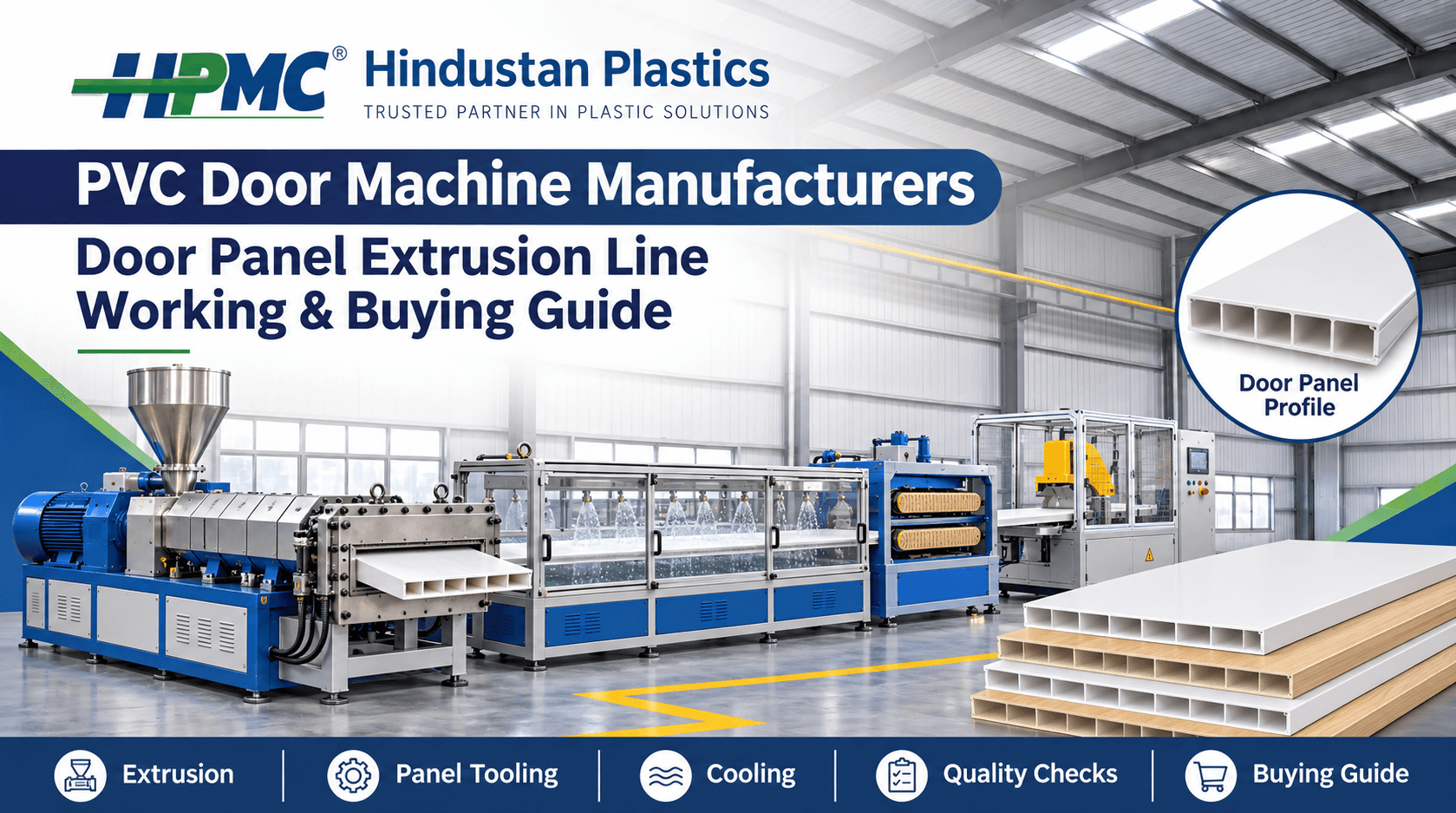
A PVC door panel extrusion machine is usually sold as a line with several stages. The extruder processes the PVC compound, and a die forms the continuous cross-section. Calibration and cooling help the profile retain its shape. A haul-off unit moves the panel through the equipment, and a cutter produces the required lengths.
The term PVC door machine can cover different scopes. One quote may include extrusion and cutting, while another may also include handling or finishing equipment. Ask the manufacturer to identify which stages are included and which your factory will need to arrange separately. This matters if your finished door uses a decorative film, edge trim, joining profiles or hardware fitted after extrusion.
HPMC’s Twin Screw Plant for PVC Profile lists PVC door profiles among its applications. Share your panel drawing with the supplier so it can confirm the tooling and line configuration for your specific product.
How Does a PVC Door Panel Extrusion Line Work?
1. Prepare and Feed the PVC Compound
Confirm what form of PVC compound the proposed line is designed to process. Share the material grade, any additives and the production formulation if available. If the supplier proposes running a different compound for the demonstration, record that difference so you can assess how closely the trial represents your intended operation.
Use a representative batch for the trial. Note how it is stored and fed into the machine, especially if you expect to use different grades or colours across shifts. Keep the batch reference with the sample records so you can trace any unexpected change in finish or dimensions.
2. Shape the Panel Through the Die
The die forms the outside faces and edges of the panel. If your drawing specifies a hollow section, the tooling must also form the internal webs and chambers. Show the supplier which dimensions affect assembly, including any joining features or locations where hardware will be fitted.
A drawing should identify the finished product dimensions and tolerances. If you have an approved sample, provide it along with the drawing. The sample helps explain surface appearance and fit, while the drawing gives both teams the dimensions to measure during the trial.
3. Calibrate and Cool the Profile
After the panel leaves the die, calibration and cooling help it retain its intended shape. Inspect the cooled panel on a suitable reference surface. Take measurements at several positions rather than checking a single spot. This is especially useful when you are evaluating a wide panel or a section with different features along its edges.
Ask how the line supports the panel as it moves downstream. Also discuss how samples will be handled after cutting so that the trial team can separate changes seen on the line from damage caused by storage or stacking.
4. Pull and Cut the Panel to Length
The haul-off moves the continuous panel through the line. The cutter then produces the lengths required for assembly or packaging. Measure the finished length after cooling and check whether the cut is square. Inspect the ends for chips, rough edges or damage to internal webs on hollow panels.
The basic sequence of forming, calibration, cooling, pulling and cutting also applies to other rigid profiles. For a related example, read HPMC’s guide to window profile machine manufacturers.
How Panel Design Affects the Equipment Choice
Wide Panels and Narrow Interlocking Sections
Start by deciding whether the door leaf uses a wide extruded panel or several narrower sections that join together. With a wide panel, take measurements across the face and check whether the finished piece stays flat after cooling. With interlocking sections, assemble several lengths side by side and check whether the joints close evenly across the full door width.
Ask the supplier to demonstrate the actual panel design during the trial. A sample with a simpler cross-section can illustrate the general process, but the finished edges and joints of your intended design determine whether the panel is suitable for assembly.
Plain and Decorative Surfaces
If the panel will be sold with a plain finish, agree on the visible surface criteria before the trial. Bring a reference piece where possible and compare samples under the same lighting. Record whether a visible mark appears across the entire batch or only after a change in conditions.
For a laminated door panel, ask the finishing team to process sample lengths from the trial. Check whether the film sits evenly along the face and edges. Agree separately on which quality checks apply to the extruded section and which apply after finishing.
What to Specify Before Asking for a Quote
Give every supplier the same drawings and target output. A quotation based on a narrow, simple section may differ from a quotation for a wider panel with additional joining features. The following details help the supplier assess the job before proposing equipment.
- Cross-section. Provide a dimensioned drawing showing overall width, thickness, edge features and any internal webs or chambers.
- Finished length. List the required lengths and tolerances. Note whether the pieces will be cut again during assembly.
- Surface finish. Mark the faces that will remain visible. Describe the required colour and finish, and identify any lamination or other downstream finishing.
- Joining and assembly. Explain how panels connect to adjoining sections or edge trims. Share the relevant mating parts or drawings.
- Production target. State how many accepted panels you need per shift and which sizes account for most of your orders.
- Material and trial samples. Share the formulation or material grade and provide representative material for a machine trial where possible.
If you also make frames or jambs, submit those drawings separately. A door leaf panel and the frame that surrounds it have different cross-sections and assembly requirements. Ask the supplier to explain the tooling and downstream equipment for each product.
How to Compare PVC Door Machine Manufacturers
1. Compare the Extruder and the Complete Line
Ask suppliers to explain why the proposed extruder suits your compound and panel geometry. If you are comparing single screw and twin screw options, ask what feed preparation, tooling and downstream equipment each proposal assumes. HPMC’s Single Screw Plant for PVC Profile provides a separate equipment reference for this discussion.
Review the complete equipment list, including the die, calibration tooling, cooling, haul-off and cutter. If you already own equipment you want to retain, give the supplier its dimensions and operating limits. Ask how it would connect to the proposed line before counting it as part of the setup.
2. Confirm Tooling and Changeover Requirements
Check which panel sizes the quote covers and whether each size needs separate dies or calibration tooling. Ask suppliers to distinguish the tools included in the base quote from optional sets. If you plan to introduce additional widths later, ask what equipment or tooling changes would be required.
During a trial, time the change from the last approved piece of one size to the first approved piece of the next. Record the adjustments and trial material used during the change. This gives you a better basis for scheduling short orders than the time needed to change the die alone.
3. Compare Accepted Panels per Shift
Ask suppliers to report material throughput and accepted panels separately. A high extrusion rate tells you how much material moves through the machine, while the accepted panel count shows how much finished product passes inspection. Include the finished dimensions and run duration in the trial record so results can be compared on the same basis.
Suppose a one-hour demonstration yields 110 cut panels. Eight fail the dimensional checks and four have damaged ends. The result is 98 accepted panels for that hour. If a supplier uses a shorter steady period to quote output, ask for the full trial duration and the total accepted count as well.
4. Review the Factory Layout and Commissioning Scope
Request a layout showing where the material enters, where operators inspect the panels and how cut lengths are collected. Confirm the electrical and cooling requirements, service access and space needed to move finished products. If the panels go straight to lamination or assembly, include that handling route in the layout.
Agree on which products the supplier will demonstrate at commissioning and who will provide the trial material. Ask what training covers and what records you will receive after the line is commissioned. HPMC outlines its installation and troubleshooting support under Technical Assistance.
Quality Checks for a PVC Door Panel Trial
Use the same measurement method for samples taken at the start, middle and end of the agreed run. Label each piece with the material batch, panel size and time of collection. Keep an approved sample as a reference if both teams agree it meets the specification.
- Dimensions. Check overall width, thickness and finished length against the drawing. Measure more than one position on a wide panel.
- Flatness. Inspect the panel after cooling on an agreed reference surface. Record where any bow or twist appears.
- Visible faces. Look for scratches, lines, marks and colour variation. Use comparable lighting when checking multiple samples.
- Cut ends. Inspect squareness, edge chipping and the condition of the cross-section after cutting.
- Assembly fit. Fit the sample to the intended joining profile, trim or hardware where relevant. Record any gaps or difficulty seating the parts.
- Finishing trial. If lamination or another finishing step is part of production, take representative samples through that step before approving the surface.
Agree in advance on the number of samples and how acceptance will be recorded. A photograph may show surface appearance, but recorded dimensions and an assembly check make the result easier to verify during installation.
Common Panel Defects and What to Inspect
A defect can have several causes. Record what changed before it appeared and retain a sample from each side of the change. Review your observations with the machine supplier before deciding where to investigate.
- Bowing after cooling. Check when it first appears and review cooling, panel support and handling after cutting.
- Inconsistent joint fit. Compare the edge dimensions with the drawing and check whether the mating parts are within specification.
- Surface lines or rough areas. Note whether the mark stays in one position. Review the tooling, material condition and any recent process changes.
- Chipped cut ends. Inspect cutter condition, how the panel is supported and whether the damage repeats on every piece.
- Changing thickness across the panel. Measure several points on cooled samples and review the die setup and downstream conditions with the supplier.
Ask which parts the maintenance team should inspect regularly and which spares are recommended for the quoted equipment. HPMC provides information on its Spare Parts support.
How to Plan the First Production Runs
Start with a panel that represents your regular orders. Record the material batch, tooling, run duration and accepted quantity. Keep the measurement sheet with the approved sample so operators can compare the first production pieces with the trial result.
Next, test a size change that is likely to occur. If a wider panel needs different tooling, note how much time passes before the next acceptable panel can be cut and measured. If a new finish is planned, send a few samples through finishing before you build stock.
- Startup record. Note when material entered the line and when the first acceptable panel was produced.
- Inspection record. Record the sample locations, readings and reasons for rejecting any pieces.
- Handling record. Check whether panels remain flat and their edges stay protected during movement to the next operation.
- Handover record. Keep the approved settings, samples and agreed checks together for the incoming shift.
Use these records when planning the number of orders you can run in a shift. The time available for extrusion will also need to account for inspection, tool changes and downstream handling.
What Affects the Price of a PVC Door Machine?
Price depends on the equipment scope, panel dimensions, tooling sets, controls and finishing requirements. A quotation for one panel size may differ from a line designed for several widths or for a factory that also needs handling and finishing equipment. Ask suppliers to separate the machine price, tooling, installation and optional items.
Consider what it will take to run your first orders. Compare the accepted output, changeover time and labour required to inspect, collect and finish the panels. If the next stage cannot keep up with the line, include that in the production plan. This gives you a clearer picture of what the investment will deliver after installation.
Conclusion
The best way to compare PVC door machine manufacturers is to use your own panel drawings, compound and acceptance criteria. Check the cooled panels for size, flatness, finish and assembly fit. Then compare accepted output, tooling, changeover requirements and service support across quotations for the same production job.
Contact HPMC
HPMC (Hindustan Plastics and Machinery Corporation).
Share your panel drawings, intended formulation, finishing requirements and target output with HPMC to discuss the extrusion line and tooling for your project.
Address: 5, Category II, DSIDC Industrial Area, Nangloi, Delhi – 110041, India.
Phone: +91 95605 96392.
Email: info@hindustanplastics.com.
Frequently Asked Questions
Find quick answers to the most common questions about this topic.
It is a line that processes PVC compound and forms a continuous door panel section. The profile is then calibrated, cooled, pulled and cut into the required lengths.
A panel forms the door leaf or part of it. A frame surrounds the opening. They require separate drawings and may need different dies, calibration tooling and downstream equipment.
Some lines support multiple sizes within their design range. Ask which sizes are approved and which need separate dies, calibration tooling or other changes.
Calibration helps the extruded panel retain its intended shape and dimensions as it cools. Confirm the result by measuring the cooled sample against the drawing.
Place a cooled sample on an agreed reference surface and inspect for bowing or twist. Use the same method on several pieces from different points in the run.
That depends on the quotation. Ask whether the supplier includes lamination, surface preparation or other finishing equipment and how it connects to the extrusion process.
Check the cooled dimensions, flatness, surface finish, cut ends and assembly fit. Record the number of accepted panels and any downtime or rejects.
Give both suppliers the same drawings, formulation and production targets. Compare included tooling, finished output, utility needs, commissioning and parts support.
The main factors include the extruder configuration, panel size range, tooling sets, downstream equipment, controls and commissioning scope. Request an itemised quote.
Send the panel cross-section, required dimensions, material grade, finishing and assembly details, expected output and factory layout. Include an approved sample if available.