
Introduction
A single screw extruder is a widely used machine in plastic processing. It converts thermoplastic raw materials into a continuous melt that can be shaped into pipes, profiles, sheets, granules and other products. However, stable extrusion depends on more than the motor or screw speed. Screw geometry, barrel design, material feeding, temperature control and downstream equipment all influence performance.
For manufacturers, understanding these factors can help when selecting an extruder, planning a new production line or investigating inconsistent output.
This guide explains the main design elements of a single screw extruder, how they affect processing, and what manufacturers should evaluate before purchasing or maintaining the equipment.
What Is a Single Screw Extruder?
A single screw extruder is a plastic processing machine that uses one rotating screw inside a heated barrel to convey, soften, melt and push polymer material through a die.
The machine configuration depends on the polymer, the product being manufactured and the required production conditions. Single screw extruders are commonly used for suitable polyethylene and polypropylene applications, as well as selected PVC processing applications where the machine design is appropriate.
For an overview of HPMC's available machine range, visit the Single Screw Extruder product page.
Main Components of a Single Screw Extruder
1. Screw
The screw conveys the polymer through the barrel and contributes to melting, mixing and pressure development. Its geometry must be suited to the material and intended application.
2. Barrel
The barrel houses the rotating screw and provides the structure for material processing. It typically contains heating and temperature-control zones.
3. Feed Zone
The feed zone receives material from the hopper and begins conveying it into the machine. Stable feeding is important for consistent output.
4. Heating and Cooling System
Temperature-control systems help maintain the required processing conditions. The settings depend on the polymer, screw design, output requirements and machine configuration.
5. Gearbox and Drive System
The motor and gearbox deliver the rotational movement required by the screw. Drive capacity and gearbox design must match the machine's operating requirements.
6. Die and Downstream Equipment
The die shapes the processed polymer into the required product. Depending on the application, the line may also include cooling, calibration, haul-off, cutting, winding or pelletizing equipment.
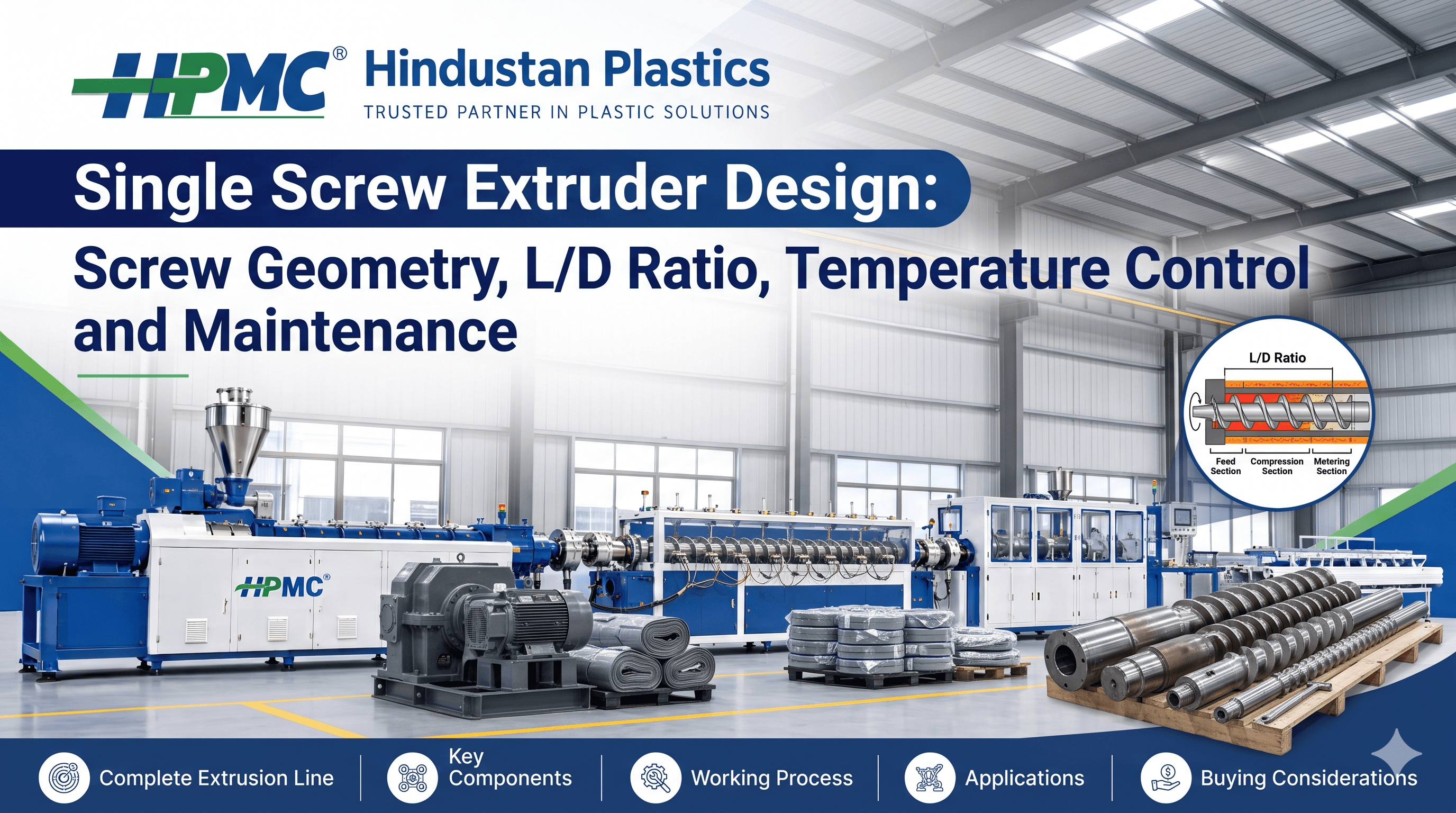
Understanding Single Screw Extruder Screw Design
Screw design has a major influence on how a polymer moves and processes inside the extruder.
Feed Section
The feed section receives solid polymer and transports it forward. The screw geometry must support reliable conveying without creating unnecessary feeding instability.
Compression or Transition Section
In many conventional screw designs, the channel geometry changes through the transition section. This helps the material move from solid conveying towards melting and plasticization.
The appropriate design depends on the polymer's melting behaviour and the required processing conditions.
Metering Section
The metering section helps convey the processed material towards the die at a controlled rate. Its design influences pressure development, melt consistency and output stability.
Not every screw follows an identical geometry. Barrier screws and other specialised designs may use different arrangements to improve processing for particular applications.
What Is the L/D Ratio in a Single Screw Extruder?
The L/D ratio is the ratio between the screw's effective length and its outside diameter.
It is an important design parameter because it helps describe the screw's proportions. However, the L/D ratio alone does not determine output, melt quality or energy consumption.
When evaluating an extruder, manufacturers should consider the L/D ratio alongside:
- Screw diameter and geometry.
- Polymer type and formulation.
- Required output and screw speed.
- Heating and cooling capacity.
- Mixing and plasticization requirements.
- Die resistance and downstream conditions.
A longer screw is not automatically better for every application. The appropriate configuration depends on the material and the complete extrusion process.
How Temperature Control Affects Extrusion
Temperature control is essential because polymers respond differently to heat and mechanical energy.
Processing Temperature
The temperature profile should suit the selected polymer and product requirements. An unsuitable profile can affect material flow, surface appearance and dimensional consistency.
Temperature Uniformity
Unstable temperatures across the barrel or die can contribute to inconsistent processing. Sensors, heaters and control systems should be maintained according to the machine manufacturer's recommendations.
Material-Specific Requirements
PVC, HDPE, LDPE, LLDPE and PP have different processing characteristics. They should not be processed using one universal temperature profile.
Die Temperature
The die must operate under conditions suitable for the material and product design. Temperature variations can influence material flow and the appearance of the finished product.
Operators should use material-supplier guidance and machine-specific instructions when establishing processing settings.
The Importance of the Feed Zone
Material feeding is one of the first stages of extrusion, and inconsistencies here can affect the entire production process.
Common factors to consider include:
- Material consistency: Variations in pellet size, bulk density or material condition can affect feeding behaviour.
- Hopper condition: Material buildup or obstructions may interfere with steady feeding.
- Feed throat temperature: The feed area must be maintained according to the machine and material requirements.
- Material supply: Interruptions in the material supply can cause output fluctuations.
- Moisture and contamination: These may affect processing for materials that are sensitive to them.
If output fluctuates, operators should examine the feeding system as well as the screw, temperature controls and downstream equipment before changing operating settings.
What Affects Single Screw Extruder Output?
Extruder output depends on several interacting variables rather than one specification alone.
Screw Speed
Changing screw speed affects material conveying and processing. The result depends on the screw design, polymer and available drive capacity.
Screw and Barrel Condition
Wear can alter the machine's ability to convey and process material consistently. The effect depends on the material, operating conditions and degree of wear.
Material Properties
Different polymers and formulations behave differently during extrusion. Material changes may require a different processing approach.
Die Resistance
The die and downstream system influence the pressure required to move the melt through the line.
Temperature Profile
Temperature settings influence material behaviour and must be suitable for the polymer and machine configuration.
Downstream Line Speed
The cooling, haul-off, cutting or winding arrangement must operate in coordination with the extruder. Otherwise, the finished product may show dimensional variation or handling problems.
For this reason, manufacturers should request output figures for the specific material, product dimensions and machine configuration rather than relying on a general maximum-capacity claim.
Common Single Screw Extrusion Problems and What to Inspect
Observed issueAreas to investigate
Fluctuating output
Material feeding, screw speed, material consistency and process stability
Uneven product dimensions
Die alignment, material flow, cooling and haul-off
Surface irregularities
Material condition, processing temperatures and die condition
Unstable melt pressure
Feeding, material properties, die resistance and screw condition
Excessive drive load
Material conditions, process settings and mechanical condition
Inconsistent product quality
Raw materials, temperature control, tooling and downstream operation
These are possible areas for investigation, not definitive diagnoses. The actual cause should be identified before making adjustments.
Single Screw Extruder Maintenance Checklist
Routine maintenance helps identify wear and equipment issues before they lead to extended production interruptions.
Screw and Barrel
Follow the manufacturer's inspection schedule and check for wear or damage appropriate to the machine's operating conditions.
Gearbox and Drive
Inspect the drive system according to the prescribed maintenance procedure. Lubrication and servicing should follow the manufacturer's instructions.
Heating and Temperature Controls
Check heaters, sensors and control systems for proper operation. Temperature readings should be reviewed if processing becomes unstable.
Feed System
Keep the hopper and feed area clean and inspect for material buildup or obstructions.
Die and Tooling
Inspect the die for wear, deposits or damage when maintenance procedures permit. Use appropriate shutdown and isolation procedures before servicing equipment.
Electrical and Safety Systems
Inspect electrical connections and safety devices according to the manufacturer's maintenance instructions. Repairs should be handled by qualified personnel.
Maintenance Records
Record inspections, servicing, replacement parts and recurring production issues. These records can help identify patterns and support maintenance planning.
Single Screw Extruder vs Twin Screw Extruder
Single screw and twin screw extruders differ in their screw arrangements and processing characteristics.
A single screw extruder uses one screw and can be suitable for many continuous extrusion applications. A twin screw extruder uses two screws and may offer different conveying and mixing characteristics depending on whether the screws are co-rotating or counter-rotating and how they are configured.
The choice depends on the polymer, formulation, mixing requirements, production targets and final product.
For a more detailed comparison, read HPMC's Twin Screw Extruder vs Single Screw Extruder guide.
Selecting a Single Screw Extruder for Your Production Line
Before choosing a machine, manufacturers should define their product and process requirements.
Identify the Polymer
Confirm the material to be processed, including whether it is PVC, HDPE, LDPE, LLDPE, PP or another suitable thermoplastic.
Define the Product
Specify whether the intended output is a pipe, profile, sheet, granule or another product. The die and downstream equipment will depend on this choice.
Confirm Required Output
Discuss the desired output using the actual material and product specifications. Ask the supplier to clarify the conditions associated with any stated capacity.
Review Screw Design and L/D Ratio
Consider the screw configuration as part of the complete machine design rather than selecting equipment based on a single number.
Check Temperature Control
Evaluate the heating zones, temperature monitoring and control arrangements required for the selected material.
Consider the Complete Line
Confirm whether the project requires calibration, cooling, haul-off, cutting, winding, pelletizing or other downstream systems.
Evaluate Service and Support
Review spare-parts availability, operator training, installation support and maintenance requirements before finalising the purchase.
Single Screw Extruders for PVC Compounding
PVC compounding has specific material-processing requirements. The formulation may include PVC resin, stabilisers, lubricants, fillers, pigments and other additives.
The suitability of a single screw system depends on the formulation, required mixing characteristics and intended compound quality. Not every PVC compounding application is suitable for the same machine configuration.
For more information about this specific application, see HPMC's Single Screw Extruder for PVC Compounding article.
Why Consider HPMC for Single Screw Extrusion Machinery?
HPMC (Hindustan Plastics & Machinery Corporation) is a plastic machinery manufacturer based in Delhi, India. Its single screw extruder range is intended for suitable plastic processing applications.
When discussing a machine with HPMC, manufacturers should provide details about the polymer, product type, dimensions, required output and downstream process. This helps establish whether the available configuration matches the intended production requirements.
Businesses can review the Single Screw Extruder product range and contact HPMC for machine-specific information.
Conclusion
Single screw extruder performance depends on the combined design of the screw, barrel, feeding system, temperature controls, drive system and downstream equipment. Understanding these factors helps manufacturers evaluate machine suitability and investigate production inconsistencies more systematically.
Before purchasing, compare machine configurations against the actual polymer and product requirements. Regular maintenance, stable material feeding and documented process checks can also support consistent operation.
Contact HPMC to discuss your production needs and request technical information for a suitable single screw extrusion setup.
Contact HPMC
HPMC (Hindustan Plastics & Machinery Corporation)
Address: 5, Category II, DSIDC Industrial Area, Nangloi, Delhi – 110041, India
Website: https://www.hindustanplastics.com/
Phone: +91 95605 96392
Email: info@hindustanplastics.com
Google Business Profile: https://share.google/lBK4uD53HqY891ynv
Frequently Asked Questions
Find quick answers to the most common questions about this topic.
It processes suitable thermoplastic materials into products such as pipes, profiles, sheets and other extruded forms, depending on the machine configuration.
It is the ratio between the screw's effective length and its outside diameter. It is one of several factors considered during machine selection.
Depending on the screw design and configuration, single screw extruders can process materials such as HDPE, LDPE, LLDPE, PP and certain PVC formulations.
Temperature control helps maintain processing conditions suitable for the polymer and supports consistent material flow and product quality.
Output depends on screw design, speed, polymer properties, feeding, temperature conditions, die resistance and downstream equipment.
No. The suitable ratio depends on the material, screw geometry, processing requirements and overall machine design.
Possible causes include unstable feeding, material variation, unsuitable process settings, screw or barrel wear and changes in downstream resistance.
Maintenance intervals depend on the machine, material and operating conditions. Follow the manufacturer's schedule and inspect the equipment regularly.
Some machines can process different materials when their design and configuration are suitable. Confirm material compatibility and any tooling or process changes with the manufacturer.
Review the intended polymer, product dimensions, target output, screw design, L/D ratio, temperature controls, downstream equipment and technical support.