
Introduction
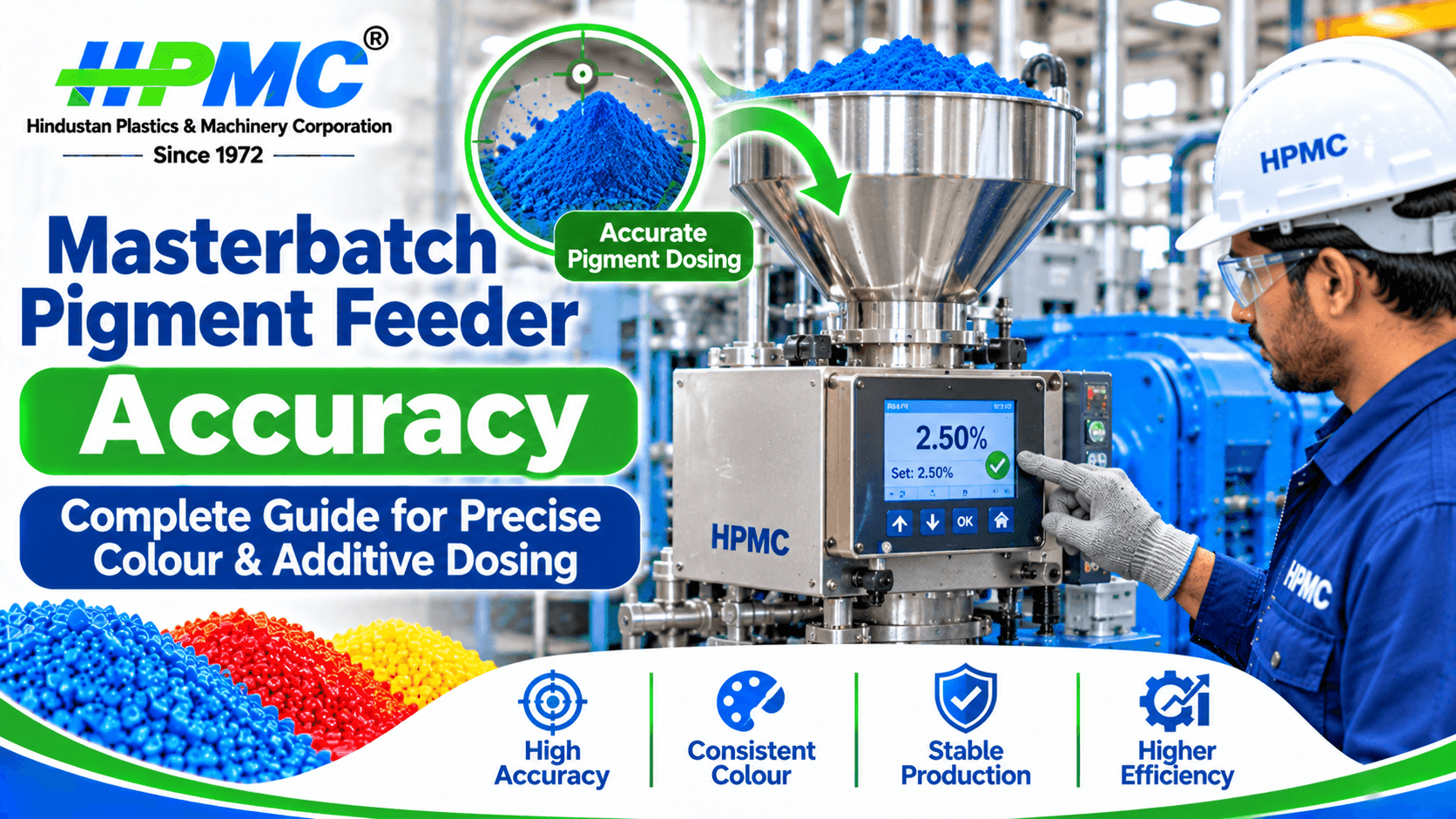
In plastic manufacturing, achieving consistent colour and material quality depends on accurate ingredient feeding. Masterbatch contains concentrated pigments, additives or fillers that are mixed with a base polymer to achieve the required colour and material properties. Even a small variation in pigment feeding can affect the final product's appearance, colour consistency and production quality. This is why Masterbatch Pigment Feeder Accuracy is an important factor in modern plastic extrusion and compounding operations.
A masterbatch pigment feeder controls the quantity of colour concentrate or pigment supplied to the extrusion process. It helps maintain the required formulation and supports consistent material dosing throughout production. When the feeding system operates inaccurately, manufacturers may experience colour variation, material wastage, inconsistent product quality and additional production costs.
For manufacturers producing colour masterbatch, plastic pipes, profiles, sheets, films and other polymer products, selecting and maintaining an accurate feeding system is essential. In this guide, we will explain how masterbatch pigment feeder accuracy works, the factors affecting feeding performance, common problems, maintenance practices and ways to improve dosing consistency.
What Is Masterbatch Pigment Feeder Accuracy?
Masterbatch pigment feeder accuracy refers to the ability of a feeding system to deliver the required quantity of pigment or colour masterbatch consistently during plastic processing.
A feeder supplies the selected material to the extruder according to the production formulation. Depending on the application, the feeding system may use volumetric or gravimetric technology.
The accuracy of the feeder influences how consistently the pigment is introduced into the base polymer. A properly selected system helps manufacturers maintain the desired colour concentration and reduce unnecessary material consumption.
Important factors include:
- Feeder design and operating principle.
- Pigment particle size and flow characteristics.
- Material bulk density.
- Screw speed and feeding stability.
- Hopper design.
- Calibration and maintenance.
- Extruder output consistency.
Why Is Pigment Feeder Accuracy Important in Plastic Manufacturing?
1. Maintains Consistent Colour
Consistent pigment dosing helps maintain the required colour throughout the production process. Unstable feeding can create visible shade differences between products or batches.
2. Reduces Raw Material Wastage
Accurate dosing prevents unnecessary pigment consumption. This is particularly important when manufacturers use expensive colour concentrates or specialised additives.
3. Improves Product Quality
Consistent pigment feeding supports repeatable product appearance and helps manufacturers maintain their quality requirements.
4. Supports Stable Production
A properly functioning feeder provides a more consistent material supply to the extrusion system, reducing unnecessary process adjustments.
5. Controls Production Costs
Pigments and masterbatch concentrates contribute to manufacturing costs. Better dosing control helps manufacturers manage material consumption more effectively.
Types of Masterbatch Pigment Feeding Systems
1. Volumetric Feeder
A volumetric feeder supplies material based on a controlled feeding volume over time. It commonly uses a rotating screw or another metering mechanism to deliver the pigment.
Its performance depends on material bulk density, particle characteristics and feeding conditions. Changes in these properties can affect the actual weight delivered.
2. Gravimetric Feeder
A gravimetric feeder measures material weight and controls feeding according to the required mass flow or dosing ratio.
It can help maintain more consistent dosing when material properties change, provided the system is correctly selected, installed and calibrated.
3. Loss-in-Weight Feeder
A loss-in-weight feeder measures the reduction in hopper weight over time to determine material consumption.
The control system adjusts the feeding mechanism to maintain the target feeding rate. This arrangement is commonly considered where accurate continuous dosing is important.
4. Screw-Based Pigment Feeder
A screw feeder uses a rotating screw to move pigment or masterbatch from the hopper towards the extrusion process.
The screw design should match the material characteristics and required feeding range.
Factors That Affect Masterbatch Pigment Feeder Accuracy
1. Pigment Particle Size
Pigments and masterbatch materials may have different particle sizes and physical characteristics. These differences can influence how the material moves through the hopper and feeder.
Fine powders may behave differently from regular polymer pellets, making suitable feeder selection important.
2. Material Bulk Density
Bulk density affects the amount of material delivered by a volumetric feeder. Variations in bulk density can result in changes in actual material consumption even when the feeder settings remain unchanged.
3. Hopper Material Flow
Poor material movement inside the hopper can create irregular feeding. Bridging, rat-holing and material compaction may interrupt the supply of pigment.
4. Screw Design
The screw geometry, pitch and feeding arrangement influence material movement. The selected screw should be suitable for the pigment or masterbatch being processed.
5. Feeder Calibration
Incorrect calibration can create differences between the target feeding rate and actual material consumption. Regular calibration helps verify system performance.
6. Vibration and Machine Conditions
Excessive vibration and unsuitable installation conditions can influence weighing stability in gravimetric feeding systems.
7. Moisture and Material Condition
Moisture can change the flow characteristics of certain pigment powders and additives. Proper material storage and handling help reduce feeding problems.
8. Extruder Output Variation
If the main polymer output changes while pigment feeding remains constant, the final pigment concentration may also change. Coordinating the feeder with the extrusion process is therefore important.
Common Masterbatch Pigment Feeder Accuracy Problems
1. Inconsistent Pigment Dosing
One of the most common problems is variation in the quantity of pigment supplied during production.
Possible causes:
- Incorrect feeder calibration.
- Irregular material flow.
- Changes in bulk density.
- Unsuitable screw configuration.
Solution: Check actual material consumption, inspect the hopper and feeding screw, and verify calibration according to the manufacturer's procedure.
2. Colour Variation in Finished Products
Colour differences may occur when pigment concentration changes during production.
Possible causes:
- Unstable pigment feeding.
- Incorrect masterbatch formulation.
- Inconsistent mixing.
- Changes in base polymer supply.
Solution: Compare feeder records with production output and evaluate colour samples under consistent testing conditions.
3. Pigment Bridging in the Hopper
Bridging occurs when material forms an arch inside the hopper and prevents normal material movement.
Possible causes:
- Poor material flow characteristics.
- Fine pigment particles.
- Hopper design limitations.
- Material compaction.
Solution: Review hopper geometry and consider suitable agitation or material-flow assistance approved for the feeder.
4. Feeder Output Fluctuation
Unstable feeder output can affect the consistency of pigment concentration.
Possible causes:
- Incorrect screw selection.
- Inconsistent material supply.
- Mechanical wear.
- Incorrect control settings.
Solution: Inspect the feeding mechanism, review control parameters and verify actual material consumption.
5. Incorrect Gravimetric Readings
Gravimetric systems may show unstable readings when weighing conditions are affected.
Possible causes:
- Excessive vibration.
- Incorrect load-cell installation.
- Electrical interference.
- Material buildup.
- Calibration issues.
Solution: Inspect the weighing arrangement, check connections and follow the manufacturer's calibration instructions.
How to Improve Masterbatch Pigment Feeder Accuracy
1. Select the Correct Feeder
Choose a feeding system according to pigment form, required dosing range, material flow properties and production capacity.
2. Perform Regular Calibration
Verify actual feeding performance against the required target. Calibration should be performed at suitable intervals and whenever important material or equipment changes occur.
3. Maintain Consistent Material Quality
Use properly stored and controlled raw materials. Changes in pigment characteristics can affect feeding performance.
4. Inspect the Feeding Screw
Check the screw for wear, material buildup and damage. A worn or unsuitable screw may cause irregular feeding.
5. Maintain Proper Hopper Conditions
Ensure the hopper supports consistent material movement. Investigate bridging, rat-holing and material compaction whenever feeding becomes unstable.
6. Monitor Feeding Rate
Record the target feeding rate and actual material consumption during production. Compare readings to identify unusual variations.
7. Coordinate Feeding with Extruder Output
The pigment feeding rate should remain appropriate for the main polymer output. Changes in extrusion throughput may require corresponding adjustments to the dosing system.
8. Train Machine Operators
Operators should understand feeder settings, calibration procedures, alarm conditions and material-handling requirements.
Volumetric vs Gravimetric Pigment Feeder: Which Is Better?
Both systems have their own applications in plastic manufacturing.
Volumetric feeding: This system controls material delivery based on volume. It can be suitable for applications where material flow and bulk density remain relatively consistent.
Gravimetric feeding: This system controls material delivery using weight measurement. It is useful when manufacturers require controlled mass-based dosing and want to compensate for changes in material flow characteristics.
The correct selection depends on the pigment type, required dosing accuracy, production capacity and overall machine configuration.
Manufacturers should discuss their formulation and operating requirements before selecting a feeding system.
Role of Twin Screw Extruders in Accurate Masterbatch Processing
A twin screw extruder plays an important role in masterbatch production because it combines material conveying, melting, mixing and dispersion.
However, even a well-designed extruder cannot compensate for every feeding problem. If pigment enters the machine inconsistently, the final formulation may also become inconsistent.
A properly coordinated feeding and extrusion arrangement helps manufacturers maintain better control over the complete compounding process.
HPMC offers Co-Rotating Twin Screw Extruders for polymer compounding, colour masterbatch, filler masterbatch and other processing applications.
For a better understanding of the complete production process, manufacturers can also read the Corotating Twin Screw Extruder for Masterbatch: Working and Buying Guide.
Maintenance Checklist for Masterbatch Pigment Feeders
Regular maintenance helps maintain feeding consistency and reduces unexpected production interruptions.
- Inspect the hopper for material buildup.
- Check the feeding screw for wear and damage.
- Verify feeder calibration.
- Inspect weighing sensors and electrical connections.
- Check for material bridging or irregular flow.
- Review actual pigment consumption.
- Inspect drive motors and mechanical components.
- Check control panel readings and alarms.
- Clean material-contact surfaces during approved shutdown procedures.
- Maintain a record of maintenance and calibration activities.
For manufacturers working with different formulations, maintaining separate material and calibration records can make production changeovers easier to manage.
How to Choose the Right Masterbatch Pigment Feeder
Before purchasing a pigment feeder, manufacturers should evaluate their actual production requirements.
Material Compatibility
Identify whether the feeder will handle pigment powder, colour masterbatch pellets, additives or other materials.
Required Dosing Range
Confirm the minimum and maximum feeding rates required for the production formulations.
Production Capacity
The feeder should be suitable for the expected extrusion output and required dosing ratio.
Accuracy Requirements
Discuss the required feeding consistency with the equipment supplier and confirm how performance will be demonstrated during testing.
Control System
Check whether the feeder can communicate with the extrusion line and support the required monitoring functions.
Maintenance and Support
Ask about calibration, spare parts, operator training and technical assistance.
Manufacturers comparing different machine configurations can also explore HPMC's Co-Rotating Twin Screw Extruder for Compounding and Recycling solutions.
Conclusion
Masterbatch Pigment Feeder Accuracy is essential for maintaining consistent colour, controlled material consumption and reliable plastic manufacturing operations. An inaccurate feeding system can create colour variation, increase material wastage and affect the quality of finished products.
Selecting the correct feeder, maintaining suitable material flow, performing regular calibration and coordinating pigment feeding with extruder output can help manufacturers improve dosing consistency.
For better production performance, manufacturers should evaluate the complete feeding and extrusion system rather than focusing only on the feeder itself. A suitable combination of feeding technology, process control and regular maintenance supports more consistent masterbatch processing.
Contact Hindustan Plastics and Machinery Corporation (HPMC)
Hindustan Plastics and Machinery Corporation (HPMC) provides plastic extrusion, compounding, recycling and polymer processing machinery solutions for industrial manufacturers.
Businesses planning a new masterbatch production line, upgrading existing extrusion machinery or exploring suitable compounding equipment can contact HPMC to discuss their requirements.
Whether your application involves colour masterbatch, filler masterbatch, additive masterbatch or polymer compounding, sharing your material details and production targets helps the team discuss a suitable machinery configuration.
Company: Hindustan Plastics and Machinery Corporation (HPMC)
Address: 5, Category II, DSIDC Industrial Area, Nangloi, Delhi – 110041, India
Phone: +91 95605 96392
Email: info@hindustanplastics.com
Website: https://www.hindustanplastics.com/
Request a Quote: https://www.hindustanplastics.com/get-in-touch
Google Business Profile: https://share.google/lBK4uD53HqY891ynv
When contacting HPMC, share your pigment type, masterbatch formulation, target dosing range, required production capacity and extrusion application.
Contact HPMC today to discuss your masterbatch production requirements and suitable extrusion machinery solutions.
Frequently Asked Questions
Find quick answers to the most common questions about this topic.
It refers to the ability of a feeder to deliver the required quantity of pigment or colour masterbatch consistently during plastic manufacturing.
It helps maintain consistent colour, control raw material consumption and support repeatable product quality.
Volumetric and gravimetric feeders are both used. Selection depends on material characteristics, dosing requirements and production conditions.
Common causes include incorrect calibration, material bridging, changes in bulk density, screw wear and unstable material flow.
Use a suitable feeder, maintain consistent material quality, perform regular calibration and monitor actual feeding performance.
Volumetric feeders control material delivery based on volume, whereas gravimetric feeders measure material weight to control dosing.
Yes. Variations in pigment concentration can create shade differences and inconsistent colour in finished plastic products.
Calibration frequency depends on the feeder design, material characteristics and operating conditions. Follow the manufacturer's recommended schedule.
Yes. A suitably configured twin screw extruder can process colour masterbatch, filler masterbatch and additive masterbatch formulations.
HPMC provides co-rotating twin screw extrusion machinery for masterbatch production, polymer compounding and other plastic processing applications. Contact HPMC to discuss suitable machine configurations and production requirements.