
Introduction
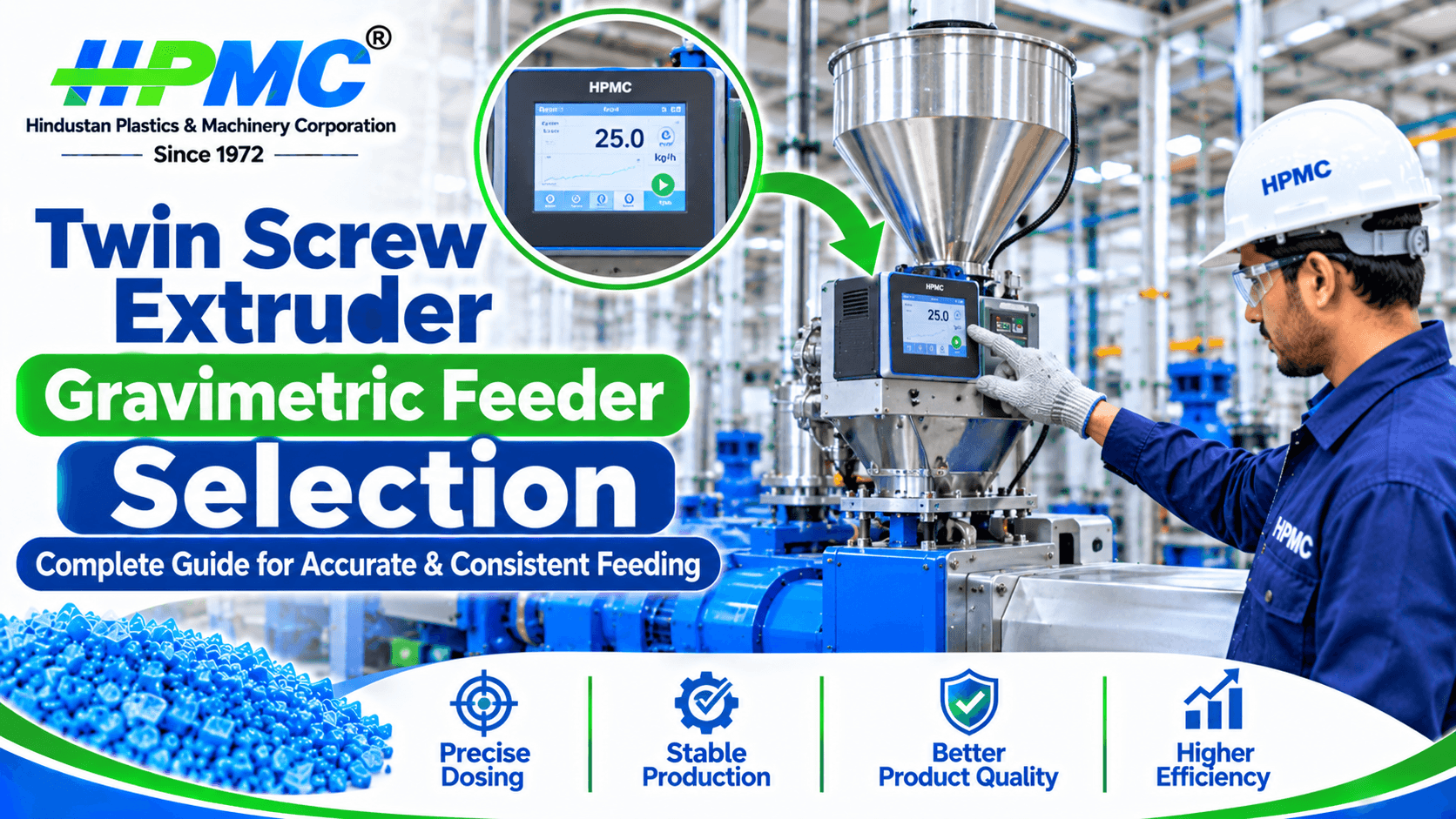
In modern plastic manufacturing, maintaining accurate material feeding is essential for producing consistent and high-quality products. Twin screw extruders are widely used in plastic compounding, masterbatch production, polymer processing and recycling applications. These processes often involve multiple raw materials, including polymers, fillers, pigments and additives. Even small variations in material feeding can affect the final product quality, formulation consistency and production performance. This is why Twin Screw Extruder Gravimetric Feeder Selection is an important consideration for manufacturers.
A gravimetric feeder is a material dosing system that measures the weight of the material being supplied and controls the feeding rate according to the required production conditions. Unlike a conventional volumetric feeder, which primarily controls material delivery by volume, a gravimetric feeder uses weight-based measurement to regulate material feeding.
Selecting the right gravimetric feeder helps manufacturers maintain accurate formulation ratios, reduce material wastage and improve production consistency. However, the correct feeder depends on material characteristics, required feeding capacity, dosing accuracy, screw configuration and the overall extrusion process.
This guide explains how to select a suitable gravimetric feeder for a twin screw extruder, important technical considerations, different feeder types, common feeding problems and maintenance practices.
What Is a Gravimetric Feeder in a Twin Screw Extruder?
A gravimetric feeder is an industrial dosing system designed to control the quantity of material entering an extrusion machine based on weight measurement.
It continuously monitors material weight and adjusts the feeding mechanism to maintain the required feeding rate. This makes it useful in applications where accurate proportions of different raw materials are important.
In twin screw extrusion, gravimetric feeders can be used for feeding:
- PP and PE polymer granules.
- Calcium carbonate and other mineral fillers.
- Colour pigments and masterbatch.
- Glass fibre and reinforcing materials.
- Processing additives.
- Recycled plastic granules.
- Other compatible polymer ingredients.
Depending on the production formulation, manufacturers may use one main feeder or multiple gravimetric feeders to supply different ingredients.
Why Is Gravimetric Feeder Selection Important?
Selecting a suitable gravimetric feeder directly influences the consistency of material feeding and the overall extrusion process.
1. Accurate Material Dosing
Different plastic formulations require specific proportions of polymers, fillers and additives. A suitable gravimetric feeder helps maintain the required material feeding rate according to the production formulation.
2. Consistent Product Quality
Changes in raw material proportions can affect colour, density, mechanical properties and other product characteristics. Weight-based dosing helps maintain more consistent ingredient proportions.
3. Reduced Material Wastage
Accurate feeding can reduce unnecessary material consumption caused by excessive or inconsistent dosing. This is particularly important when processing expensive additives, pigments and specialised polymers.
4. Improved Production Stability
Stable material feeding supports consistent operation of the twin screw extruder. It can help reduce formulation fluctuations and unnecessary adjustments during production.
5. Better Process Monitoring
Modern gravimetric feeding systems can provide information about feeding rates, material consumption and dosing performance. This information helps production teams monitor the process more effectively.
Twin Screw Extruder Gravimetric Feeder Selection: Important Factors
1. Material Characteristics
The first step is understanding the physical characteristics of the material being processed. Different materials behave differently inside a feeding hopper and dosing mechanism.
Important characteristics include:
- Particle size and shape.
- Bulk density.
- Flowability.
- Moisture content.
- Material consistency.
- Dust generation.
- Tendency to bridge or form lumps.
For example, plastic granules generally flow differently from fine mineral powders. Therefore, a feeder suitable for polymer pellets may not be appropriate for fine calcium carbonate powder.
2. Required Feeding Capacity
Feeder capacity is another important selection factor. Manufacturers should identify the required feeding rate for each ingredient before choosing a feeder.
The required capacity depends on the total extrusion output and the percentage of each material in the formulation.
The selected feeder should provide an appropriate operating range for the actual production requirement. A feeder that operates continuously near its minimum or maximum limit may not provide the desired control under every operating condition.
3. Dosing Accuracy
Dosing accuracy is particularly important in masterbatch, filler compounding and engineering plastic applications.
Before selecting a gravimetric feeder, manufacturers should check:
- Specified feeding accuracy.
- Repeatability.
- Measurement resolution.
- Operating range.
- Calibration requirements.
- Performance under actual material conditions.
Always distinguish between the manufacturer's stated accuracy and the accuracy achievable in the complete production process.
4. Feeder Type and Design
The feeder design should match the characteristics of the material.
For example, fine powders may require a different feeding arrangement from free-flowing plastic granules. The selected mechanism should provide a consistent material supply without excessive fluctuations.
5. Load Cell Performance
Load cells are important components of gravimetric feeding systems because they measure changes in material weight.
When evaluating a feeder, consider the load cell's capacity, resolution, stability and suitability for the operating environment.
Vibration, improper mounting and external mechanical interference can affect measurement performance. Therefore, the feeder installation should follow the manufacturer's recommendations.
6. Screw and Hopper Configuration
The hopper and dosing screw influence how material moves through the feeder.
A suitable configuration should provide consistent material discharge and minimise the risk of bridging, blockage or irregular feeding.
For difficult-flowing powders, manufacturers may require specialised hopper geometry or material-flow assistance.
7. Control System Compatibility
The gravimetric feeder should communicate properly with the twin screw extruder's control system.
Depending on the machine configuration, the system may support:
- Feeding rate monitoring.
- Screw speed adjustment.
- Weight measurement.
- Alarm notifications.
- Recipe management.
- Production data monitoring.
Control compatibility should be confirmed before finalising the equipment.
8. Material Changeover Requirements
Manufacturers producing different formulations may need to change materials regularly.
In such cases, easy cleaning, accessible material-contact components and convenient calibration procedures become important selection factors.
9. Installation Space
The available space above and around the extruder should also be considered.
Check hopper height, feeder mounting arrangement, maintenance access, material loading requirements and clearance for cleaning.
10. Maintenance and Technical Support
A gravimetric feeder requires regular inspection and calibration.
Before purchasing, evaluate the availability of spare parts, technical assistance, operating instructions and maintenance support.
Different Types of Gravimetric Feeders Used in Plastic Processing
1. Loss-in-Weight Feeder
A loss-in-weight feeder measures the reduction in material weight inside its hopper over time.
The system uses this weight change to determine the actual material feeding rate and adjusts the dosing mechanism to maintain the required rate.
It is commonly considered for applications where accurate continuous material feeding is required.
Typical applications include:
- Polymer granule feeding.
- Powder dosing.
- Additive feeding.
- Filler feeding.
- Masterbatch production.
2. Gain-in-Weight Feeder
A gain-in-weight feeder measures the increase in weight of material collected in a receiving container or weighing arrangement.
It is useful for applications where ingredients are added into a weighing vessel in controlled quantities.
Depending on the process, it may be used for batch preparation and formulation dosing.
3. Single-Screw Gravimetric Feeder
A single-screw gravimetric feeder uses a rotating screw to control material discharge.
Its suitability depends on the material's flow characteristics, required capacity and screw design.
4. Twin-Screw Gravimetric Feeder
A twin-screw feeder uses two feeding screws to move material through the dosing system.
It may be suitable for certain powders, additives and difficult-flowing materials, depending on the feeder design.
The correct feeder should be selected according to the actual material properties rather than simply choosing a feeder based on its screw arrangement.
Gravimetric Feeder vs Volumetric Feeder
Both feeding systems are used in plastic processing, but their measurement methods are different.
Gravimetric Feeder: Measures material weight and controls feeding according to the required weight-based rate.
Volumetric Feeder: Controls material delivery based primarily on the volume discharged over time.
Gravimetric feeding is particularly useful when formulation accuracy is important or material bulk density can vary.
Volumetric feeding may be suitable for applications where material flow and bulk density remain sufficiently consistent.
The final choice should depend on the production formulation, required accuracy, budget and operating conditions.
How to Select the Right Gravimetric Feeder for a Twin Screw Extruder
Step 1: Identify the Raw Materials
Prepare a complete list of the polymers, fillers, pigments and additives used in your formulation.
Step 2: Determine the Required Feeding Rate
Calculate the required feeding rate for each ingredient according to the target production output and formulation.
Step 3: Check Material Flow Characteristics
Evaluate particle size, bulk density, flowability, moisture and other properties that influence material movement.
Step 4: Select the Suitable Feeder Mechanism
Choose an appropriate single-screw, twin-screw or other feeding arrangement according to the material.
Step 5: Verify Measurement Requirements
Review load cell capacity, measurement resolution, specified accuracy and calibration requirements.
Step 6: Check Extruder Compatibility
Confirm that the feeder can be properly mounted and integrated with the twin screw extruder.
Step 7: Evaluate Automation
Check the availability of feeding controls, monitoring functions, alarms and recipe management where required.
Step 8: Review Maintenance Requirements
Consider cleaning access, spare parts, calibration procedures and technical support.
Step 9: Conduct Material Trials
Where possible, test the feeder using the actual production material before finalising the configuration.
Common Gravimetric Feeder Problems and Their Solutions
1. Inconsistent Material Feeding
Irregular material flow may result from poor material flowability, hopper bridging, incorrect feeder settings or mechanical issues.
Inspect the material condition, hopper arrangement and dosing mechanism.
2. Load Cell Reading Fluctuation
Unstable load cell readings can be caused by vibration, incorrect mounting, external interference or electrical issues.
Check the installation and follow the manufacturer's calibration procedure.
3. Material Bridging in the Hopper
Fine powders and certain additives may form bridges inside the hopper, preventing consistent material discharge.
Suitable hopper geometry and approved material-flow assistance may help address this problem.
4. Incorrect Feeding Rate
An incorrect feeding rate may result from calibration errors, unsuitable operating settings or mechanical wear.
Verify the feeder settings and compare the measured feeding performance with the required production rate.
5. Dust Accumulation
Fine powders can create dust around feeding components and weighing arrangements.
Use suitable dust-control measures and maintain the feeder according to the manufacturer's recommendations.
6. Feeder Calibration Problems
Incorrect calibration can affect material dosing performance.
Calibration should be carried out using the manufacturer's procedure and appropriate test conditions.
Best Practices for Gravimetric Feeder Maintenance
Regular Cleaning
Clean hoppers, screws and material-contact surfaces according to the material and manufacturer's instructions.
Load Cell Inspection
Check load cell mounting, connections and measurement stability.
Calibration Checks
Perform calibration and feeding verification at the recommended intervals.
Monitor Feeding Performance
Review feeding rates and material consumption during production.
Check Mechanical Components
Inspect dosing screws, motors, couplings and other moving components for wear.
Maintain Material Quality
Ensure that raw materials meet the required moisture and particle-size specifications.
Train Operators
Operators should understand feeder controls, alarms, calibration procedures and safe maintenance practices.
Relationship Between Gravimetric Feeding and Twin Screw Extruder Performance
Gravimetric feeding and twin screw extrusion work together to support consistent polymer processing.
The feeder controls how much material enters the extruder, while the screw configuration influences conveying, melting, mixing and material dispersion.
If the feeding rate fluctuates, the material composition and processing conditions may also change. This can affect the consistency of the final compound.
Manufacturers planning a complete extrusion setup should evaluate the feeder and extruder as part of the same production system.
HPMC's Co-Rotating Twin Screw Extruder range is designed for polymer compounding, masterbatch production and high-filler applications, with configurations supporting multiple feeders.
For a better understanding of the complete processing system, read the Corotating Twin Screw Extruder for Compounding and Recycling guide.
Manufacturers working with PVC formulations can also explore the Twin Screw Extruder for PVC Compounding guide to understand feeding, mixing and compounding requirements.
If you are comparing different machinery configurations, HPMC's Twin Screw Extruder Machinery page provides additional information about extrusion equipment.
For businesses planning their machinery investment, the Co-Rotating Twin Screw Extruder Price in India guide explains important factors to evaluate when comparing machine quotations.
Conclusion
Twin Screw Extruder Gravimetric Feeder Selection is an important part of planning an accurate and consistent plastic compounding process. The right feeder helps control the supply of polymers, fillers, pigments and additives according to the required production formulation.
Before selecting a gravimetric feeder, manufacturers should evaluate material characteristics, required feeding capacity, dosing accuracy, load cell performance, screw design, hopper configuration and control system compatibility.
A properly selected and maintained feeding system can support consistent material proportions, reduce unnecessary wastage and improve process monitoring.
Manufacturers should also consider feeder compatibility with the complete twin screw extrusion line rather than selecting the feeder independently.
By understanding the material requirements and production targets, businesses can choose a feeding arrangement that supports reliable long-term manufacturing performance.
Contact Hindustan Plastics and Machinery Corporation (HPMC)
Hindustan Plastics and Machinery Corporation (HPMC) provides plastic extrusion, compounding, recycling and plastic processing machinery solutions for industrial manufacturers.
Businesses planning a new twin screw extrusion line, upgrading existing equipment or evaluating gravimetric feeding requirements can contact the HPMC team to discuss their applications.
Whether your requirement involves polymer compounding, masterbatch production, filler processing, PVC compounding or plastic recycling, sharing the correct technical details helps identify a suitable machinery configuration.
Company: Hindustan Plastics and Machinery Corporation (HPMC)
Address: 5, Category II, DSIDC Industrial Area, Nangloi, Delhi – 110041, India
Phone: +91 95605 96392
Email: info@hindustanplastics.com
Website: https://www.hindustanplastics.com/
Request a Quote: https://www.hindustanplastics.com/get-in-touch
Google Business Profile: https://share.google/lBK4uD53HqY891ynv
When contacting HPMC, share your polymer type, filler percentage, additive requirements, target production capacity, feeding rate and extrusion machine specifications.
Contact HPMC today to discuss your twin screw extrusion and plastic compounding machinery requirements.
Frequently Asked Questions
Find quick answers to the most common questions about this topic.
A gravimetric feeder is a weight-based material dosing system used to control the feeding rate of polymers, fillers, pigments and additives entering a twin screw extruder.
Gravimetric feeding helps maintain accurate ingredient proportions, supports consistent formulation quality and reduces material variations during production.
Gravimetric feeding controls material supply based on weight measurement, whereas volumetric feeding controls material delivery based primarily on volume.
Depending on the feeder design, materials may include plastic granules, mineral powders, pigments, fillers, additives and compatible recycled plastic materials.
A loss-in-weight feeder measures the reduction in hopper weight over time to determine and control the actual material feeding rate.
Consider the required material feeding rate, total extruder output, formulation percentage, material flow characteristics and feeder operating range.
A feeder is generally configured for a particular material or compatible material range. Different ingredients may require separate feeders depending on their properties and dosing requirements.
Possible causes include incorrect calibration, load cell instability, vibration, material bridging, inconsistent flow and mechanical wear.
Calibration frequency depends on the manufacturer's recommendations, operating conditions and required dosing accuracy. Regular verification is important.
HPMC's co-rotating twin screw extruder configurations support multiple feeder arrangements. The suitable feeding system and integration requirements should be confirmed according to the material and machine configuration.