
Introduction
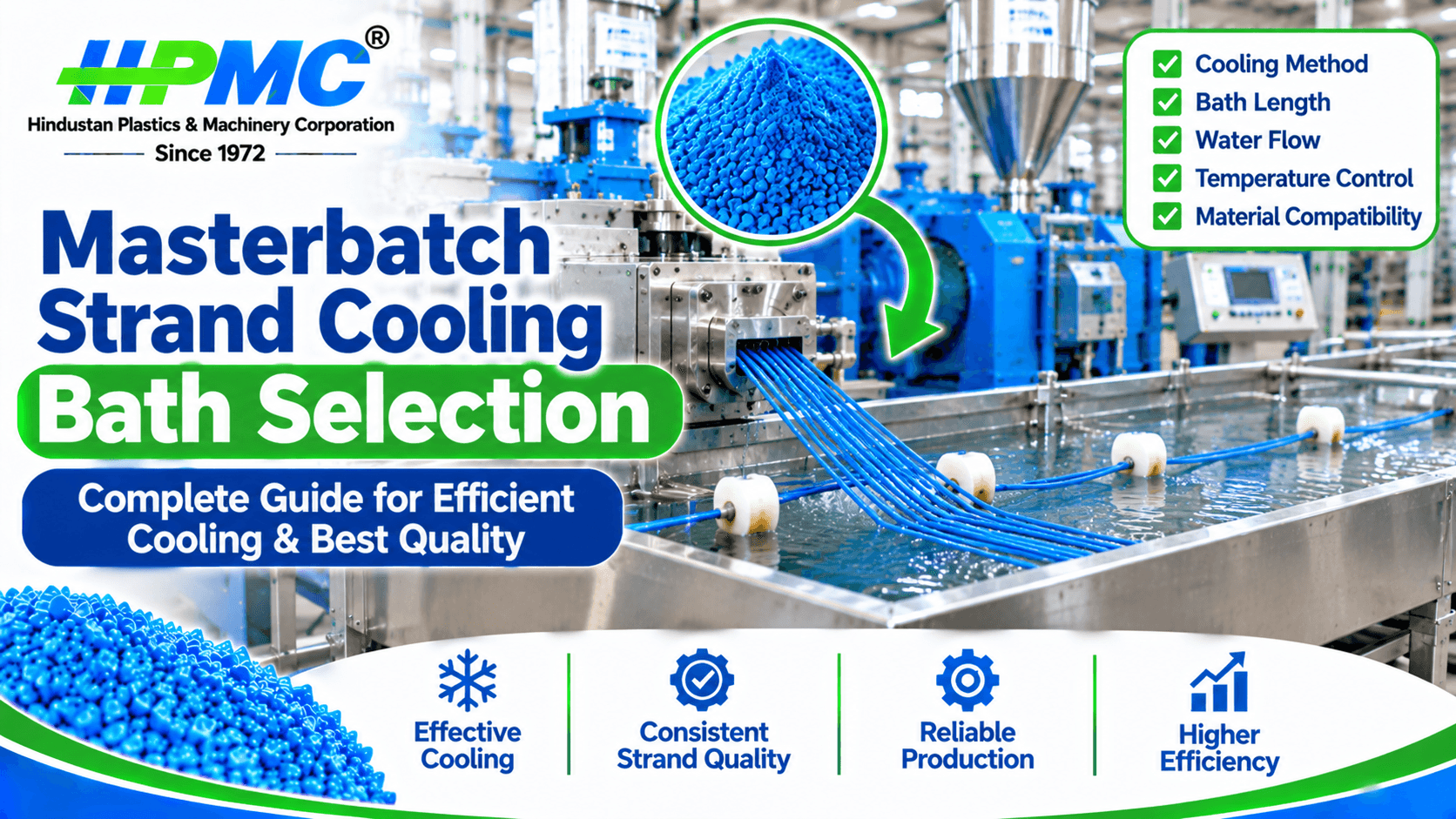
In plastic compounding and masterbatch manufacturing, cooling plays an important role in maintaining consistent product quality. After molten polymer passes through the extrusion die, it needs to be cooled properly before moving to the cutting and pelletising stages. An unsuitable cooling arrangement can cause strand breakage, inconsistent pellet quality, production interruptions and unnecessary material wastage. This is why Masterbatch Strand Cooling Bath Selection is an important consideration when designing or upgrading a masterbatch production line.
A strand cooling bath is designed to cool continuously extruded polymer strands using controlled water circulation. The cooling system helps the material achieve a suitable condition before entering the strand pelletiser. Its length, water flow, temperature management, material construction and strand-guiding arrangement should match the polymer formulation and production capacity.
For manufacturers producing colour masterbatch, filler masterbatch, additive masterbatch and engineering plastic compounds, selecting the correct cooling bath can improve production stability and downstream processing. In this guide, we will discuss cooling bath selection, important design considerations, common problems, maintenance practices and factors to evaluate before purchasing a system.
What Is a Masterbatch Strand Cooling Bath?
A masterbatch strand cooling bath is a downstream component of an extrusion and pelletising line. It receives hot polymer strands from the extrusion die and cools them before they reach the cutting equipment.
During production, molten polymer exits through multiple openings in the strand die. These continuous strands enter the water-filled cooling bath, where heat is transferred from the polymer to the circulating water. Once sufficiently cooled, the strands move towards the drying and cutting sections.
The cooling bath must provide consistent conditions across all strands. Uneven cooling or unstable strand movement can affect the quality and reliability of the pelletising process.
A typical arrangement includes:
- Stainless-steel cooling tank.
- Water circulation system.
- Water inlet and outlet connections.
- Strand guides and rollers.
- Temperature monitoring arrangement.
- Drainage and cleaning provisions.
- Supporting frame and adjustment mechanisms.
Why Is Correct Strand Cooling Bath Selection Important?
1. Maintains Consistent Strand Quality
A properly selected cooling bath helps strands cool under stable conditions. This supports consistent strand handling before cutting.
2. Reduces Strand Breakage
Unstable cooling conditions can affect strand strength and handling. A suitable bath arrangement helps reduce avoidable interruptions.
3. Supports Better Pellet Quality
The cooling stage influences the condition of strands entering the cutter. Consistent strand feeding supports more uniform pellet production.
4. Improves Production Stability
Correct water circulation, suitable bath dimensions and proper strand guidance help maintain a smoother production process.
5. Reduces Material Wastage
Repeated strand breakage and production interruptions can increase rejected material. A suitable cooling arrangement helps manufacturers control these losses.
6. Supports Continuous Operation
An appropriately designed cooling bath can help the extrusion line operate more reliably when matched to the required output and polymer characteristics.
Types of Strand Cooling Bath Systems
1. Standard Water Cooling Bath
A standard water cooling bath uses a tank filled with circulating water. Extruded strands pass through the bath and gradually lose heat before reaching the cutting section. Its configuration depends on the strand diameter, polymer type and production requirements.
2. Adjustable Strand Cooling Bath
An adjustable system allows operators or maintenance personnel to position the bath according to the production line arrangement. Adjustment features can make installation and alignment easier.
3. Stainless-Steel Cooling Bath
Stainless-steel construction is commonly considered where corrosion resistance, cleaning and industrial durability are important. The material grade and thickness should be confirmed according to the application.
4. Temperature-Controlled Cooling System
Some applications may require closer control of cooling-water temperature. A suitable temperature-management arrangement can help maintain repeatable processing conditions when production requirements demand it.
5. Multi-Strand Cooling Bath
A multi-strand arrangement handles several polymer strands simultaneously. Strand spacing and water distribution should be considered to avoid overcrowding and inconsistent cooling.
Important Factors in Masterbatch Strand Cooling Bath Selection
1. Polymer Material Compatibility
Different polymers have different thermal and processing characteristics. PP, PE, engineering plastics and filled masterbatch formulations may require different cooling arrangements. Before selecting a bath, share the polymer grade, additives, filler content and expected strand dimensions with the equipment supplier.
2. Cooling Bath Length
Bath length determines the available cooling path for the strands. The required length depends on extrusion output, strand speed, material properties and cooling conditions. A longer bath is not automatically better; it should be selected according to the actual process.
3. Water Flow and Circulation
Consistent water circulation helps remove heat from the cooling bath. Poor circulation can create uneven temperature conditions, particularly when multiple strands are processed simultaneously. Check pump capacity, inlet and outlet positioning, drainage and water distribution.
4. Cooling Water Temperature
Water temperature influences the rate at which heat is removed from the polymer. Manufacturers should evaluate the required cooling conditions for the specific material and production rate. Temperature monitoring can help operators identify changes during continuous production.
5. Strand Spacing and Guidance
Strands should travel through the bath without unnecessary crossing, tangling or contact. Proper guides and rollers help maintain the required path and support stable feeding towards the drying and cutting sections.
6. Tank Material and Construction
The cooling tank should be suitable for industrial operating conditions. Stainless-steel construction can offer advantages in cleaning and corrosion resistance. Buyers should review fabrication quality, welds, supports and accessibility for maintenance.
7. Production Capacity
The cooling bath should match the expected extrusion throughput. A system designed for a lower output may not provide suitable cooling when production capacity increases. Always discuss the actual operating range rather than selecting equipment based only on the extruder's model name.
8. Cleaning and Maintenance Access
Water deposits, polymer contamination and other residues can affect equipment cleanliness. Easy access to the tank, drainage points and circulation components makes regular maintenance more convenient.
9. Integration with the Pelletiser
The bath outlet should align with the strand dryer and pelletiser. Incorrect positioning or unstable strand movement can affect feeding into the cutter. Evaluate the complete downstream arrangement before finalising the equipment.
How Does a Masterbatch Strand Cooling Bath Work?
The cooling process is part of a continuous extrusion and pelletising operation.
Step 1: Polymer Melting and Extrusion
Raw materials are processed in the extruder. The polymer melts and moves towards the die under controlled processing conditions.
Step 2: Strand Formation
Molten material exits through the strand die and forms continuous strands. Consistent die output supports stable downstream handling.
Step 3: Entry into the Cooling Bath
The hot strands enter the water cooling bath through a suitable guiding arrangement. The water removes heat from the polymer as the strands move through the tank.
Step 4: Cooling and Solidification
The strands continue through the bath until they reach a suitable condition for downstream handling. The required cooling conditions depend on the polymer and line configuration.
Step 5: Surface Water Removal
After cooling, strands move through a suitable drying arrangement. This helps remove excess surface water before cutting.
Step 6: Pellet Cutting
The cooled strands enter the strand pelletiser, where they are converted into pellets for collection and further use.
For a detailed explanation of downstream equipment and pellet quality, manufacturers can read HPMC's Strand Pelletizing Line Cooling and Pellet Quality Guide.
Common Cooling Bath Problems and Their Solutions
1. Uneven Strand Cooling
Possible causes: Poor water circulation, unsuitable strand spacing, incorrect bath configuration or changes in water temperature.
Solution: Inspect water distribution, check the position of the strands and monitor temperature conditions across the bath.
2. Frequent Strand Breakage
Possible causes: Unstable extrusion, unsuitable cooling conditions, incorrect strand guidance or material-related processing problems.
Solution: Inspect the complete process, including the die, bath entry, cooling conditions and strand path. Do not assume the cooling bath is the only cause.
3. Strand Tangling
Possible causes: Incorrect strand spacing, damaged guides, poor alignment or unstable strand movement.
Solution: Check strand guides, rollers and bath alignment. Maintain adequate separation between strands.
4. Excessive Water Carryover
Possible causes: Ineffective drainage, unsuitable strand exit arrangement or insufficient surface drying.
Solution: Inspect the bath outlet and drying section. Ensure the strands move correctly towards the air-knife or other drying equipment.
5. Inconsistent Cooling Water Temperature
Possible causes: Insufficient circulation, unsuitable cooling capacity or changes in operating conditions.
Solution: Monitor water temperature, inspect the circulation system and verify that the cooling arrangement matches the production requirements.
6. Water Leakage
Possible causes: Damaged connections, worn seals, loose fittings or tank damage.
Solution: Inspect the tank and water connections during a safe shutdown. Replace damaged components according to the manufacturer's maintenance instructions.
How to Improve Strand Cooling Performance
Manufacturers can improve cooling consistency by following a few important operating practices:
- Maintain consistent water circulation.
- Monitor cooling-water temperature.
- Keep the tank clean and free from accumulated contamination.
- Maintain proper spacing between strands.
- Inspect strand guides and rollers regularly.
- Check the alignment between the extruder, cooling bath and pelletiser.
- Remove surface water before the cutting stage.
- Record recurring strand breakage and cooling-related issues.
- Follow the recommended maintenance schedule.
- Train operators to identify abnormal cooling conditions.
Role of Twin Screw Extruders in Masterbatch Cooling
A twin screw extruder is commonly used for polymer compounding and masterbatch production. It helps combine the carrier polymer with pigments, fillers and additives through controlled conveying, melting and mixing.
After the material passes through the extrusion die, the downstream cooling and pelletising system becomes important for producing consistent pellets. The cooling bath must therefore be compatible with the extruder's output and the required strand configuration.
HPMC provides Co-Rotating Twin Screw Extruders for masterbatch production, polymer compounding and other industrial applications.
The complete equipment arrangement should be evaluated together, including feeders, extruder, die head, cooling bath, strand dryer and pelletiser.
How to Choose the Right Cooling Bath for Your Production Line
Before purchasing a cooling bath, manufacturers should evaluate the following requirements:
1. Identify the Material
Confirm whether the production line will process PP, PE, engineering plastics, colour masterbatch or filled compounds.
2. Confirm Required Output
Share the expected production capacity and operating speed with the supplier.
3. Evaluate Strand Dimensions
Provide the expected number of strands, strand diameter and die arrangement.
4. Review Water Circulation
Check the required water flow, cooling arrangement, drainage and temperature-management needs.
5. Check Equipment Dimensions
Confirm the available factory space and the distance between the extruder and pelletiser.
6. Review Construction Quality
Ask about tank material, fabrication quality, supports and maintenance access.
7. Confirm Complete Line Compatibility
Ensure the cooling bath works with the extruder, strand dryer and pelletiser.
8. Discuss Installation and Support
Clarify installation, commissioning, spare parts, maintenance and operator training before finalising the purchase.
Manufacturers planning a complete compounding setup can also explore HPMC's Co-Rotating Twin Screw Extruder for Compounding and Recycling solutions.
Maintenance Checklist for a Strand Cooling Bath
Regular maintenance helps maintain cooling performance and equipment reliability.
- Inspect the tank for leakage and damage.
- Clean the cooling bath at suitable intervals.
- Check water inlet and outlet connections.
- Inspect pumps and circulation components.
- Verify temperature monitoring devices.
- Check strand guides and rollers.
- Inspect the drainage arrangement.
- Remove accumulated deposits and contamination.
- Review the alignment with downstream equipment.
- Maintain maintenance and inspection records.
Conclusion
Masterbatch Strand Cooling Bath Selection is an important part of designing a reliable extrusion and pelletising line. The correct bath should match the polymer material, extrusion output, strand dimensions and downstream cutting requirements.
Manufacturers should consider bath length, water circulation, temperature management, strand guidance, tank construction and maintenance accessibility before selecting equipment. A properly coordinated cooling system helps maintain stable strand handling, supports consistent pellet quality and reduces avoidable production interruptions.
Rather than selecting a cooling bath as an isolated component, evaluate it as part of the complete masterbatch production line. This approach helps ensure better equipment compatibility and more reliable manufacturing operations.
Contact Hindustan Plastics and Machinery Corporation (HPMC)
Hindustan Plastics and Machinery Corporation (HPMC) provides machinery solutions for plastic extrusion, polymer compounding, masterbatch production and recycling applications. Manufacturers planning a new masterbatch production line or upgrading existing equipment can contact HPMC to discuss their requirements.
For equipment selection, share your polymer grade, required production capacity, number of strands, strand dimensions, cooling-water requirements and desired pellet quality. The team can discuss suitable machinery configurations based on your application.
Company: Hindustan Plastics and Machinery Corporation (HPMC)
Address: 5, Category II, DSIDC Industrial Area, Nangloi, Delhi – 110041, India
Phone: +91 95605 96392
Email: info@hindustanplastics.com
Website: https://www.hindustanplastics.com/
Request a Quote: https://www.hindustanplastics.com/get-in-touch
Google Business Profile: https://share.google/lBK4uD53HqY891ynv
Explore the Masterbatch Extrusion Working and Buying Guide to understand the complete production process. You can also review the Twin Screw Extruder Price Guide when evaluating your machinery investment.
Contact HPMC today to discuss your masterbatch extrusion and strand cooling requirements.
Frequently Asked Questions
Find quick answers to the most common questions about this topic.
A masterbatch strand cooling bath is a water-based cooling system that cools hot polymer strands after extrusion and before pellet cutting.
It helps remove heat from extruded strands, supports stable strand handling and prepares the material for the pelletising process.
Consider polymer type, production capacity, strand diameter, number of strands, bath length, water circulation and downstream equipment compatibility.
The cooling bath configuration depends on the polymer being processed, including PP, PE and suitable engineering plastic formulations.
Possible causes include unstable extrusion, unsuitable cooling conditions, incorrect strand guidance and material-related processing issues.
Yes. The available cooling path influences strand cooling before cutting. The required length depends on the material, output and operating conditions.
Proper water circulation helps maintain more consistent cooling conditions and removes heat from the strands during continuous production.
Cleaning frequency depends on production conditions, water quality and material contamination. Follow the manufacturer's recommended maintenance schedule.
Yes. A compatible strand cooling bath can be integrated with a twin screw extrusion and pelletising line.
HPMC provides co-rotating twin screw extrusion machinery and related plastic processing solutions. Contact the company to discuss your production requirements and suitable equipment configuration.