
Introduction
A twin screw extruder is an important machine used in plastic extrusion, PVC compounding, plastic recycling and polymer processing. It operates continuously under mechanical load, making proper gearbox maintenance essential for reliable production. One of the most important maintenance activities is Twin Screw Extruder Gearbox Oil Checks.
The gearbox transfers power from the motor to the rotating screws. It supports the required torque and rotational movement during material processing. Gearbox oil helps lubricate internal gears and bearings, reduce friction, carry away heat and protect components against premature wear.
However, when gearbox oil becomes contaminated, its level drops or its condition deteriorates, the machine may develop operating problems. Unusual gearbox noise, increased temperature, vibration, leakage and changes in operating performance can indicate that further inspection is necessary.
For plastic manufacturers, regular gearbox oil inspection is an important part of preventive maintenance. It helps identify potential lubrication problems before they develop into serious mechanical failures.
In this guide, we will explain Twin Screw Extruder Gearbox Oil Checks, common gearbox oil problems, inspection procedures, warning signs, maintenance practices and ways to maintain reliable extrusion machine performance.
What Is a Twin Screw Extruder Gearbox?
A twin screw extruder gearbox is a mechanical transmission system that connects the drive motor to the twin screw assembly. It transfers motor power and provides the torque and speed required for the extrusion process.
Depending on the machine design, the gearbox may contain gears, shafts, bearings and lubrication arrangements that work together to support continuous operation.
Gearbox oil plays several important roles:
- Lubricates gears and bearings.
- Reduces friction between moving components.
- Helps control operating temperature.
- Protects internal surfaces against wear.
- Helps carry contaminants towards filtration or settling arrangements where provided.
- Supports reliable mechanical operation.
The correct gearbox lubrication arrangement depends on the machine design, operating conditions and gearbox manufacturer's specifications.
Why Are Twin Screw Extruder Gearbox Oil Checks Important?
Regular gearbox oil checks help manufacturers identify lubrication-related problems at an early stage.
1. Prevents Excessive Gear Wear
Gear teeth operate under mechanical load. Insufficient lubrication or unsuitable oil can increase friction and contribute to premature wear.
Regular inspection helps identify oil-level problems, contamination and changes in oil condition.
2. Maintains Proper Lubrication
Gearbox oil must remain within the recommended operating level to support the lubrication system.
Low oil levels may affect the availability of lubricant to internal components, depending on the gearbox design.
3. Helps Control Gearbox Temperature
Lubrication reduces friction and supports heat management within the gearbox.
Incorrect oil levels, unsuitable lubricant or degraded oil may contribute to abnormal operating temperatures.
4. Reduces Unexpected Downtime
Gearbox problems can interrupt the entire extrusion production process.
Routine inspection helps maintenance teams identify potential issues before they result in major equipment breakdowns.
5. Supports Longer Equipment Life
Following the recommended lubrication schedule helps protect gears, bearings and other internal components from avoidable damage.
6. Improves Maintenance Planning
Maintaining oil inspection records helps manufacturers identify recurring issues and plan maintenance activities more effectively.
Twin Screw Extruder Gearbox Oil Checks: Important Inspection Points
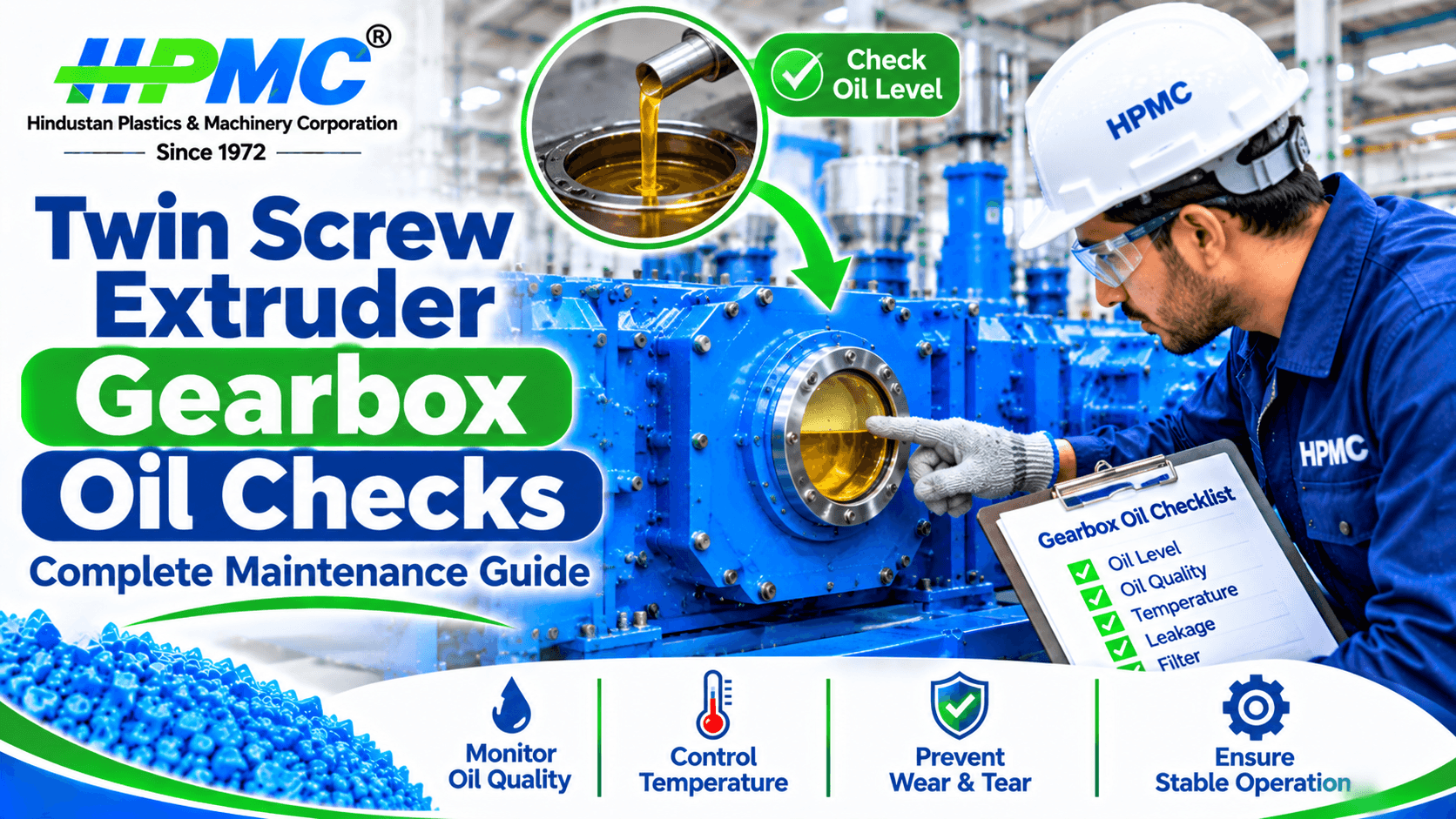
1. Check the Gearbox Oil Level
Oil level is one of the first things operators should inspect during routine maintenance.
A low oil level may indicate leakage, incorrect filling or lubricant consumption associated with the equipment design.
Check the oil level using the manufacturer's specified method, such as an oil sight glass, dipstick or designated level indicator.
What to inspect:
- Whether the oil level is within the recommended range.
- Whether the sight glass is clean and readable.
- Whether any leakage is visible around the gearbox.
- Whether the level changes unexpectedly between inspections.
Avoid overfilling the gearbox because excessive oil can also create operating problems.
2. Inspect Gearbox Oil Colour
Oil appearance can provide useful information about its condition.
Fresh gearbox oil generally has an appearance consistent with its specified lubricant grade. However, colour alone cannot confirm whether the oil is suitable for continued use.
During inspection, look for unusual darkening, cloudiness, suspended particles or visible contamination.
If the oil appears significantly different from its normal condition, investigate the cause before deciding whether replacement is necessary.
3. Check for Oil Contamination
Contamination is an important concern in industrial gearbox maintenance.
Water, dust, dirt and metallic particles may enter the lubrication system through different routes.
Possible contamination indicators include:
- Cloudy or milky-looking oil.
- Visible dirt or suspended particles.
- Metallic debris.
- Unusual deposits.
- Changes in oil appearance or consistency.
Where necessary, an oil sample can be sent for laboratory analysis to assess contamination, viscosity and wear-related particles.
4. Monitor Gearbox Oil Temperature
Temperature monitoring helps identify unusual operating conditions.
An unexpected increase in gearbox temperature may be associated with insufficient lubrication, unsuitable oil, excessive mechanical load, cooling problems or internal mechanical issues.
Operators should compare temperature readings with the gearbox manufacturer's permitted operating range and the machine's normal operating baseline.
Do not assume that every temperature increase is caused by gearbox oil alone.
5. Inspect Oil Leakage
Oil leakage should be identified and investigated before the gearbox continues operating with an insufficient lubricant supply.
Common inspection areas include:
- Shaft seals.
- Housing joints.
- Oil plugs.
- Inspection covers.
- Oil pipes and connections.
- Oil cooler connections, where fitted.
If leakage is detected, identify its source and arrange appropriate repairs according to the manufacturer's procedure.
6. Check Oil Viscosity
Viscosity describes the resistance of oil to flow. It is an important property for maintaining the required lubrication film between moving surfaces.
Using oil with an unsuitable viscosity may affect lubrication performance, particularly when operating conditions change.
Always select the lubricant grade specified by the gearbox manufacturer. Do not choose an oil grade only because it appears similar to the existing oil.
7. Inspect the Oil Filter
Some gearbox lubrication systems include filters that remove contaminants from circulating oil.
A blocked or damaged filter may affect oil circulation and lubrication performance.
Check filter condition, differential pressure indicators and replacement requirements according to the gearbox lubrication system design.
8. Listen for Unusual Gearbox Noise
Unusual mechanical sounds should not be ignored during routine inspection.
Grinding, knocking or abnormal whining noises may indicate a lubrication problem or another mechanical issue.
Noise alone does not confirm gearbox damage. A qualified technician should investigate the equipment using the appropriate inspection procedure.
Common Twin Screw Extruder Gearbox Oil Problems
Low Gearbox Oil Level
Low oil levels may result from leakage, incorrect filling or other equipment-related conditions.
If the level falls below the recommended range, investigate the cause and restore the correct level using the specified lubricant.
Oil Discolouration
Oil may darken because of ageing, operating conditions, contamination or oxidation.
Compare the oil condition with previous inspection records and consider oil analysis when necessary.
Water Contamination
Water contamination can affect lubricant properties and contribute to corrosion and reduced lubrication performance.
Check for possible water entry through seals, breathers, cooling arrangements or maintenance activities.
Excessive Oil Temperature
High oil temperature may develop due to unsuitable lubricant, excessive load, insufficient cooling or mechanical problems.
Investigate the complete lubrication and drive system rather than immediately assuming that oil replacement will solve the problem.
Metallic Particles in Oil
Metallic particles may indicate internal component wear or damage.
If visible metallic debris is found, arrange further inspection and oil analysis. Significant contamination should not be ignored.
Oil Leakage Around Seals
Damaged seals or loose connections may cause lubricant leakage.
Inspect the affected area and replace damaged components using the recommended maintenance procedure.
How to Perform a Twin Screw Extruder Gearbox Oil Inspection
A systematic inspection process helps operators maintain consistent maintenance records.
Step 1: Follow Machine Safety Procedures
Before performing any maintenance activity, follow the machine manufacturer's safety instructions.
Where inspection requires opening covers, accessing moving components or performing repairs, isolate the equipment and apply the required lockout and tagout procedures.
Step 2: Review the Gearbox Manual
Identify the specified lubricant grade, oil capacity, inspection method and recommended maintenance intervals.
Different gearbox models may require different lubrication arrangements.
Step 3: Check Oil Level
Use the designated oil-level indicator and follow the specified checking conditions.
Record the observed oil level and investigate any unusual changes.
Step 4: Inspect Oil Appearance
Check the oil for unusual colour, cloudiness, contamination and visible particles.
If necessary, collect an oil sample using the approved sampling procedure.
Step 5: Inspect for Leakage
Examine seals, joints, plugs and external connections for signs of leakage.
Step 6: Review Operating Temperature
Record gearbox temperature and compare it with the machine's normal operating readings and manufacturer limits.
Step 7: Check Lubrication Components
Inspect the oil pump, filter, cooler and associated connections if these components are included in the gearbox lubrication system.
Step 8: Maintain Inspection Records
Document oil level, appearance, temperature, leakage observations and any maintenance performed.
These records help maintenance teams identify changes and plan future servicing.
When Should Twin Screw Extruder Gearbox Oil Be Changed?
Gearbox oil replacement intervals depend on gearbox design, lubricant type, operating temperature, production conditions and manufacturer recommendations.
There is no single replacement interval suitable for every twin screw extruder.
Manufacturers should consider the following factors:
Operating Hours: Continuous production may influence lubricant service life.
Oil Condition: Contamination, oxidation and changes in viscosity may indicate the need for further assessment.
Operating Temperature: Consistently high temperatures can accelerate lubricant deterioration.
Manufacturer Recommendations: Follow the gearbox supplier's specified replacement interval.
Oil Analysis: Laboratory testing can help assess lubricant condition and identify wear-related contamination.
When changing gearbox oil, use the specified lubricant and follow the recommended draining, flushing and refilling procedure. Mixing different oil types without checking compatibility should be avoided.
Best Practices for Twin Screw Extruder Gearbox Maintenance
Use the Correct Lubricant
Always use the oil grade recommended by the gearbox manufacturer. Check viscosity, lubricant specifications and compatibility before filling or replacing oil.
Maintain Correct Oil Levels
Inspect oil levels regularly and investigate unexpected changes instead of repeatedly topping up the gearbox without identifying the cause.
Keep the Lubrication System Clean
Prevent dirt and moisture from entering the gearbox during oil sampling, filling and replacement.
Monitor Temperature and Noise
Record normal operating conditions and investigate unusual temperature changes, vibration or mechanical sounds.
Inspect Seals and Connections
Regularly examine accessible seals, plugs and oil lines for leakage or damage.
Follow Preventive Maintenance
Create a documented inspection schedule based on operating hours and the gearbox manufacturer's maintenance instructions.
Use Qualified Maintenance Technicians
Internal gearbox inspection, repairs and lubricant system servicing should be handled by trained personnel.
Relationship Between Gearbox Maintenance and Twin Screw Extruder Performance
The gearbox is an important part of the complete twin screw extrusion system. It transfers power to the screws, allowing them to convey, mix and process the polymer material.
If the gearbox develops lubrication or mechanical problems, the machine may experience abnormal noise, temperature changes, vibration or interruptions.
However, extrusion quality also depends on other components, including screw configuration, barrel condition, feeding equipment, heating systems, die design and downstream machinery.
For a better understanding of machine operation and component selection, manufacturers can explore HPMC's Twin Screw Extruder for PVC Compounding.
A suitable Conical Twin Screw Extruder should be selected according to the polymer, formulation, production capacity and final product requirements.
For additional information about machine operating components, read the Conical Twin Screw Extruder for PVC Pipe guide.
Regular gearbox inspections should also form part of the complete machine startup and maintenance process. Manufacturers can refer to HPMC's PVC Pipe Line Commissioning Checklist for additional equipment inspection points.
For broader extrusion maintenance guidance, the Single Screw Extruder Troubleshooting and Maintenance guide provides further information about drive systems, gearbox lubrication and other machine components.
Common Mistakes to Avoid During Gearbox Oil Checks
Even routine maintenance can become ineffective when important inspection practices are ignored.
Avoid these common mistakes:
- Using an incorrect gearbox oil grade.
- Overfilling or underfilling the gearbox.
- Ignoring unusual oil leakage.
- Mixing incompatible lubricants.
- Ignoring cloudy or contaminated oil.
- Changing oil without investigating recurring contamination.
- Ignoring abnormal gearbox temperature.
- Failing to inspect oil filters where fitted.
- Performing maintenance without proper machine isolation.
- Not maintaining oil inspection records.
Avoiding these mistakes helps manufacturers maintain a more reliable lubrication maintenance programme.
Conclusion
Twin Screw Extruder Gearbox Oil Checks are an important part of preventive maintenance in plastic extrusion and compounding industries. Regular inspection of oil level, appearance, contamination, viscosity, temperature and leakage helps identify lubrication-related issues before they develop into major mechanical problems.
Using the correct lubricant, following manufacturer-recommended replacement intervals and maintaining inspection records can support reliable gearbox operation and reduce avoidable production interruptions.
For plastic manufacturers, gearbox maintenance should not be treated as an isolated activity. It should be included in the complete twin screw extruder maintenance programme to support consistent machine operation and long-term equipment reliability.
Contact Hindustan Plastics and Machinery Corporation (HPMC)
Hindustan Plastics and Machinery Corporation (HPMC) provides plastic extrusion, compounding, recycling, reprocessing and industrial machinery solutions. Manufacturers planning to install a new extrusion line or upgrade existing production equipment can discuss their requirements with the HPMC team.
If your production facility is experiencing gearbox lubrication issues, abnormal machine noise, temperature fluctuations or recurring maintenance problems, proper equipment inspection and suitable machinery selection are important.
Company: Hindustan Plastics and Machinery Corporation (HPMC)
Address: 5, Category II, DSIDC Industrial Area, Nangloi, Delhi – 110041, India
Phone: +91 95605 96392
Email: info@hindustanplastics.com
Website: https://www.hindustanplastics.com/
Request a Quote: https://www.hindustanplastics.com/get-in-touch
Google Business Profile: https://share.google/lBK4uD53HqY891ynv
When contacting HPMC, share your extruder model, gearbox configuration, polymer type, production capacity, operating conditions and current maintenance concerns to discuss suitable machinery requirements.
Contact HPMC today to discuss your twin screw extrusion machinery requirements and explore suitable solutions for reliable plastic processing and production.
Frequently Asked Questions
Find quick answers to the most common questions about this topic.
Plastic Recycling Pellet Size Variation refers to differences in the length, diameter, weight or shape of recycled plastic granules produced during the pelletizing process.
Common causes include incorrect cutter speed, worn blades, inconsistent strand diameter, unstable extrusion output, unsuitable cooling and irregular material feeding.
Manufacturers can maintain correct cutter settings, inspect blades, stabilise extrusion output, control strand dimensions and monitor cooling conditions.
Yes. Incompatible cutter speed and material feeding speed can produce pellets with inconsistent lengths.
Yes. Blunt, damaged or misaligned blades can contribute to uneven cutting, rough edges and inconsistent pellet dimensions.
Suitable cooling helps stabilise strands before cutting. Inadequate or unsuitable cooling may affect strand handling and cutting consistency.
Strand pelletizing cools continuous polymer strands before cutting. Water ring pelletizing cuts molten polymer at the die face and uses circulating water for cooling and transport.
Melt filtration removes suitable solid contaminants from molten plastic. It can support cleaner processing, but pellet dimensions are primarily influenced by extrusion, die and cutting conditions.
Pellet dimensions should be inspected at regular intervals during production. The frequency depends on production requirements, material characteristics and quality control procedures.
HPMC provides plastic extrusion, recycling and pelletizing machinery solutions. Manufacturers can contact the HPMC team to discuss polymer type, required pellet dimensions, production capacity and suitable machine configurations.