
Introduction
In modern plastic manufacturing, maintaining stable extrusion pressure is essential for producing consistent and high-quality products. A twin screw extruder is widely used in plastic compounding, masterbatch production, polymer processing and recycling applications. During extrusion, molten plastic passes through the die under controlled pressure to achieve the required product shape and dimensions. Any unexpected change in die pressure can affect material flow, product quality and overall production stability. This is why Twin Screw Extruder Die Pressure Monitoring is an important part of industrial extrusion operations.
Die pressure monitoring allows manufacturers to observe pressure conditions near the extrusion die and identify unusual changes during production. It helps operators understand whether the material is flowing consistently and whether the extrusion process is operating within the recommended conditions.
Proper pressure monitoring can also help identify potential problems related to material feeding, melt filtration, temperature variations, die blockage and equipment wear. In this guide, we will explain how die pressure monitoring works, why it is important, common pressure-related problems and the best practices manufacturers should follow.
What Is Twin Screw Extruder Die Pressure Monitoring?
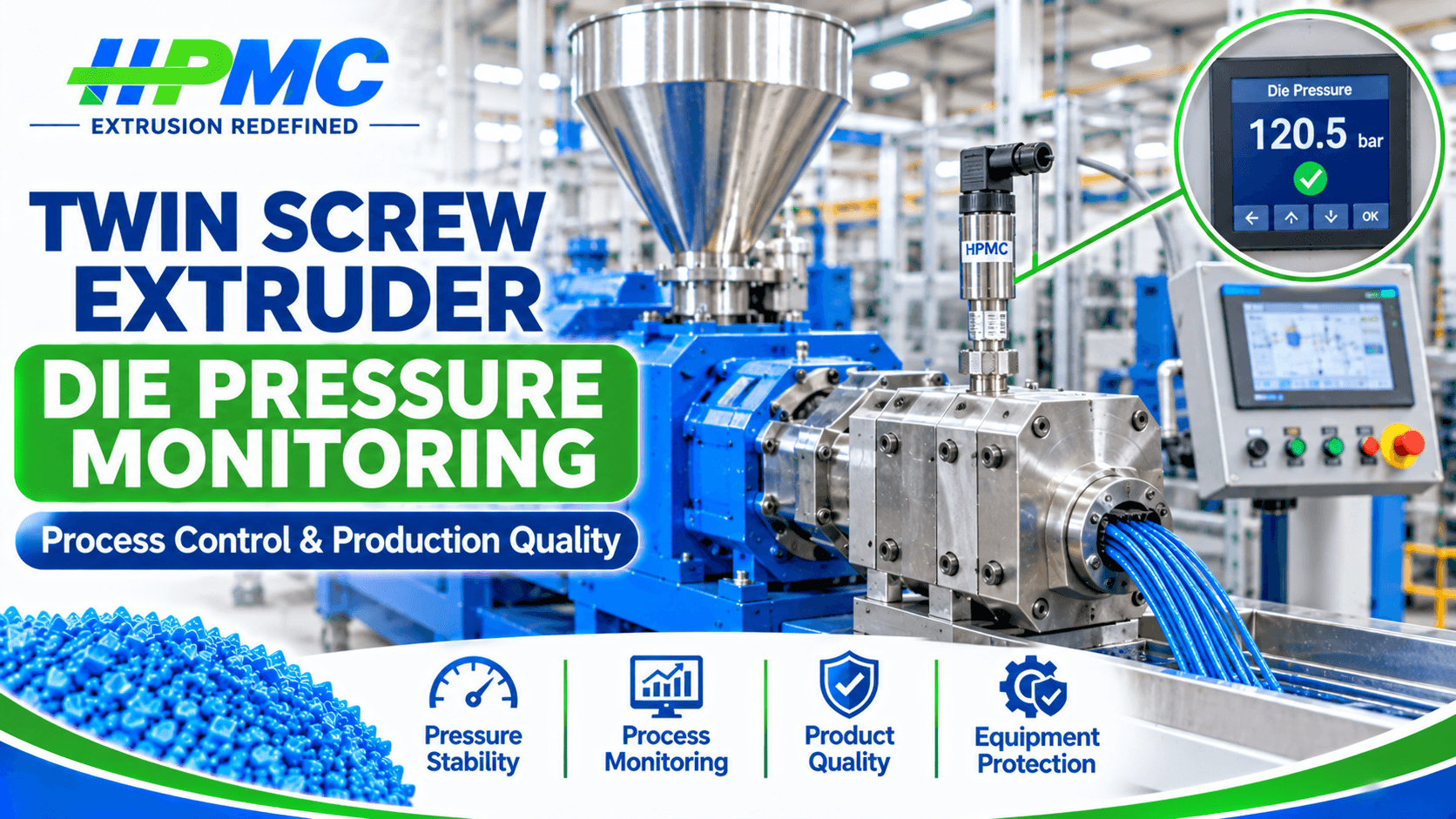
Twin screw extruder die pressure monitoring is the process of measuring and observing the pressure of molten polymer near the die section of an extrusion machine.
A pressure sensor or pressure transducer is generally installed at a suitable location in the melt flow path. It measures the pressure and sends a signal to a monitoring instrument or machine control system.
The pressure reading helps operators understand the condition of the molten material before it passes through the die.
Depending on the extrusion system, pressure monitoring may include:
- Melt pressure sensors.
- Digital pressure indicators.
- Pressure transmitters.
- Machine control panels.
- High-pressure alarm systems.
- Process monitoring software.
The sensor location and measurement range should be selected according to the machine design, material and operating requirements.
Why Is Die Pressure Monitoring Important in Twin Screw Extrusion?
Die pressure monitoring provides useful information about extrusion conditions and helps manufacturers maintain a more controlled production process.
1. Maintains Stable Material Flow
Stable melt pressure helps operators monitor material movement through the die. Unexpected pressure fluctuations may indicate changes in feeding, melting or flow resistance.
2. Helps Maintain Product Quality
Changes in extrusion pressure can influence material flow and product consistency. Monitoring pressure helps operators identify process variations before they create larger production problems.
3. Identifies Die Blockage
Material deposits, contaminants and partially blocked flow passages can increase resistance inside the die. Pressure monitoring helps identify unusual increases that may require inspection.
4. Protects Extrusion Equipment
Unexpected pressure increases can place additional stress on the die, barrel and other pressure-containing components. Suitable monitoring and protective systems help operators respond to abnormal conditions.
5. Improves Production Monitoring
Pressure readings provide useful information for production records, troubleshooting and process optimisation.
How Does Die Pressure Monitoring Work?
A typical die pressure monitoring arrangement uses a pressure sensor installed in the melt flow section of the extrusion system.
The process generally involves the following stages.
1. Molten Material Preparation
Raw polymer enters the twin screw extruder through the feeding system. The rotating screws convey, mix and process the material under controlled operating conditions.
2. Material Melting and Mixing
Inside the heated barrel, the polymer undergoes melting and mixing. Screw geometry, temperature settings, material formulation and operating speed influence the melt condition.
3. Pressure Generation
As molten material moves towards the die, resistance within the flow path creates pressure. The pressure depends on several factors, including material viscosity, output rate and die design.
4. Pressure Measurement
A suitable melt pressure sensor measures the pressure at its installed location. The sensor converts the measured pressure into an electrical signal.
5. Digital Monitoring
The signal is displayed through a pressure indicator or machine control system, allowing operators to observe pressure changes during production.
6. Operator Response
If the pressure moves outside the established operating range, operators can investigate material feeding, filtration, temperature conditions and die cleanliness.
Important Components of a Die Pressure Monitoring System
1. Melt Pressure Sensor
The melt pressure sensor is the main measuring component. It is designed to measure pressure in molten polymer processing applications.
The sensor should be compatible with the operating temperature, pressure range and material conditions.
2. Pressure Transmitter
A pressure transmitter converts the measured pressure into a signal that can be communicated to the machine control system.
3. Digital Pressure Display
The digital indicator displays pressure readings so operators can monitor the process without manually checking the measuring equipment.
4. Machine Control Panel
The control panel provides access to pressure readings and other machine operating information. Depending on the system, alarms and monitoring functions may also be available.
5. Pressure Alarm System
Some extrusion systems include alarm functions to notify operators when pressure exceeds a configured limit.
The alarm limits should be established according to the equipment manufacturer's specifications and validated operating conditions.
Factors That Affect Twin Screw Extruder Die Pressure
1. Raw Material Characteristics
Different polymers have different melt flow characteristics. Material viscosity, molecular structure, formulation and temperature sensitivity can influence extrusion pressure.
2. Screw Speed
Changes in screw speed can influence material conveying, mixing and output. The resulting pressure response depends on the extruder configuration and material behaviour.
3. Barrel Temperature
Incorrect temperature settings can affect polymer melting and viscosity. If the material is not processed under suitable conditions, melt flow resistance may change.
4. Die Design
Die geometry, flow channel dimensions and die condition influence the resistance encountered by molten material.
5. Melt Filtration Condition
A clogged or heavily loaded filter can increase resistance in the melt flow path and contribute to pressure changes.
6. Material Feeding
Irregular material feeding can create fluctuations in extrusion output and pressure.
7. Contamination
Foreign particles and incompatible materials can affect flow behaviour and may contribute to restrictions in the die or filtration system.
8. Equipment Condition
Worn components, incorrect assembly and unsuitable operating conditions can influence extrusion performance.
Common Die Pressure Problems and Their Solutions
1. High Die Pressure
High die pressure may indicate increased resistance in the melt flow path.
Possible causes include:
- Partially blocked die channels.
- Clogged melt filters.
- Excessive material feeding.
- Unsuitable processing temperature.
- Material contamination.
Solution: Review pressure trends, inspect filtration condition and check the die according to the manufacturer's safety and maintenance procedures.
2. Low Die Pressure
Low pressure may be associated with insufficient material supply, changes in material viscosity or other process conditions.
Solution: Check raw material feeding, screw operation, temperature settings and sensor performance before making adjustments.
3. Pressure Fluctuation
Unstable pressure readings can result from inconsistent feeding, changing material properties, unstable processing conditions or measurement problems.
Solution: Compare pressure readings with feeding rate, screw speed, temperature and production output to identify the possible cause.
4. Sudden Pressure Increase
A sudden pressure increase may indicate a developing blockage, filtration restriction or unexpected material-flow change.
Solution: Follow the machine's operating and alarm procedures. Do not continue operating outside approved pressure limits.
5. Incorrect Pressure Reading
Incorrect readings may be caused by sensor damage, poor electrical connections, unsuitable installation or calibration problems.
Solution: Inspect the sensor installation and connections, and verify its performance using the manufacturer's recommended procedure.
Best Practices for Effective Die Pressure Monitoring
Regular Pressure Observation
Operators should monitor pressure readings throughout production and record unusual changes.
Establish Normal Operating Conditions
Maintain a reference record of stable pressure readings for different materials, formulations and production conditions.
Inspect Pressure Sensors
Check sensor condition, installation and electrical connections according to the equipment manufacturer's recommendations.
Maintain Melt Filtration
Inspect filtration equipment and replace or clean filter elements according to the approved maintenance procedure.
Maintain Temperature Stability
Monitor barrel and die temperatures to help maintain suitable melt-processing conditions.
Follow Safe Cleaning Procedures
Die cleaning and inspection should only be performed after following the required shutdown, isolation and pressure-release procedures.
Train Machine Operators
Operators should understand pressure indicators, alarm conditions, troubleshooting procedures and machine safety requirements.
Benefits of Installing a Pressure Monitoring System
Better Process Control
Pressure readings provide additional information about the condition of molten material during extrusion.
Reduced Unexpected Downtime
Early identification of abnormal pressure trends can help maintenance teams investigate potential problems before they develop into major breakdowns.
Improved Production Consistency
Monitoring pressure alongside other process parameters supports more repeatable operating conditions.
Better Maintenance Planning
Historical pressure information can help identify recurring filtration, material-flow or equipment-related problems.
Improved Equipment Protection
Suitable pressure monitoring and safety protection help operators respond to abnormal operating conditions.
Relationship Between Die Pressure and Twin Screw Extruder Performance
Die pressure is closely connected with the overall performance of a twin screw extrusion system.
The screws control material conveying, melting and mixing, while the die determines the final flow path through which molten polymer exits the machine.
When material feeding, temperature, filtration and die conditions remain suitable, the extrusion process can operate more consistently.
However, pressure readings should never be interpreted independently. Operators should evaluate pressure together with screw speed, motor load, feeding rate, melt temperature and final product quality.
Manufacturers planning a complete compounding setup can explore HPMC's Co-Rotating Twin Screw Extruder range for information about available extrusion configurations.
For a better understanding of the complete manufacturing process, read the Corotating Twin Screw Extruder for Compounding and Recycling guide.
Businesses working with PVC formulations can also explore the Twin Screw Extruder for PVC Compounding guide to understand extrusion and material-processing requirements.
If you are comparing different extrusion machine configurations, visit HPMC's Twin Screw Extruder Machinery page for additional machinery information.
Manufacturers evaluating machine investment and production requirements can also read the Co-Rotating Twin Screw Extruder Price in India guide.
How to Improve Die Pressure Monitoring in Industrial Production
Improving pressure monitoring requires more than installing a sensor. Manufacturers should establish a complete process-monitoring approach.
First, select a pressure sensor suitable for the material temperature and expected operating range. The installation location should be approved by the equipment manufacturer.
Second, verify the sensor signal and display readings during commissioning. Record the normal pressure behaviour under suitable production conditions.
Third, establish appropriate alarm limits based on machine specifications. Operators should know how to respond when pressure readings move outside the approved range.
Finally, maintain records of pressure readings, material changes, filter inspections and maintenance activities. These records help identify recurring issues and support better production decisions.
Conclusion
Twin Screw Extruder Die Pressure Monitoring plays an important role in maintaining stable and controlled plastic extrusion operations. By measuring melt pressure near the die, manufacturers can observe changes in material flow and identify potential problems related to filtration, material feeding, temperature and die conditions.
A properly selected pressure sensor, suitable monitoring arrangement and regular maintenance practices can support consistent production and help protect extrusion equipment.
Manufacturers should monitor pressure alongside other important process parameters instead of relying on a single reading to evaluate machine performance.
By following suitable monitoring procedures and responding to abnormal pressure changes, production teams can improve process control, reduce avoidable downtime and maintain better manufacturing consistency.
Contact Hindustan Plastics and Machinery Corporation (HPMC)
Hindustan Plastics and Machinery Corporation (HPMC) provides plastic extrusion, compounding, recycling and plastic processing machinery solutions for industrial manufacturers.
Businesses planning a new twin screw extrusion line, upgrading existing equipment or looking for suitable extrusion machinery can contact the HPMC team to discuss their production requirements.
Whether your application involves polymer compounding, masterbatch production, filler processing, PVC compounding or plastic recycling, sharing the correct technical information helps identify a suitable machinery configuration.
Company: Hindustan Plastics and Machinery Corporation (HPMC)
Address: 5, Category II, DSIDC Industrial Area, Nangloi, Delhi – 110041, India
Phone: +91 95605 96392
Email: info@hindustanplastics.com
Website: https://www.hindustanplastics.com/
Request a Quote: https://www.hindustanplastics.com/get-in-touch
Google Business Profile: https://share.google/lBK4uD53HqY891ynv
When contacting HPMC, share your polymer type, extrusion application, target production capacity, machine specifications and pressure monitoring requirements.
Contact HPMC today to discuss your twin screw extrusion machinery requirements and suitable production solutions.
Frequently Asked Questions
Find quick answers to the most common questions about this topic.
It is the process of measuring and observing molten polymer pressure near the die of a twin screw extruder to monitor material flow and extrusion conditions.
It helps identify unusual pressure changes, monitor material flow, investigate potential blockages and maintain more consistent extrusion conditions.
A melt pressure sensor or pressure transducer designed for high-temperature polymer processing is commonly used.
Possible causes include blocked die channels, clogged filters, excessive flow resistance, material contamination and unsuitable processing conditions.
Low pressure may be related to insufficient feeding, changes in melt viscosity, operating conditions or an inaccurate pressure measurement.
Pressure fluctuations may indicate inconsistent material flow or changing process conditions, potentially affecting product consistency and dimensional quality.
The sensor should be installed at a suitable pressure measurement location approved by the machine manufacturer, with consideration for temperature and mechanical compatibility.
Inspection and calibration frequency should follow the sensor manufacturer's recommendations and the operating conditions of the extrusion system.
Yes. Monitoring abnormal pressure trends can help operators identify potential process problems and arrange inspections before they develop into more serious issues.
HPMC provides co-rotating twin screw extrusion machinery for applications including plastic compounding, masterbatch production and recycling. Contact the company to discuss suitable machine configurations and technical requirements.