
Introduction
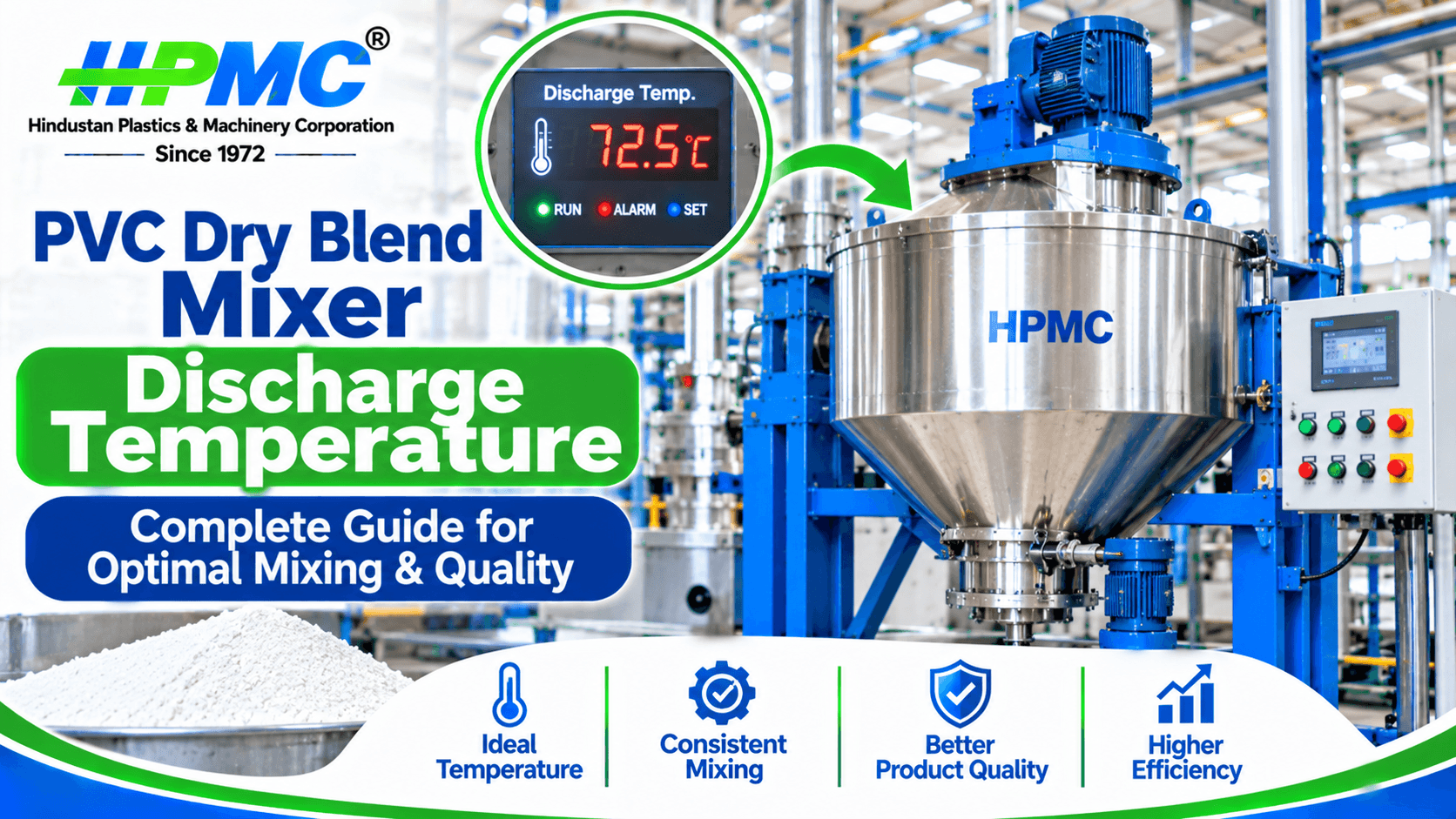
In PVC manufacturing, proper mixing is one of the most important stages for achieving consistent material quality. PVC resin is combined with stabilizers, lubricants, fillers, processing aids and other additives to prepare a uniform dry blend. During this process, temperature plays an important role in determining how effectively the ingredients are distributed throughout the mixture. This makes PVC Dry Blend Mixer Discharge Temperature an important factor for manufacturers operating PVC compounding and extrusion plants.
A PVC dry blend mixer generally uses high-speed mechanical mixing to distribute ingredients and generate heat through friction and mechanical energy. As mixing continues, the material temperature increases. The blend is discharged when it reaches the temperature and condition specified for the particular formulation and equipment.
If the discharge temperature is too low, certain ingredients may not be distributed or absorbed as intended. On the other hand, excessive temperature can affect heat-sensitive additives and may increase the risk of material degradation. Therefore, manufacturers need to maintain suitable mixing conditions rather than relying on one fixed temperature for every PVC formulation.
In this guide, we will explain PVC dry blend mixer discharge temperature, the factors affecting it, common mixing problems, temperature monitoring methods, maintenance practices and important considerations for selecting PVC mixing equipment.
What Is PVC Dry Blend Mixer Discharge Temperature?
PVC dry blend mixer discharge temperature refers to the temperature of the PVC material when it leaves the high-speed mixer after completing the mixing cycle.
During the mixing process, PVC resin is combined with different additives. The mixer blades rotate at high speed and create mechanical movement, friction and heat. This helps distribute ingredients throughout the formulation.
The discharge temperature is an important process parameter because it indicates the thermal condition of the prepared blend before it moves to the next production stage.
The required discharge temperature depends on several factors:
- PVC resin characteristics.
- Stabilizer and lubricant formulation.
- Type and quantity of fillers.
- Mixer design and capacity.
- Mixing speed and duration.
- Initial material temperature.
- Production requirements.
There is no single discharge temperature suitable for every PVC dry blend. Manufacturers should follow the formulation supplier's recommendations and the mixer manufacturer's operating instructions.
Why Is Discharge Temperature Important in PVC Dry Blending?
1. Improves Additive Distribution
PVC formulations contain different ingredients that need to be distributed consistently. Suitable mixing conditions help achieve better distribution of stabilizers, lubricants, fillers and other additives.
2. Supports Consistent Material Quality
Stable discharge conditions help manufacturers maintain repeatable mixing results between production batches.
3. Helps Control Material Degradation
PVC is sensitive to excessive heat exposure. Monitoring discharge temperature helps operators identify unusual temperature increases before they affect material quality.
4. Supports Better Extrusion Performance
A properly prepared dry blend can support more consistent feeding and processing in the downstream extrusion system.
5. Reduces Production Wastage
Incorrect mixing conditions may lead to rejected batches, inconsistent material properties and additional production adjustments. Better temperature control helps reduce these risks.
6. Improves Batch-to-Batch Consistency
Recording discharge temperature for each batch makes it easier to compare production conditions and identify unwanted variations.
How Does a PVC Dry Blend Mixer Work?
A PVC dry blend mixer combines PVC resin with different additives under controlled mechanical mixing conditions.
Step 1: Raw Material Feeding
PVC resin and the required ingredients are weighed according to the approved formulation. Consistent raw material quality is important for repeatable mixing results.
Step 2: Initial Mixing
The ingredients are loaded into the mixer. The rotating blades begin distributing the materials throughout the mixing chamber.
Step 3: Heating Through Mechanical Energy
As mixing continues, mechanical energy and friction increase the material temperature. The rate of temperature increase depends on mixer speed, formulation and operating conditions.
Step 4: Additive Distribution
The mixing action helps distribute stabilizers, lubricants, fillers and other ingredients through the PVC resin.
Step 5: Temperature Monitoring
Operators monitor the material temperature using the installed temperature sensor or approved measuring arrangement.
Step 6: Material Discharge
When the required mixing condition is achieved, the blend is discharged according to the established operating procedure.
Step 7: Cooling and Storage
The hot blend may be transferred into a cooling mixer. Cooling helps bring the material to a suitable temperature for storage or subsequent processing.
Factors Affecting PVC Dry Blend Mixer Discharge Temperature
1. Mixer Speed
Mixer speed influences mechanical energy generation and heat development during the mixing cycle. Higher speeds may increase the rate of temperature rise, depending on the equipment and formulation.
2. Mixing Time
Longer mixing periods can increase material temperature. However, extending the mixing cycle unnecessarily may create excessive heat exposure and affect productivity.
3. PVC Resin Quality
Different PVC resin grades can have different characteristics. These differences may influence material movement and mixing behaviour.
4. Stabilizer Formulation
Heat stabilizers play an important role in PVC processing. Their type and quantity should be selected according to the application and formulation requirements.
5. Lubricant Content
Internal and external lubricants influence material flow, friction and processing behaviour. An unsuitable lubricant balance may affect mixing performance and downstream extrusion.
6. Filler Content
Fillers such as calcium carbonate can influence the behaviour of the dry blend. The quantity, particle characteristics and moisture condition should be considered during formulation development.
7. Initial Material Temperature
The temperature of raw materials before mixing can influence the final discharge temperature. Storage conditions and factory environment may contribute to variations.
8. Mixer Capacity and Loading
Incorrect batch loading can affect mixing efficiency. Overloading or underloading may create differences in material movement and heat development.
9. Temperature Sensor Accuracy
An inaccurate temperature sensor may provide incorrect readings. Regular inspection and calibration are important for reliable temperature monitoring.
Common PVC Dry Blend Mixer Discharge Temperature Problems
1. High Discharge Temperature
Excessive discharge temperature may affect the condition of heat-sensitive PVC ingredients.
Possible causes:
- Excessive mixing duration.
- High mixer speed.
- Incorrect batch loading.
- Formulation imbalance.
- Temperature-control problems.
Solutions: Review the mixing cycle, verify the approved formulation and inspect the temperature monitoring system. Avoid changing operating settings without evaluating the material and equipment requirements.
2. Low Discharge Temperature
Low discharge temperature may indicate that the mixing cycle has not achieved the required process condition.
Possible causes:
- Insufficient mixing time.
- Incorrect mixer speed.
- Low initial material temperature.
- Incorrect batch loading.
- Equipment performance issues.
Solutions: Check the mixing parameters and compare actual batch conditions with the approved production procedure.
3. Uneven Mixing Temperature
Temperature differences within a batch may indicate inconsistent material movement.
Possible causes:
- Uneven ingredient distribution.
- Incorrect mixer loading.
- Worn mixing blades.
- Unsuitable mixing speed.
- Material buildup inside the vessel.
Solutions: Inspect the mixer blades, mixing chamber and loading procedure. Verify that the material is moving correctly during the mixing cycle.
4. Temperature Fluctuation Between Batches
Large differences between batches can make it difficult to maintain consistent material quality.
Possible causes:
- Different raw material conditions.
- Inconsistent batch weights.
- Changes in mixing time.
- Sensor calibration problems.
- Variations in operator settings.
Solutions: Maintain batch records and monitor important process parameters. Check raw material conditions and verify sensor performance.
5. PVC Dry Blend Discolouration
Yellowing or unusual colour changes may indicate excessive heat exposure, formulation problems or contamination.
Possible causes:
- Excessive temperature.
- Incorrect stabilizer formulation.
- Contaminated mixing equipment.
- Long material residence time.
- Unsuitable storage conditions.
Solutions: Inspect the formulation, mixing conditions and material handling process. Consult the material supplier if discolouration continues.
How to Maintain the Correct PVC Dry Blend Mixer Discharge Temperature
1. Follow the Approved Formulation
Every PVC application may require a different formulation. Follow the approved material recipe and avoid making uncontrolled changes to ingredient quantities.
2. Monitor Temperature During Mixing
Record temperature readings at suitable stages of the mixing cycle. This helps identify unusual temperature increases and batch variations.
3. Control Mixing Speed
Use the recommended mixer speed for the specific formulation and equipment. Avoid unnecessary speed adjustments.
4. Maintain Consistent Batch Loading
Maintain the approved batch weight and loading sequence. Consistent loading supports repeatable mixing conditions.
5. Inspect Mixer Blades
Worn or damaged blades can affect material movement. Inspect mixing components regularly and replace damaged parts according to manufacturer instructions.
6. Check Temperature Sensors
Verify sensor condition and calibration. An inaccurate sensor can lead to incorrect discharge decisions.
7. Maintain Proper Cooling
The cooling mixer should be suitable for the required batch size and production cycle. Proper cooling helps prepare the blend for subsequent processing.
8. Maintain Production Records
Record batch weight, mixing duration, mixer speed, discharge temperature and any unusual operating conditions. These records help operators identify recurring issues.
Role of Hot and Cool Mixers in PVC Processing
Hot and cool mixers are commonly used together in PVC dry blend preparation.
Hot Mixer
The hot mixer combines PVC resin with the required additives. Mechanical mixing generates heat and helps distribute the formulation ingredients.
Cool Mixer
After the required hot mixing stage, the material is transferred to the cooling mixer. The cooling system helps reduce material temperature and prepares the blend for storage or further processing.
Both mixers should have compatible capacities and operating cycles. If their capacities are not properly matched, the production workflow may experience unnecessary waiting periods.
Manufacturers planning a complete PVC production facility can explore HPMC's Conical Twin Screw Plant for PVC Compounding to understand the available PVC compounding machinery configuration.
How Discharge Temperature Affects PVC Extrusion Quality
The condition of the dry blend can influence downstream extrusion performance. If the material is not prepared consistently, the extruder may experience changes in feeding behaviour and processing stability.
Some possible effects include:
- Variations in material feeding.
- Changes in processing behaviour.
- Inconsistent compound quality.
- Surface appearance problems.
- Unstable extrusion output.
- Increased process adjustments.
A consistent dry blend is therefore an important starting point for reliable PVC extrusion.
Manufacturers can also read HPMC's guide on Common PVC Pipe Extrusion Defects and Their Causes to understand how material preparation and extrusion conditions can influence finished pipe quality.
How to Choose the Right PVC Dry Blend Mixer
Selecting suitable mixing equipment requires an understanding of the production application and material formulation.
1. Production Capacity
Determine the required batch size and expected production output. The mixer capacity should match the complete production workflow.
2. Mixer Configuration
Evaluate whether the production process requires a high-speed hot mixer, a cooling mixer or a complete hot-and-cool mixer combination.
3. Temperature Monitoring
Check the availability and arrangement of temperature sensors, control panels and discharge mechanisms.
4. Mixing Blade Design
The blade design should support suitable material movement and mixing performance for the intended formulation.
5. Cooling Arrangement
Check the cooling mixer configuration and its ability to handle the required batch size and production cycle.
6. Automation and Controls
PLC-based controls and suitable monitoring arrangements can help operators maintain repeatable mixing conditions.
7. Maintenance Accessibility
Inspect the mixer design, discharge arrangement and access to important mechanical components.
8. Technical Support
Discuss installation, commissioning, spare parts, operator training and maintenance support before purchasing equipment.
For further information about PVC processing equipment, read HPMC's Conical Twin Screw Plant for PVC Compounding: Complete Guide.
Maintenance Checklist for PVC Dry Blend Mixers
Regular preventive maintenance helps maintain reliable mixing performance and reduce unexpected downtime.
- Inspect mixing blades for wear or damage.
- Check the mixing chamber for material deposits.
- Inspect the discharge valve and sealing arrangement.
- Verify temperature sensor accuracy.
- Check the motor and gearbox condition.
- Inspect electrical connections and control panels.
- Check cooling water connections and circulation.
- Maintain proper lubrication according to manufacturer instructions.
- Inspect safety interlocks and emergency stops.
- Record maintenance activities and batch performance.
For operating instructions and equipment-specific maintenance guidance, manufacturers can refer to the HPMC Product Manuals and Documentation Centre.
Why Consider HPMC for PVC Processing Machinery?
Hindustan Plastics and Machinery Corporation (HPMC) provides plastic extrusion, PVC compounding and polymer processing machinery solutions for industrial manufacturers.
When planning a PVC compounding facility, equipment selection should consider material formulation, required production capacity, mixing arrangement, extrusion requirements and downstream processing.
HPMC's PVC Compounding Machinery Solutions provide further information for manufacturers evaluating PVC processing equipment.
Conclusion
PVC Dry Blend Mixer Discharge Temperature is an important process parameter that influences material preparation and overall PVC manufacturing consistency. Proper temperature monitoring helps manufacturers maintain suitable mixing conditions, reduce excessive heat exposure and achieve more repeatable batch results.
The discharge temperature should always be selected according to the PVC formulation, mixer design and production requirements. There is no universal temperature setting for every PVC dry blend.
By maintaining consistent batch loading, monitoring mixing conditions, inspecting equipment and following approved operating procedures, manufacturers can improve mixing reliability and support better downstream extrusion performance.
Contact Hindustan Plastics and Machinery Corporation (HPMC)
Hindustan Plastics and Machinery Corporation (HPMC) provides plastic extrusion, PVC compounding and polymer processing machinery solutions for industrial manufacturers. Businesses planning a new PVC compounding plant, upgrading existing mixing equipment or looking for suitable machinery configurations can contact HPMC to discuss their requirements.
Whether your application involves PVC pipes, profiles, cables or other PVC products, sharing your formulation and production requirements helps the team understand your application and discuss suitable equipment options.
Company: Hindustan Plastics and Machinery Corporation (HPMC)
Address: 5, Category II, DSIDC Industrial Area, Nangloi, Delhi – 110041, India
Phone: +91 95605 96392
Email: info@hindustanplastics.com
Website: https://www.hindustanplastics.com/
Request a Quote: https://www.hindustanplastics.com/get-in-touch
Google Business Profile: https://share.google/lBK4uD53HqY891ynv
When contacting HPMC, share your PVC formulation, required batch capacity, mixer configuration, target production output and cooling requirements.
Contact HPMC today to discuss suitable PVC mixing and compounding machinery for your manufacturing facility.
Frequently Asked Questions
Find quick answers to the most common questions about this topic.
It is the temperature of the PVC dry blend when it leaves the high-speed mixer after completing the mixing cycle.
It helps indicate the thermal condition of the material and supports consistent mixing, additive distribution and downstream processing.
There is no single ideal temperature for every formulation. The required temperature depends on the PVC resin, additives, mixer design and production requirements.
Excessive mixing time, high mixer speed, incorrect batch loading and formulation-related factors can contribute to higher discharge temperatures.
The material may not achieve the required mixing condition, which can affect additive distribution and subsequent processing behaviour.
Monitor material temperature, maintain suitable mixing speed and duration, follow the approved formulation and verify temperature sensor accuracy.
A hot mixer combines PVC resin and additives while generating heat through mechanical mixing. A cool mixer reduces the temperature of the prepared blend before further processing.
Inconsistent dry blend preparation can influence feeding behaviour, processing stability and the quality of the finished PVC product.
Maintenance frequency depends on operating hours, production conditions and equipment design. Follow the manufacturer's recommended maintenance schedule.
Yes. HPMC provides PVC compounding and extrusion machinery solutions. Manufacturers can contact the company to discuss suitable equipment configurations and production requirements.