
Introduction
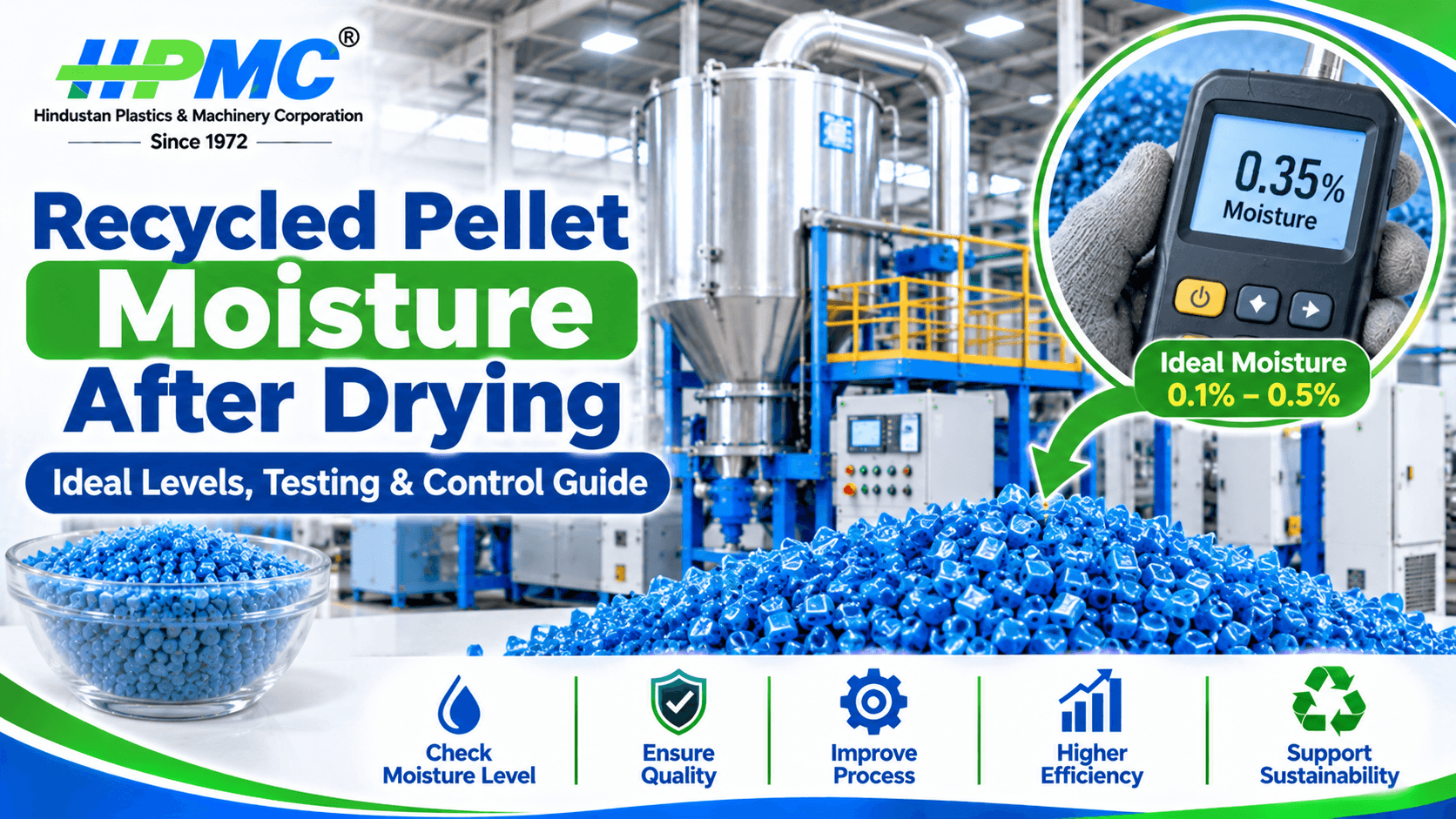
Moisture control is one of the most important factors in plastic recycling and pellet manufacturing. After washing, drying and extrusion, recycled plastic pellets must maintain suitable moisture conditions before they are packed, stored or used in further manufacturing processes. Excess moisture can affect material handling, processing stability, product appearance and the performance of the final plastic product. This is why Recycled Pellet Moisture After Drying is an important consideration for plastic recycling manufacturers.
Plastic pellets can retain moisture for different reasons, including insufficient drying, incorrect temperature settings, poor airflow, unsuitable storage conditions and moisture absorption during handling. Even when pellets appear dry from the outside, some materials may retain moisture internally.
Manufacturers need to understand how moisture enters recycled pellets, how to measure it accurately and how to maintain suitable drying conditions. Proper moisture management can help improve pellet consistency, reduce processing issues and maintain reliable production.
In this guide, we will explain the causes of moisture after drying, testing methods, drying equipment, common problems, prevention techniques and best practices for maintaining recycled pellet quality.
What Is Recycled Pellet Moisture After Drying?
Recycled Pellet Moisture After Drying refers to the amount of moisture remaining in plastic granules after they pass through a drying process.
During plastic recycling, waste materials may undergo sorting, washing, rinsing, dewatering, extrusion and pelletising. Washing introduces water into the material, while the drying stage reduces the remaining moisture before further processing or storage.
However, drying does not always remove all moisture. The final moisture content depends on the polymer type, pellet size, drying temperature, airflow, processing time and equipment performance.
Different polymers have different moisture absorption characteristics. For example, polyethylene and polypropylene generally absorb relatively little moisture, whereas hygroscopic materials such as PET, PA and certain engineering plastics may require more controlled drying.
For this reason, manufacturers should establish moisture limits according to the polymer supplier's recommendations and the requirements of the final application.
Why Is Moisture Control Important in Recycled Plastic Pellets?
Moisture management directly influences the quality and usability of recycled plastic granules.
1. Maintaining Pellet Quality
Excess moisture can affect pellet handling and may create processing problems during subsequent manufacturing. Maintaining appropriate moisture levels helps support consistent material quality.
2. Preventing Processing Defects
Moisture can turn into vapour when plastic is heated during extrusion or injection moulding. Depending on the polymer and processing conditions, this may contribute to bubbles, voids, surface marks and other defects.
3. Improving Production Stability
Consistent material moisture helps manufacturers maintain more predictable processing conditions. Uncontrolled moisture can create variations in melt behaviour and final product quality.
4. Supporting Better Storage
Properly dried pellets are easier to handle and store when suitable packaging and environmental controls are maintained. However, some polymers can absorb moisture again after drying.
5. Reducing Material Rejection
Poor moisture control can lead to inconsistent output and additional quality inspections. Maintaining suitable drying conditions helps reduce moisture-related production problems.
Common Causes of Moisture in Recycled Pellets After Drying
1. Insufficient Drying Time
One common reason for residual moisture is insufficient drying time. When pellets do not remain inside the drying system for the required duration, some moisture may remain in the material.
The required drying time depends on the polymer, initial moisture level, pellet size and dryer performance.
2. Incorrect Drying Temperature
Drying temperature must be suitable for the specific polymer. A temperature that is too low may not provide sufficient moisture removal, while excessive heat can damage sensitive materials or affect pellet properties.
Manufacturers should always follow the recommended temperature range for the material being processed.
3. Poor Airflow
Hot air needs to circulate properly throughout the drying system. Blocked filters, restricted air passages, damaged fans and incorrect airflow settings can reduce drying efficiency.
Uneven airflow may also result in some pellets drying more effectively than others.
4. High Initial Moisture Content
Washed plastic flakes and pellets can contain significant moisture before entering the drying stage. If mechanical dewatering is insufficient, the dryer may receive more water than it is designed to handle.
Proper dewatering before thermal drying can help reduce the workload on the drying system.
5. Incorrect Storage Conditions
Dried pellets may absorb moisture from humid surroundings, particularly when they are exposed to open air for extended periods.
Unsealed bags, uncovered storage containers and humid production areas can contribute to moisture reabsorption.
6. Dryer Maintenance Problems
Dirty filters, worn heating elements, damaged insulation and malfunctioning temperature sensors can affect dryer performance.
Regular equipment inspection is important for maintaining consistent drying conditions.
7. Uneven Pellet Size
Differences in pellet dimensions can affect heat transfer and drying consistency. Larger pellets may require different drying conditions compared with smaller granules.
Maintaining consistent pellet size can support more predictable drying performance.
How Does the Plastic Pellet Drying Process Work?
Plastic pellet drying involves reducing moisture through controlled heat and airflow. The exact process depends on the polymer and the drying technology used.
1. Material Collection
After washing, dewatering or pelletising, the plastic material is collected and transferred to the drying system.
2. Initial Moisture Removal
Mechanical dewatering can remove a substantial portion of surface water before thermal drying. This helps reduce the amount of moisture that the dryer needs to remove.
3. Controlled Heating
The drying system supplies heat according to the requirements of the polymer. Proper temperature control helps reduce moisture without unnecessarily affecting material properties.
4. Air Circulation
Airflow carries moisture away from the pellets. The effectiveness of this stage depends on air temperature, humidity, circulation and contact with the material.
5. Moisture Testing
After drying, samples should be tested using a suitable moisture measurement method. Testing helps determine whether the pellets meet the requirements of the next production stage.
6. Packaging and Storage
Once the material meets the required specifications, it should be transferred into suitable packaging or storage containers to minimise moisture reabsorption.
How to Measure Recycled Pellet Moisture After Drying
Accurate moisture measurement helps manufacturers identify drying problems and maintain consistent product quality.
1. Moisture Analyser
A suitable moisture analyser can measure the moisture content of a representative pellet sample. The testing method should be appropriate for the polymer and expected moisture range.
2. Karl Fischer Titration
Karl Fischer titration is a laboratory method used for determining water content. It can be suitable for applications that require accurate moisture measurement at relatively low levels.
3. Loss-on-Drying Method
In this method, a sample is weighed before and after controlled heating. The weight difference is used to estimate moisture and other volatile losses.
It is important to understand that loss-on-drying can include substances other than water, depending on the polymer and testing conditions.
4. Infrared Moisture Measurement
Certain infrared moisture analysers can be used for rapid testing. The equipment should be calibrated and validated for the specific polymer and sample type.
5. Regular Sample Testing
Manufacturers should collect representative samples from different production batches. Testing only one sample may not identify variations throughout the production process.
Factors That Affect Moisture Removal During Drying
Polymer Type
Different plastics have different moisture absorption properties. PET, nylon and other hygroscopic polymers may require specialised drying arrangements, while PE and PP generally have lower moisture absorption.
Initial Moisture Level
The amount of moisture present before drying influences the required processing time and drying conditions.
Pellet Size
Pellet dimensions influence heat transfer and moisture movement. Consistent pellet sizing can help improve drying uniformity.
Temperature Control
The correct drying temperature is essential for achieving the required moisture level without causing material degradation.
Airflow and Humidity
Drying air should have suitable temperature and moisture characteristics. Poor airflow or high air humidity can reduce moisture removal efficiency.
Equipment Design
Dryer capacity, insulation, heating arrangement, material residence time and airflow distribution all influence drying performance.
Common Problems Caused by Excess Moisture in Recycled Pellets
Bubbles During Extrusion
Moisture may vaporise when pellets enter a heated extrusion system, contributing to bubbles and voids in the processed material.
Poor Surface Finish
Excess moisture can contribute to surface defects in certain applications, depending on the polymer and processing conditions.
Inconsistent Product Quality
Variations in moisture between batches may lead to inconsistent processing and finished product characteristics.
Increased Processing Difficulties
Moisture-related problems may require additional drying, material inspection and process adjustments.
Material Wastage
If moisture causes defects in finished products, manufacturers may experience higher rejection rates and additional reprocessing requirements.
Best Practices to Reduce Moisture in Recycled Plastic Pellets
1. Improve Mechanical Dewatering
Remove as much surface water as practical before thermal drying. A suitable dewatering system can reduce the moisture load on downstream equipment.
2. Maintain Correct Drying Temperature
Set the dryer temperature according to the polymer supplier's recommendations. Avoid using the same drying temperature for every plastic material.
3. Maintain Proper Airflow
Clean filters, inspect fans and maintain unrestricted airflow throughout the drying system.
4. Use Suitable Drying Equipment
Select a dryer according to the polymer, material throughput, initial moisture level and required final moisture specification.
5. Test Moisture Regularly
Establish a routine testing procedure for every production batch or at an appropriate frequency based on the manufacturing process.
6. Store Pellets Properly
Use sealed bags, moisture-resistant containers or suitable storage arrangements. Hygroscopic materials may require moisture-protected packaging.
7. Maintain Drying Equipment
Inspect heating elements, sensors, filters, fans and insulation regularly. Preventive maintenance helps avoid unexpected performance variations.
8. Train Production Operators
Operators should understand material-specific drying requirements, moisture testing procedures and the correct response to abnormal readings.
Role of Plastic Recycling Machinery in Moisture Management
Moisture management begins before the drying stage. Washing, dewatering, feeding, extrusion, degassing and pelletising all influence the condition of recycled plastic material.
A properly designed recycling line should manage these stages according to the feedstock and final product requirements.
For example, HPMC's Wet Recycling Extrusion Line is designed for processing suitable moisture-bearing plastic flakes and films. Its advertised configuration includes moisture handling of up to 25%, subject to material and operating conditions.
For materials that require degassing during extrusion, a suitable Vented Recycling Plant can provide a dedicated venting section to help remove moisture, trapped air and certain volatile components.
The choice of equipment should always depend on polymer type, feedstock condition, required production capacity and final pellet specifications.
How to Maintain Consistent Recycled Pellet Quality
Maintaining consistent recycled pellet quality requires more than achieving a low moisture reading. Manufacturers should also monitor pellet size, contamination, colour, melt flow characteristics and other properties relevant to the final application.
The Two Stage Plastic Reprocess Extrusion Line is another equipment option that manufacturers can evaluate for applications requiring two sequential extrusion stages.
For further improvement in pellet production, the Strand Pelletizing Line explains the importance of cooling, strand handling and cutting conditions in achieving consistent pellet quality.
A complete recycling process should integrate suitable material preparation, moisture management, extrusion, filtration, cooling and pellet collection. Each stage should be monitored to maintain stable production.
Conclusion
Recycled Pellet Moisture After Drying is an important quality parameter in plastic recycling and reprocessing. Excess moisture can affect extrusion performance, pellet handling, surface quality and the consistency of finished plastic products.
Manufacturers can control these issues by selecting suitable drying equipment, maintaining correct temperature and airflow, improving mechanical dewatering, conducting regular moisture testing and storing dried pellets in appropriate conditions.
It is equally important to select recycling machinery according to the polymer type, feedstock moisture, required production capacity and final application. A properly maintained production line can help improve material consistency, reduce moisture-related defects and support reliable plastic recycling operations.</WritingBlock}
<WritingBlock id="73183" variant="document">## Contact Hindustan Plastics and Machinery Corporation (HPMC)
Hindustan Plastics and Machinery Corporation (HPMC) provides plastic extrusion, recycling and reprocessing machinery solutions for industrial applications. If you are facing moisture-related problems in recycled plastic pellets or planning to upgrade your recycling facility, HPMC can help you explore suitable machinery configurations.
Company: Hindustan Plastics and Machinery Corporation (HPMC)
Address: 5, Category II, DSIDC Industrial Area, Nangloi, Delhi – 110041, India
Phone: +91 95605 96392
Email: info@hindustanplastics.com
Website: https://www.hindustanplastics.com/
Request a Quote: https://www.hindustanplastics.com/get-in-touch
Google Business Profile: https://share.google/lBK4uD53HqY891ynv
When contacting HPMC, share your plastic material type, initial moisture level, required final moisture specification, production capacity and existing drying or recycling equipment details.
Contact HPMC today to discuss your plastic recycling requirements and find suitable machinery solutions for consistent recycled pellet production.
Frequently Asked Questions
Find quick answers to the most common questions about this topic.
It refers to the amount of water remaining in recycled plastic granules after the drying process. It is an important parameter for maintaining material quality and processing performance.
Common reasons include insufficient drying time, incorrect temperature, poor airflow, high initial moisture, equipment problems and moisture absorption during storage.
Moisture analysers, Karl Fischer titration and suitable laboratory testing methods can be used depending on the polymer and required accuracy.
Yes. Excess moisture can turn into vapour during heating and may contribute to bubbles, voids, surface defects and inconsistent processing.
Hygroscopic plastics such as PET, nylon and certain engineering polymers require particularly careful drying. PE and PP generally have lower moisture absorption.
A pellet dryer uses controlled heat and airflow to reduce moisture in plastic granules before storage or further manufacturing.
Yes. Certain polymers can absorb moisture from humid surroundings. Suitable packaging and controlled storage help prevent moisture reabsorption.
Poor airflow reduces the circulation of heated air and can result in uneven drying and higher residual moisture.
Testing frequency depends on production volume, polymer type and quality requirements. Regular batch testing is recommended to identify moisture variations.
HPMC offers plastic extrusion and recycling machinery solutions. Manufacturers can contact its team to discuss suitable equipment based on polymer type, moisture conditions and production requirements.