
Introduction
Plastic film recycling is an important part of the modern plastic processing industry. Recycling manufacturers process different types of lightweight plastic materials, including LDPE film, LLDPE film, HDPE film, agricultural film, packaging waste and industrial plastic scrap. However, handling these materials can create feeding challenges because plastic films are flexible, lightweight and difficult to move consistently through conventional feeding systems. One common problem is Plastic Film Compactor Feed Bridging.
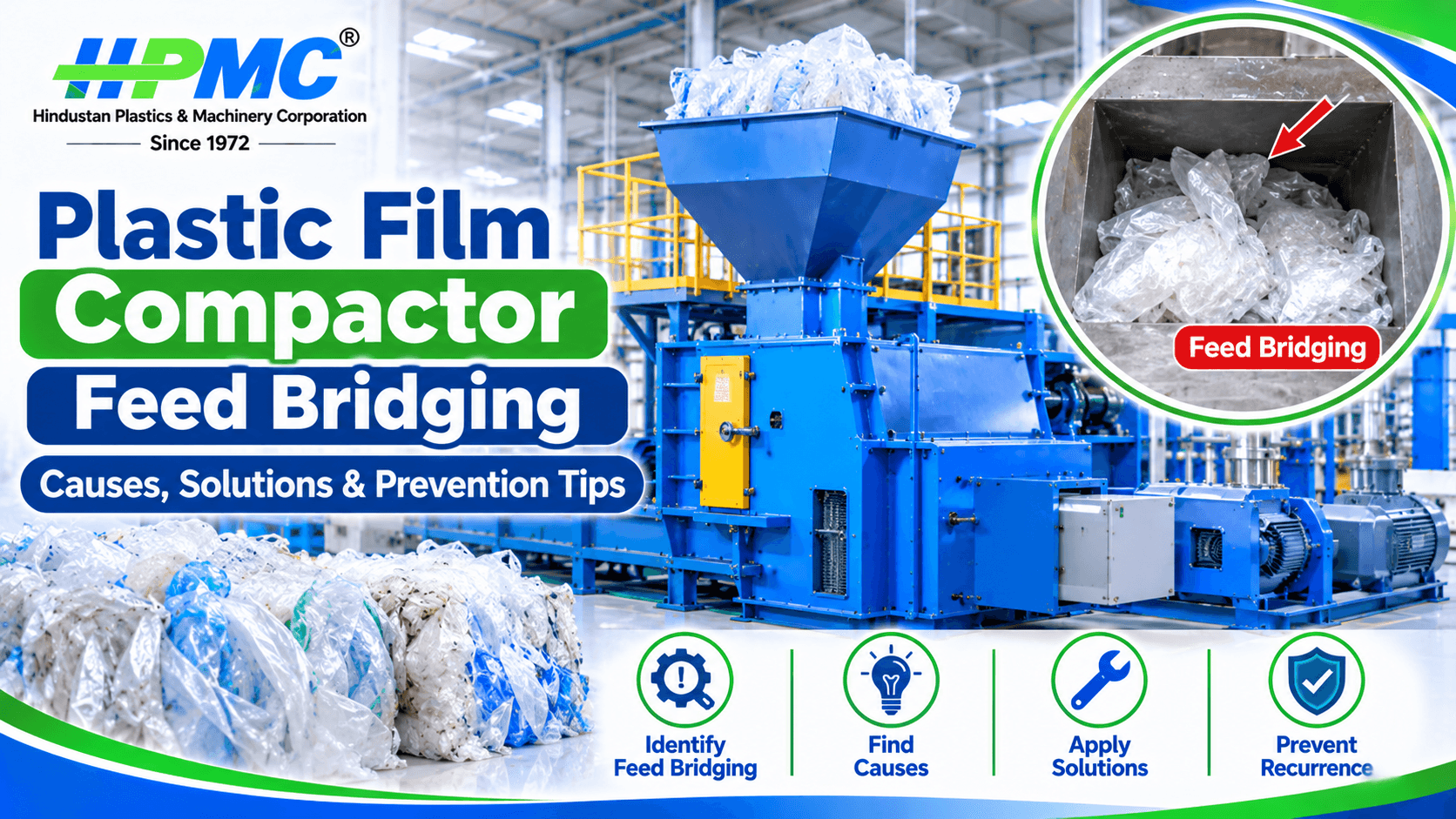
Feed bridging occurs when plastic film accumulates inside the compactor hopper and forms a layer or arch that prevents material from moving freely towards the cutting and compaction section. Even when sufficient plastic material is available inside the hopper, the machine may receive an inconsistent supply. This can result in unstable feeding, production interruptions, irregular compaction and reduced overall machine performance.
For recycling manufacturers, understanding the reasons behind feed bridging is essential for maintaining stable operations. Proper material preparation, hopper design, feeding arrangements and regular machine maintenance can help reduce this problem.
In this guide, we explain what plastic film compactor feed bridging is, why it happens, common warning signs, practical solutions, preventive maintenance and important considerations when selecting a plastic recycling compactor.
What Is Plastic Film Compactor Feed Bridging?
Plastic Film Compactor Feed Bridging is a feeding problem in which lightweight plastic film forms a blockage or bridge inside the hopper instead of moving smoothly towards the compaction chamber.
Plastic film materials behave differently from rigid plastic scrap. Their flexible structure allows them to fold, overlap, stick together and form large bundles. When these materials accumulate inside the hopper, they may create a temporary blockage that interrupts normal feeding.
The compactor is designed to cut, mix, densify and prepare suitable plastic waste before it enters the recycling extrusion process. When material cannot move properly through the feeding area, the machine may experience irregular loading and inconsistent output.
Feed bridging can occur with different types of flexible plastic waste, depending on film size, material condition, feeding method, hopper design and machine configuration.
Why Does Feed Bridging Occur in Plastic Film Compactors?
1. Low Bulk Density of Plastic Film
Plastic film has a low bulk density compared with many rigid plastic materials. Large quantities of film can occupy considerable space while containing relatively little material by weight.
When lightweight film enters the hopper, it may spread unevenly and accumulate around the feeding walls. This can prevent material from moving towards the compaction section.
2. Flexible Nature of Plastic Material
Flexible plastic films can fold, twist and overlap during feeding. Multiple layers may become entangled and create a bridge inside the hopper.
This behaviour is particularly common when processing loose packaging films, shopping bags and agricultural plastic waste.
3. Incorrect Hopper Design
Hopper dimensions, wall angles, opening size and feeding arrangements influence how material moves towards the compactor.
If the hopper is unsuitable for the actual film material, waste may accumulate around certain areas instead of moving smoothly towards the processing chamber.
4. Excessive Material Feeding
Feeding a large quantity of plastic film at once can create an uneven material load. When the hopper receives more material than the feeding mechanism can process, film may accumulate and form a blockage.
5. Moisture and Contamination
Wet plastic film, dirt, labels and other contaminants can influence material handling. Depending on the feedstock condition, these materials may increase the tendency of film to stick together or form compacted bundles.
6. Inconsistent Film Size
Large sheets, long strips and irregular film pieces can become tangled during feeding. If the incoming material is not properly prepared, it may create unstable feeding conditions.
Common Signs of Plastic Film Compactor Feed Bridging
Identifying feed bridging early can help manufacturers prevent unnecessary production interruptions.
1. Irregular Material Feeding
One of the first signs is inconsistent material movement from the hopper into the compaction chamber. The machine may receive material in irregular quantities instead of a continuous supply.
2. Empty Feeding Chamber Despite a Full Hopper
The hopper may appear full, but the material is not reaching the processing section. This is a common indication that film has formed a bridge.
3. Fluctuating Motor Load
When material feeding becomes irregular, the motor load may also fluctuate depending on the machine design and operating conditions.
4. Reduced Production Output
Feed bridging can interrupt the material supply and reduce the amount of plastic processed during a production shift.
5. Frequent Operator Intervention
Operators may need to stop the machine and investigate the feeding problem repeatedly. Frequent intervention can affect production planning and labour efficiency.
6. Inconsistent Compaction
When the material supply is unstable, the compactor may not receive a consistent quantity of plastic film. This can influence the quality and consistency of the prepared material.
How to Prevent Plastic Film Compactor Feed Bridging
1. Select a Suitable Hopper Design
The hopper should be designed according to the type of plastic film being processed. Its dimensions, wall angles and feeding opening should support suitable material movement.
Manufacturers should consider the actual feedstock rather than selecting hopper dimensions only according to machine size.
2. Maintain Controlled Material Feeding
Avoid overloading the hopper with excessive quantities of film. A controlled feeding arrangement helps maintain a more consistent material supply.
The feeding rate should be coordinated with the compactor's processing capability.
3. Prepare Plastic Film Before Feeding
Material preparation can help reduce feeding difficulties. Large film bundles and unsuitable oversized pieces should be managed according to the machine's feeding requirements.
For applications involving large film waste, a suitable Film Shredder for Plastic Recycling can be considered as part of the material preparation process.
4. Maintain Proper Material Quality
Remove unsuitable contaminants and separate materials according to the recycling process requirements. Proper sorting and preparation can improve material handling.
5. Inspect the Feeding Mechanism
Regularly inspect the feeding components, rotating parts, cutting arrangement and other relevant mechanical components. Worn or damaged parts may affect material movement.
6. Monitor Machine Performance
Observe material movement, motor load, feeding consistency and production output. Identifying unusual changes early can help prevent repeated feeding interruptions.
Role of a Plastic Film Compactor in Recycling Operations
A plastic film compactor is an important component in many plastic recycling extrusion lines. It prepares lightweight film waste before the material enters the extruder.
The compactor generally performs cutting, mixing, frictional heating and densification according to its design. These operations help reduce the handling difficulties associated with loose plastic film and prepare the material for further processing.
A suitable Recycling Plant with Compactor can be configured for compatible materials such as LDPE, HDPE, LLDPE, PP films and other suitable plastic waste.
The actual machine configuration should be selected according to polymer type, material condition, contamination level and required production capacity.
How Feed Bridging Affects Recycling Production
Reduced Feeding Efficiency
When material stops moving freely inside the hopper, the extruder may not receive a consistent supply of prepared plastic.
Increased Production Downtime
Repeated feeding interruptions require operator attention and troubleshooting. This can reduce productive operating time.
Unstable Extrusion Conditions
Inconsistent material supply can influence the feeding conditions of the downstream extruder. Depending on the system, this may contribute to variations in processing performance.
Increased Operating Costs
Repeated stoppages, additional operator intervention and unnecessary maintenance can increase operating costs.
Difficulty Maintaining Production Targets
When the feeding process is unstable, manufacturers may find it difficult to maintain planned production schedules and output targets.
Maintenance Checklist for Plastic Film Compactor Feeding Systems
Preventive maintenance is important for reducing feeding problems and maintaining consistent machine operation.
Manufacturers should include the following activities in their maintenance programme:
- Inspect the hopper for accumulated plastic film.
- Check the hopper walls for material deposits.
- Inspect feeding components for wear.
- Check the condition of cutting blades.
- Inspect the motor and gearbox according to manufacturer recommendations.
- Monitor unusual vibration and noise.
- Check relevant electrical connections and safety devices.
- Inspect the feeding opening for obstructions.
- Clean accessible areas using approved procedures.
- Record recurring feeding problems and maintenance activities.
Before inspecting or clearing a blockage, stop and isolate the machine according to the manufacturer's lockout and safety procedure. Never reach into an operating hopper or use hands to remove trapped material.
Choosing the Right Plastic Film Compactor for Your Recycling Plant
Selecting the right machine is important for maintaining reliable feeding and processing performance.
1. Consider the Plastic Material
Identify whether you are processing LDPE, LLDPE, HDPE, PP film, agricultural film or mixed plastic waste. Different materials have different feeding and processing characteristics.
2. Evaluate Material Condition
Check whether the incoming film is clean, washed, wet, dry, contaminated or mixed with other materials.
3. Check Required Production Capacity
Discuss your target processing capacity with the machine manufacturer. The hopper, compaction chamber, motor and downstream extruder should be appropriately matched.
4. Review Hopper and Feeding Design
Ask about the feeding arrangement and whether it is suitable for the size, flexibility and bulk density of your plastic film.
5. Evaluate Maintenance Requirements
Check access for inspection, cleaning, blade replacement and servicing. Easy maintenance can help reduce avoidable production interruptions.
6. Check Complete Recycling Line Compatibility
A compactor should be selected as part of the complete recycling process. Consider the extruder, filtration system, degassing arrangement and pelletising equipment.
Manufacturers looking for additional information about complete film recycling systems can explore the Film Grade Plastic Recycling Machine Guide.
Importance of Compactor and Extruder Synchronisation
The compactor and extruder should operate together as a coordinated production system.
The compactor prepares the lightweight plastic film and supplies material to the extrusion section. The extruder melts and processes the prepared plastic before it moves through filtration and pelletising equipment.
If the material feeding rate is inconsistent, the extruder may experience variations in material supply. This can influence processing stability and overall production performance.
Manufacturers should therefore evaluate the compactor feeding arrangement, extruder capacity, screw configuration and control system together.
For applications requiring suitable degassing during plastic recycling, a Vented Recycling Plant may also be considered depending on the feedstock and processing requirements.
Best Practices for Improving Plastic Film Compactor Performance
Maintain Consistent Feeding
Provide material at a controlled rate that matches the machine's operating requirements.
Avoid Unnecessary Overloading
Excessive material loading can increase the risk of bridging and irregular feeding.
Follow Recommended Operating Settings
Use the machine manufacturer's recommended operating parameters and avoid unauthorised adjustments.
Train Machine Operators
Operators should understand the warning signs of bridging, safe shutdown procedures and routine inspection requirements.
Monitor Production Records
Maintain records of feeding interruptions, material types, machine settings and maintenance activities. These records can help identify recurring problems.
Work With a Suitable Machine Manufacturer
Discuss your actual film material and operating requirements with the machinery supplier before finalising a compactor configuration.
Conclusion
Plastic Film Compactor Feed Bridging is a common feeding challenge in plastic film recycling because lightweight and flexible materials can accumulate inside the hopper instead of moving smoothly towards the compaction chamber.
Low bulk density, film entanglement, unsuitable hopper design, excessive feeding and inconsistent material preparation are some of the factors that can contribute to this issue.
Manufacturers can reduce feeding interruptions by selecting a suitable hopper design, maintaining controlled feeding, preparing incoming film properly and following a preventive maintenance schedule.
A properly configured compactor, combined with a compatible extrusion and pelletising system, helps support stable recycling operations. Understanding the actual feedstock and production requirements is essential when selecting machinery for long-term industrial use.
Contact Hindustan Plastics and Machinery Corporation (HPMC)
Hindustan Plastics and Machinery Corporation (HPMC) provides plastic extrusion, compounding and recycling machinery solutions for different industrial applications. Manufacturers planning a plastic film recycling plant or looking to improve their existing feeding and compaction arrangement can contact HPMC to discuss suitable machine configurations.
Company: Hindustan Plastics and Machinery Corporation (HPMC)
Address: 5, Category II, DSIDC Industrial Area, Nangloi, Delhi – 110041, India
Phone: +91 95605 96392
Email: info@hindustanplastics.com
Website: https://www.hindustanplastics.com/
Request a Quote: https://www.hindustanplastics.com/get-in-touch
Google Business Profile: https://share.google/lBK4uD53HqY891ynv
When contacting HPMC, share the type of plastic film, material size, contamination level, moisture condition, expected processing capacity and desired recycled output.
Contact HPMC today to discuss your plastic film compactor requirements and explore suitable recycling machinery solutions for your business.
Frequently Asked Questions
Find quick answers to the most common questions about this topic.
Plastic Film Compactor Feed Bridging occurs when lightweight plastic film forms an arch or blockage inside the hopper and prevents material from moving properly towards the compaction chamber.
Common causes include low material bulk density, flexible film entanglement, unsuitable hopper design, excessive feeding and inconsistent material preparation.
Lightweight LDPE, LLDPE, HDPE and PP films may create feeding challenges because of their flexible structure and low bulk density. Actual behaviour depends on material size and condition.
Manufacturers can improve feeding by selecting a suitable hopper design, controlling material input, preparing the film properly and maintaining the feeding mechanism.
Yes. Depending on the material and its condition, moisture can influence how plastic films stick together and move through the feeding system.
Common signs include irregular material movement, a full hopper with an empty feeding chamber, fluctuating motor load, reduced production output and frequent operator intervention.
A properly configured compactor can cut, densify and prepare suitable lightweight plastic films before extrusion, supporting more manageable feeding and processing.
Yes. Unsuitable hopper dimensions, wall angles and feeding openings can contribute to material accumulation and interrupted feeding.
Inspection frequency depends on production intensity, feedstock condition and machine design. Manufacturers should follow the recommended maintenance schedule and inspect the feeding system regularly.
Consider plastic type, material condition, required capacity, hopper design, feeding arrangement, motor configuration, downstream extruder compatibility and technical support before purchasing.