Introduction
PVC profile manufacturing requires accurate dimensions, consistent shapes and a smooth surface finish. These qualities depend on several factors, including material preparation, extrusion conditions, die design, calibration and cooling. Among these components, the calibration sleeve plays an important role in maintaining the required profile shape during production.
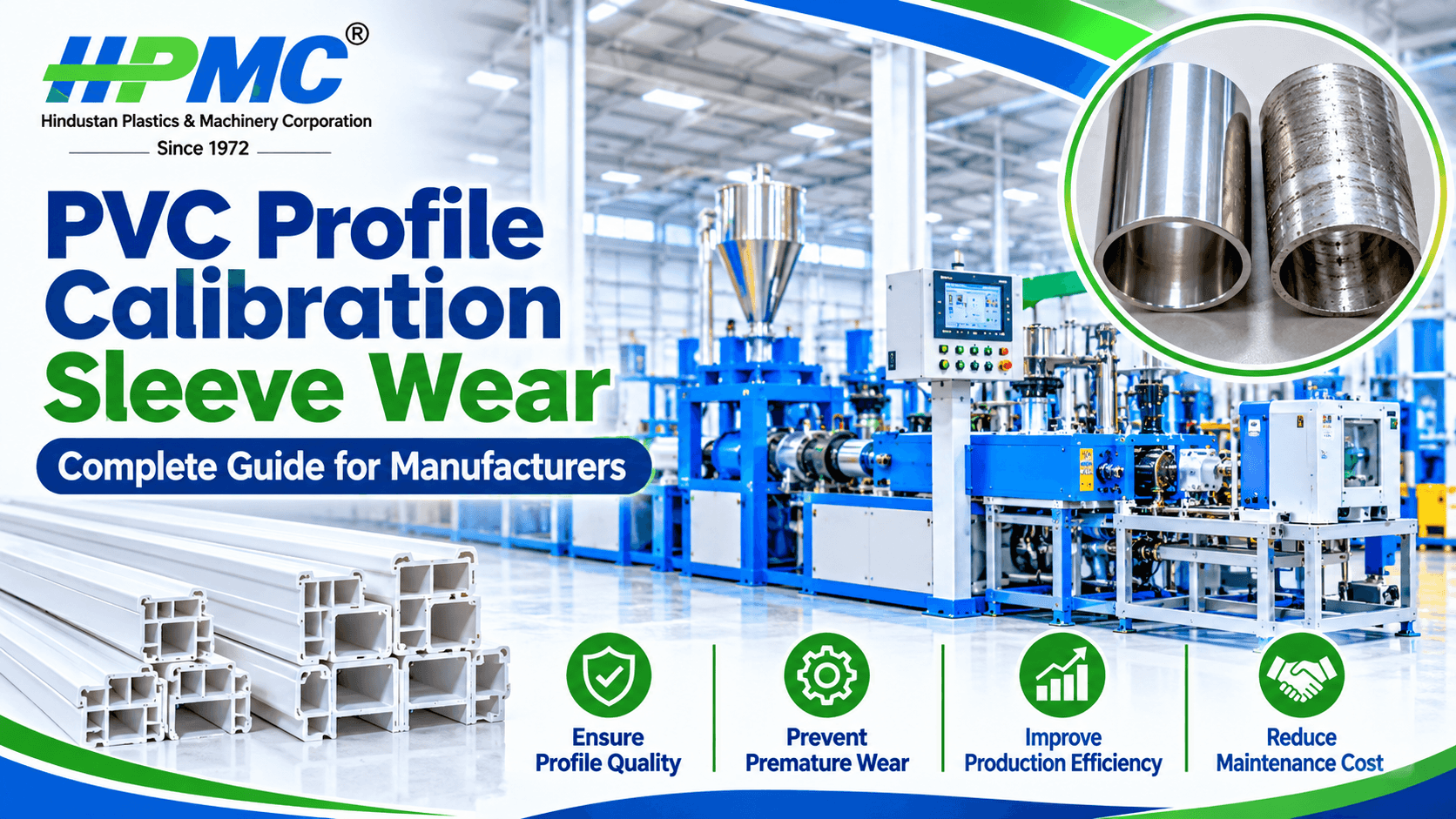
PVC Profile Calibration Sleeve Wear is a common maintenance concern in continuous extrusion operations. During regular production, calibration sleeves are exposed to repeated contact, temperature variations, material deposits and cleaning activities. Over time, these conditions can affect the sleeve surface and its ability to support consistent profile calibration.
When calibration sleeve wear is not identified at the right time, manufacturers may experience dimensional variations, surface marks, profile deformation and unnecessary production adjustments. These problems can affect finished product quality and increase maintenance requirements.
Understanding the causes of calibration sleeve wear, identifying early warning signs and following suitable maintenance practices can help manufacturers maintain stable extrusion operations. This guide explains how calibration sleeves work, why wear develops, how it affects PVC profile quality and what manufacturers can do to prevent unnecessary equipment damage.
What Is a PVC Profile Calibration Sleeve?
A PVC profile calibration sleeve is an important component of the calibration arrangement used in PVC profile extrusion. It helps support the required profile geometry after the hot material leaves the extrusion die.
During production, the extruded PVC profile passes through calibration and cooling equipment. The calibration arrangement helps establish the required dimensions and shape while the material gradually cools and becomes stable.
Calibration sleeves are designed according to the profile shape, dimensions and machine configuration. Their contact surfaces must maintain suitable conditions to support consistent profile formation.
During continuous production, friction, material deposits, incorrect cleaning and operating conditions can gradually affect the sleeve surface. This deterioration is known as calibration sleeve wear.
A properly maintained calibration sleeve supports consistent profile quality, whereas a damaged or worn surface may contribute to dimensional variation and visible defects.
How Does a Calibration Sleeve Work in PVC Profile Extrusion?
The calibration sleeve works as part of the downstream extrusion system. Its function is connected with the die, calibration table, cooling system and haul-off unit.
1. Material Preparation
The process begins with preparing the required PVC formulation. PVC resin is mixed with suitable stabilisers, lubricants, pigments, processing aids and other additives according to the intended application.
Consistent material preparation helps maintain stable processing conditions.
2. PVC Extrusion
The prepared material enters the extruder, where controlled heat and mechanical action plasticise the PVC compound. The processed material then moves towards the profile die.
3. Profile Formation
The profile die gives the molten PVC its required cross-sectional shape. The design and condition of the die influence material distribution and the dimensions of the extruded profile.
4. Calibration
After leaving the die, the hot profile enters the calibration arrangement. The calibration sleeve and associated equipment help maintain the required profile dimensions and geometry.
5. Cooling
The profile passes through the cooling section, where its temperature gradually decreases. Proper cooling helps the material retain its intended shape.
6. Haul-Off and Cutting
The haul-off unit pulls the profile through the production line at a controlled speed. The cutting system then separates the finished profile into the required lengths.
Each stage contributes to finished product quality. Manufacturers should therefore maintain the complete extrusion line rather than focusing only on the calibration sleeve.
Common Causes of PVC Profile Calibration Sleeve Wear
Calibration sleeve wear can develop due to several mechanical and operational factors. Identifying the actual cause is important before deciding whether cleaning, repair or replacement is required.
1. Continuous Production and Surface Friction
During continuous extrusion, the profile moves through the calibration arrangement. Repeated contact may gradually affect the surface condition of the sleeve.
Long production hours without suitable inspection can allow minor surface deterioration to develop into a larger maintenance concern.
2. Improper Cleaning Practices
Calibration sleeves require regular cleaning to remove PVC deposits and material residues. However, using unsuitable tools, abrasive materials or aggressive cleaning methods may damage the finished surface.
Manufacturers should follow approved cleaning procedures and avoid unnecessary mechanical abrasion.
3. Material Deposits and Contamination
PVC compound deposits may accumulate on calibration surfaces during production. If these deposits are not removed properly, they can create uneven contact conditions and affect the finished profile surface.
Material contamination may also increase cleaning requirements and make regular inspection more important.
4. Incorrect Operating Conditions
Unsuitable vacuum settings, cooling conditions or production speeds may create additional stress on the calibration arrangement.
Operating conditions should be adjusted according to the profile design, PVC formulation and equipment specifications.
5. Poor Cooling-Water Quality
Water used in calibration and cooling systems may contain minerals or impurities. Over time, deposits can develop on equipment surfaces and inside water passages.
These deposits may affect cooling performance and increase maintenance requirements.
6. Incorrect Installation and Alignment
Improper installation or alignment can create uneven contact between the profile and calibration sleeve. This may result in localised wear, inconsistent profile dimensions or additional friction.
7. Natural Component Ageing
Like other production components, calibration sleeves have a service life. Continuous operation, maintenance history, surface quality and production conditions influence how quickly the component deteriorates.
Warning Signs of Calibration Sleeve Wear
Manufacturers should monitor calibration sleeve condition regularly because early signs of wear are generally easier to investigate than severe damage.
1. Scratches and Surface Marks
Visible scratches, rough areas or irregular surface marks may indicate damage to the calibration sleeve. The affected area should be inspected to determine whether it influences profile calibration or finished product quality.
2. Profile Dimension Variation
If the finished profile does not maintain consistent dimensions, the calibration system should be inspected. Sleeve wear is one possible cause. Die condition, material flow, cooling and haul-off settings should also be checked.
3. Uneven Surface Finish
A worn or contaminated sleeve may contribute to visible marks or irregularities on the finished profile. Operators should compare the affected areas with the calibration arrangement to identify the possible source.
4. Frequent Production Adjustments
If operators repeatedly need to adjust calibration settings to maintain the same profile dimensions, the sleeve condition should be checked along with other process parameters.
5. Increased Cleaning Requirements
Frequent deposits or difficult cleaning may indicate changes in surface condition or process stability. The underlying cause should be identified instead of depending only on repeated cleaning.
How Calibration Sleeve Wear Affects PVC Profile Quality
Calibration sleeve condition can influence several aspects of finished product quality.
Dimensional Accuracy
A calibration sleeve helps maintain the intended profile geometry. Wear or damage may affect its ability to support consistent dimensions.
Manufacturers should regularly inspect profile measurements to identify unexpected dimensional changes.
Surface Finish
Scratches, deposits and damaged contact surfaces can contribute to visible marks on the finished profile. These defects may affect the appearance of window frames, door sections and other PVC profile products.
Profile Shape
Incorrect calibration or uneven support may contribute to profile deformation, depending on the product design and extrusion arrangement.
Production Stability
Worn components can increase the need for process adjustments, inspections and maintenance activities.
Material Rejection
If dimensional or surface defects exceed customer acceptance requirements, finished profiles may need to be rejected or reprocessed.
For a better understanding of common extrusion-related problems, manufacturers can also refer to HPMC's Common PVC Pipe Extrusion Defects and Their Causes.
How to Prevent PVC Profile Calibration Sleeve Wear
Preventive maintenance is one of the most effective ways to maintain calibration equipment in suitable operating condition.
1. Follow a Regular Inspection Schedule
Inspect the sleeve surface at suitable intervals according to production hours and the manufacturer's maintenance recommendations. Look for scratches, deposits, deformation and visible surface damage.
2. Use Approved Cleaning Methods
Clean the calibration sleeve using recommended tools and procedures. Avoid abrasive materials or cleaning methods that may damage the surface finish.
3. Maintain Proper Water Quality
Check the cooling-water supply and circulation system regularly. Suitable water treatment and routine cleaning can help reduce mineral deposits.
4. Verify Calibration Alignment
Ensure that the sleeve is correctly installed and aligned with the die and downstream equipment. Incorrect alignment may create uneven contact and localised wear.
5. Monitor Production Conditions
Maintain suitable vacuum, cooling, haul-off and extrusion settings. Avoid making unnecessary adjustments without identifying the actual cause of the problem.
6. Maintain Accurate Records
Keep records of sleeve inspections, cleaning, repairs, replacement dates and recurring production issues. These records help maintenance teams understand wear patterns and plan preventive maintenance.
7. Replace Damaged Components When Necessary
If the sleeve has severe scratches, deformation or dimensional damage, consult the equipment supplier about repair or replacement.
Calibration Sleeve Inspection and Maintenance Checklist
A structured maintenance checklist helps operators identify early signs of wear and maintain consistent production conditions.
Important inspection points include:
- Check the internal calibration surface for scratches.
- Inspect the sleeve for material deposits.
- Look for visible deformation or damaged edges.
- Check sleeve installation and alignment.
- Inspect vacuum passages where applicable.
- Verify cooling-water circulation.
- Check for mineral deposits and contamination.
- Review finished profile dimensions.
- Inspect profile surfaces for unusual marks.
- Record inspection findings and maintenance activities.
The inspection frequency should depend on production conditions, equipment design and the manufacturer's recommendations.
Before starting a new production line, manufacturers can also refer to HPMC's PVC Pipe Line Commissioning Checklist for relevant equipment inspection and commissioning guidance.
How to Select a Quality PVC Profile Calibration Sleeve
Selecting a suitable calibration sleeve is important for manufacturers who want consistent profile dimensions and reliable production.
Material Quality
Evaluate the sleeve material and its suitability for the intended production application. The material should provide appropriate wear resistance, surface finish and dimensional stability.
Surface Finish
The internal contact surface should have the required finish for the specific profile and calibration arrangement. Surface quality can influence profile appearance and calibration performance.
Profile Compatibility
Different PVC profile designs require different calibration arrangements. The sleeve should be suitable for the profile geometry, dimensions and production requirements.
Machine Compatibility
Check the sleeve dimensions, mounting arrangement and compatibility with existing calibration equipment.
Maintenance Requirements
Understand the cleaning, inspection and replacement requirements before purchasing a new component.
Supplier Support
Discuss technical specifications, installation instructions, spare parts and maintenance support with the equipment supplier.
Manufacturers planning a complete production setup can explore HPMC's PVC Profile Machine Manufacturers Complete Buying Guide.
Role of the Extrusion Line in Calibration Sleeve Performance
Calibration sleeve performance cannot be considered separately from the complete PVC profile extrusion line.
Several connected components influence the conditions under which the sleeve operates.
Extruder: Processes the PVC compound and supplies material to the profile die.
Profile Die: Forms the required cross-sectional shape and controls material distribution.
Calibration System: Helps establish and maintain the intended profile dimensions.
Cooling System: Stabilises the extruded profile during production.
Haul-Off Unit: Pulls the profile through the line at a controlled speed.
Cutting Machine: Separates the finished profile into the required lengths.
When these components operate together correctly, manufacturers can maintain more consistent production conditions.
For manufacturers evaluating their extrusion equipment, HPMC's Conical Twin Screw Plant for PVC Profile provides additional information about PVC profile production machinery.
When Should a Calibration Sleeve Be Replaced?
Not every surface mark means that the sleeve must be replaced. The decision should be based on the actual condition of the component and its effect on production.
Replacement or professional assessment may be necessary when:
- Deep scratches affect the calibration surface.
- The sleeve has visible deformation.
- Required dimensions cannot be maintained despite correct process settings.
- Surface damage repeatedly transfers marks to finished profiles.
- Cleaning no longer restores suitable surface conditions.
- The sleeve does not meet the required inspection criteria.
Where repair is possible, it should only be carried out using an approved process that maintains the required dimensions and surface finish.
The replacement decision should be made with reference to the sleeve manufacturer's specifications.
Benefits of Proper Calibration Sleeve Maintenance
Regular maintenance provides several operational advantages for PVC profile manufacturers.
Consistent Profile Quality
A suitable calibration surface helps support consistent profile dimensions and appearance.
Reduced Production Interruptions
Identifying wear early helps maintenance teams plan repairs or replacements before major production issues develop.
Better Component Life
Correct cleaning, installation and operating practices can help prevent premature sleeve damage.
Reduced Material Waste
Maintaining stable calibration conditions can help reduce avoidable production defects and rejected profiles.
Improved Production Planning
Maintenance records help manufacturers plan component replacement and minimise unexpected interruptions.
Why Choose HPMC for PVC Extrusion Machinery?
Hindustan Plastics and Machinery Corporation (HPMC) has been associated with plastic extrusion machinery manufacturing since 1972.
HPMC provides extrusion machinery solutions for different plastic processing and profile manufacturing applications.
For manufacturers planning PVC profile production, selecting suitable extrusion machinery is only one part of the project. The die, calibration system, cooling arrangement, haul-off and cutting equipment should also be selected according to the intended profile design and production requirements.
A properly configured production line, combined with suitable maintenance practices, helps manufacturers work towards consistent product dimensions and reliable production.
Manufacturers can also explore HPMC's Window Profile Machine Manufacturers Complete Guide to understand the equipment and production requirements for PVC and UPVC window profile manufacturing.
Conclusion
PVC Profile Calibration Sleeve Wear is an important maintenance concern in continuous profile extrusion manufacturing. A worn or damaged sleeve can contribute to dimensional variation, surface marks, profile deformation and increased production adjustments.
Manufacturers can reduce these problems by inspecting calibration surfaces regularly, following approved cleaning procedures, maintaining suitable cooling conditions and checking correct sleeve alignment.
It is also important to monitor the complete extrusion line because die condition, material consistency, haul-off speed and cooling performance can influence calibration results.
With proper inspection, preventive maintenance and timely replacement of damaged components, manufacturers can support stable production and maintain consistent PVC profile quality.
If you are planning a new PVC profile extrusion setup or looking to improve an existing production line, contact HPMC to discuss suitable machinery solutions and technical requirements.
Contact Hindustan Plastics and Machinery Corporation (HPMC)
Company: Hindustan Plastics and Machinery Corporation (HPMC)
Address: 5, Category II, DSIDC Industrial Area, Nangloi, Delhi – 110041, India
Phone: +91 95605 96392
Email: info@hindustanplastics.com
Website: https://www.hindustanplastics.com/
Request a Quote: Contact HPMC
Google Business Profile: View HPMC on Google
When contacting HPMC, share your PVC profile type, profile dimensions, material formulation, existing extrusion line configuration, calibration sleeve condition, expected processing capacity and desired production output to discuss a suitable machinery solution.
Frequently Asked Questions
Find quick answers to the most common questions about this topic.
PVC Profile Calibration Sleeve Wear refers to the gradual deterioration of the calibration sleeve surface due to continuous production, friction, cleaning activities and operating conditions.
Common causes include continuous friction, improper cleaning, material deposits, incorrect installation, unsuitable operating conditions and natural component ageing.
Wear may contribute to dimensional variation, surface marks, inconsistent profile shapes and increased production adjustments.
Visible scratches, rough surfaces, damaged edges, recurring profile marks and difficulty maintaining dimensions may indicate sleeve wear.
Yes. A damaged or worn sleeve may affect the calibration process. However, die alignment, cooling conditions and haul-off settings should also be inspected.
Inspection frequency depends on production hours, sleeve material and operating conditions. Follow the equipment manufacturer's recommended maintenance schedule.
Use approved cleaning methods, maintain suitable water quality, verify installation alignment and inspect the sleeve regularly.
Replacement may be necessary when deep scratches, deformation or surface damage affect calibration performance and cannot be corrected through approved maintenance.
Yes. Poor water quality may cause mineral deposits and contamination in the calibration and cooling system, increasing cleaning and maintenance requirements.
Calibration helps maintain the required profile dimensions and shape after the material leaves the extrusion die. It supports dimensional consistency and finished product quality.