
Introduction
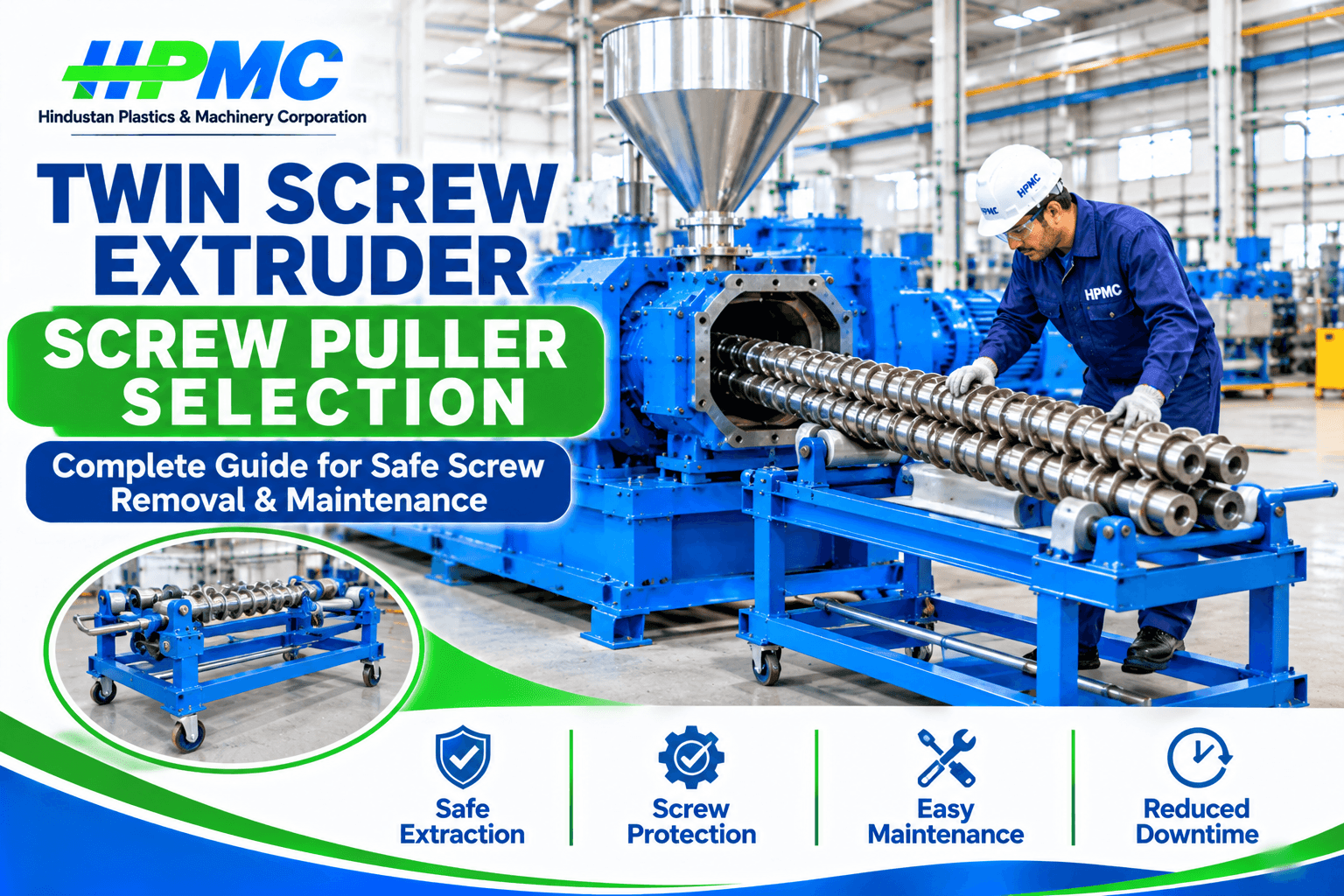
A twin screw extruder is an important machine used in plastic compounding, masterbatch production, polymer processing and plastic recycling. Its performance depends on several mechanical components, including screws, barrels, gearbox, drive system and feeding arrangements. Among the important maintenance activities, removing and inspecting the screws requires suitable equipment and careful handling. This is where Twin Screw Extruder Screw Puller Selection becomes important.
A screw puller is a mechanical handling or extraction arrangement designed to help remove the screw assembly from an extruder during maintenance, cleaning, inspection or replacement. Selecting the correct screw puller can make the maintenance process more controlled while reducing the risk of damaging expensive screw elements and related machine components.
An unsuitable extraction arrangement may create handling difficulties, uneven loading, alignment problems or unnecessary stress on mechanical components. It can also increase maintenance time and create additional safety risks for operators.
For manufacturers operating twin screw extrusion lines, selecting a suitable screw puller should be part of the overall equipment maintenance planning process. This guide explains the important factors involved in Twin Screw Extruder Screw Puller Selection, including machine compatibility, screw dimensions, extraction capacity, safety features, maintenance requirements and common selection mistakes.
What Is a Twin Screw Extruder Screw Puller?
A twin screw extruder screw puller is an equipment arrangement used to assist in withdrawing screw assemblies from an extruder barrel. It is particularly useful when screws require inspection, cleaning, servicing or replacement.
Twin screw extruders contain two screw shafts that work together during material conveying, melting and mixing. Depending on the machine design, screw assemblies can be long, heavy and difficult to handle manually.
A suitable screw extraction system provides controlled support during removal and helps maintenance personnel handle the screw assembly more safely.
The exact puller arrangement depends on the extruder manufacturer, screw design, machine size, extraction direction and maintenance requirements.
Why Is Screw Puller Selection Important?
Choosing the correct screw puller is important because screw removal is a mechanical maintenance activity that requires proper support and alignment.
1. Supports Safe Screw Removal
Twin screw assemblies can have considerable weight and length. A suitable extraction arrangement helps support the assembly during removal and reduces dependence on manual handling.
2. Helps Protect Screw Elements
Screw elements can have carefully designed conveying and mixing profiles. Improper handling may damage their surfaces or create difficulties during reinstallation.
3. Reduces Maintenance Time
A compatible screw puller can make planned screw removal more organised. This helps maintenance teams complete inspection and cleaning activities more efficiently.
4. Supports Proper Alignment
Alignment is important when withdrawing long screw assemblies. An appropriate extraction system helps maintain controlled movement and reduces the risk of unwanted contact with surrounding components.
5. Improves Maintenance Planning
A suitable screw puller allows manufacturers to plan routine screw inspection, cleaning and replacement activities as part of their preventive maintenance programme.
Twin Screw Extruder Screw Puller Selection: Important Factors to Consider
1. Extruder Model and Machine Compatibility
The first step is to identify the exact twin screw extruder model. Different machines have different barrel arrangements, screw dimensions, extraction directions and maintenance requirements.
A screw puller suitable for one machine may not be compatible with another model.
Before selecting equipment, check:
- Extruder manufacturer and model.
- Screw configuration.
- Barrel dimensions.
- Screw extraction direction.
- Available maintenance space.
- Existing screw removal arrangement.
Manufacturers should confirm compatibility with the original equipment manufacturer or a qualified machinery supplier before purchasing an extraction system.
2. Screw Length and Diameter
Screw dimensions are among the most important selection considerations.
Long screw assemblies require adequate support throughout the extraction process. Their diameter also influences the design of the supporting and gripping arrangements.
Consider the complete screw assembly rather than looking only at the screw diameter. The extraction equipment should accommodate the actual dimensions and configuration of the components being removed.
3. Screw Assembly Weight
The total weight of the screw assembly must be considered when selecting a screw puller.
Weight depends on screw length, diameter, material, element configuration and other design characteristics.
The extraction system should have a suitable rated capacity for the complete assembly, including any handling accessories used during removal.
Never assume that a puller has sufficient capacity based only on its physical appearance. Verify the rated working load and manufacturer's documentation.
4. Extraction Force and Pulling Mechanism
The pulling mechanism should provide controlled movement appropriate for the machine design.
Depending on the application, extraction systems may use mechanical, hydraulic or other engineered arrangements.
Important considerations include:
- Controlled pulling movement.
- Suitable extraction force.
- Stable operation under load.
- Compatibility with the machine's extraction arrangement.
- Appropriate mechanical support.
The required pulling force should be established using the machine manufacturer's procedure. Operators should never attempt to overcome unexpected resistance by applying excessive force.
5. Screw Support and Alignment
Long screw assemblies require appropriate support during removal.
A suitable screw puller should help maintain alignment and prevent excessive bending or unwanted movement. Supporting arrangements should match the screw length and extraction path.
Incorrect support can place unnecessary stress on the screw assembly and surrounding machine components.
6. Available Maintenance Space
Factory layout is another important factor in screw puller selection.
Manufacturers should evaluate the space available around the extruder before deciding on a suitable arrangement.
Check:
- Available extraction distance.
- Floor space near the machine.
- Access for maintenance personnel.
- Movement of lifting equipment.
- Clearance around nearby production equipment.
- Space required for storing removed screw assemblies.
A suitable extraction system should fit the actual maintenance area without obstructing normal factory movement.
7. Safety Features
Safety should be a priority when selecting screw extraction equipment.
Important safety considerations include:
- Stable supporting structures.
- Suitable load-rated components.
- Secure screw holding arrangements.
- Controlled extraction movement.
- Appropriate mechanical guarding where required.
- Emergency stopping arrangements where powered equipment is used.
- Clear operating and maintenance instructions.
The complete extraction process should follow the equipment manufacturer's safety procedures and the factory's approved isolation and lockout/tagout requirements.
8. Ease of Operation
A practical screw puller should be suitable for the maintenance team's operating requirements.
The equipment should provide accessible controls, understandable operating procedures and convenient positioning.
Maintenance personnel should receive appropriate training before operating the extraction arrangement.
9. Maintenance and Spare Parts Availability
The screw puller itself requires periodic inspection and maintenance.
Before purchasing, understand the availability of replacement components, service support and technical documentation.
Hydraulic connections, mechanical supports, moving parts and load-bearing components should be inspected according to the manufacturer's maintenance recommendations.
10. Future Production Requirements
Manufacturers planning future production expansion should also consider whether their screw puller will remain suitable for their expected equipment requirements.
If multiple extruder models are operated in the same factory, compatibility should be checked separately for each machine.
A puller designed for one screw assembly should not automatically be assumed suitable for every extruder in the production facility.
Different Types of Screw Pulling Arrangements
The most suitable arrangement depends on the machine design, screw dimensions and maintenance requirements.
Mechanical Screw Puller
Mechanical extraction arrangements use a mechanical pulling mechanism to withdraw the screw assembly.
Their suitability depends on the required extraction force, machine compatibility and mechanical design.
Hydraulic Screw Puller
Hydraulic extraction arrangements use hydraulic power to produce controlled pulling movement.
They may be considered where the machine and extraction requirements call for a powered pulling arrangement. Hydraulic capacity, connection compatibility and operating controls should be verified before selection.
Trolley-Based Screw Handling System
A screw handling trolley can support the movement and positioning of removed screw assemblies.
It can be useful for transferring screws between the extruder and a designated cleaning or maintenance area. Its load capacity, support arrangement and movement path should match the screw assembly.
These arrangements are not interchangeable in every application. The correct solution must be confirmed against the actual extruder design.
How to Select the Right Screw Puller for a Twin Screw Extruder
Selecting the correct equipment becomes easier when manufacturers follow a structured evaluation process.
Step 1: Identify the Extruder Model
Record the machine manufacturer, model number and relevant technical specifications.
Step 2: Collect Screw Dimensions
Measure or obtain the screw assembly length, diameter and configuration from the machine documentation.
Step 3: Confirm Assembly Weight
Determine the complete assembly weight using reliable manufacturer information or an approved weighing method.
Step 4: Understand the Extraction Procedure
Review the manufacturer's recommended screw removal method, extraction direction and any special mechanical requirements.
Step 5: Evaluate the Maintenance Area
Check floor space, extraction clearance, lifting access and the location where removed screws will be placed.
Step 6: Compare Puller Specifications
Review the rated capacity, pulling mechanism, support arrangement, operating controls and compatibility information.
Step 7: Review Safety Requirements
Confirm that the proposed equipment and operating procedure meet the applicable factory safety requirements.
Step 8: Confirm Technical Compatibility
Before purchasing, obtain confirmation from the extruder manufacturer or a qualified equipment supplier.
Common Problems During Twin Screw Extruder Screw Removal
Screw Assembly Stuck Inside the Barrel
Material deposits, thermal conditions, wear or mechanical issues may contribute to difficult screw removal.
The cause should be investigated using the manufacturer's procedure. Excessive pulling force should not be applied.
Incorrect Screw Alignment
Improper support can create alignment difficulties during extraction.
Check the pulling arrangement and support points before continuing the operation.
Insufficient Extraction Capacity
If the selected equipment does not have adequate rated capacity, safe and controlled removal may not be possible.
Always verify the assembly weight and the puller's rated capacity before starting maintenance.
Limited Factory Space
Insufficient clearance can obstruct screw removal and handling.
Review the extraction path and factory layout before installing or positioning the equipment.
Damage to Screw Elements
Improper gripping, unsupported movement or contact with hard surfaces may damage screw elements.
Use suitable handling supports and follow the equipment manufacturer's instructions.
Best Practices for Screw Puller Operation and Maintenance
Follow Machine Isolation Procedures
Before screw removal, stop the extruder and follow the approved shutdown, isolation and lockout/tagout procedure.
Allow Safe Cooling
Follow the manufacturer's instructions for cooling and preparing the equipment before maintenance. Never begin screw extraction while hazardous operating conditions remain.
Clean the Screw Assembly Correctly
Use approved cleaning methods suitable for the screw material and the polymer being processed. Avoid unapproved tools or chemicals that may damage component surfaces.
Inspect Screw Elements
Check for visible wear, damage, deposits and other abnormalities during maintenance.
Maintain Extraction Equipment
Inspect the puller, support structures, hydraulic components and other load-bearing parts according to the manufacturer's schedule.
Train Maintenance Personnel
Only trained and authorised personnel should operate the extraction system.
Maintain Maintenance Records
Record inspection dates, screw condition, maintenance work, replaced components and any unusual extraction difficulties.
Relationship Between Screw Puller Selection and Extruder Performance
Screw puller selection is directly related to maintenance convenience and equipment handling. However, the puller itself does not improve the mixing quality or production output of an extruder.
Extrusion performance depends on several other factors, including screw design, barrel condition, gearbox performance, motor capacity, feeding consistency, temperature control and material formulation.
For manufacturers exploring extrusion technology, HPMC's Co-Rotating Twin Screw Extruder range provides information about machinery used for polymer compounding, masterbatch production and other processing applications.
The appropriate screw configuration should always be selected according to the intended material and production requirements.
For additional information about screw technology and plastic processing applications, read HPMC's Corotating Twin Screw Extruder for Compounding and Recycling guide.
Manufacturers comparing extrusion technologies can also explore Twin Screw Extruder vs Single Screw Extruder to understand the differences in machine design and applications.
For PVC processing requirements, HPMC's Twin Screw Extruder for PVC Compounding guide provides further information about compounding machinery and maintenance considerations.
Businesses planning PVC pipe production can also explore HPMC's Conical Twin Screw Extruder solutions.
Conclusion
Twin Screw Extruder Screw Puller Selection is an important consideration for manufacturers who regularly perform screw cleaning, inspection, servicing and replacement.
The right extraction arrangement should match the extruder model, screw dimensions, assembly weight, extraction direction, available maintenance space and safety requirements. Manufacturers should also evaluate the pulling mechanism, support arrangement, operating convenience and maintenance requirements before purchasing.
An unsuitable screw puller can create handling difficulties and unnecessary maintenance risks. Therefore, equipment compatibility should always be verified using the machine manufacturer's technical documentation.
By planning screw removal properly and selecting suitable extraction equipment, manufacturers can make maintenance activities more organised, protect valuable screw assemblies and support reliable long-term operation of their twin screw extrusion systems.
Contact Hindustan Plastics and Machinery Corporation (HPMC)
Hindustan Plastics and Machinery Corporation (HPMC) provides plastic extrusion, compounding, recycling and plastic processing machinery solutions for industrial manufacturers.
Businesses planning a new twin screw extrusion line, upgrading existing machinery or evaluating equipment requirements can discuss their application with the HPMC team.
Whether your requirement involves polymer compounding, masterbatch production, PVC processing or plastic recycling, sharing the correct technical details helps identify suitable machinery configurations.
Company: Hindustan Plastics and Machinery Corporation (HPMC)
Address: 5, Category II, DSIDC Industrial Area, Nangloi, Delhi – 110041, India
Phone: +91 95605 96392
Email: info@hindustanplastics.com
Website: https://www.hindustanplastics.com/
Request a Quote: https://www.hindustanplastics.com/get-in-touch
Google Business Profile: https://share.google/lBK4uD53HqY891ynv
When contacting HPMC, share your extruder model, screw diameter, screw assembly length, machine configuration, production application and maintenance requirements to discuss suitable machinery solutions.
Contact HPMC today to discuss your plastic extrusion machinery requirements and explore suitable solutions for your manufacturing facility.
Frequently Asked Questions
Find quick answers to the most common questions about this topic.
A twin screw extruder screw puller is a mechanical or powered extraction arrangement used to help remove screw assemblies from the extruder barrel during cleaning, inspection, maintenance or replacement.
Correct selection helps support controlled screw removal, proper alignment, safe handling and protection of expensive screw components.
Consider the extruder model, screw length, diameter, assembly weight, extraction direction, required pulling mechanism, maintenance space and safety requirements.
Not necessarily. Compatibility depends on machine design, screw dimensions, extraction arrangements and rated capacity. Confirm suitability for each machine before use.
A mechanical puller uses a mechanical arrangement to generate pulling movement, while a hydraulic puller uses hydraulic power. The suitable option depends on the extraction requirements and machine design.
Important information includes the extruder model, screw assembly dimensions, assembly weight, extraction direction, required clearance and manufacturer-recommended removal procedure.
Material deposits, thermal conditions, wear, mechanical interference or other equipment-related issues may contribute to difficult extraction. The cause should be investigated before continuing.
Use compatible extraction equipment, provide suitable support, maintain alignment, follow the approved removal procedure and avoid applying excessive pulling force.
Inspection frequency depends on usage and the manufacturer's recommendations. Load-bearing components, mechanical supports, moving parts and hydraulic connections should be checked regularly.
Yes. HPMC provides plastic extrusion and processing machinery solutions, including twin screw extrusion equipment for suitable industrial applications. Contact HPMC to discuss machine specifications and production requirements.